
Loading, please wait...
LOT 1030
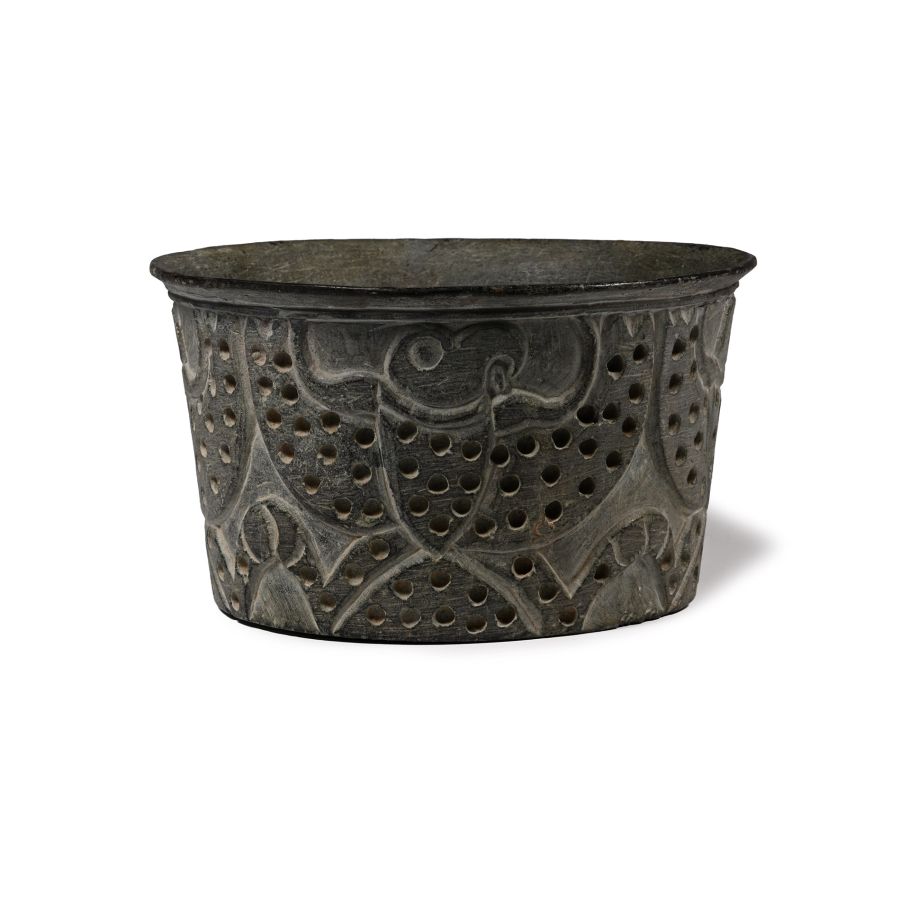
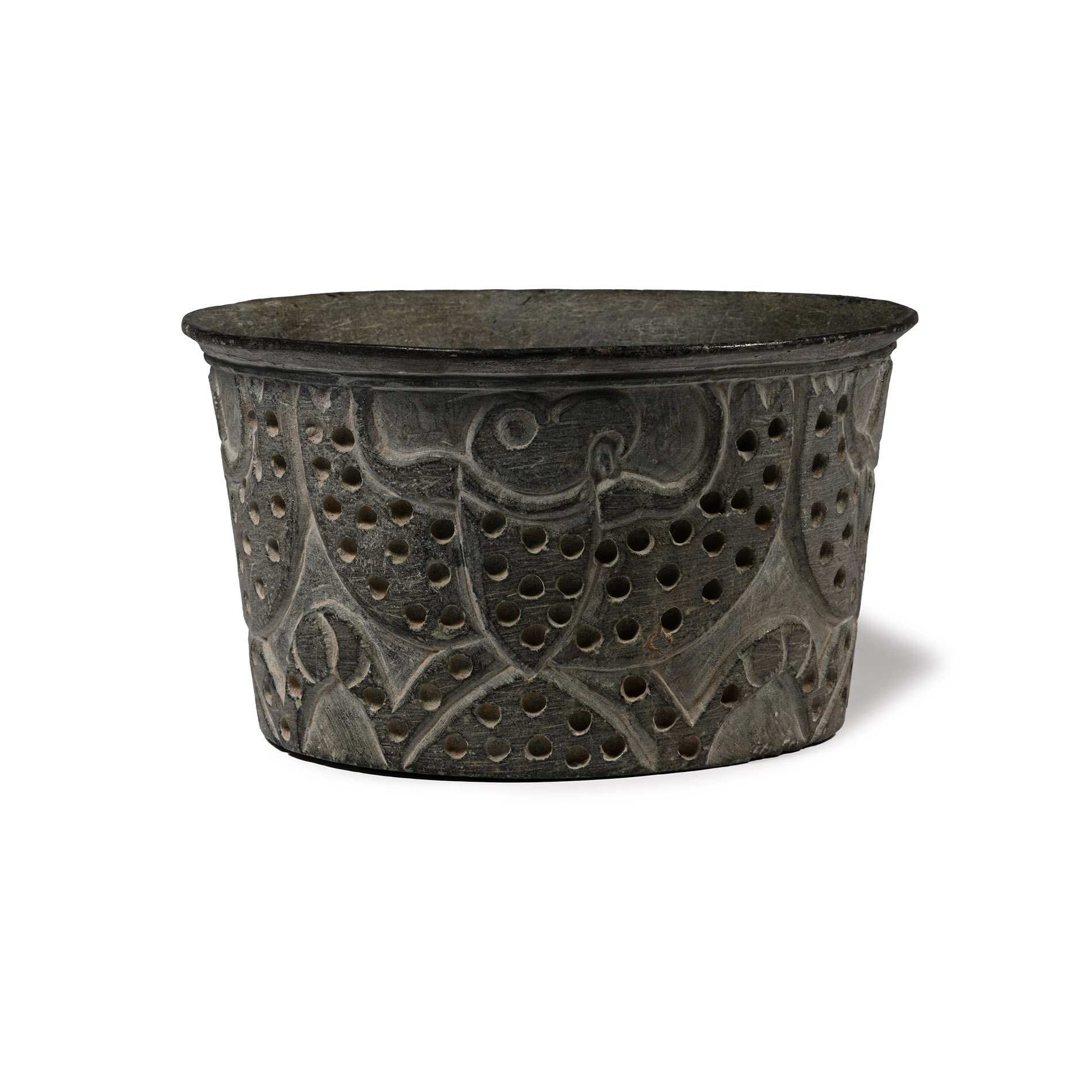
Bactrian Stone Bowl with Birds
3RD-2ND MILLENNIUM B.C.
5 1/8 in. (490 grams, 13 cm).
Drum-shaped with stepped flared rim, sidewall with frieze of stylised birds, each with wings spread, legs extended and head turned to the right; rows of shallow sockets to accept a coloured fill (now absent).
ProvenanceAcquired from a gallery in France, held in the UK since 1982, thence by descent.
Private collection, London.
Cf. Aruz, J. ed., Art Of The First Cities: The Third Millennium B.C. from the Mediterranean to the Indus, The Metropolitan Museum of Art, New York, 2003, p.326, for similar.
CONDITIONTimeLine Auctions follows a vetting process to ensure the authenticity and legality of all items, reinforcing our commitment to integrity and responsible trading. Each antiquity, antique, and coin lot undergoes thorough examination by a vetting committee of at least ten external specialists, professional trade association members, scientists, and archaeologists: Our Vetting Process
AUCTIONS:
TimeLine is a leading auction house specialising in antiquities, ancient art, collectables, natural history, coins, medals, and books. Our auctions offer museums, collectors, historians, and enthusiasts the opportunity to acquire unique and historically significant pieces.
-
.jpg)
Bactrian Ritual Stone Idol
2nd-1st millennium B.C.Sold for (Inc. bp): £52
Round-section columnar bar with tapering ends, pecked texturing. 4.6 kg, 46 cm
From a collection acquired on the UK art market from various auction houses and collections mostly before 2000. From an important Cambridgeshire estate; thence by descent. -
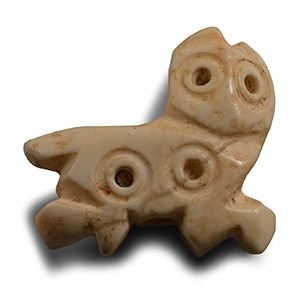
Jemdet Nasr Type White Stone Reclining Animal Amulet
3rd millennium B.C.Sold for (Inc. bp): £247
Carved with the head facing and the body in profile; the, eyes indicated by drilled dots within circles, two similar dots on body; pierced vertically. 4.3 grams, 24 mm
From the collection of Mr S.M., London, UK, formed from 1979-1999.
The eyes and spots were intended to be inlaid with a material in a contrasting colour. -
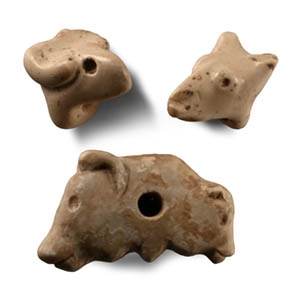
Mesopotamian White Marble Animal Amulets
2nd-1st millennium B.C.Estimate: £400 - 600 (+bp*)
Opening Bid: £160
Comprising: profile addorsed bear and bear-cub heads; two sheep's heads. 15.8 grams total, 17-33 mm
From the private collection of Mr K.A., acquired in the 1990s-early 2000s.
