
Loading, please wait...
LOT 1131
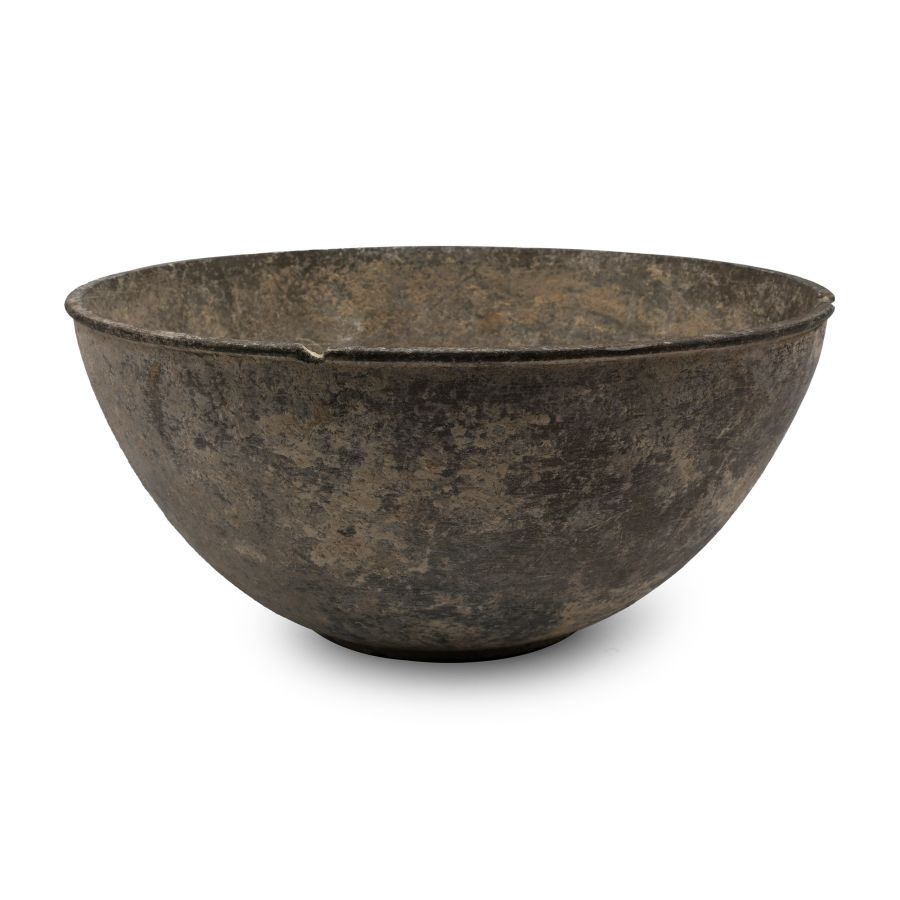
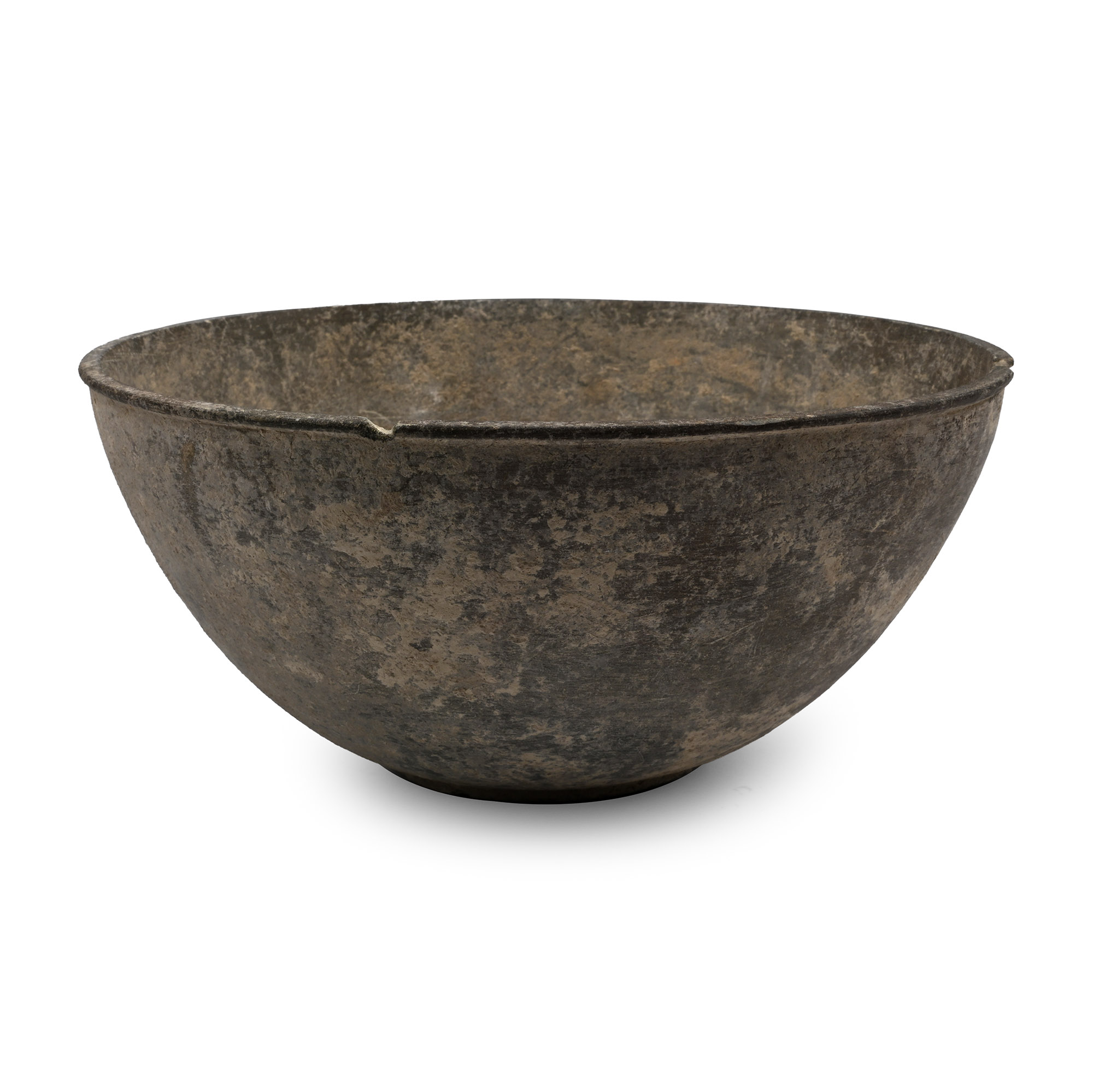
Bactrian Schist Vessel
1ST MILLENNIUM B.C.
7 5/8 in. (771 grams, 19.5 cm wide).
Hemispherical in profile with disc base, stepped central tondo and everted lip to the rim.
ProvenanceFrom a collection formed before 1990.
Ex Mayfair, London, UK, gallery, 2000s.
This lot has been cleared against the Art Loss Register database, and is accompanied by an illustrated lot declaration signed by the Head of the Antiquities Department, Dr Raffaele D'Amato.
TimeLine Auctions follows a vetting process to ensure the authenticity and legality of all items, reinforcing our commitment to integrity and responsible trading. Each antiquity, antique, and coin lot undergoes thorough examination by a vetting committee of at least ten external specialists, professional trade association members, scientists, and archaeologists: Our Vetting Process
AUCTIONS:
TimeLine is a leading auction house specialising in antiquities, ancient art, collectables, natural history, coins, medals, and books. Our auctions offer museums, collectors, historians, and enthusiasts the opportunity to acquire unique and historically significant pieces.
-
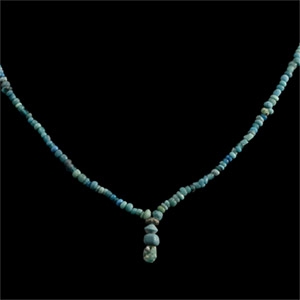
Achaemenid Blue Glass Bead Necklace String
6th-4th century B.C. and laterSold for (Inc. bp): £65
Composed of mainly oblate and annular beads with larger beads as a central feature; restrung. 5.55 grams, 38 cm
From the London, UK, art market in the 1990s. This lot has been cleared against the Art Loss Register database, and is accompanied by an illustrated lot declaration signed by the Head of the Antiquities Department, Dr Raffaele D'Amato. -
.jpg)
Sumerian Shell Cylinder Seal with Heroes
2600-2300 B.C.Sold for (Inc. bp): £234
With cord and bead handles; accompanied by a copy of an old scholarly note, typed and signed by W.G. Lambert, late Professor of Assyriology, University of Birmingham, 1970-1993, which states: 'Cylinder seal of fossil shell. 28 x 16 mm., condition good. Contest scene: standing hero succours reared up domestic animal on either side as they are attacked by lions, a second hero pulls the tail of the right-hand lion from behind; terminal scorpion below double line. This well known type of Sumerian seal occurs at the very end of the Early Dynastic periods, and on into the beginning of the Akkad dynasty. The scene involves divine heroes, and it was hoped that in actual life such figures would save domestic herds from attacks of lions.'; accompanied by a museum-quality impression. 14.9 grams total, 8.1-27.78 mm
UK private collection, acquired 1980-1983. Accompanied by a copy of a scholarly note, typed and signed by Professor Wilfrid George Lambert in August 1990. This lot has been cleared against the Art Loss Register database, and is accompanied by an illustrated lot declaration signed by the Head of the Antiquities Department, Dr Raffaele D'Amato. -
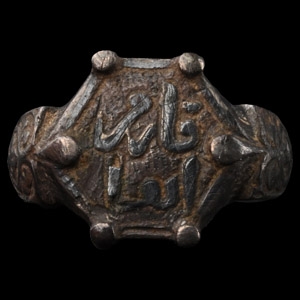
Western Asiatic Silver Ring with Niello
12th-13th century A.D. or laterEstimate: £500 - 700 (‡+bp*)
Opening Bid: £250
With carinated hoop, heater-shaped plaques to the shoulders, hexagonal bezel with pellet to each angle and reserved calligraphic legend. 9.03 grams, 23.84 mm overall, 19.40 mm internal diameter (approximate size British P, USA 7 1/2, Europe 16.23, Japan 15)
From a central European collection. Mr S.A., acquired in 1992. Thence by descent, family collection, since the late 1990s. This lot has been cleared against the Art Loss Register database, and is accompanied by an illustrated lot declaration signed by the Head of the Antiquities Department, Dr Raffaele D'Amato.
