
Loading, please wait...
LOT 1383
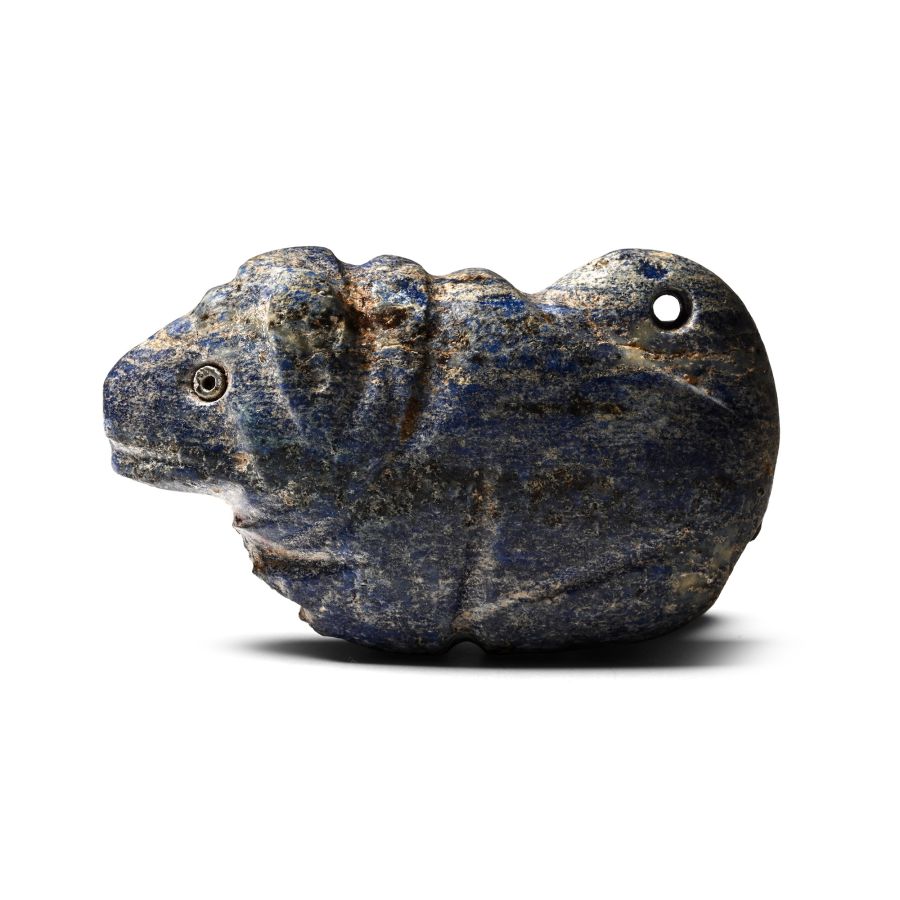
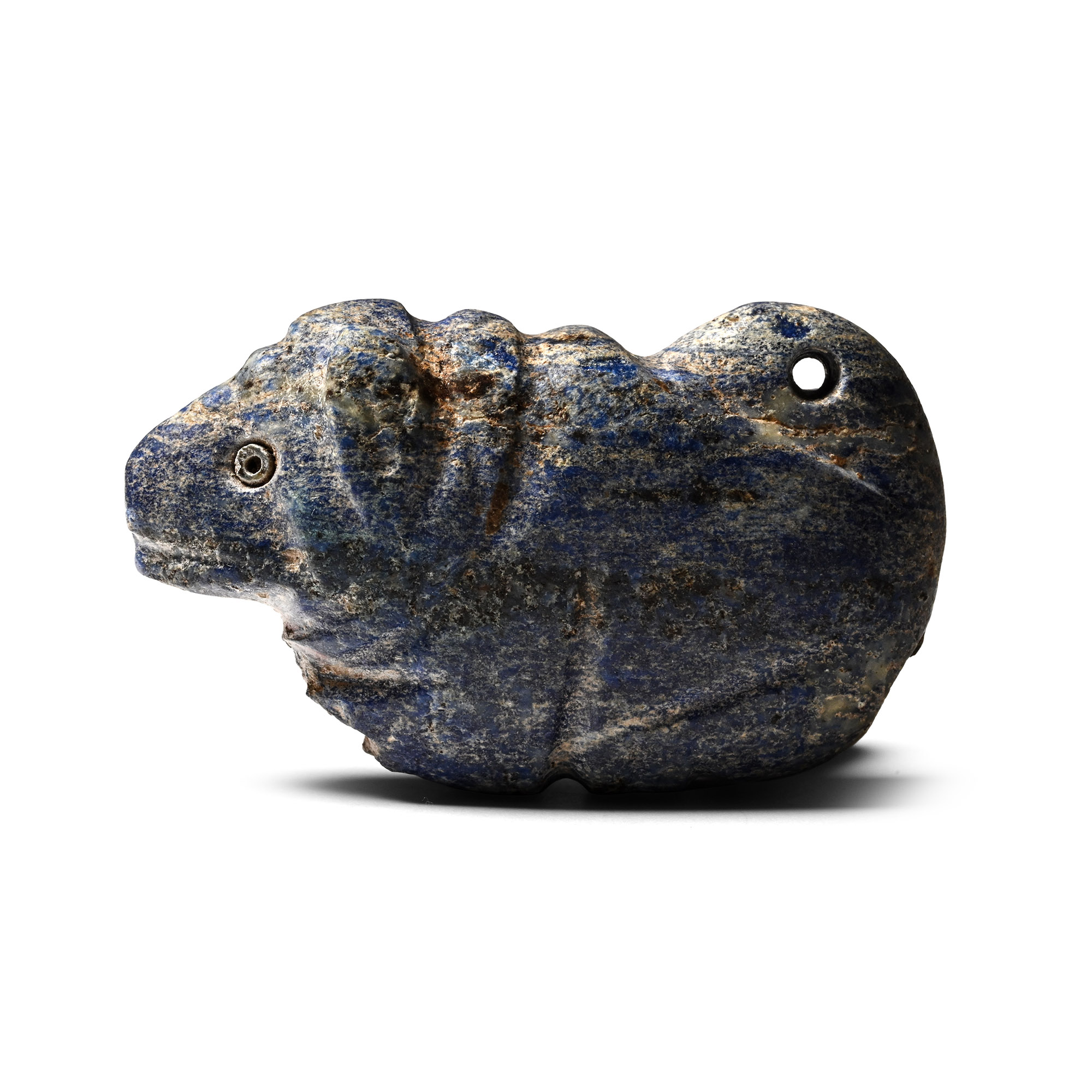
Bactrian Lapis Lazuli Recumbent Bull with Inlaid Eyes
3RD MILLENNIUM B.C.
1 3/4 in. (31.7 grams, 46 mm).
Modelled in the round with the legs folded beneath the body, pierced at the rump; sockets at the eyes, one with inlay; bronze mounting rod set into the lower body.
Provenancewith Gallery Rosen Ancient Art, Tel Aviv, 1968.
with a London, UK gallery, 1971-early 2000s.
Accompanied by a copy of the original 1968 invoice.
This lot has been checked against the Interpol Database of stolen works of art and is accompanied by a search certificate number no.12409-225344.
TimeLine Auctions follows a vetting process to ensure the authenticity and legality of all items, reinforcing our commitment to integrity and responsible trading. Each antiquity, antique, and coin lot undergoes thorough examination by a vetting committee of at least ten external specialists, professional trade association members, scientists, and archaeologists: Our Vetting Process
AUCTIONS:
TimeLine is a leading auction house specialising in antiquities, ancient art, collectables, natural history, coins, medals, and books. Our auctions offer museums, collectors, historians, and enthusiasts the opportunity to acquire unique and historically significant pieces.
LOT 1383
Bactrian Lapis Lazuli Recumbent Bull with Inlaid Eyes
Estimate £800 - 1,000€930 - 1,160 (for guidance only)$1,080 - 1,350 (for guidance only)
-
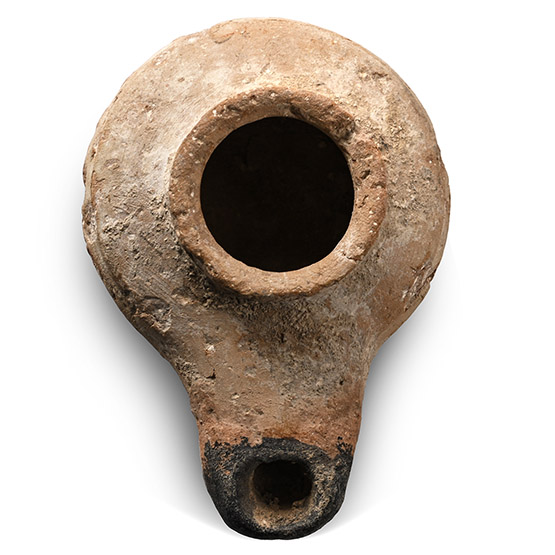
Judean Terracotta Shephelah Oil Lamp
3rd-2nd century B.C.Sold for (Inc. bp): £72
Comprising a drum-shaped body with a flat base and a low rim to the filler-hole, a long D-shaped nozzle. 79 grams, 85 mm
From the Lloyd and Jeanne Raport collection, Washington, D.C. and Florida, USA, formed between 1972-2000. Acquired through Bonhams, London, UK. -
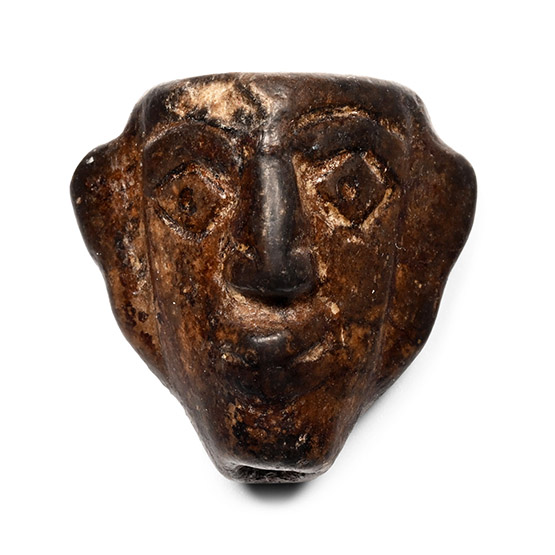
Sumerian Black Stone Face Amulet
Uruk/Jemdet Nasr Period, circa 3500-2900 B.C. or laterSold for (Inc. bp): £390
Carved in the half-round with large eyes and ears; drilled depression above the head and beneath the chin. 4.6 grams, 19 mm
From the 'S' collection, acquired 1970-1990s. Accompanied by a description from Peter Gert Van der Veen, senior lecturer of Levantine Archaeology, Johannes Gutenberg-Universität, Mainz. -
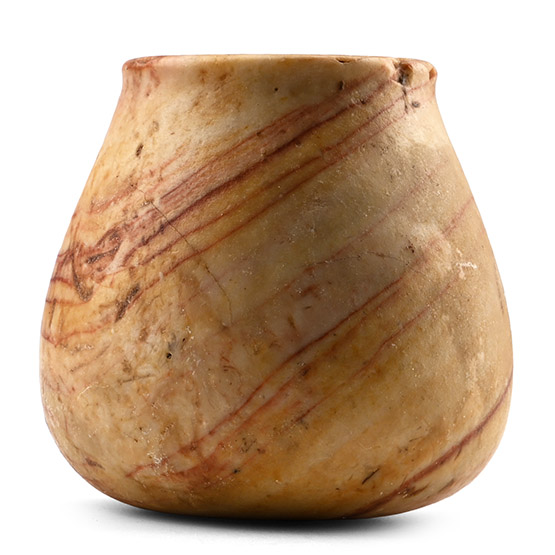
Western Asiatic Banded Alabaster Vessel
2nd-1st millennium B.C.Sold for (Inc. bp): £59
With broad flat base and ovoid profile, thick rim. 148 grams, 59 mm
Private collection, UK.
