
Loading, please wait...
LOT 0252
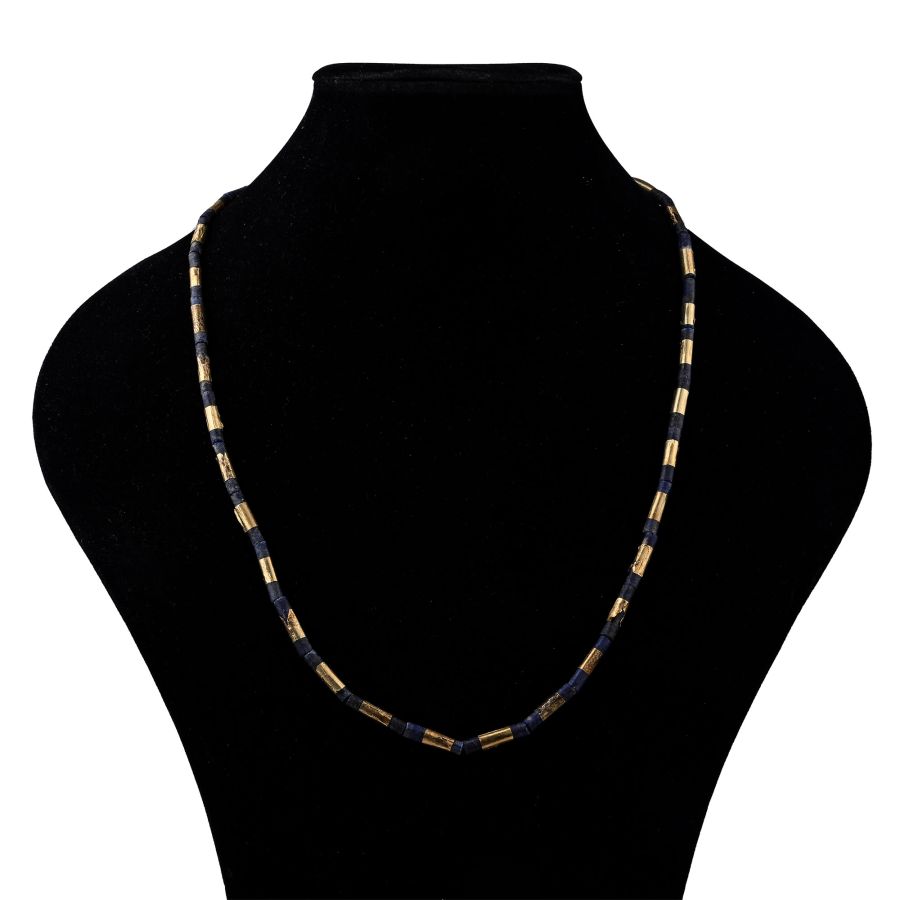
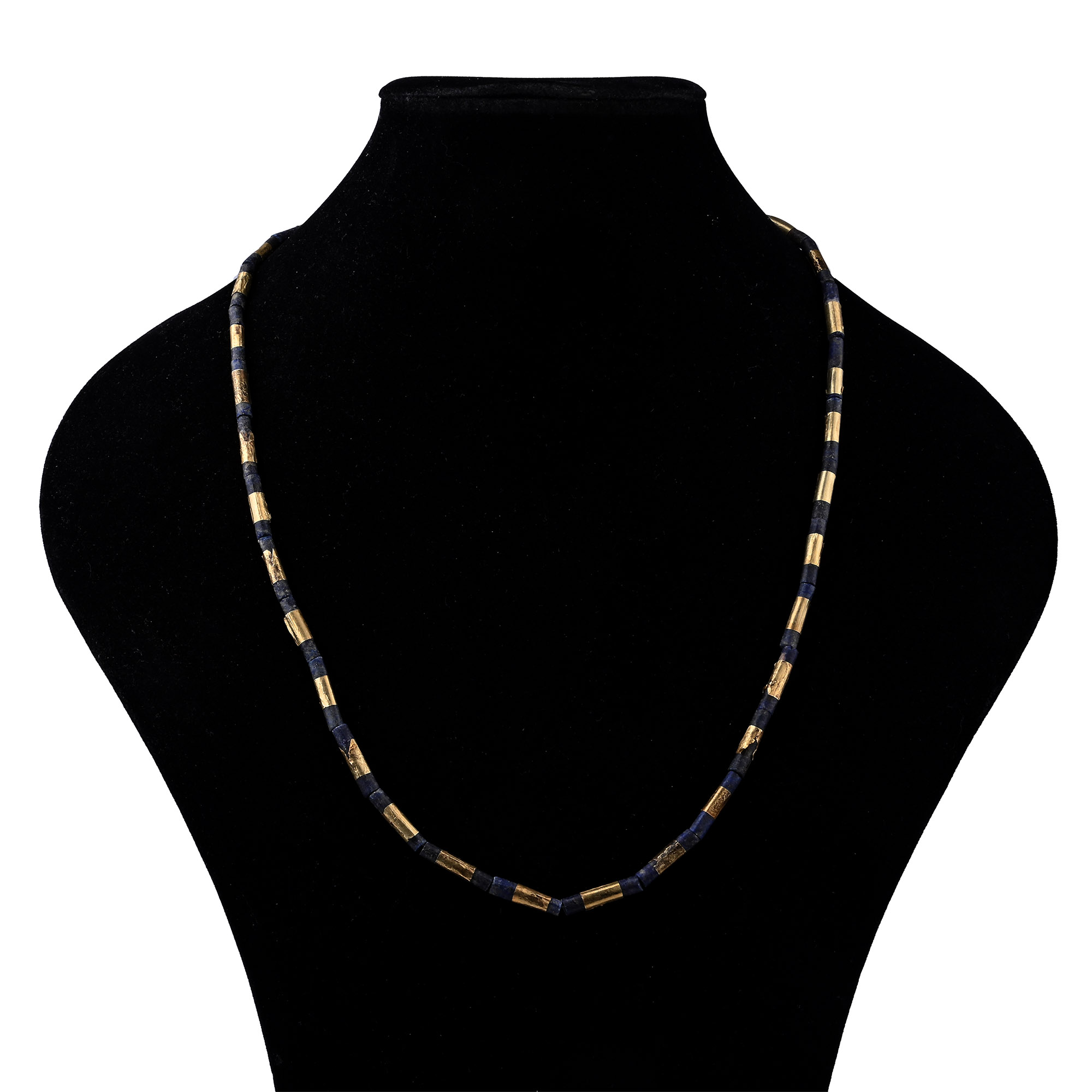
Bactrian Lapis Lazuli Bead Necklace with Later Gold Foil
1ST MILLENNIUM B.C.
24 in. (22 grams, 61 cm).
Restrung group of tubular lapis lazuli beads, each with a sheet-gold sleeve; modern clasp.
ProvenanceAcquired on the London art market.
Private collection, UK.
TimeLine Auctions follows a vetting process to ensure the authenticity and legality of all items, reinforcing our commitment to integrity and responsible trading. Each antiquity, antique, and coin lot undergoes thorough examination by a vetting committee of at least ten external specialists, professional trade association members, scientists, and archaeologists: Our Vetting Process
AUCTIONS:
TimeLine is a leading auction house specialising in antiquities, ancient art, collectables, natural history, coins, medals, and books. Our auctions offer museums, collectors, historians, and enthusiasts the opportunity to acquire unique and historically significant pieces.
LOT 0252
Bactrian Lapis Lazuli Bead Necklace with Later Gold Foil
Sold for (Inc. bp): £650
-
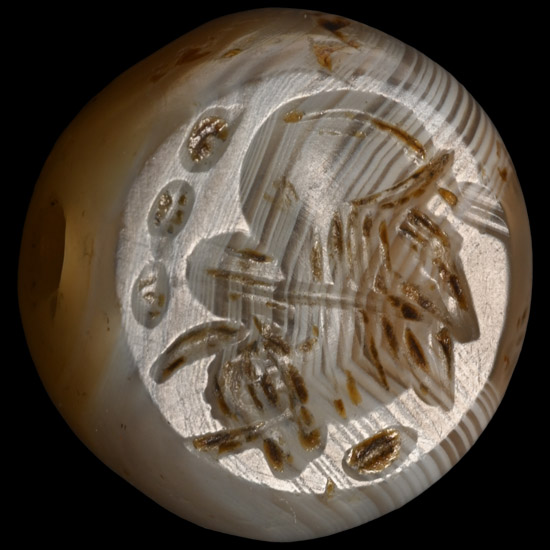
Sasanian Banded Agate Stamp Seal with Portrait
Circa 3rd-7th century A.D.Sold for (Inc. bp): £195
With incuse profile bust with beard. 1.64 grams, 11.42 mm
From the private collection of a European gentleman (1942-2024), formed since the 1970s. -
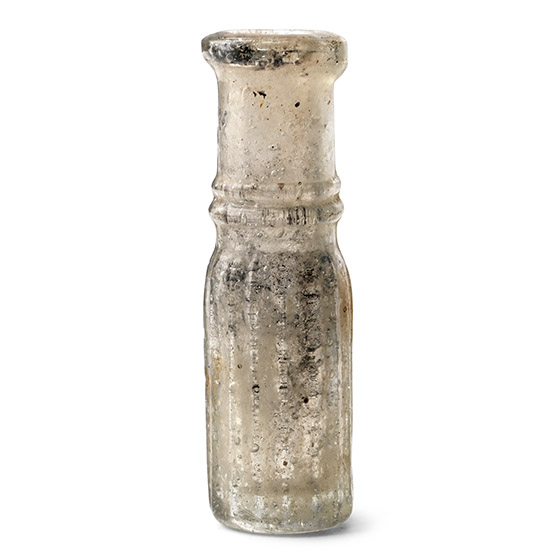
Western Asiatic Cosmetic Glass Vessel
8th-12th century A.D.Sold for (Inc. bp): £13
Ribbed round-section body with tubular neck and everted rim. 9.29 grams, 49 mm
From a London, UK, collection of glass, 1970-2000s. -
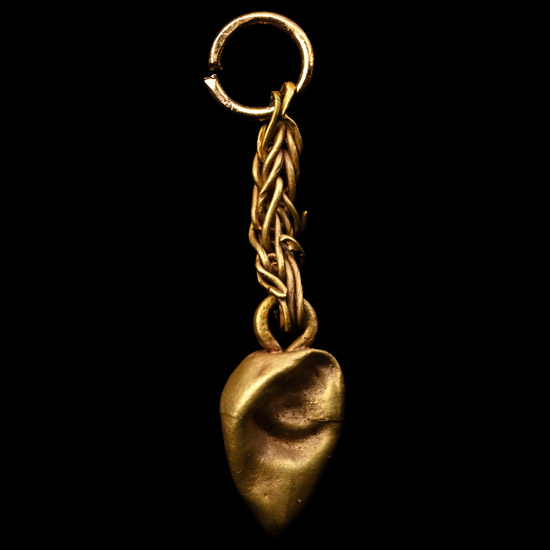
Western Asiatic Gold Teardrop Pendant
1st millennium B.C.Sold for (Inc. bp): £52
Comprising a hollow-form teardrop-shaped pendant suspended from a chain with a later gold-coloured loop. 0.55 grams, 26 mm
Ex private British collection, formed in the 1980s. Property of a West Northamptonshire, UK, gentleman.
