
Loading, please wait...
LOT 0239
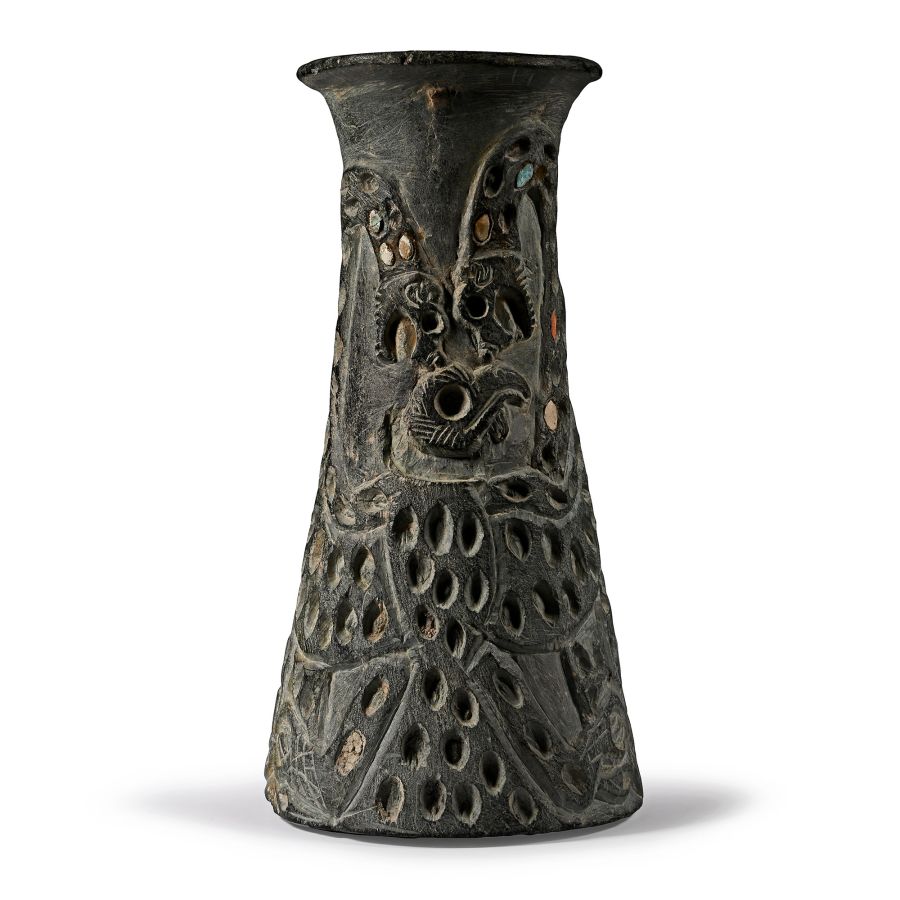
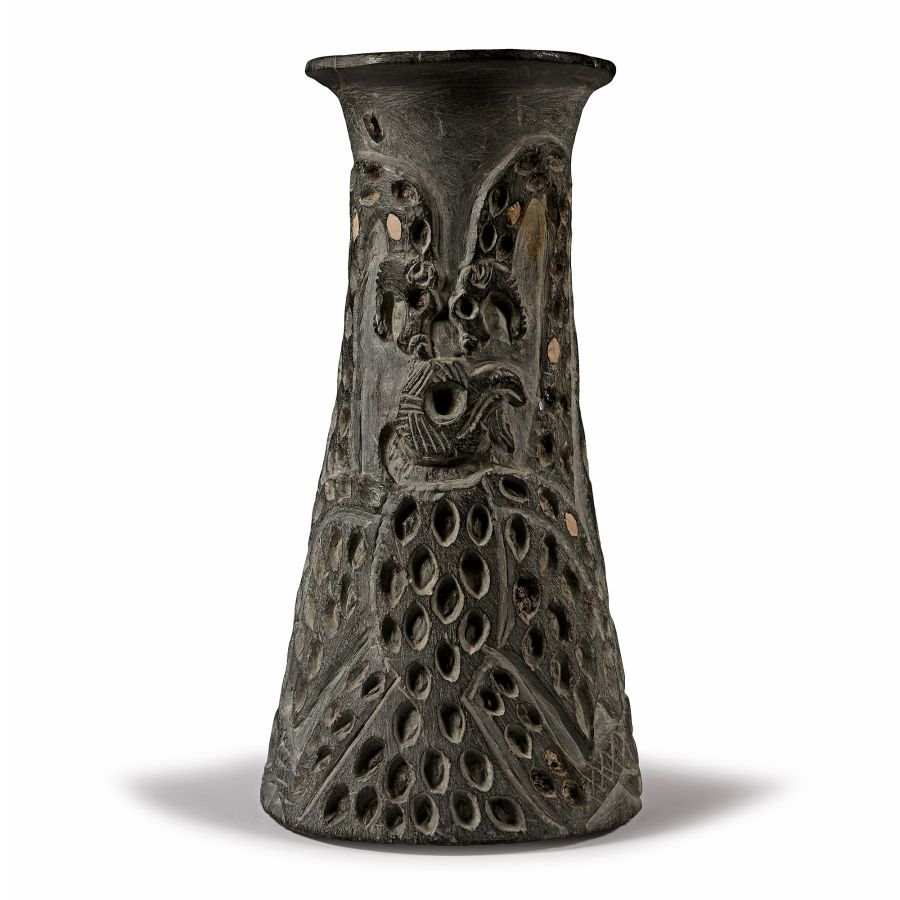
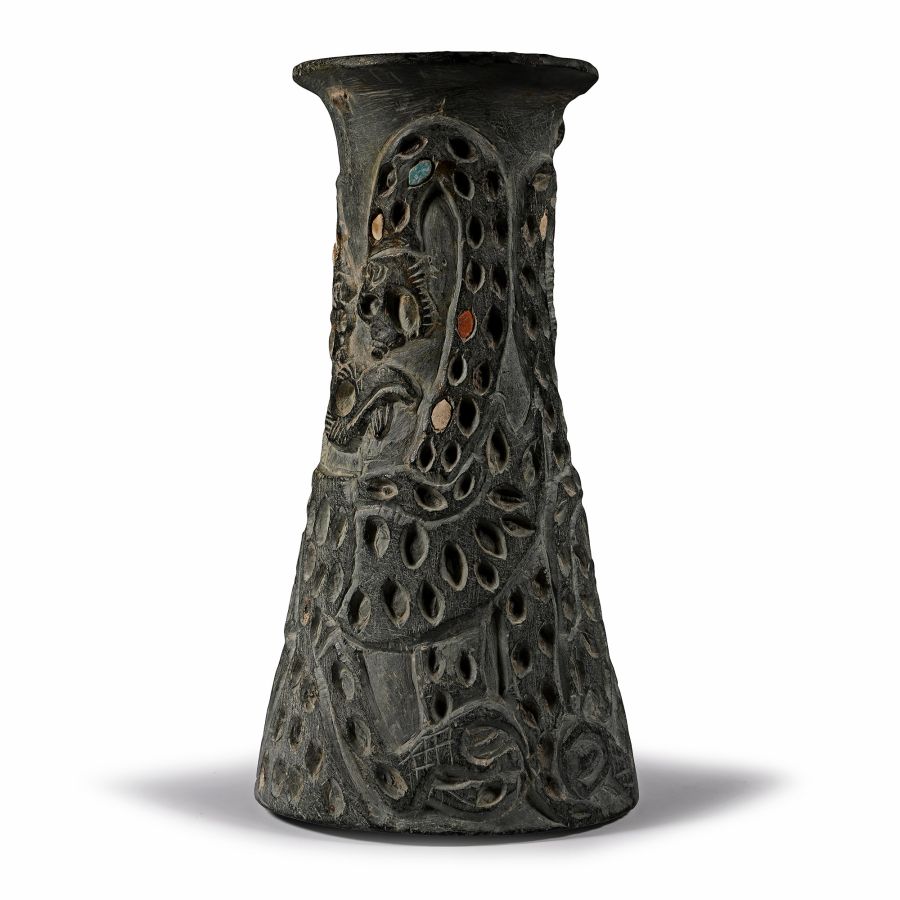
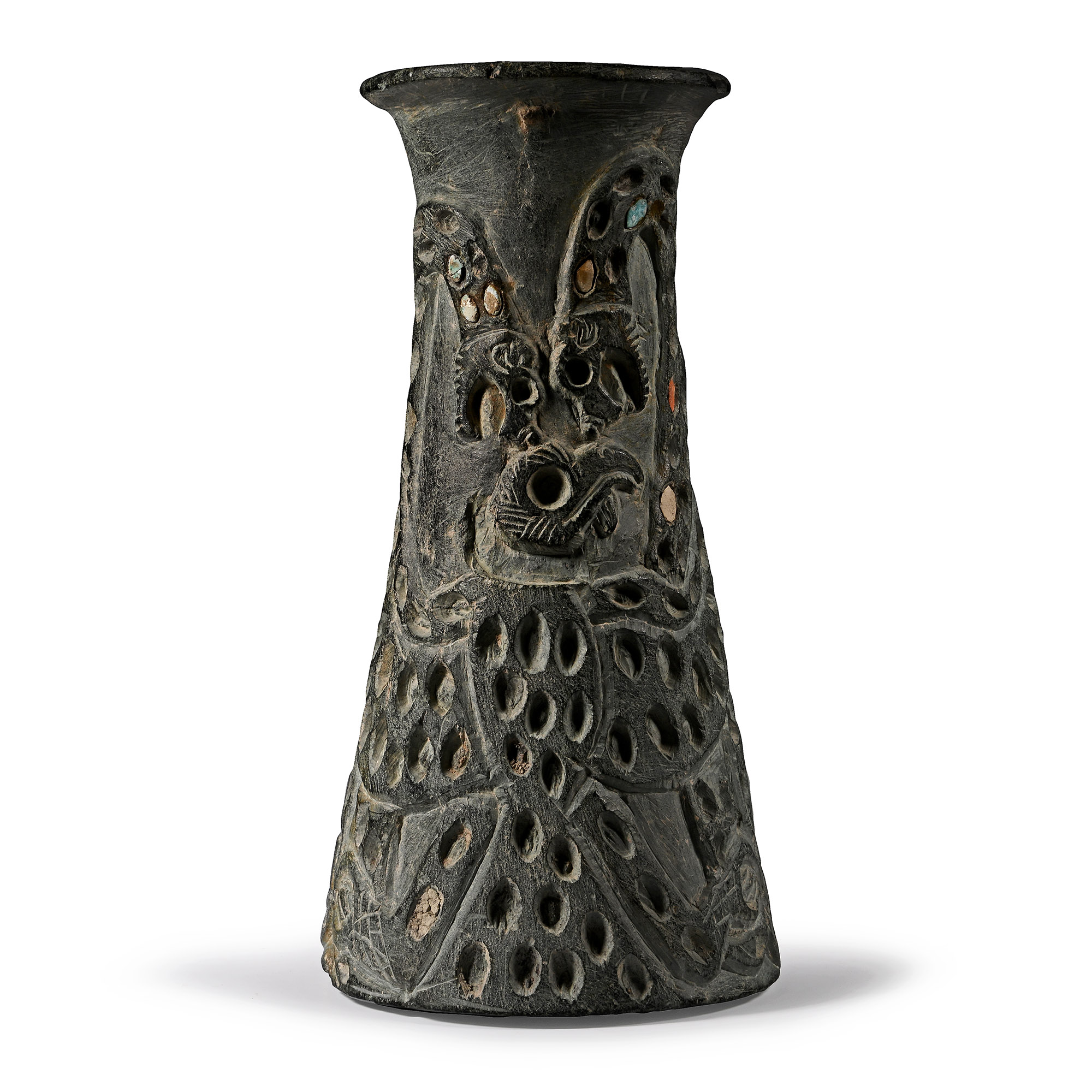
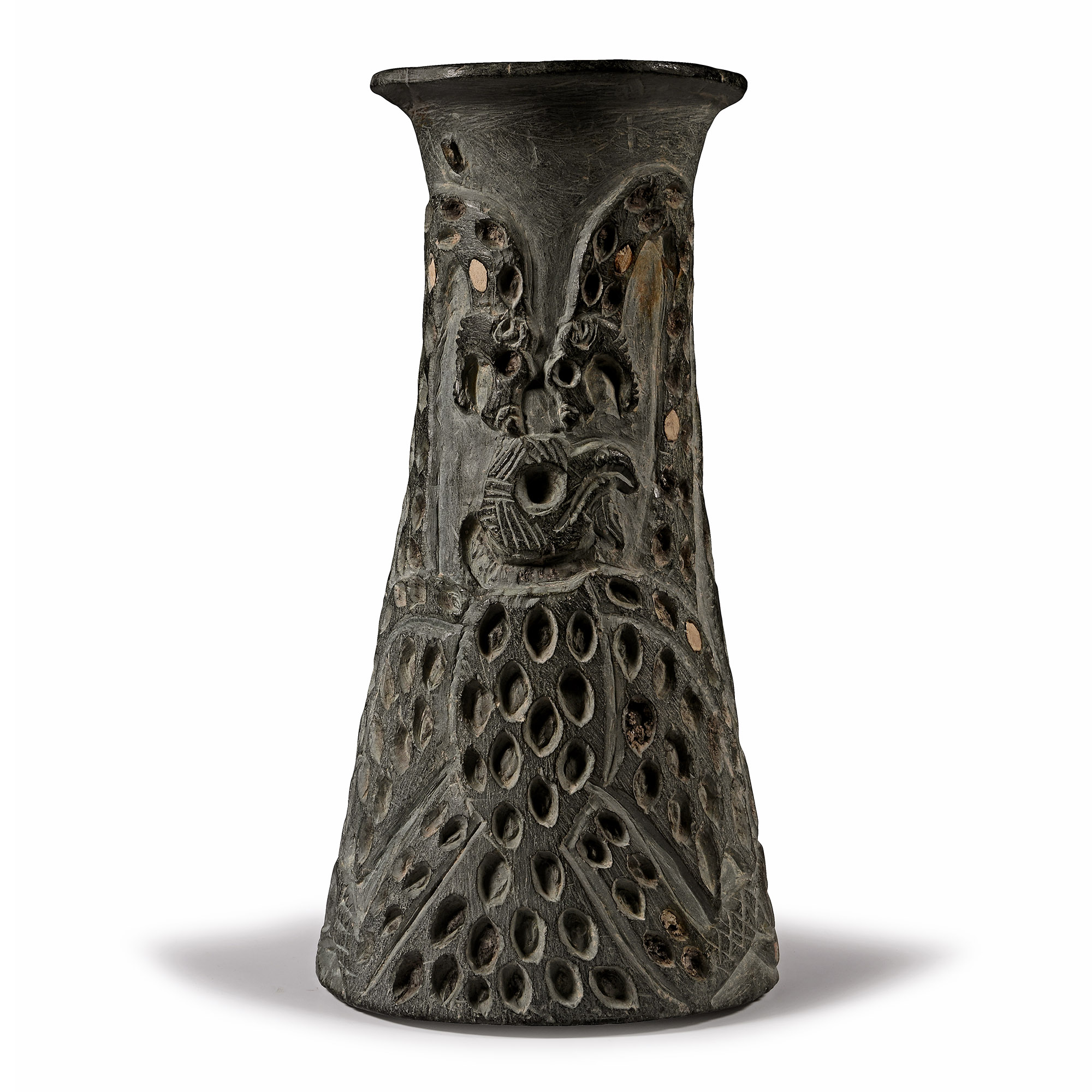
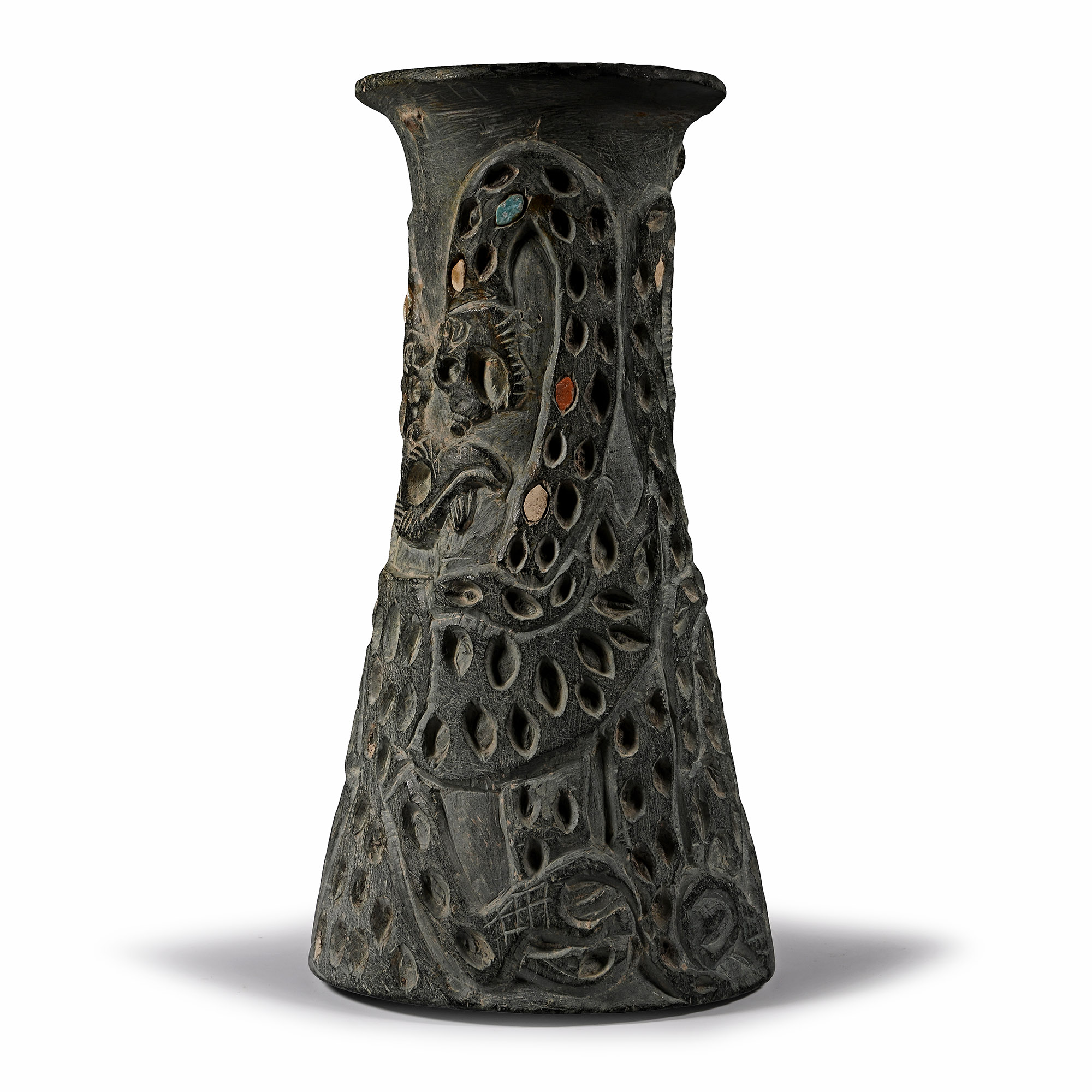
Bactrian Chlorite Vessel with Opposing Serpents
3RD MILLENNIUM B.C.
9 in. (2.3 kg, 23 cm).
With a frieze comprising an eagle with spread wings, two rearing lion-headed serpents above with open jaws; the bodies of the beasts with shallow sockets to accept inserts, some still present. [No Reserve]
Provenancewith Gallery Rosen Ancient Art, Tel Aviv, 1960s.
Ex London, UK, gallery, 1971-early 2000s.
London, UK, collection.
This lot has been checked against the Interpol Database of stolen works of art and is accompanied by a search certificate no.12773-237879.
This lot has been cleared against the Art Loss Register database, and is accompanied by an illustrated lot declaration signed by the Head of the Antiquities Department, Dr Raffaele D'Amato.
Cf. Salvatori, S., ‘Early Bactrian Objects in private collections’ in Ligabue, G., and Salvatori, S., Bactria. An Ancient Oasis from the Sands of Afghanistan, Venice, 1988, pp.181-7, fig.84, for vessels with figures of animals in the same style; Aruz, J. (ed.), Art Of The First Cities: The Third Millennium B.C. from the Mediterranean to the Indus, The Metropolitan Museum of Art, New York, 2003, p.326, for similar vessel.
FootnotesThe chlorite stone vessels of early Bactria were kidney-shaped vessels with simple geometric decoration often representing snakes and other animals. Small cylindrical vases were used as cosmetic containers, together with chlorite cosmetic flasks. Interestingly the eyes and the bodies of the animals were destined to receive inlay, as can be seen on our specimen where some are still in situ.
CONDITIONTimeLine Auctions follows a vetting process to ensure the authenticity and legality of all items, reinforcing our commitment to integrity and responsible trading. Each antiquity, antique, and coin lot undergoes thorough examination by a vetting committee of at least ten external specialists, professional trade association members, scientists, and archaeologists: Our Vetting Process
AUCTIONS:
TimeLine is a leading auction house specialising in antiquities, ancient art, collectables, natural history, coins, medals, and books. Our auctions offer museums, collectors, historians, and enthusiasts the opportunity to acquire unique and historically significant pieces.
-
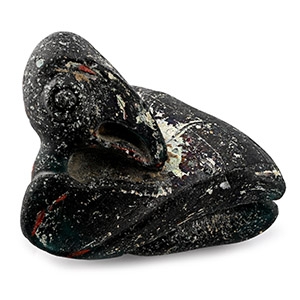
Levant Glass Bird Statuette
Late 1st millennium B.C.Sold for (Inc. bp): £91
A mainly black glass figure of a bird with open beak, domed eye, six vertical holes behind the head. 120 grams, 68 mm
Fine condition.
Property of a West London businessman, formed in the late 1980s-early 1990s. From the private collection of John Meredith, acquired since the 1990s; thence by descent. This lot has been cleared against the Art Loss Register database, and is accompanied by an illustrated lot declaration signed by the Head of the Antiquities Department, Dr Raffaele D'Amato. -
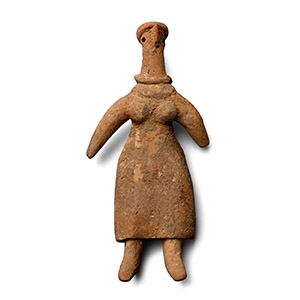
Chalcolithic Terracotta Figure
Circa 3rd millennium B.C.Sold for (Inc. bp): £468
Modelled in the round with columnar head and neck, pinched and impressed facial details, applied headdress, collar and calf-length skirt, stub arms. 173 grams, 17.5 cm high
From the property of the late Mr SM, London, UK, 1969-1999. From the private collection of John Meredith, acquired since the 1990s; thence by descent. Accompanied by a thermoluminescence analysis report no.N122k33 from Oxford Authentication. This lot has been cleared against the Art Loss Register database, and is accompanied by an illustrated lot declaration signed by the Head of the Antiquities Department, Dr Raffaele D'Amato. -
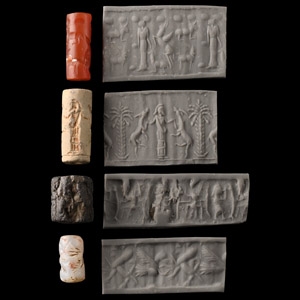
Mesopotamian Stone Cylinder Seal Collection
2nd-1st millennium B.C. and laterSold for (Inc. bp): £390
Comprising four seals in carnelian and other materials, depicting: standing figure in flounced robe holding two ibexes by the foreleg, date-palm in the field; opposed gryphon and perching bird of prey; figure and quadruped in a landscape; standing robed figure with recumbent oxen to each side, rampant gryphon. 15.78 grams total, 16-27 mm
UK private collection before 2000. Acquired on the UK art market. Private collection, London, UK. This lot has been cleared against the Art Loss Register database, and is accompanied by an illustrated lot declaration signed by the Head of the Antiquities Department, Dr Raffaele D'Amato.
