
Loading, please wait...
LOT 1102
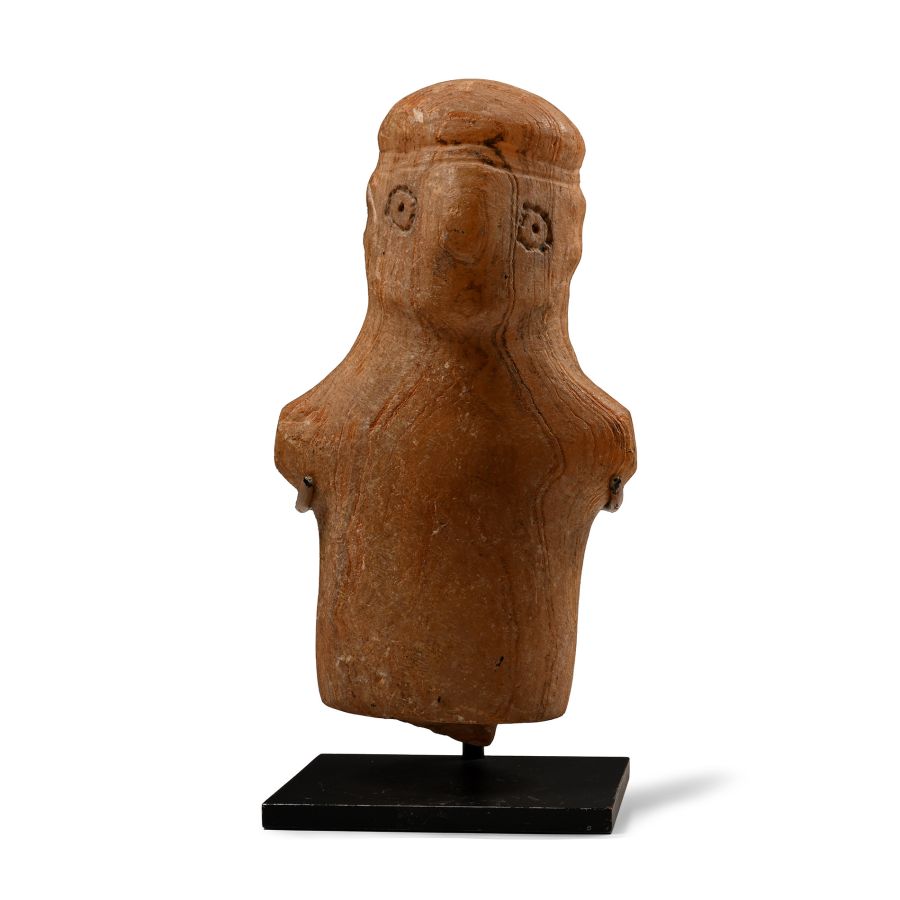
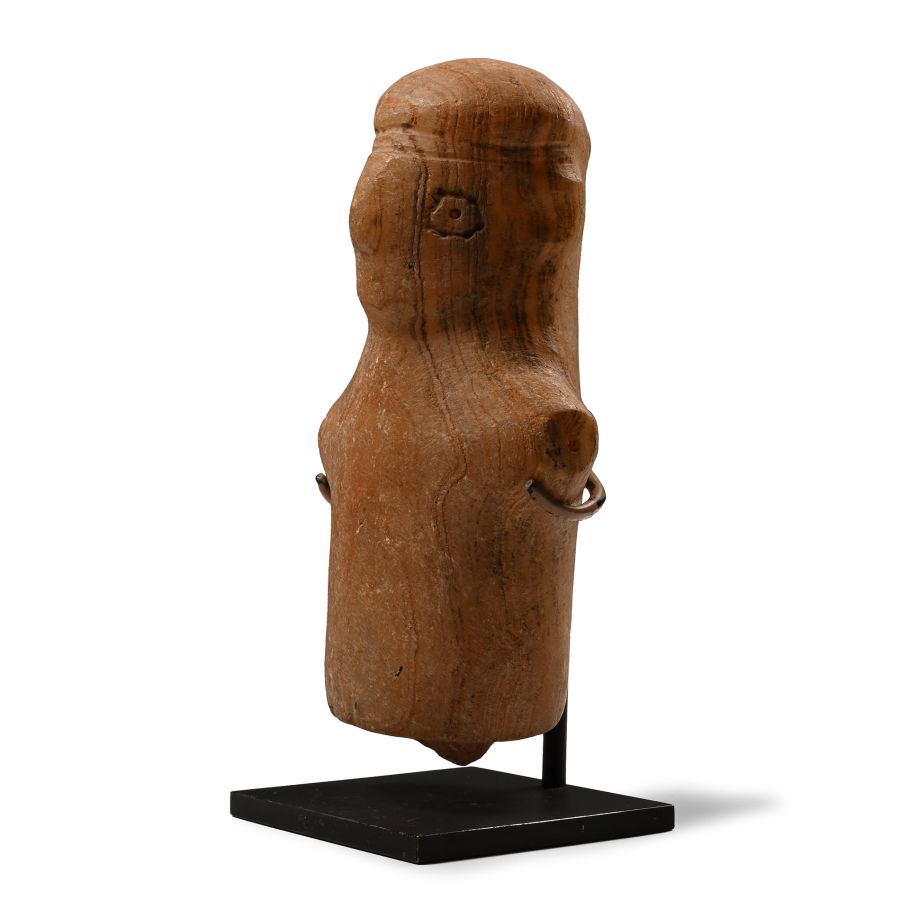
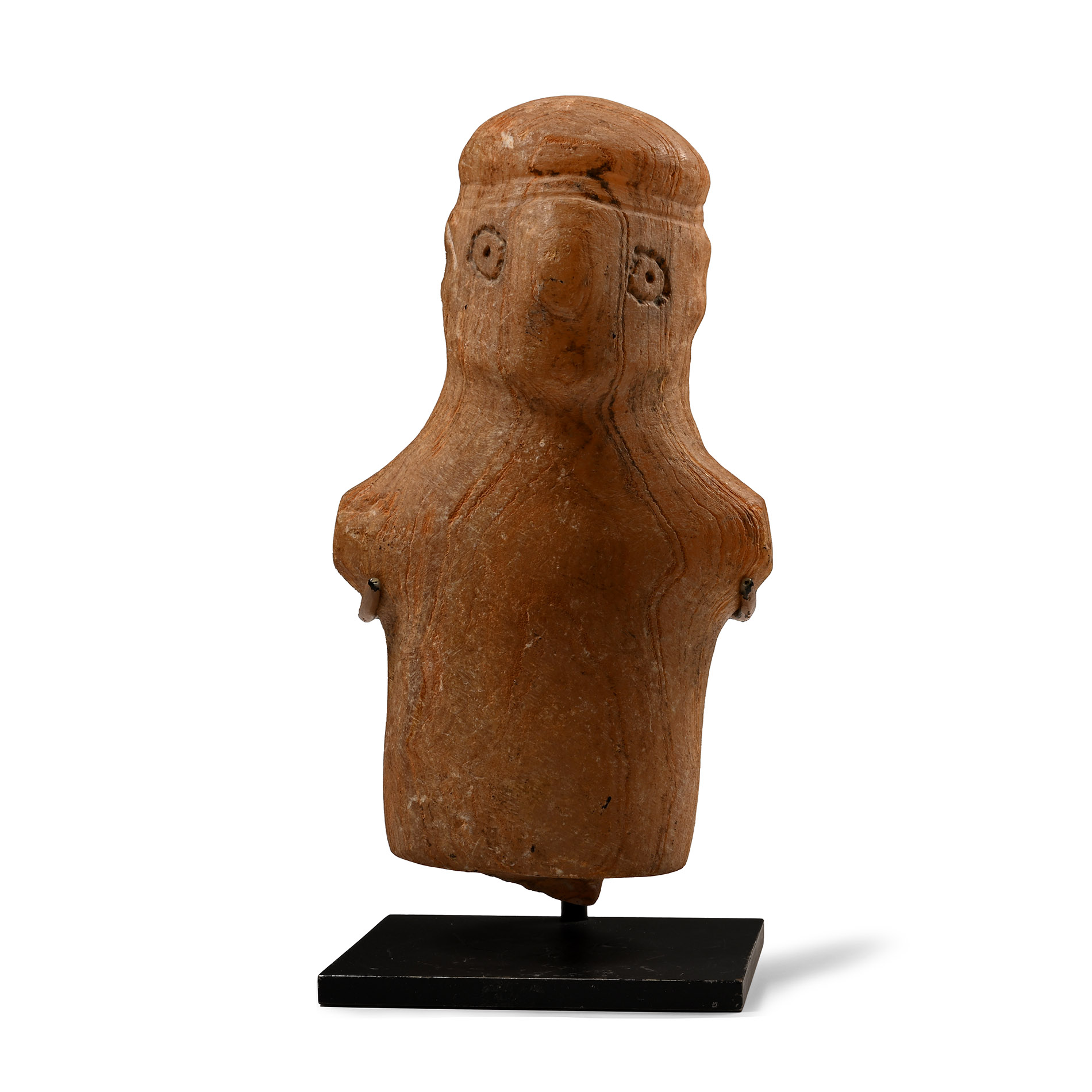
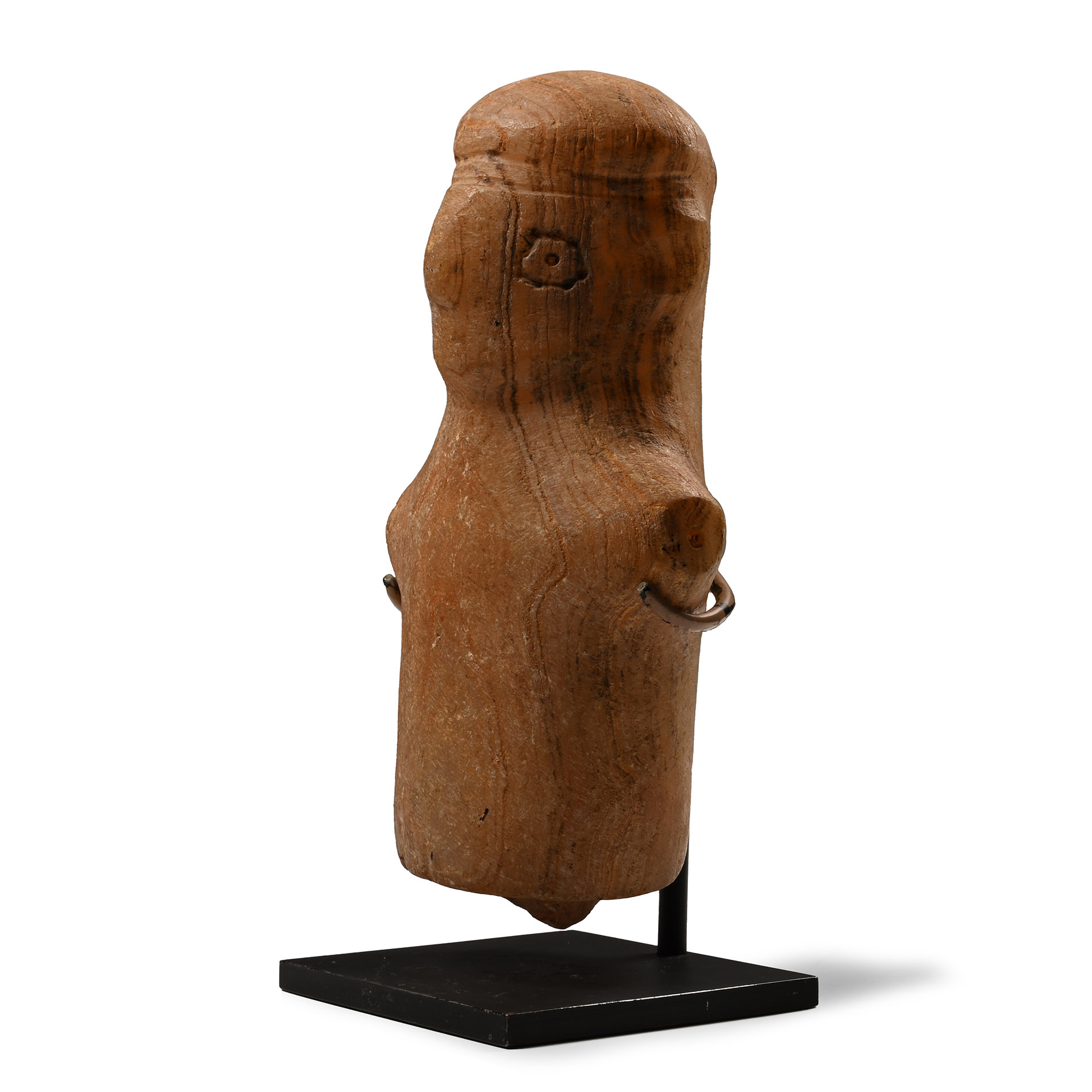
Bactrian Calcite-Alabaster Bust
3RD-2ND MILLENNIUM B.C.
7 in. (7 1/2 in.) (1.29 kg, 17.7 cm (1.67 kg total, 19 cm including stand)).
Columnar in form with stub arms, gusseted neck and rim of the cap, incised irregular ovoid eyes with drilled pupils, reserved ears, circumferential bilinear band to the brow, arms pierced; integral base absent; probably an idol; mounted on a custom-made stand.
ProvenanceEnglish private collection, 1956.
Private collection, London.
TimeLine Auctions follows a vetting process to ensure the authenticity and legality of all items, reinforcing our commitment to integrity and responsible trading. Each antiquity, antique, and coin lot undergoes thorough examination by a vetting committee of at least ten external specialists, professional trade association members, scientists, and archaeologists: Our Vetting Process
AUCTIONS:
TimeLine is a leading auction house specialising in antiquities, ancient art, collectables, natural history, coins, medals, and books. Our auctions offer museums, collectors, historians, and enthusiasts the opportunity to acquire unique and historically significant pieces.
LOT 1102
Bactrian Calcite-Alabaster Bust
Estimate £800 - 1,000€930 - 1,160 (for guidance only)$1,080 - 1,350 (for guidance only)
-

Neo-Elamite Silver Hinged Bracelet Pair
Circa 7th century B.C.Sold for (Inc. bp): £208
Each comprising a round-section penannular body with alternating raised ribs and beaded bands, block terminals with hinged C-section closure. 188 grams total, 74 mm each
From the collection of a London antiquarian, formed since the 1980s. -

Western Asiatic Terracotta Chalice
2nd millennium B.C.Sold for (Inc. bp): £91
With broad flange rim, carinated sidewall, short stem and flared foot; circumferential painted bands; rim chipped. 427 grams, 11 cm high
Acquired 1980-2015. Ex Abelita family collection. -
Aramaic Lead Scroll with Magical Text
2nd-8th century A.D.Estimate: £300 - 400 (+bp*)
Opening Bid: £167
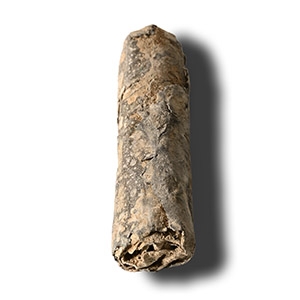
A rectangular lead sheet rolled into a tight scroll with the text to the inner face. 31 grams, 58 mm
Collected from 1970-1999. From the collection of the late Mr S.M., London, UK.
The item was possibly meant to be what the Romans called a defixio or 'curse tablet', on which the magical malediction was recorded and then shut away (by being tightly rolled up) so that the victim could not find it or change it.
