
Loading, please wait...
LOT 1166
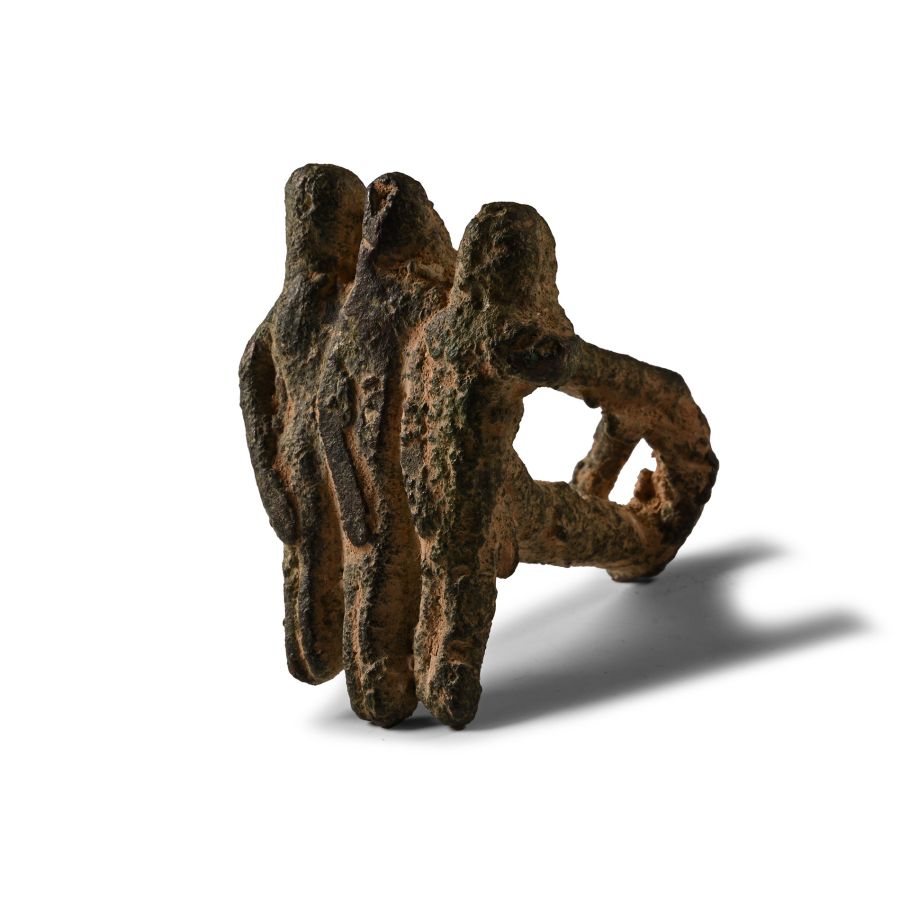
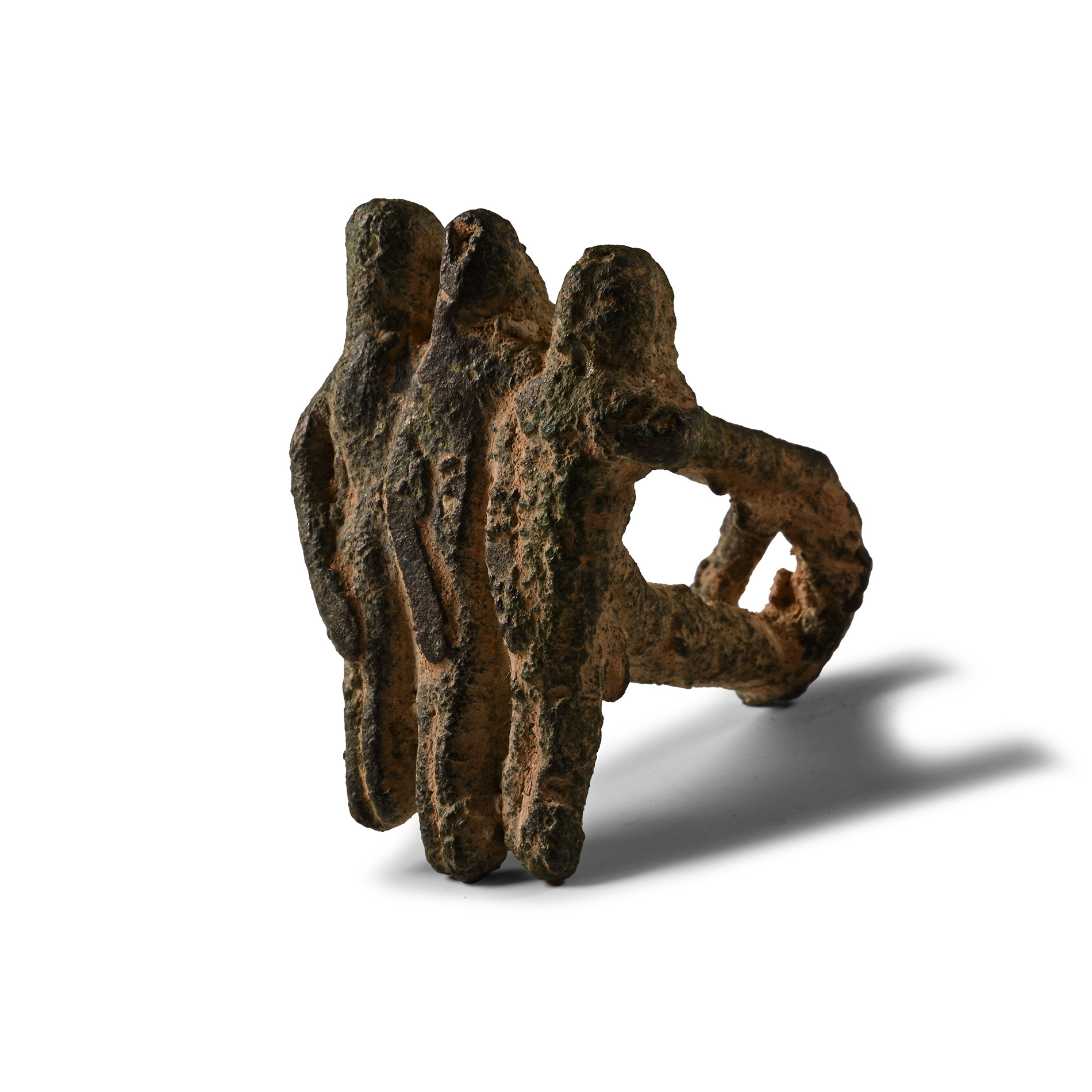
Bactrian Bronze Stamp Seal
1ST MILLENNIUM B.C.
2 1/8 in. (99 grams, 54 mm).
Formed as three nude male figures each with one hand to the mouth and the other covering the anus; with vertical bar handle and ring finial.
ProvenanceAcquired in the mid 1980s-1990s.
Private collection, Switzerland, thence by descent.
Private collection, since the late 1990s.
TimeLine Auctions follows a vetting process to ensure the authenticity and legality of all items, reinforcing our commitment to integrity and responsible trading. Each antiquity, antique, and coin lot undergoes thorough examination by a vetting committee of at least ten external specialists, professional trade association members, scientists, and archaeologists: Our Vetting Process
AUCTIONS:
TimeLine is a leading auction house specialising in antiquities, ancient art, collectables, natural history, coins, medals, and books. Our auctions offer museums, collectors, historians, and enthusiasts the opportunity to acquire unique and historically significant pieces.
LOT 1166
Bactrian Bronze Stamp Seal
Estimate £100 - 140€120 - 160 (for guidance only)$140 - 190 (for guidance only)
-
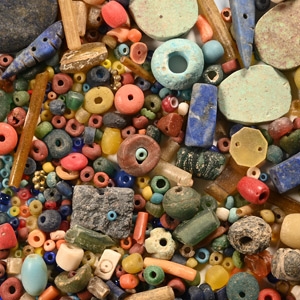
Mixed Ancient Necklace Bead Group
1st millennium B.C. and laterSold for (Inc. bp): £364
Comprising a quantity of variously shaped beads in faience, glass and stone, including some larger tabular beads. 72 grams, 1-30 mm
From a bead collection formed in the 1990s. -

Western Asiatic Gold Ring with Ornament and Pearl
1st-2nd century A.D.Sold for (Inc. bp): £211
Square-section hoop with carination to the plaque, granulated collar and pearl bead. 3.88 grams, 27.36 mm overall, 15.41 mm internal diameter (approximate size British I 1/2, USA 4 1/2, Europe 8.07, Japan 7)
Ex property of a late Japanese collector, 1970-2000s. -

Luristan Bronze Dagger Blade
12th century B.C.Sold for (Inc. bp): £182
With lentoid-section blade, tongue-shaped in plan with integral tapering hilt with flared finial, lateral flanges to accept a panel of bone or wood to each face forming the grip. 131 grams, 31.5 cm
Acquired 1980-2015. Ex Abelita family collection.
The art of Luristan can be described as the art of nomadic herdsmen and horsemen with an emphasis on the crafting of small, easily portable objects, among these a great number of bronze weapons. The rich and noble aristocrats of the Luristan, Elamites, Hurrians, Lullubians, Kutians, and Kassites, went to battle splendidly equipped and wore magnificent bronze armour, using maces, spears and daggers as offensive weapons, alongside spears, bows and arrows.
