
Loading, please wait...
LOT 1249
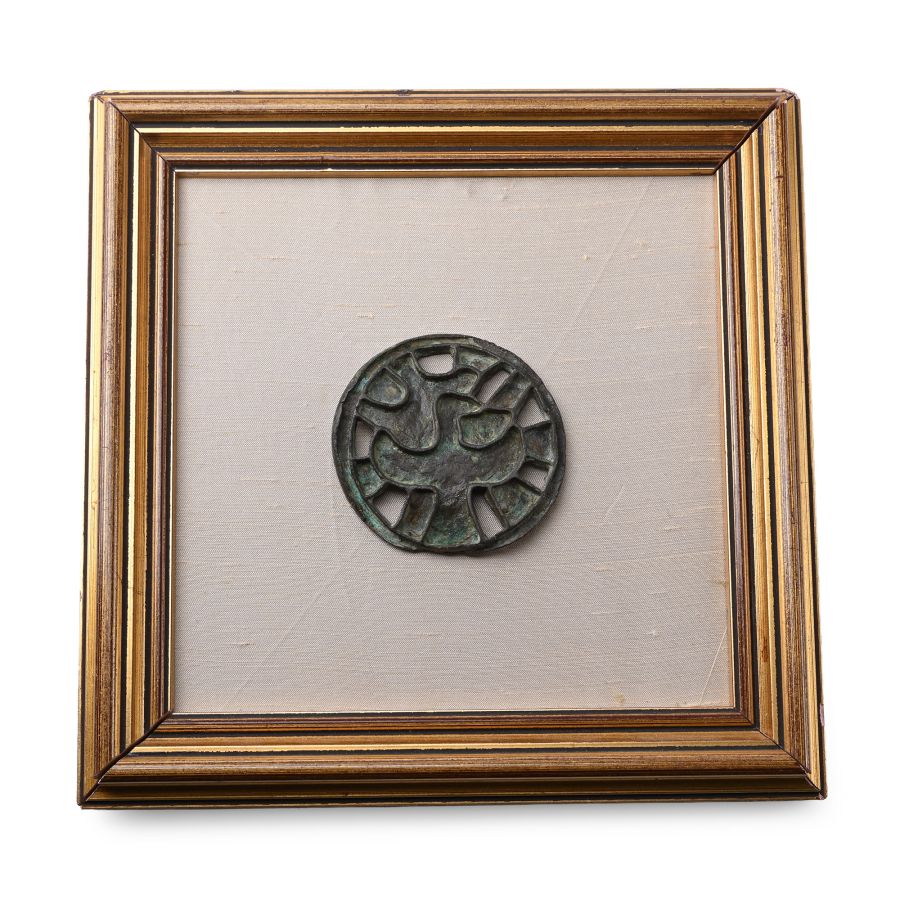
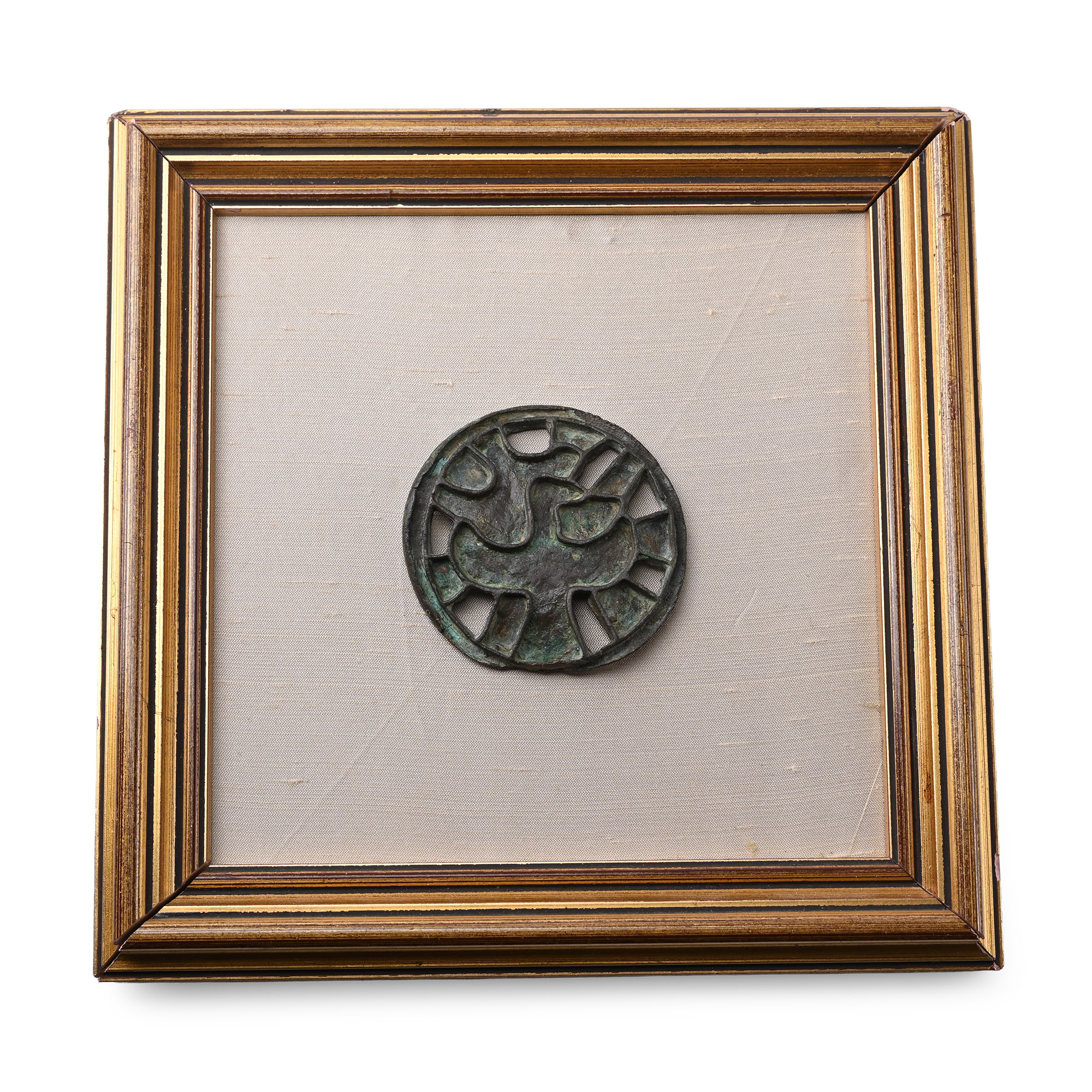
Bactrian Bronze Stamp Seal of a Bird
2ND MILLENNIUM B.C.
2 1/4 in. (298 grams total, seal: 58.6 mm).
Openwork disc with segmented detailing, mounted in a wooden frame.
ProvenanceEx London, UK, gallery, 1971-early 2000s.
London, UK, collection.
TimeLine Auctions follows a vetting process to ensure the authenticity and legality of all items, reinforcing our commitment to integrity and responsible trading. Each antiquity, antique, and coin lot undergoes thorough examination by a vetting committee of at least ten external specialists, professional trade association members, scientists, and archaeologists: Our Vetting Process
AUCTIONS:
TimeLine is a leading auction house specialising in antiquities, ancient art, collectables, natural history, coins, medals, and books. Our auctions offer museums, collectors, historians, and enthusiasts the opportunity to acquire unique and historically significant pieces.
-
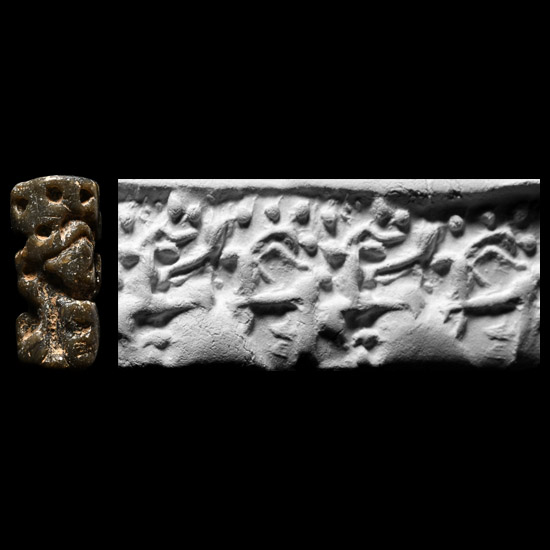
Neo-Assyrian Steatite Cylinder Seal with Capricorns
Circa 800-700 B.C.Sold for (Inc. bp): £52
A small seal with two capricorns and the Pleiades; supplied with a museum-quality impression. 0.85 grams, 14 mm
From the private collection of a European gentleman (1942-2024), formed since the 1970s. Accompanied by a previous typed catalogue slip with collection no.84. -
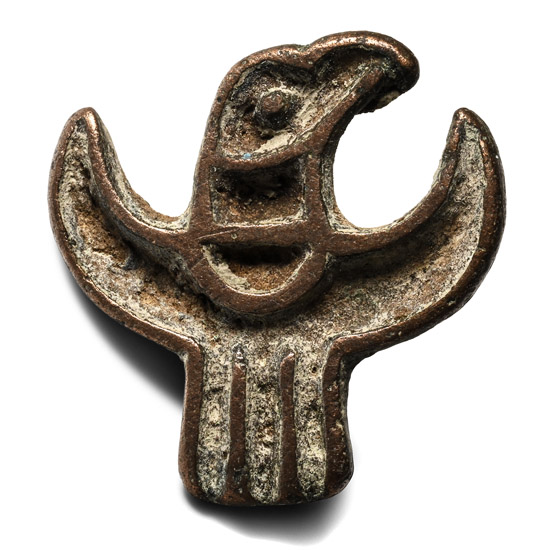
West Central Asian Bronze Eagle-Shaped Seal Matrix
Circa 2300-2000 B.C.Sold for (Inc. bp): £182
An eagle-shaped stamp seal with a loop on the reverse, accompanied by an old scholarly note, typed and signed by W.G. Lambert, late Professor of Assyriology, University of Birmingham, 1970-1993, which states: 'Stamp Seal of Bronze, 27 x 26.5 x 10.5mm. This has the shape of the thing depicted, with a flat face, convex back rising to the middle where a handle of inverted U-shape with three grooves over it is mounted. The design, which is compartmented, shows an eagle in heraldic pose: head sideways at the top with beak raised, spread wings below, and spread tail-feathers at the bottom. This comes from west central Asia and dates to c. 2300-2000 B.C. It is a most attractive piece and in very good condition -- the metal has been conserved -- save for slight damage to the beak of the bird.' 10.2 grams, 26 mm
Acquired in the late 1980s-early 1990s. Ex property of a West London businessman. Academically researched and catalogued by the late Professor Lambert in the early 1990s. Accompanied by a copy of a scholarly report, numbered R-774, typed and signed by Professor Wilfrid George Lambert. -
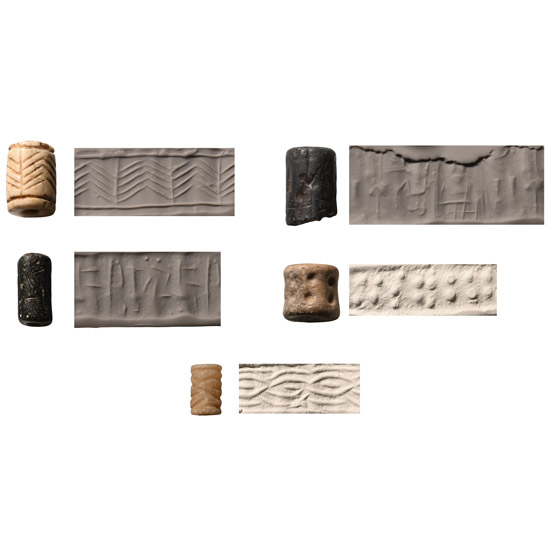
Western Asiatic Stone Cylinder Seal Group
3rd-2nd millennium B.C.Sold for (Inc. bp): £117
Comprising: a brown steatite seal with drilled motifs; a cream quartz seal with a geometric pattern; an intentionally broken hematite seal with a nude frontal woman, two small figures with antlers beneath, a male with curly hair and another figure with a long neck, a practise piece; a cram limestone seal with three tree motifs; a steatite seal with linear and pellet motifs; supplied with museum-quality impressions. 25.1 grams total, 13-21 mm
From the private collection of a European gentleman (1942-2024), formed since the 1970s. Accompanied by previous typed catalogue slips with collection nos.11, 12, 54, 62, 71.
