
Loading, please wait...
LOT 1835
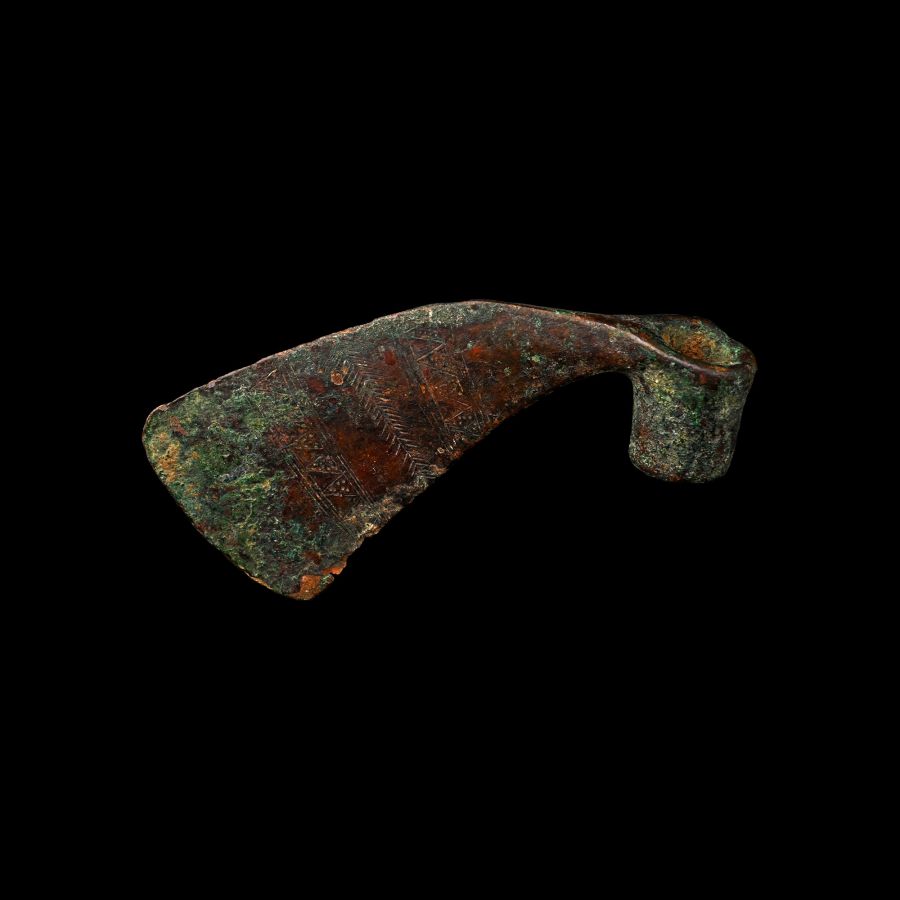
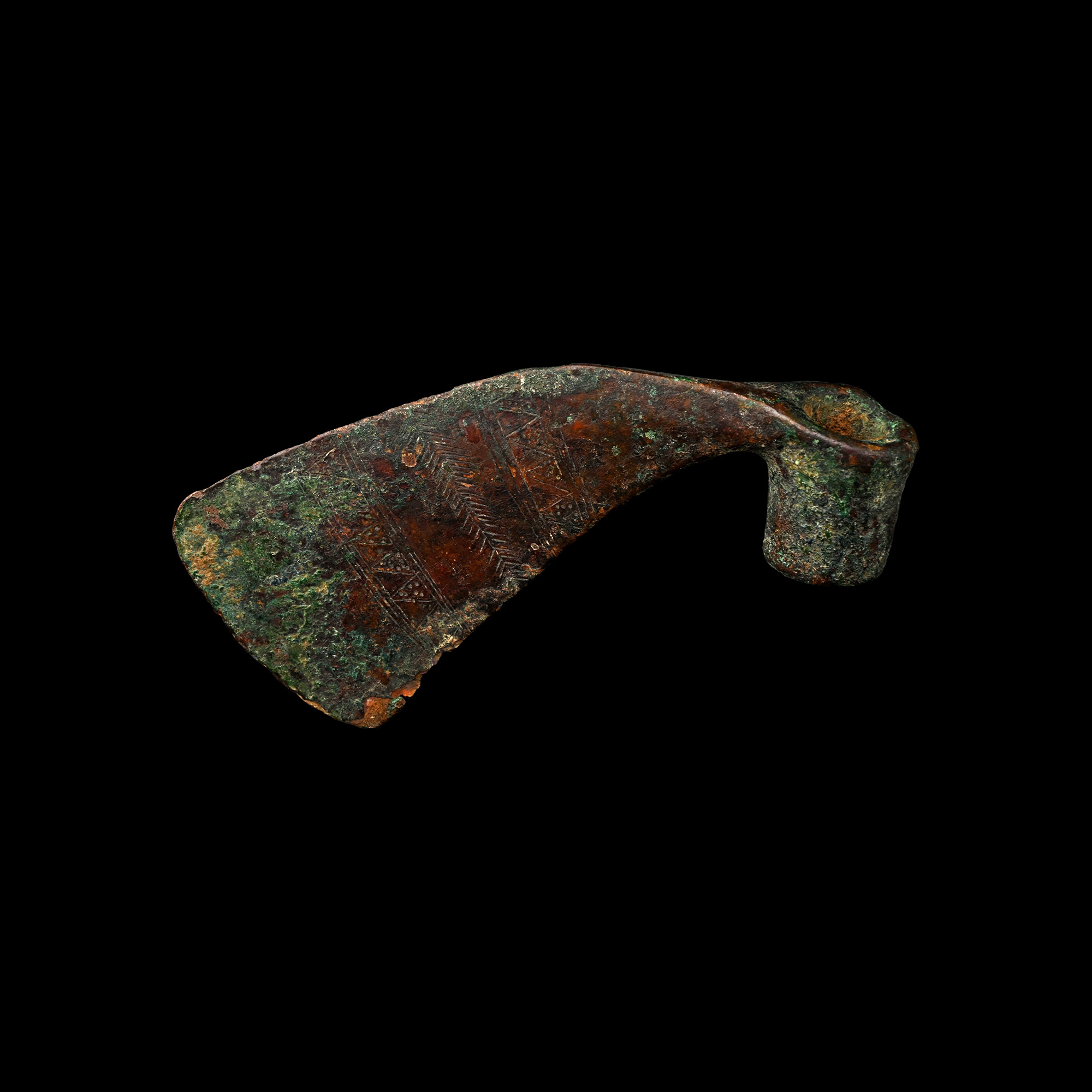
Bactrian Bronze Decorated Socketted Axehead
BRONZE AGE, 2ND MILLENNIUM B.C.
4 1/2 in. (104 grams, 11.6 cm).
Comprising a short tubular socket with flared neck to the angled blade; incised herringbone ornament to both faces flanked by pounced triangular panels in bilinear bands,
ProvenanceFrom an old English collection formed since 1960.
LiteratureCf. Curtis, J., Early Mesopotamian and Iran, London, 1993, fig.7, p.80 for a similar example.
CONDITIONTimeLine Auctions follows a vetting process to ensure the authenticity and legality of all items, reinforcing our commitment to integrity and responsible trading. Each antiquity, antique, and coin lot undergoes thorough examination by a vetting committee of at least ten external specialists, professional trade association members, scientists, and archaeologists: Our Vetting Process
AUCTIONS:
TimeLine is a leading auction house specialising in antiquities, ancient art, collectables, natural history, coins, medals, and books. Our auctions offer museums, collectors, historians, and enthusiasts the opportunity to acquire unique and historically significant pieces.
-
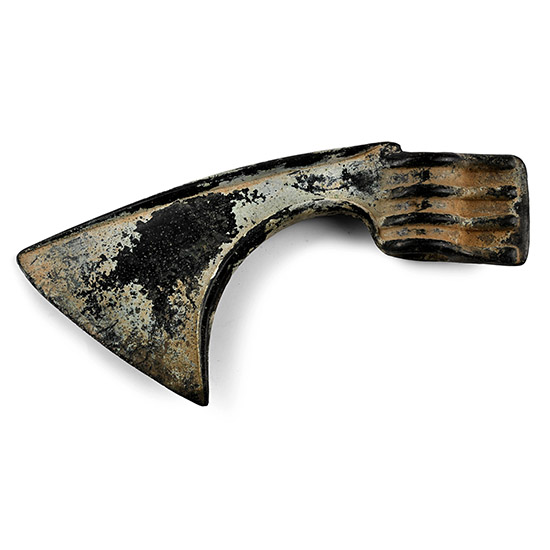
Luristan Bronze Axehead
12th-11th century B.C.Estimate: £250 - 350 (+bp*)
Opening Bid: £133
A spike-butted axehead with a short cylindrical socket with four furrowed ribs leading to four short spikes, blade with curved upper and lower edges and a convex cutting edge. 390 grams, 22 cm
Ex Abelita family collection, 1980s-2000s.
It is difficult to know whether this type of axe, given its high decoration in some specimens, was used as a weapon or was a symbol of rank and prestige, employed for ceremonial or cult purposes. However, considering that the concept of parade weapons did not exist in the surrounding areas in Antiquity, these axes were most probably used for both military and ceremonial purposes. -
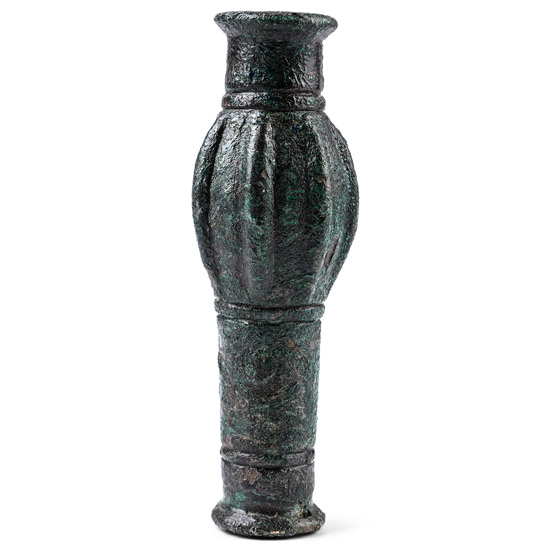
Western Asiatic Bronze Macehead
2nd-1st millennium B.C.Estimate: £200 - 300 (+bp*)
Opening Bid: £100
Comprising a cylindrical shaft with flared mouth, rounded flanges around the bulb, and horizontal stepped collars. 263 grams, 13.4 cm
Ex Abelita family collection, 1980s-2000s. -
.jpg)
Luristan Bronze Dagger
13th century B.C.Sold for (Inc. bp): £208
With a lentoid-section blade, tongue-shaped in plan, with an integral tapering hilt with flared finial, lateral flanges to accept a panel of bone to each face forming the grip. 185 grams, 32.5 cm
Ex Abelita family collection, 1980s-2000s.
The art of Luristan can be described as the art of nomadic herdsmen and horsemen with an emphasis on the crafting of small, easily portable objects, among these a great number of bronze weapons. The rich and noble aristocrats of the Luristan, Elamites, Hurrians, Lullubians, Kutians, and Kassites went to battle splendidly equipped and wore magnificent bronze armour, using maces, spears and daggers as offensive weapons, alongside spears, bows and arrows.
