
Loading, please wait...
LOT 1546
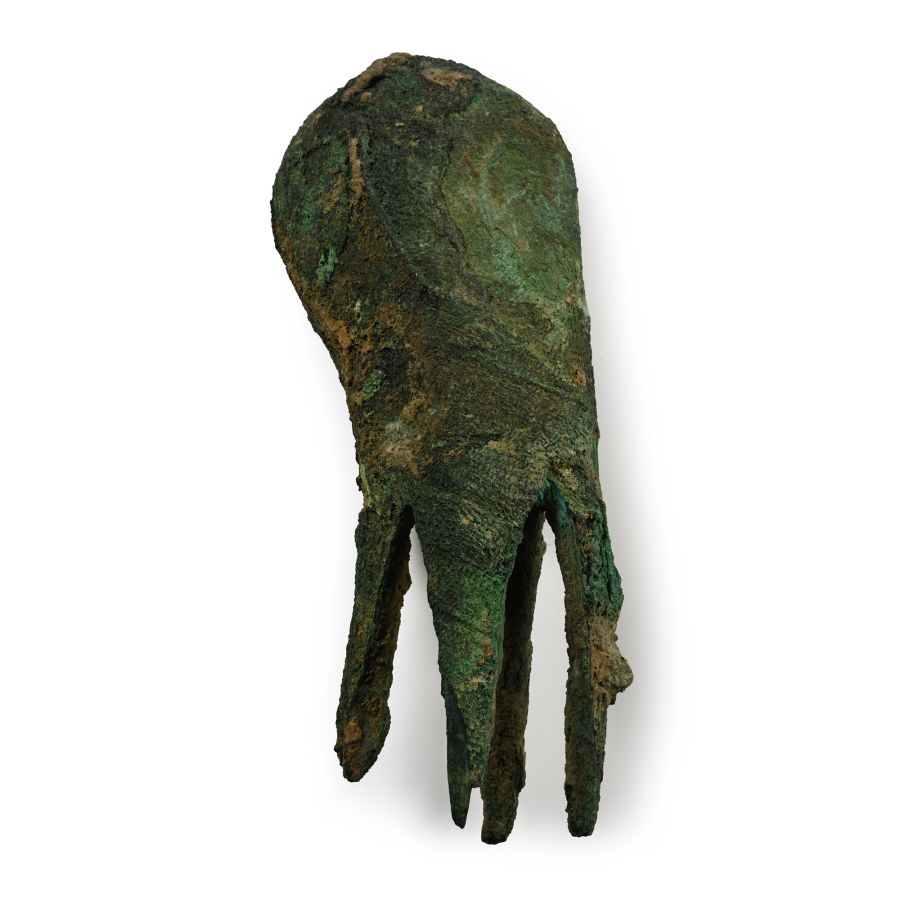
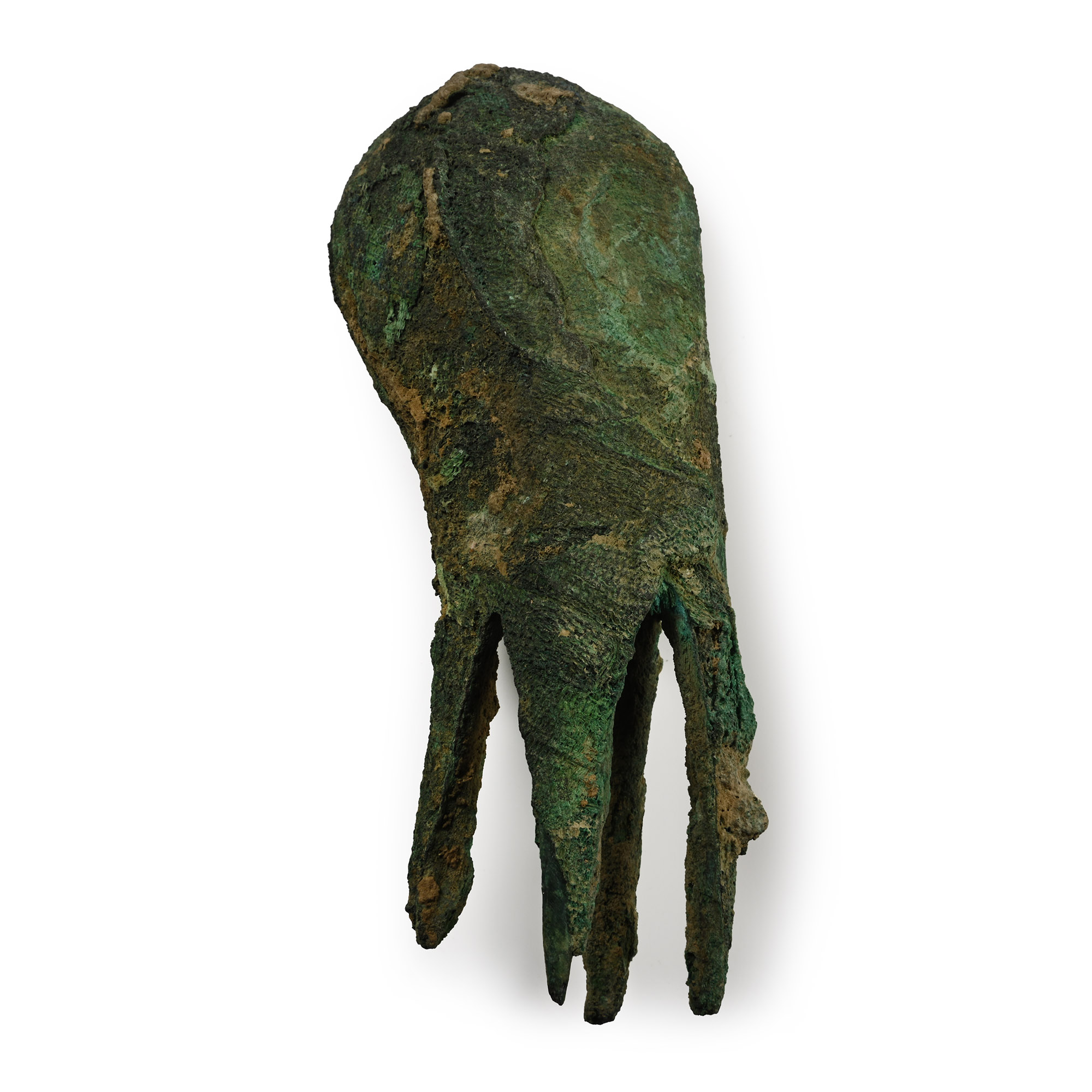
Bactrian Bronze Claw Axehead-Mace
2ND-1ST MILLENNIUM B.C.
4 1/4 in. (190 grams, 10.9 cm).
Egg-shaped with spiked sleeves or prongs, the top of the weapon with a narrow edge.
ProvenanceAcquired on the UK art market before 2000.
Property of an Essex, UK, gentleman.
This lot is accompanied by an illustrated lot declaration signed by the Head of the Antiquities Department, Dr Raffaele D’Amato.
The 'claw mace' was an enigmatic ancient bronze weapon from the Bronze Age Near East. The hollow bulbous head was trailed by tines of varying lengths. It is believed that it was affixed over a wooden shaft and used like a club in combat, and not necessarily used as ceremonial weapon. The knife edge bulb end could have broken bones and proven to be a formidable striking weapon requiring no skill to wield. The tines would have not only been decorative, but have served to add strength below the striking end to prevent breakage. In battle, maces were often used by commanders to display rank when giving orders in battle and leading soldiers, inspiring leadership and power. Egg-shaped with spiked sleeves or prongs, the top of the weapon with a narrow edge, the sleeves with small internal tangs for mounting.
CONDITIONTimeLine Auctions follows a vetting process to ensure the authenticity and legality of all items, reinforcing our commitment to integrity and responsible trading. Each antiquity, antique, and coin lot undergoes thorough examination by a vetting committee of at least ten external specialists, professional trade association members, scientists, and archaeologists: Our Vetting Process
AUCTIONS:
TimeLine is a leading auction house specialising in antiquities, ancient art, collectables, natural history, coins, medals, and books. Our auctions offer museums, collectors, historians, and enthusiasts the opportunity to acquire unique and historically significant pieces.
-
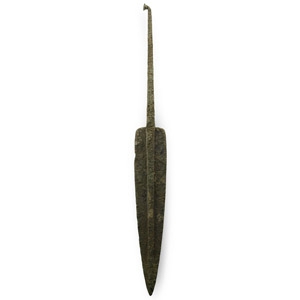
Marlik Bronze Spearhead
14th-10th century B.C.Sold for (Inc. bp): £195
Elongated tapering triangular blade, with broad midrib and squared shoulders slightly rounded at the corners, rectangular sectioned tang with a bent button end. 387 grams, 49 cm
Acquired 1980-2015. Ex Abelita family collection. This lot is accompanied by an illustrated lot declaration signed by the Head of the Antiquities Department, Dr Raffaele D’Amato.
The spearhead belongs to the sub-type A of the spearhead classification of Khorasani. Similar specimens, now in the National Museum of Iran, Teheran, were excavated in the Royal Cemetery of Marlik and found in tomb 5 trench 8 of that Necropolis. -
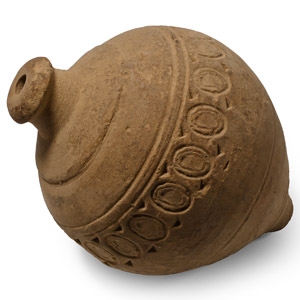
Byzantine 'Greek Fire' Ceramic Fire Bomb or Hand Grenade
9th-11th century A.D.Sold for (Inc. bp): £124
A piriform missile decorated with a band of annulets and chevrons, domed filler hole, intended to be filled with explosive liquid and wick, used as a hand grenade. 406 grams, 12.2 cm
From an important specialist collection, London, UK, 1990s onwards. Accompanied by an academic paper by military specialist Dr Raffaele D'Amato, dated 15 July 2019 and titled 'Eastern Roman Empire - Greek Fire Bomb or Hand Grenade (μεσαίον kακάβιον) 9th-11th century AD'. This lot is accompanied by an illustrated lot declaration signed by the Head of the Antiquities Department, Dr Raffaele D’Amato. -
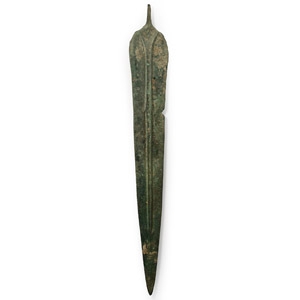
Luristan Bronze Short Sword with Blood Channels
2nd-1st millennium B.C.Sold for (Inc. bp): £390
A two-edged leaf-shaped blade with short rectangular tang, corrugated midrib extending almost to the tip and flared at the shoulder. 342 grams, 48 cm
Acquired 1980-2015. Ex Abelita family collection. This lot is accompanied by an illustrated lot declaration signed by the Head of the Antiquities Department, Dr Raffaele D’Amato.
Luristan was hardly an ethnic or political entity, but the people of Luri had relations through warfare and trade with Sumerians, Lullubi, Assyrians, Babylonians and Elamites in a large time period, spanning from the 3rd to the 2nd millennium B.C. The ruling elites of warrior horsemen were buried in the graves with their weapons and horses.
