
Loading, please wait...
LOT 1624
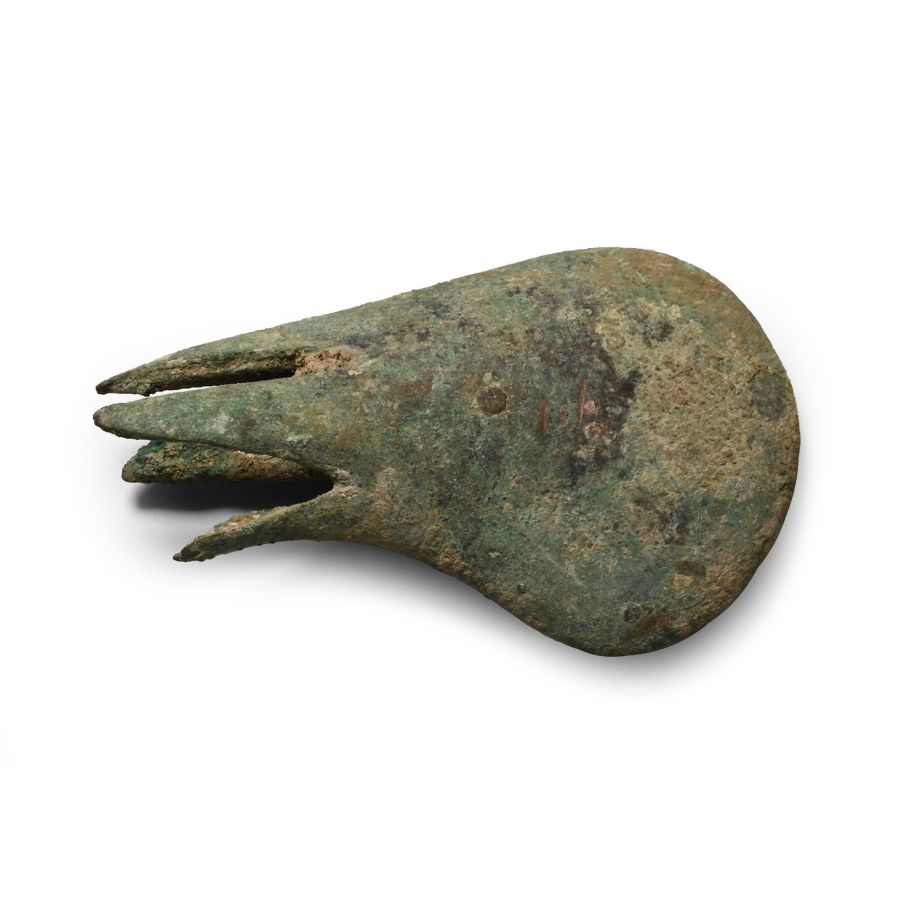
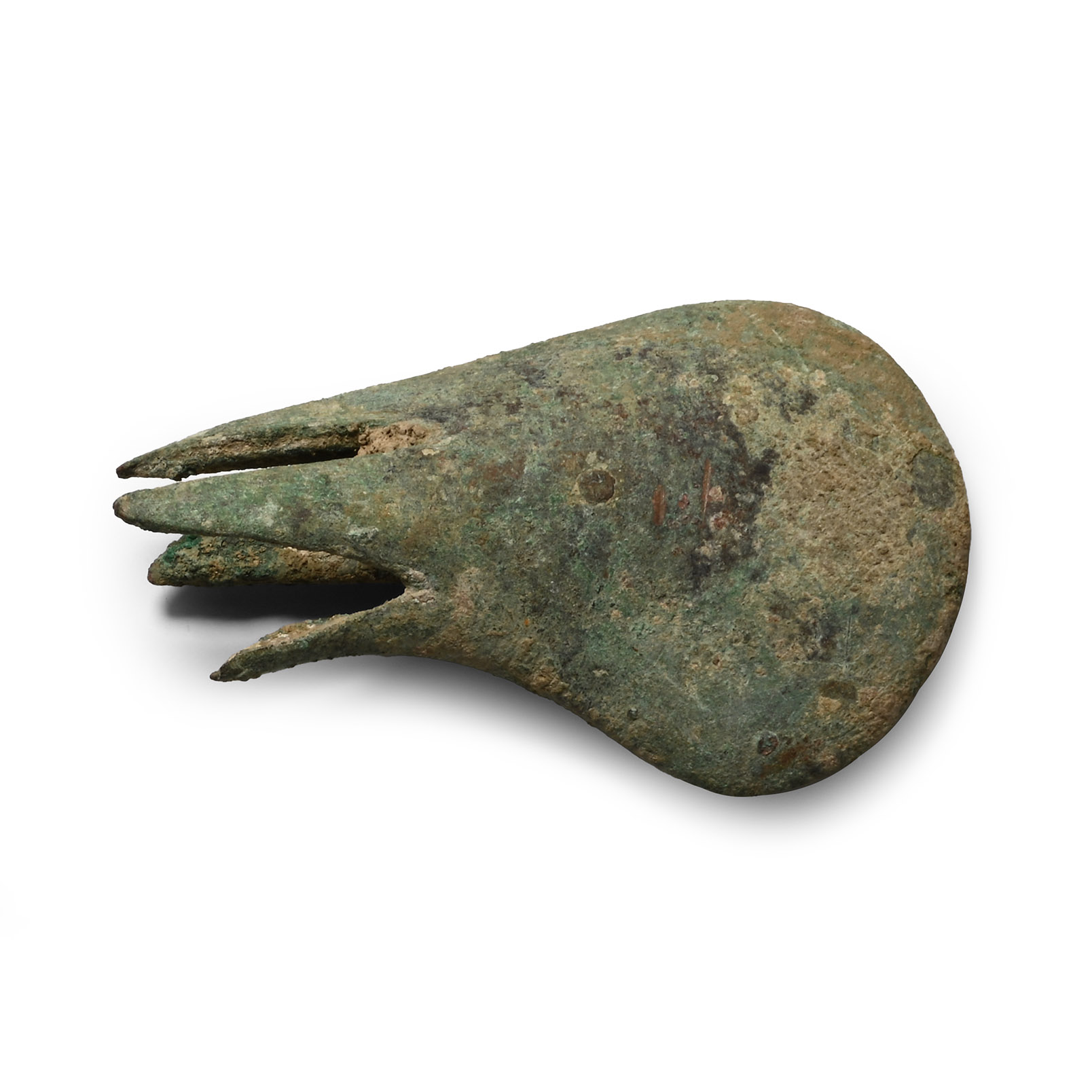
Bactrian Bronze Ceremonial Clawed Macehead
2ND-1ST MILLENNIUM B.C.
2 7/8 in. (89 grams, 73 mm).
Comma-shaped in plan with a lentoid-section head and clawed socket. [No Reserve]
ProvenanceAcquired 1980-2015.
Ex Abelita family collection.
This lot is accompanied by an illustrated lot declaration signed by the Head of the Antiquities Department, Dr Raffaele D’Amato.
The 'claw mace' was an enigmatic ancient bronze weapon from the Bronze Age Near East. The hollow bulbous head was trailed by tines of varying lengths. It is believed that it was affixed over a wooden shaft and used like a club in combat, and not necessarily used as ceremonial weapon. The knife edge bulb end could have broken bones and proven to be a formidable striking weapon requiring no skill to wield. The tines would have not only been decorative, but have served to add strength below the striking end to prevent breakage. In battle, maces were often used by commanders to display rank when giving orders in battle and leading soldiers, inspiring leadership and power.
CONDITIONTimeLine Auctions follows a vetting process to ensure the authenticity and legality of all items, reinforcing our commitment to integrity and responsible trading. Each antiquity, antique, and coin lot undergoes thorough examination by a vetting committee of at least ten external specialists, professional trade association members, scientists, and archaeologists: Our Vetting Process
AUCTIONS:
TimeLine is a leading auction house specialising in antiquities, ancient art, collectables, natural history, coins, medals, and books. Our auctions offer museums, collectors, historians, and enthusiasts the opportunity to acquire unique and historically significant pieces.
-
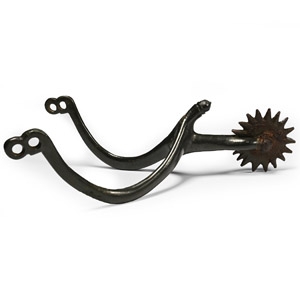
Medieval Bronze Spur with Rowel
12th-14th century A.D.Sold for (Inc. bp): £455
With D-section curved arms with figure-of-eight finials, long spur with a rowel and a shorter spur below. 126 grams, 15.4 cm
From the private collection of a London gentleman, from his grandfather's collection formed before the early 1970s. This lot is accompanied by an illustrated lot declaration signed by the Head of the Antiquities Department, Dr Raffaele D’Amato. -
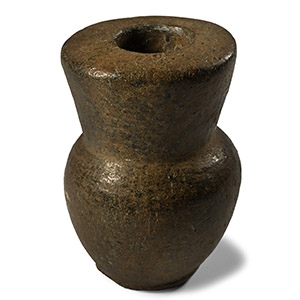
Anglo-Zulu War 'Battle of Khambula' Carved Stone Smoking Pipe Head
29 March 1879 A.D.Sold for (Inc. bp): £117
Columnar pipe bowl with waisted profile. 236 grams, 74 mm
Found by Zulu natives, Khambula, South Africa, 1990s-early 2000s. Ian Wilkinson collection, Nottinghamshire, UK, formed since 1985. This lot is accompanied by an illustrated lot declaration signed by the Head of the Antiquities Department, Dr Raffaele D’Amato.
Following defeats by the Zulu army at Isandlwana and Hiobane, the British were desperate for a victory, which they secured at Khambula. -
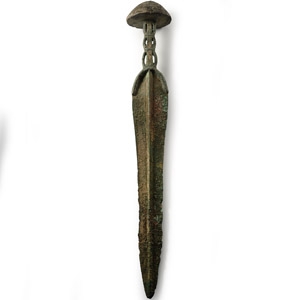
Luristan Bronze Sword
Late 2nd millennium B.C.Sold for (Inc. bp): £598
Later hilt with mushroom-shaped pommel, openwork grip with 'chain'-shaped pattern, crescentic guard, long sloping blade with rectangular-section mid-ridge. 1.05 kg, 55.2 cm
Acquired 1980-2015. Ex Abelita family collection. This lot is accompanied by an illustrated lot declaration signed by the Head of the Antiquities Department, Dr Raffaele D’Amato.
These bronze swords were characterised by a solid-cast hilt with penannular guard, a grip equipped with raised shaped figures and a conical, hollow-cast mushroom pommel. The blade had a very pronounced shaped central midrib. In the complete specimens the hilt was usually cast with the blade.
