
Loading, please wait...
LOT 1100
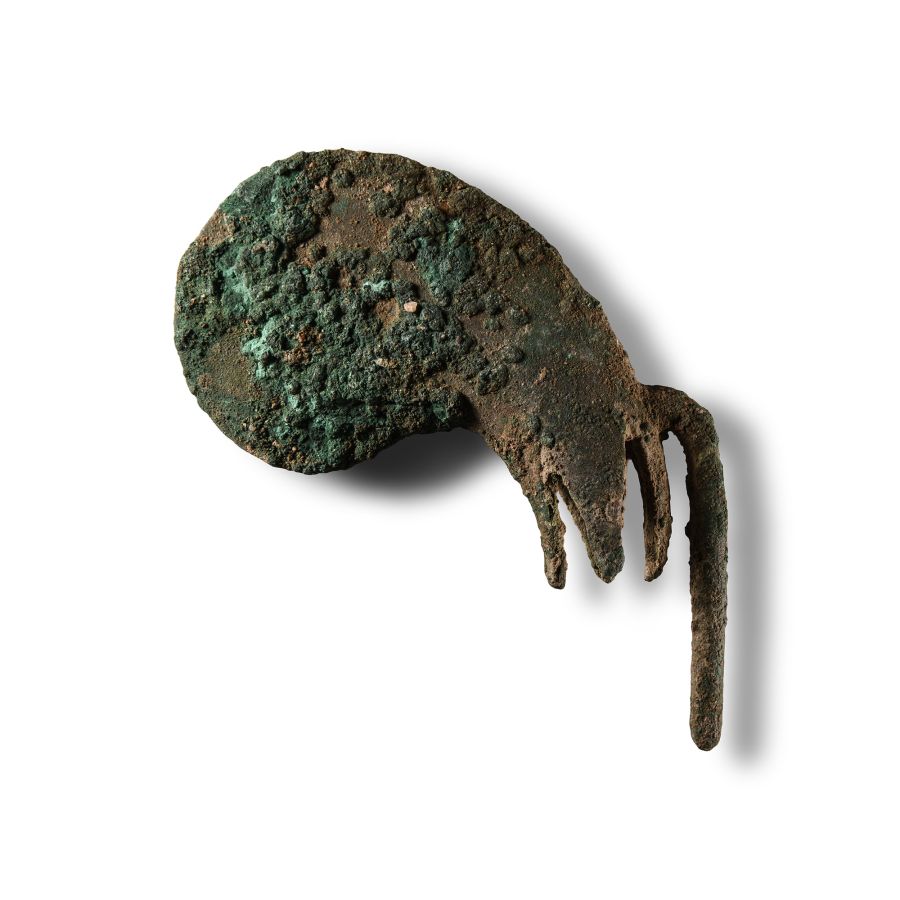
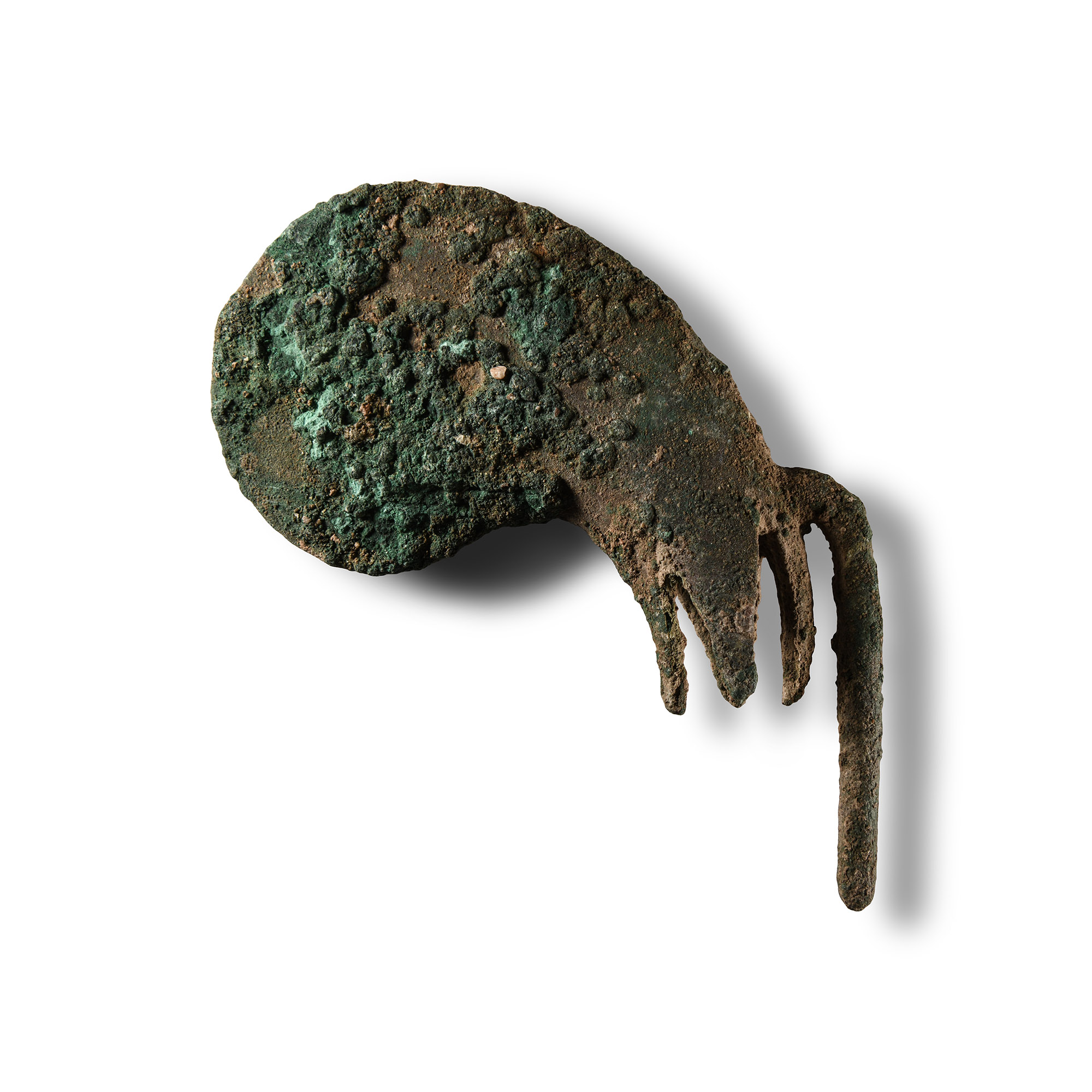
Bactrian Bronze Ceremonial Claw Mace
2ND-1ST MILLENNIUM B.C.
5 1/2 in. (237 grams, 14 cm).
Egg-shaped with spiked sleeves or prongs, the top of the weapon with narrow edge, the sleeves with small internal tangs for mounting.
ProvenanceAcquired 1980-2015.
Ex Abelita family collection.
The 'claw mace' was an enigmatic ancient bronze weapon from the Bronze Age Near East. The hollow bulbous head was trailed by tines of varying lengths. It is believed that it was affixed over a wooden shaft and used like a club in combat, and not necessarily used as ceremonial weapon. The knife edge bulb end could have broken bones and proven to be a formidable striking weapon requiring no skill to wield. The tines would have not only been decorative, but have served to add strength below the striking end to prevent breakage. In battle, maces were often used by commanders to display rank when giving orders in battle and leading soldiers, inspiring leadership and power.
CONDITIONTimeLine Auctions follows a vetting process to ensure the authenticity and legality of all items, reinforcing our commitment to integrity and responsible trading. Each antiquity, antique, and coin lot undergoes thorough examination by a vetting committee of at least ten external specialists, professional trade association members, scientists, and archaeologists: Our Vetting Process
AUCTIONS:
TimeLine is a leading auction house specialising in antiquities, ancient art, collectables, natural history, coins, medals, and books. Our auctions offer museums, collectors, historians, and enthusiasts the opportunity to acquire unique and historically significant pieces.
-
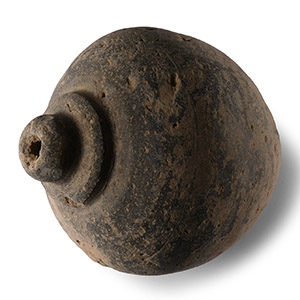
Byzantine 'Greek Fire' Ceramic Fire Bomb or Hand Grenade
Circa 11th-14th century A.D.Sold for (Inc. bp): £143
With a piriform body and domed mouth; intended to be filled with explosive liquid and wick, used as a hand grenade. 603 grams, 11.8 cm high
Acquired 1980-2015. Ex Abelita family collection. Accompanied by an academic paper by military specialist Dr Raffaele D'Amato, dated 15 July 2019 and titled 'Eastern Roman Empire - Greek Fire Bomb or Hand Grenade (μεσαίον kακάβιον) 9th-11th century AD'.
Apart from the use of siphons or manual flame-throwers called cheirosiphona, special Roman soldiers employed terracotta grenades, in the form of small jars, abundantly evidenced in archaeological excavations. Such were the γανωτα, vessels (sometimes also in bronze) used for Greek fire. They were called μεσαία kακαβιά or κυτροκακάβια where the former had a bulbous shape and the latter a more cylindrical form. -
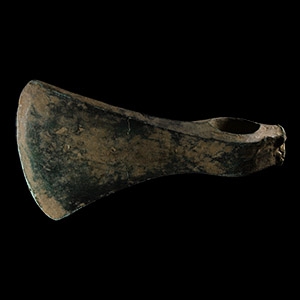
Large Western Asiatic Socketted Bronze Axehead
Late 2nd millennium B.C.Sold for (Inc. bp): £234
Composed of flared cheeks, convex cutting edge and lentoid-shaped socket with raised circumferential rib and butt, with a vertical rib to the rear. 1.16 kg, 19.2 cm
Acquired 1980-2015. Ex Abelita family collection.
In the 2nd millennium B.C., in the Caucasus area, variants of axes with a curved horizontal blade and a tubular eye developed. The simplest variants of these types were borrowed through the north of Ciscaucasia by the inhabitants of the Eurasian steppes. In the steppes, war axes became, around the middle of the 2nd millennium B.C., the most powerful bronze weapons, spreading far to the east. -
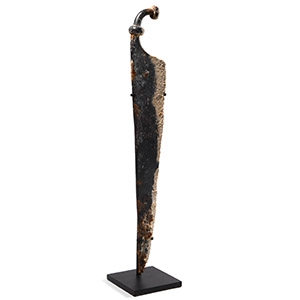
Iron Age Celtic La Tene Dagger
1st century B.C.-1st century A.D.Sold for (Inc. bp): £975
Featuring a gently curved single-edged iron blade and one-sided fuller, curved handle with knot pommel; mounted on a custom-made display stand. 525 grams total, 35 cm high including stand
Dutch art market. Private collection of K.S., Cologne, Germany, acquired 1996.
One of the military insignia of a Celtic warrior was the war-knife, usually between 33 and 35 cm long. For example, in the collection of Celtic military equipment from Galish-Lovachka, the archaeologists have found a short sword with an X-shaped handle (l = 41 cm), two middle La Tène swords (72.5 and 75 cm long), 12 large curved knives, 27 spearheads, two javelin heads, 14 arrowheads, and nine iron chain belts for hanging a sword. The war-knife was also used for hunting, as a spare weapon, or to cut the throat of an enemy in a surprise attack.
