
Loading, please wait...
LOT 0296
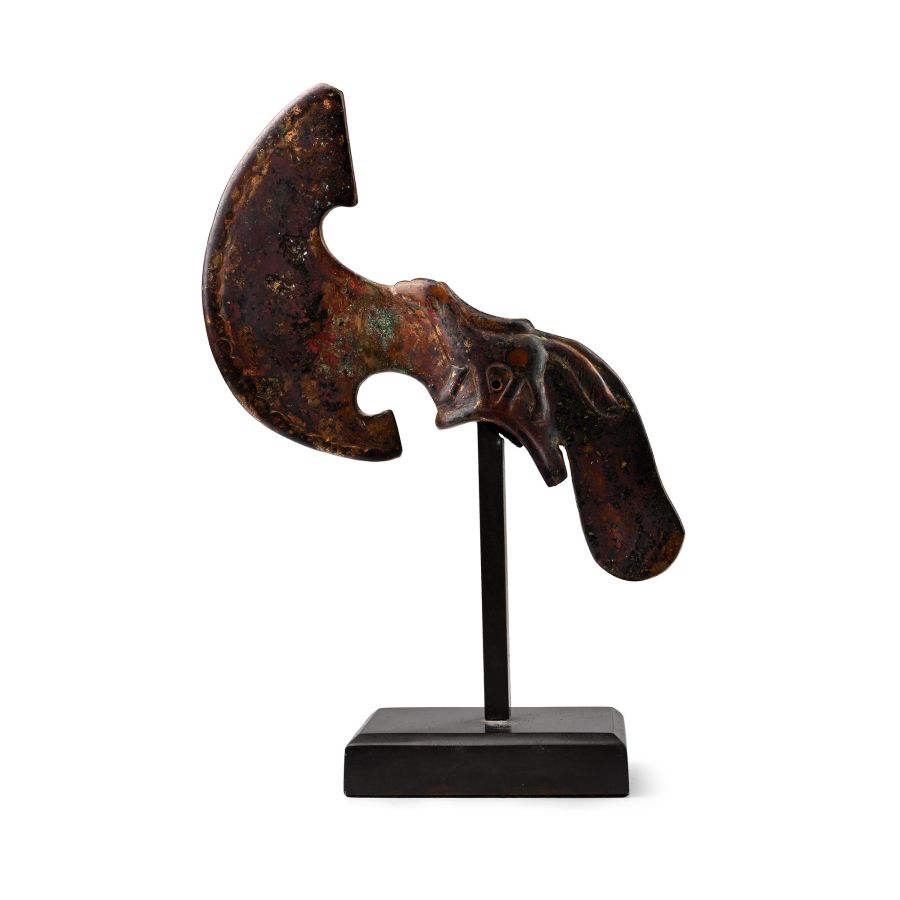
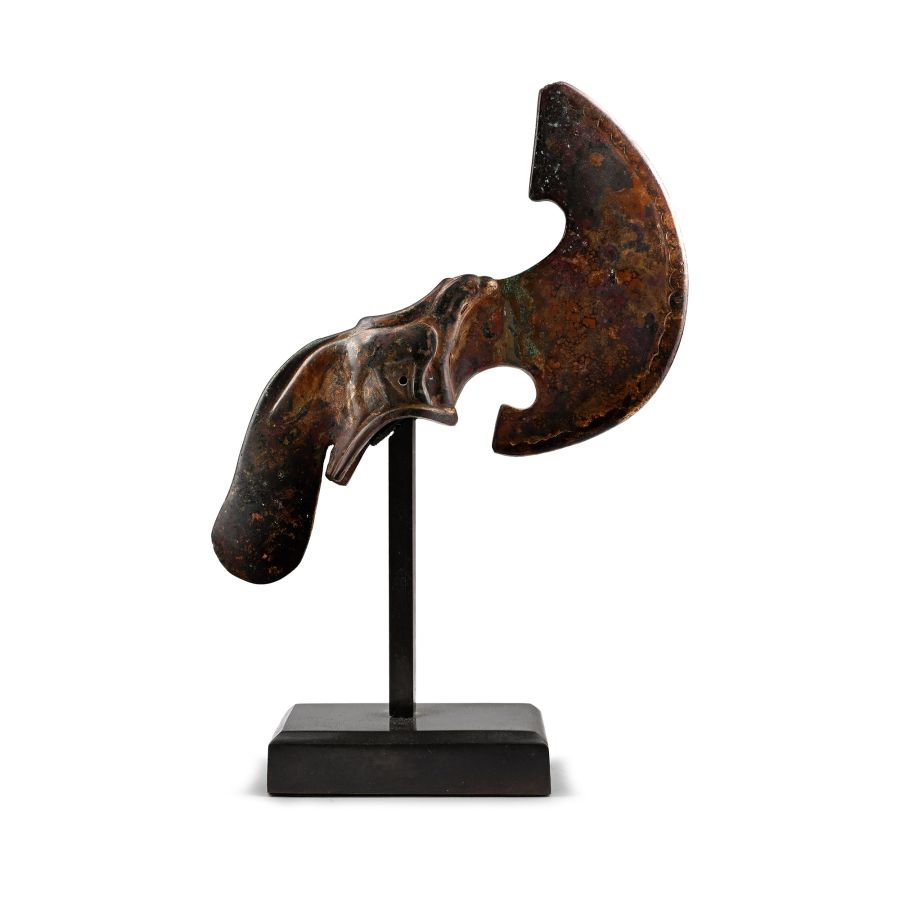
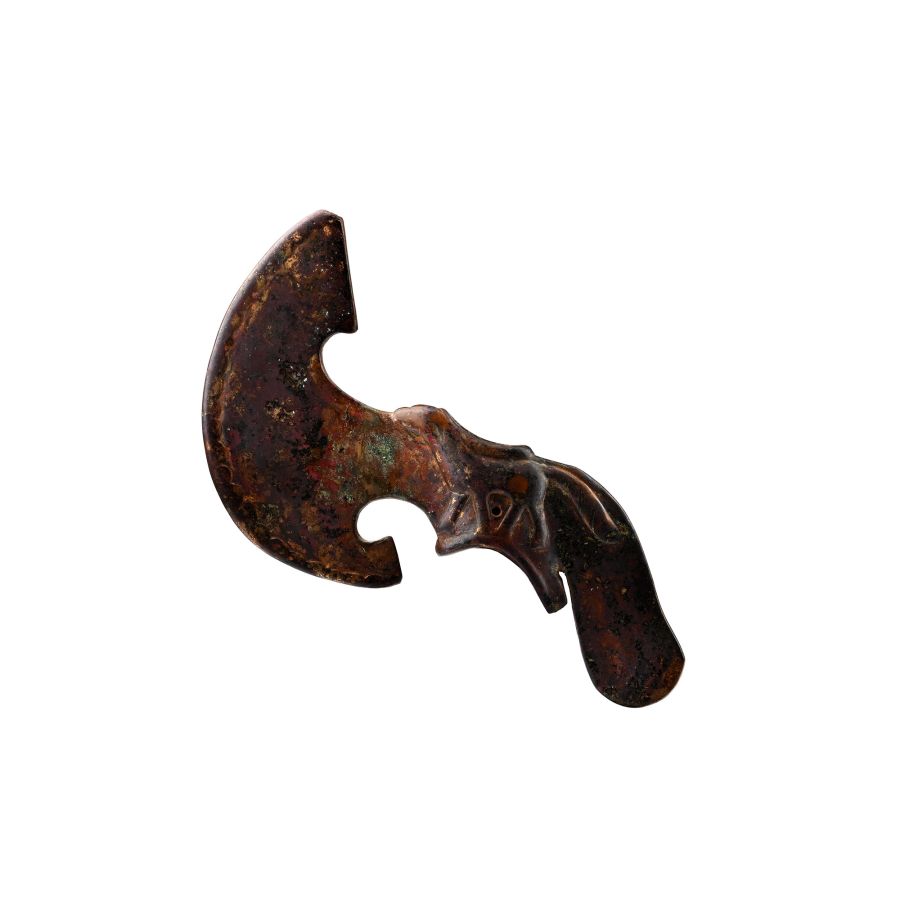
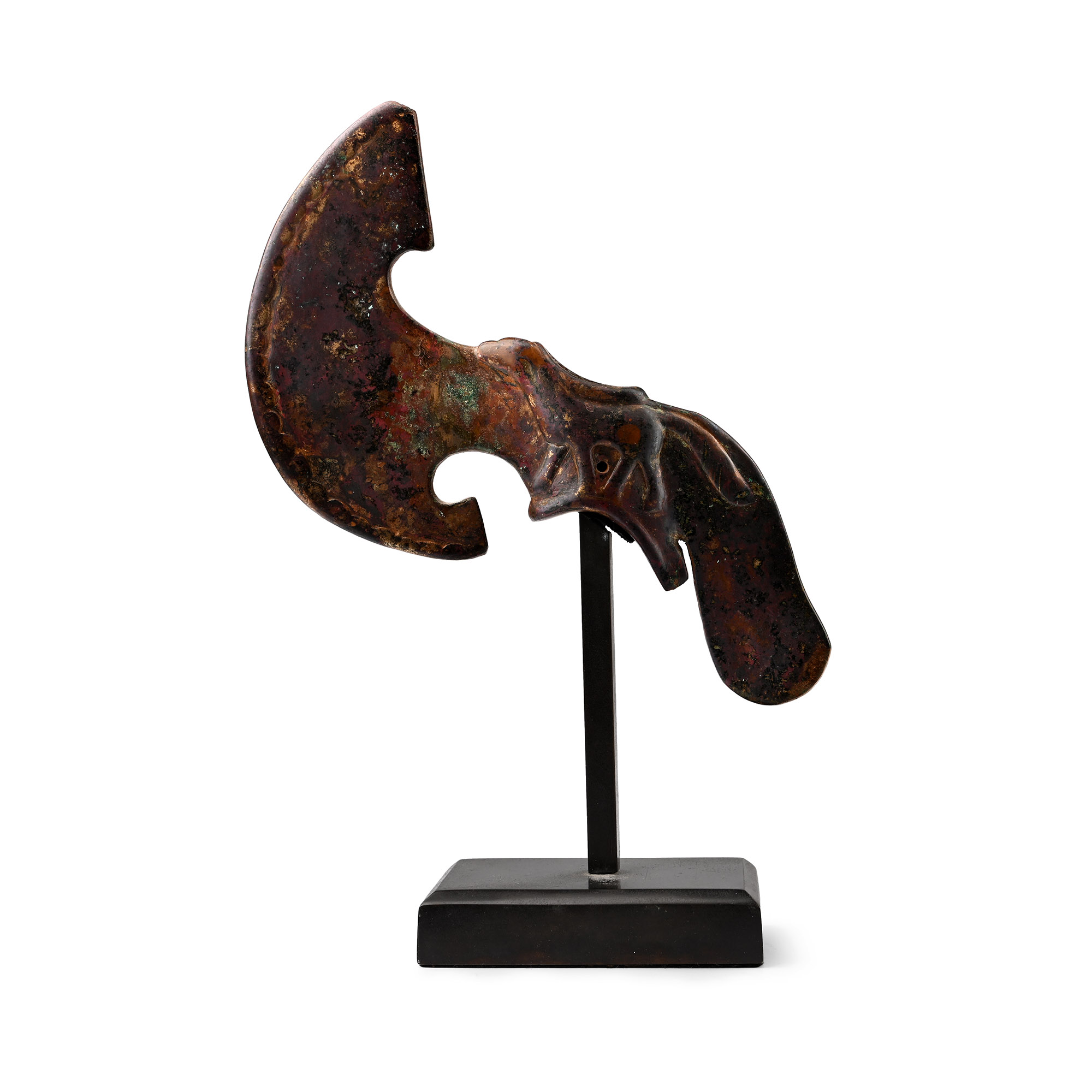
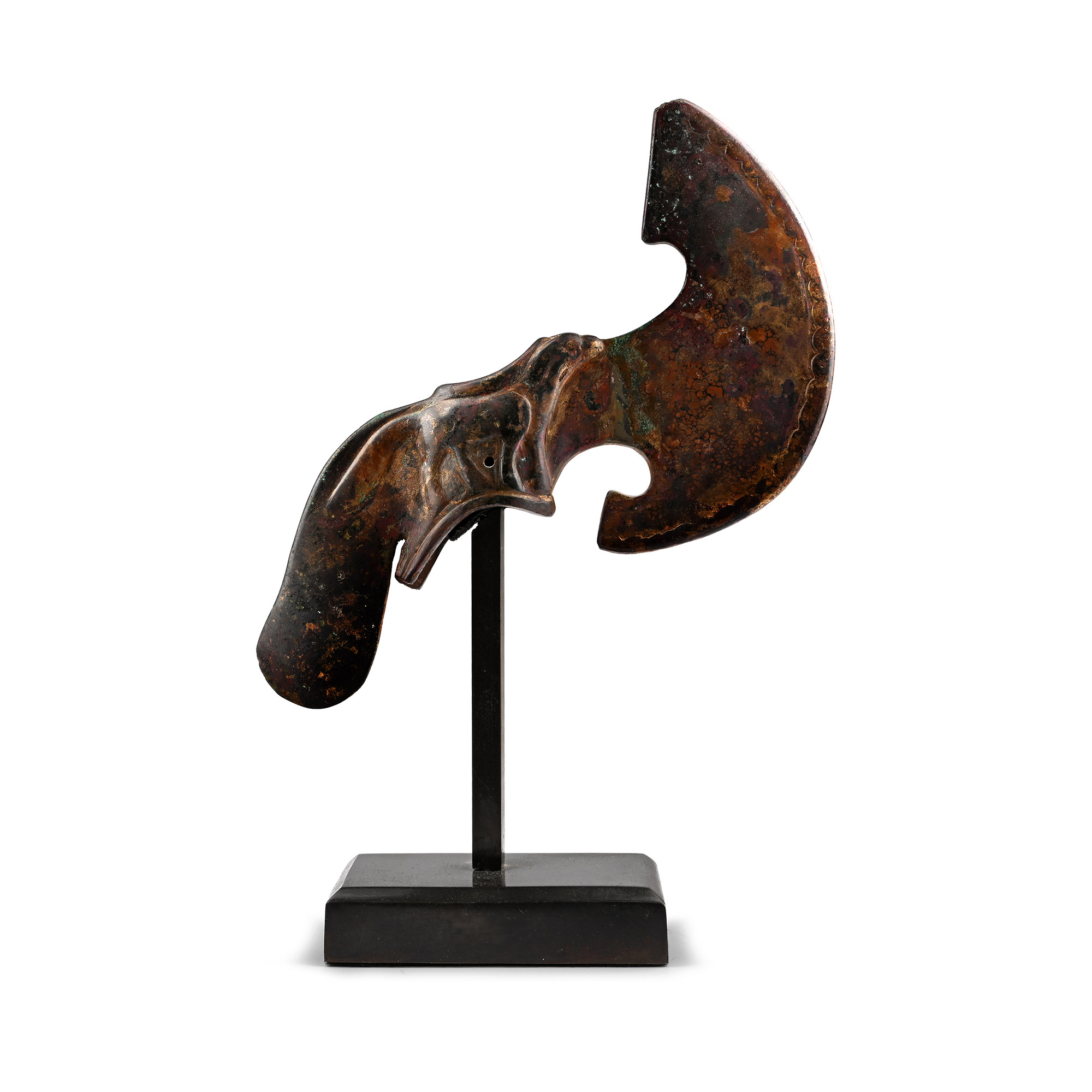
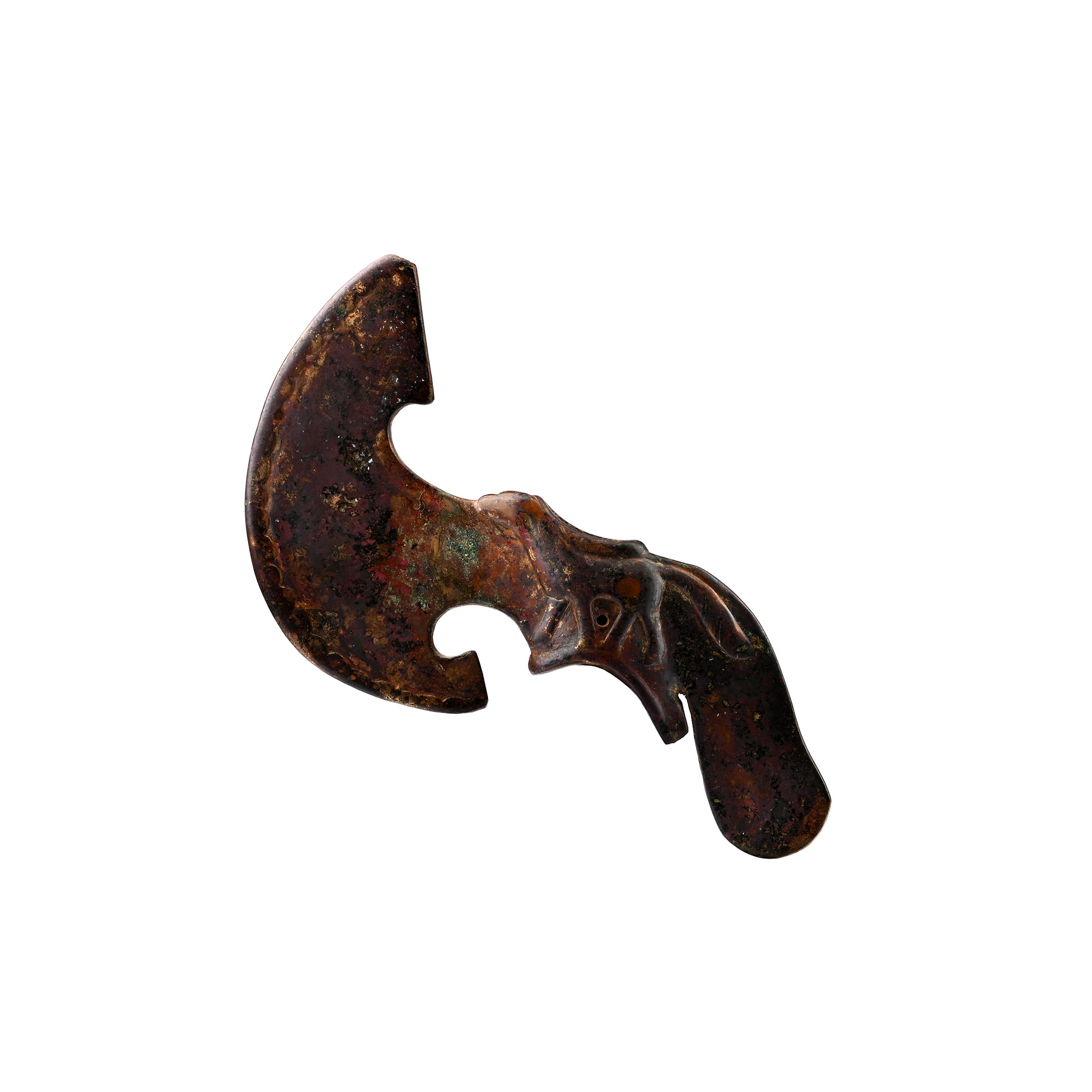
Bactrian Bronze Animal Axehead
13TH-12TH CENTURY B.C.
8 5/8 in. (780 grams total, 22 cm including stand).
Featuring a low-relief depiction of a hunting dog on each side of the socket, lobed rear plate and broad, D-shaped blade with a raised, dentilled panel along the cutting edge; mounted on a custom-made stand.
ProvenancePrivate family collection, acquired in the 1970s.
with a London gallery.
with TimeLine Auctions, 24 February 2018, no.341.
Private collection, London, UK.
Accompanied by an academic report by Dr Raffaele D'Amato.
This lot has been checked against the Interpol Database of stolen works of art and is accompanied by a search certificate number no.12841-240646.
This lot has been cleared against the Art Loss Register database, and is accompanied by an illustrated lot declaration signed by the Head of the Antiquities Department, Dr Raffaele D'Amato.
Cf. Curtis, J., Early Mesopotamian and Iran, London, 1993, fig.7, p.80; Mahboubian, H., Art of Ancient Iran, London, 1997, figs.14-15; Gorelik, M., Weapons of Ancient East, IV millennium BC-IV century BC, Saint Petersburg, 2003, in Russian, see pl.XXI, no.69, from Luristan, for similar; Gernez, G., L’armament en métal au Proche et Moyen-Orient: des origines a 1750 av. J.C., Paris, 2007, fig.2.15, subtype H 2.I.b.
FootnotesMost of these axes are believed to have originated in Bactria, but some objects come from well documented contexts in Margiane (Gonur), Lut (Shahdad) and Kermanshah (Khinaman). According to Gernez they were made for ceremonial use.
CONDITIONTimeLine Auctions follows a vetting process to ensure the authenticity and legality of all items, reinforcing our commitment to integrity and responsible trading. Each antiquity, antique, and coin lot undergoes thorough examination by a vetting committee of at least ten external specialists, professional trade association members, scientists, and archaeologists: Our Vetting Process
AUCTIONS:
TimeLine is a leading auction house specialising in antiquities, ancient art, collectables, natural history, coins, medals, and books. Our auctions offer museums, collectors, historians, and enthusiasts the opportunity to acquire unique and historically significant pieces.
LOT 0296
Bactrian Bronze Animal Axehead
Estimate £1,800 - 2,400€2,090 - 2,780 (for guidance only)$2,430 - 3,240 (for guidance only)
-
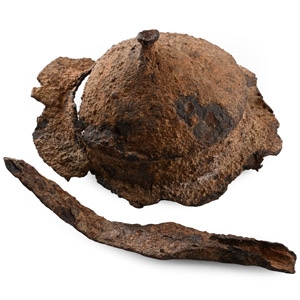
Anglo-Saxon Iron 'Battle Damaged' Shield Boss and Spear
Circa 6th century A.D.Sold for (Inc. bp): £221
Comprising: ferrous shield boss of Härke & Dickinson's Type 3 with broad flange, deep sidewall with carination and domed cone; flared apex stud; traces of fixing rivets in underside of flange; spearhead of Swanton's Type E2, lenticular in section with elongated lozengiform profile, split socket. 437 grams total, 17-17.5 cm
Found East Anglia, UK. This lot is accompanied by an illustrated lot declaration signed by the Head of the Antiquities Department, Dr Raffaele D'Amato.
The distortion to the shield boss appears to have been produced by an impact blow from a sturdy, wedge-section blade, probably an axe. -
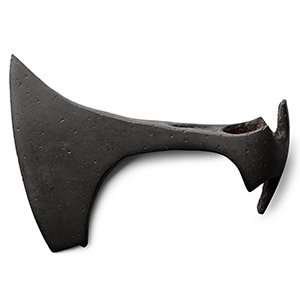
Viking Age Iron Long Bearded Axehead
10th-11th century A.D.Sold for (Inc. bp): £936
Finely curved broad blade with chin to the lower edge, rounded socket with lateral triangular extensions and a rectangular extension to the rear; restored and conserved. 648 grams, 20 cm
From the family collection of a South East London collector; formerly acquired in the late 1950s. This lot is accompanied by an illustrated lot declaration signed by the Head of the Antiquities Department, Dr Raffaele D'Amato.
This type of bearded axe seems to correspond to the E2 category of the Viking axe classification, but also has affinity with the Slavic type of axes Y. Usually these bearded axeheads (skeggöks) had a longer edge, designed to split tree trunks into planks and beams. Some of the bearded axes were known as halfÞynna öx; the neck on such a 'half thin axe' was thinly forged, to make it lighter. -
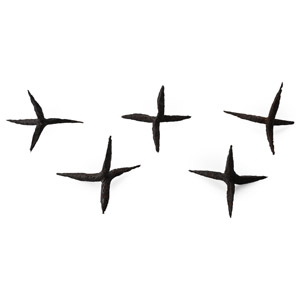
Medieval Iron Anti-Cavalry Caltrop Collection
Circa 13th-14th century A.D.Sold for (Inc. bp): £169
Each hand-forged with square-section spikes, designed so that however the item falls, one spike is always vertical. 277 grams total, 78-99 mm
From the private collection of a London gentleman, from his grandfather's collection formed before the early 1970s. This lot is accompanied by an illustrated lot declaration signed by the Head of the Antiquities Department, Dr Raffaele D'Amato.
