
Loading, please wait...
LOT 1505
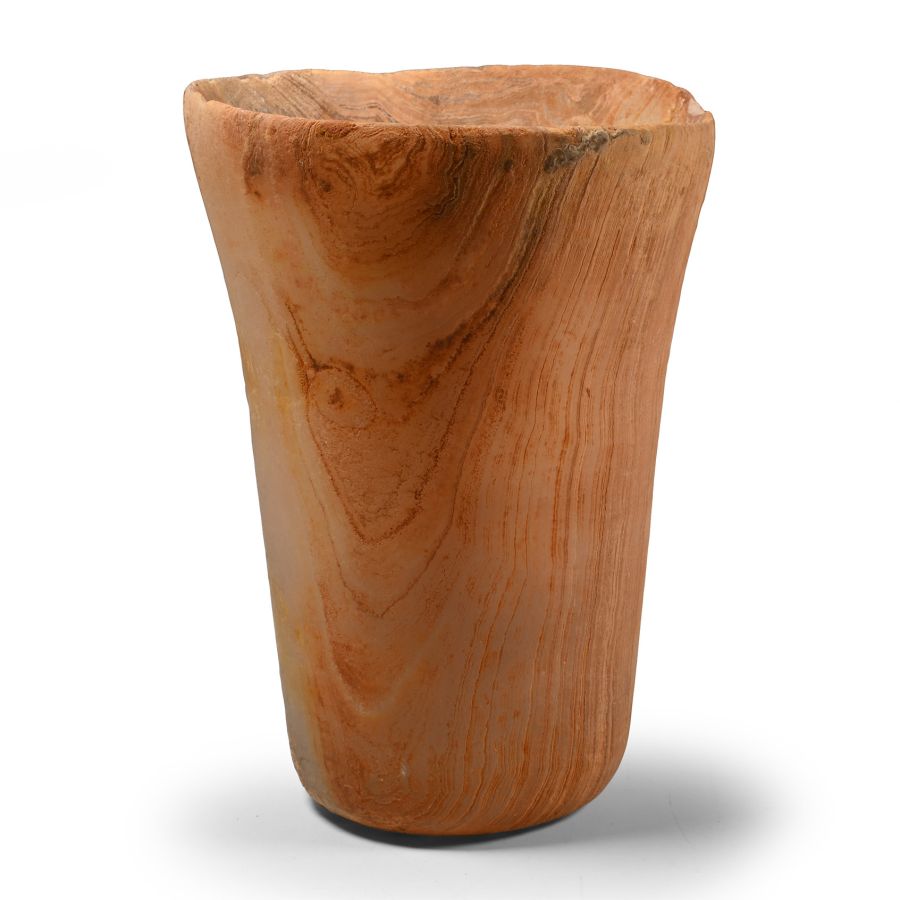
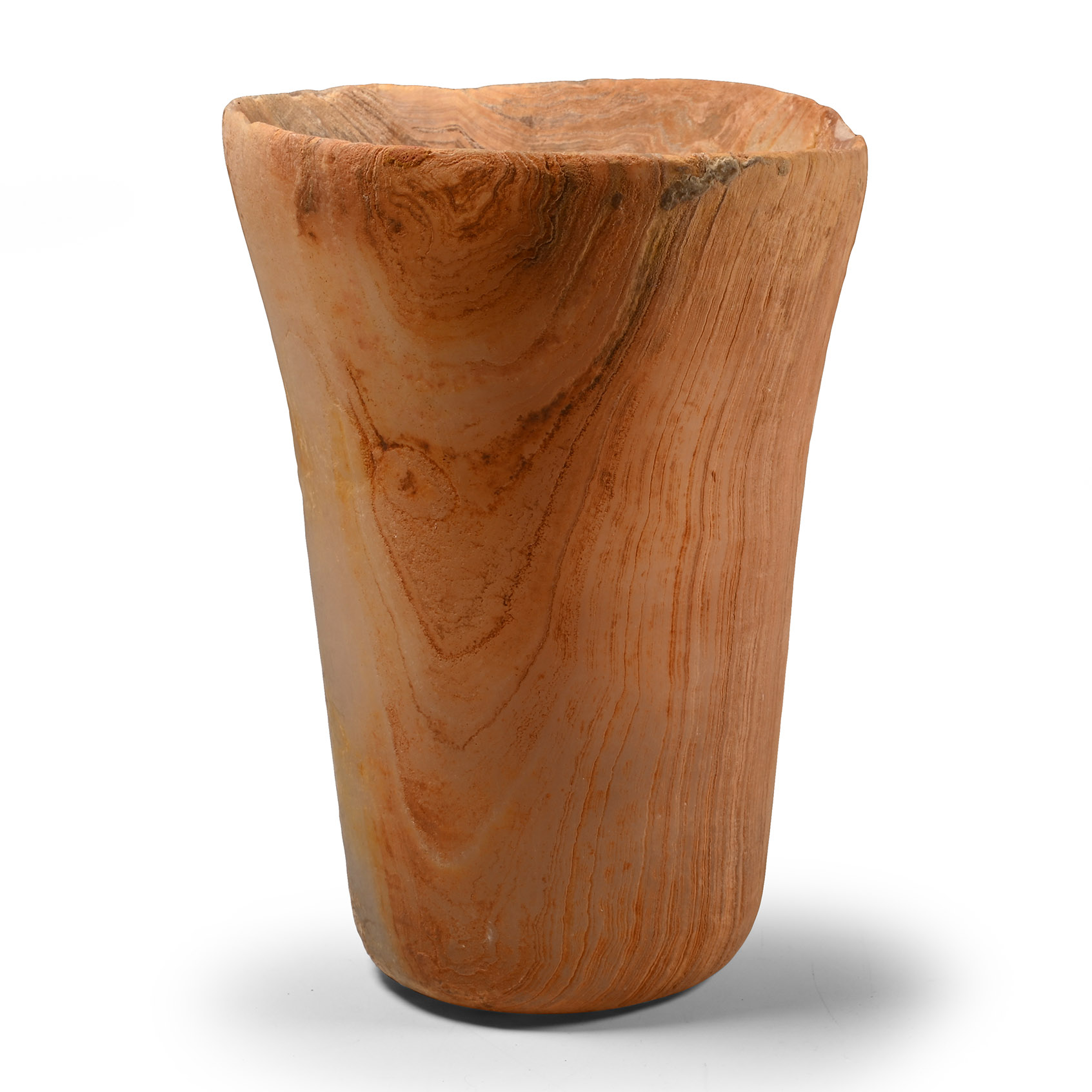
Bactrian Alabaster Vessel
2ND MILLENNIUM B.C.
5 7/8 in. (847 grams, 15 cm).
Conical in profile with disc base, flared sidewall tapering to a narrow rim.
ProvenanceEx London, UK, gallery, 1971-early 2000s.
London, UK, collection.
This lot has been cleared against the Art Loss Register database, and is accompanied by an illustrated lot declaration signed by the Head of the Antiquities Department, Dr Raffaele D'Amato.
TimeLine Auctions follows a vetting process to ensure the authenticity and legality of all items, reinforcing our commitment to integrity and responsible trading. Each antiquity, antique, and coin lot undergoes thorough examination by a vetting committee of at least ten external specialists, professional trade association members, scientists, and archaeologists: Our Vetting Process
AUCTIONS:
TimeLine is a leading auction house specialising in antiquities, ancient art, collectables, natural history, coins, medals, and books. Our auctions offer museums, collectors, historians, and enthusiasts the opportunity to acquire unique and historically significant pieces.
-
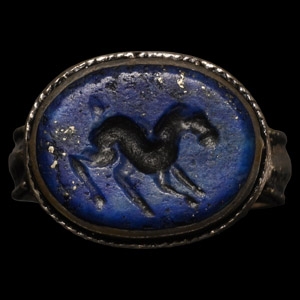
Sasanian Gemstone in Silver Ring
5th-7th century A.D. and laterSold for (Inc. bp): £650
Ellipsoid lapis lazuli cloison with intaglio horse; set in a later stepped silver cell, D-shaped hoop with filigree to each outer edge; supplied with a museum-quality impression. 7.32 grams, 28.62 mm overall, 19.63 mm internal diameter (approximate size British T, USA 9 1/2, Europe 21.26, Japan 20)
with a London, UK gallery 1971-early 2000s. Private collection, London, UK. This lot has been cleared against the Art Loss Register database, and is accompanied by an illustrated lot declaration signed by the Head of the Antiquities Department, Dr Raffaele D'Amato. -

Luristan Bronze Arrowhead Group
Circa late 2nd millennium-6th century B.C.Sold for (Inc. bp): £234
Comprising heater-shaped, leaf-shaped, barbed-and-tanged, and other types. 280 grams total, 4.1-10.8 mm
Acquired 1980-2015. Ex Abelita family collection. This lot has been cleared against the Art Loss Register database, and is accompanied by an illustrated lot declaration signed by the Head of the Antiquities Department, Dr Raffaele D'Amato.
A number of arrowheads of this type have been excavated in Luristan and in the South-Caspian region. Many parallels are from a burial context, but a large hoard of them was found in a non-funerary context. This type of arrowhead was in use from the late 2nd millennium B.C. -

Elamite Silver Beaker with Three Ibexes
Circa 2500-1500 B.C.Estimate: £25,000 - 35,000 (+bp*)
Opening Bid: £12,500
Raised from a single sheet, conical in form with concave body and everted rim; the body, executed in repoussè technique and chased details, decorated by a frieze of three male ibexes, rows of ovules under the rim and beneath the animals; the beasts with muscular bodies and curving horns, each reaching for a flower hanging from above, and eight-petalled flower to the base; late Elamite or Marlik; repaired. 148 grams, 11.7 cm high
Acquired in New York, USA, 1966. Private collection. Accompanied by an academic report by Dr Raffaele D’Amato. This lot has been checked against the Interpol Database of stolen works of art and is accompanied by a search certificate no.12167-220488. This lot has been cleared against the Art Loss Register database, and is accompanied by an illustrated lot declaration signed by the Head of the Antiquities Department, Dr Raffaele D'Amato.
This splendid vessel, decorated with a design possibly of Elamite origin, probably originates from North-Western Iran, or from southern Caspian area. Hammered sheet vessels were produced in Western Iranian metal workshops since the 3rd millennium B.C. (Moorey, Bunker, Porada, Markoe, 1981, p.82).
