
Loading, please wait...
LOT 1235
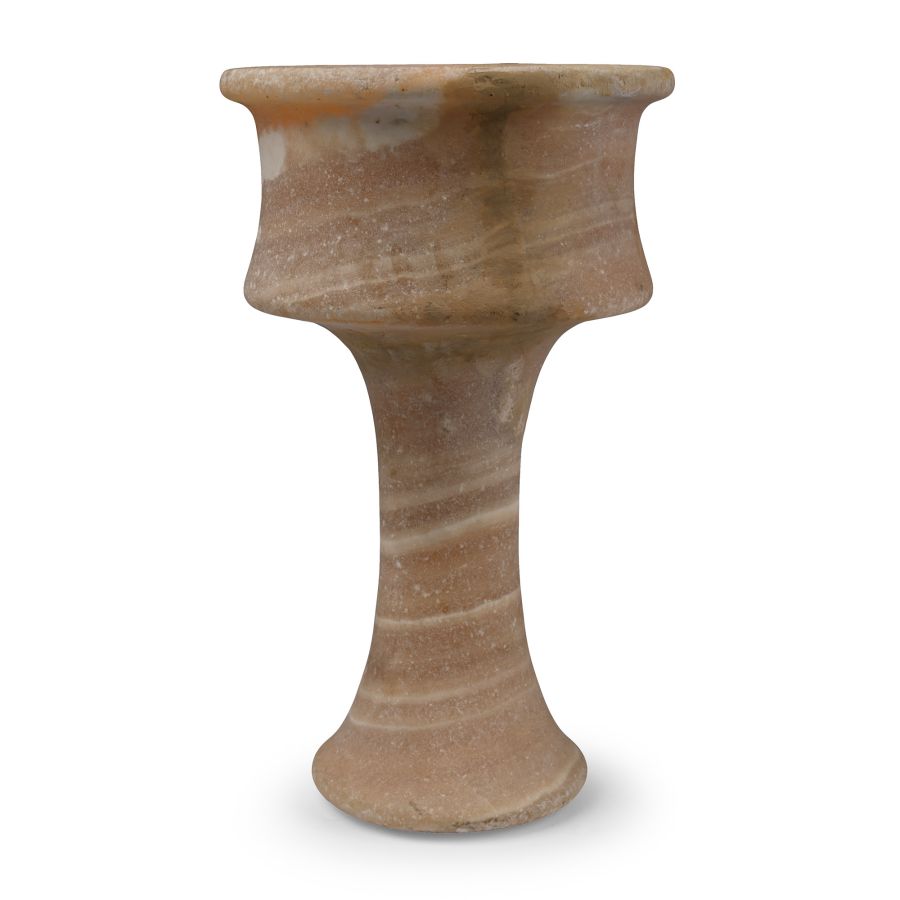
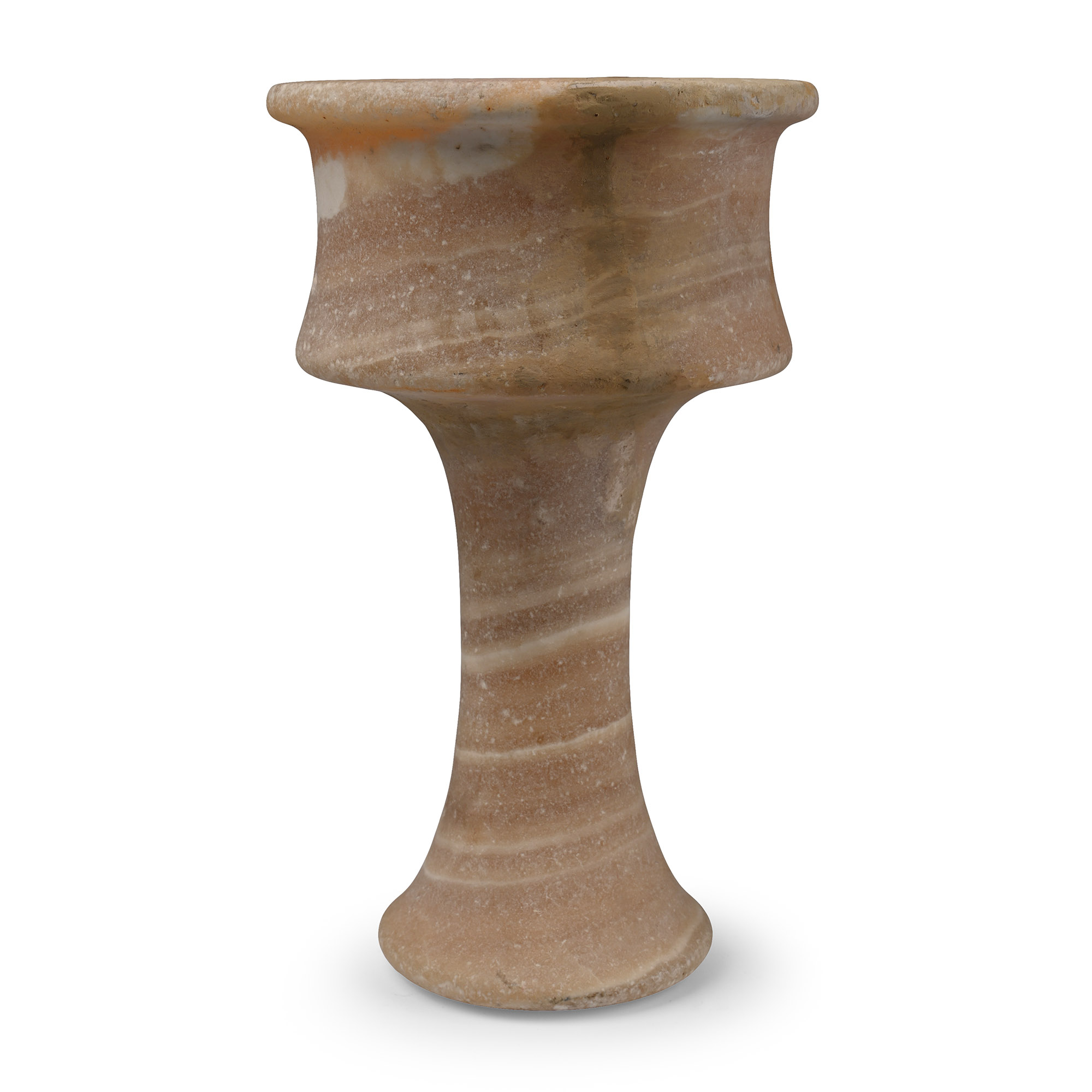
Bactrian Alabaster Chalice
1ST MILLENNIUM B.C.
10 3/8 in. (3.2 kg, 26.3 cm).
Formed as a chalice with flared foot and sturdy shank, bowl with carinated profile and everted rim. [No Reserve]
ProvenanceFrom the private collection of the late David Gold, 1990s.
David Gold was one of the co founders of the Iconic Lord John brand in Carnaby Street that sparked a style revolution in the swinging sixties dressing The Rolling Stones, The Beatles and The Kinks and were at the heart of 'all things cool'.
This lot has been cleared against the Art Loss Register database, and is accompanied by an illustrated lot declaration signed by the Head of the Antiquities Department, Dr Raffaele D'Amato.
TimeLine Auctions follows a vetting process to ensure the authenticity and legality of all items, reinforcing our commitment to integrity and responsible trading. Each antiquity, antique, and coin lot undergoes thorough examination by a vetting committee of at least ten external specialists, professional trade association members, scientists, and archaeologists: Our Vetting Process
AUCTIONS:
TimeLine is a leading auction house specialising in antiquities, ancient art, collectables, natural history, coins, medals, and books. Our auctions offer museums, collectors, historians, and enthusiasts the opportunity to acquire unique and historically significant pieces.
-
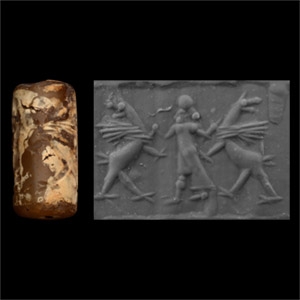
Late Assyrian Yellow Chalcedony Cylinder Seal with Standing God
800-600 B.C.Sold for (Inc. bp): £598
With standing divine figure and animals, restrung pair of red stone beads, old handwritten label '1605'; accompanied by a copy of an old scholarly note, typed and signed by W.G. Lambert, late Professor of Assyriology, University of Birmingham, 1970-1993, which states: 'Cylinder Seal of Yellow Chalcedony with Ivory Coating in Part. 33 x 16 mm. The engraving shows a standing god dressed in a long robe open at the front, from which one leg projects, holding off on either side a winged quadruped which is facing backwards. This is typical Late Assyrian or Late Babylonian seal dating c. 800-600 B.C., engraved with a combination of cutting wheel and drill. The purpose of the scene is to display the power of the god, no doubt meant as the god of the seal owner, but there is nothing to indicate exactly which god the seal engraver had in mind. Apart from a chip off the upper edge not reaching the design, the seal is in very good state of preservation.'; accompanied by a museum-quality impression. 16.7 grams, 33 mm
UK private collection, acquired 1980-1983. Accompanied by a copy of a scholarly note, typed and signed by Professor Wilfrid George Lambert in 1991. This lot has been cleared against the Art Loss Register database, and is accompanied by an illustrated lot declaration signed by the Head of the Antiquities Department, Dr Raffaele D'Amato. -
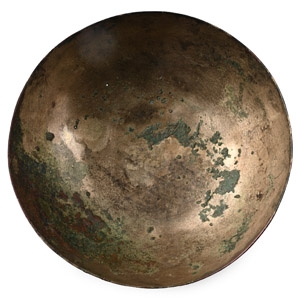
Graeco-Persian Bronze Bowl with Engraved Ring
2nd-1st century A.D.Sold for (Inc. bp): £143
Hemispherical in profile with broad base, incised ring to centre of inner face. 155 grams, 16.1 cm wide
Acquired in the 1990s. Ex Abelita family collection. This lot has been cleared against the Art Loss Register database, and is accompanied by an illustrated lot declaration signed by the Head of the Antiquities Department, Dr Raffaele D'Amato. -
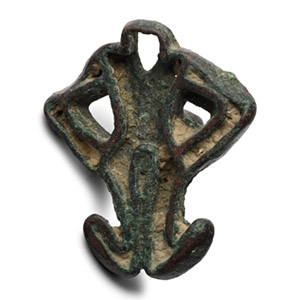
West Central Asian Bronze Human Figural Stamp Seal
Circa 2200-1800 B.C.Estimate: £200 - 300 (+bp*)
Opening Bid: £100
Compartmented stamp seal with a stalk handle, accompanied by a copy of an old scholarly note, typed and signed by W.G. Lambert, late Professor of Assyriology, University of Birmingham, 1970-1993, which states: 'Stamp Seal of Bronze, 40 x 33.5 x 22 mm. This has flat face and flat back, on which a tall stalk handle is mounted. it has an unusual shape, and the design is both compartmented and open-work in part. it may be a stylized depiction of a standing human figure akimbo, but if not the matter is open. This comes from west central Asia and dates to c. 2200-1800 B.C. The metal is in good condition, but the edges of the piece are dented in places. It is a rare design.' 23 grams, 40 mm
From the late S M collection, London, UK, 1969-1999. Accompanied by an original typed and signed scholarly note by the late W.G. Lambert, Professor of Assyriology at the University of Birmingham, 1970-1993. This lot has been cleared against the Art Loss Register database, and is accompanied by an illustrated lot declaration signed by the Head of the Antiquities Department, Dr Raffaele D'Amato.
