
Loading, please wait...
LOT 1010
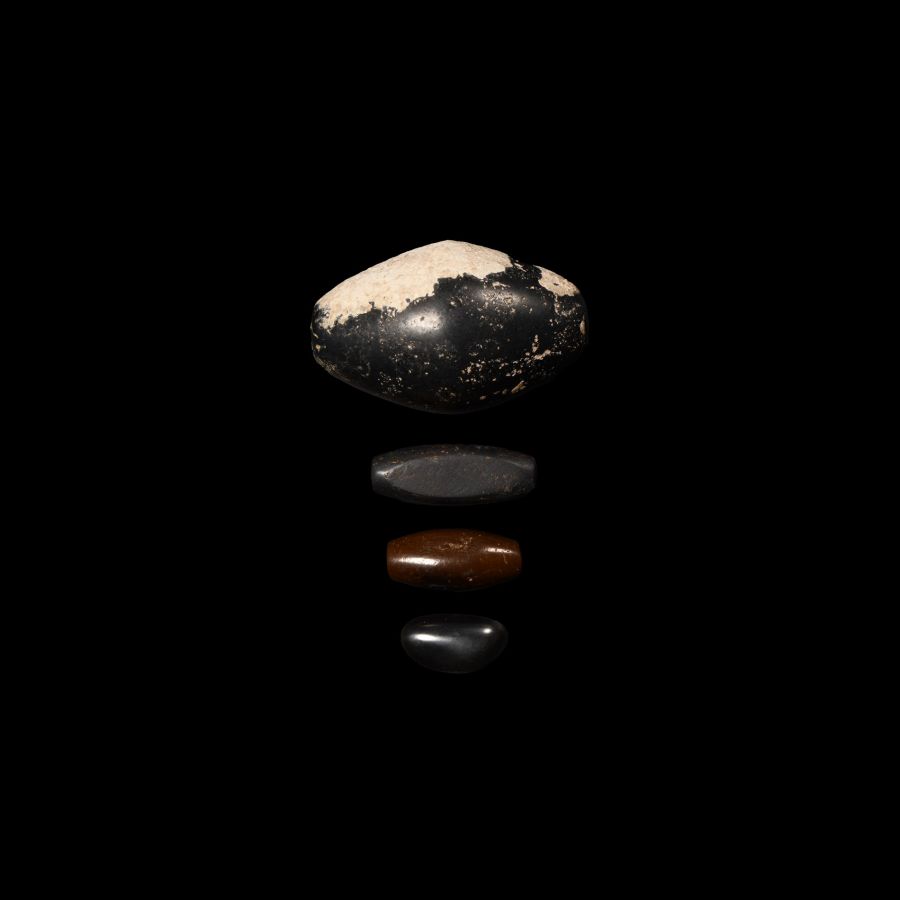
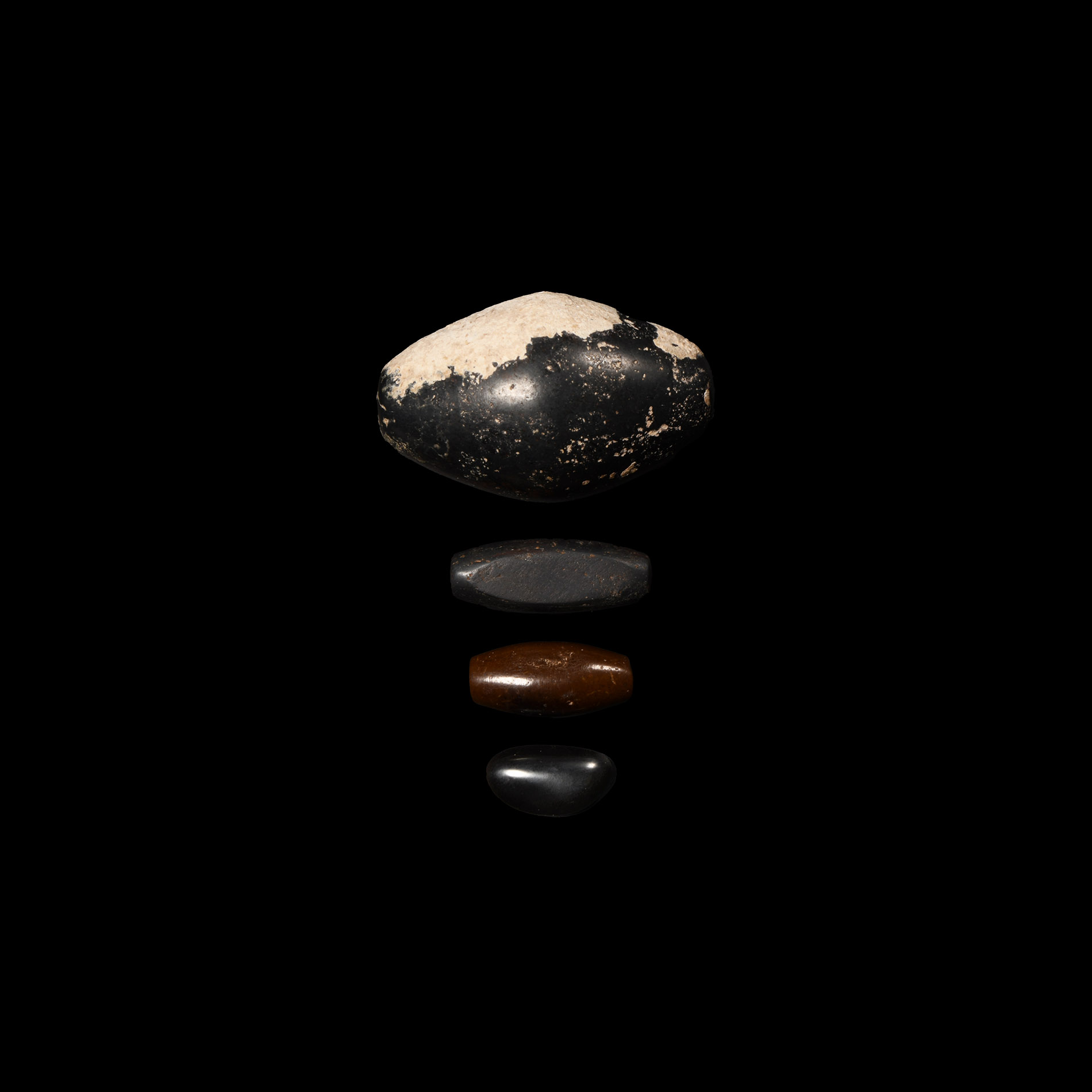
Babylonian Wheat Weight Collection
CIRCA 1ST MILLENNIUM B.C.
5/8 - 1 7/8 in. (113 grams total, 17-48 mm).
A mixed group of four stone wheat weights, comprising: one large, roughly biconical haematite example with one flat face; a pebble-shaped haematite weight with one flat face; a slender, haematite weight with flattened ends and one flat face; a smaller roughly biconical haematite example with one flattened face and flattened ends. [4]
ProvenanceAcquired 1980s-1990s.
H.N. collection, Milton Keynes, Bedfordshire, UK.
TimeLine Auctions follows a vetting process to ensure the authenticity and legality of all items, reinforcing our commitment to integrity and responsible trading. Each antiquity, antique, and coin lot undergoes thorough examination by a vetting committee of at least ten external specialists, professional trade association members, scientists, and archaeologists: Our Vetting Process
AUCTIONS:
TimeLine is a leading auction house specialising in antiquities, ancient art, collectables, natural history, coins, medals, and books. Our auctions offer museums, collectors, historians, and enthusiasts the opportunity to acquire unique and historically significant pieces.
-
.jpg)
Bactrian Silver Walking Stick Attachment
2nd millennium B.C.Estimate: £450 - 650 (+bp*)
Opening Bid: £250
A hollow-formed silver cylinder seal-type attachment, possibly from a walking stick or a furniture fitting, with a frieze of opposed seated figures, beasts and other details; accompanied by a museum-quality impression. 32.33 grams, 31 mm
Fair condition. Very rare.
Acquired before 1990. With a central London gallery. Private collection of a North West London lady. -
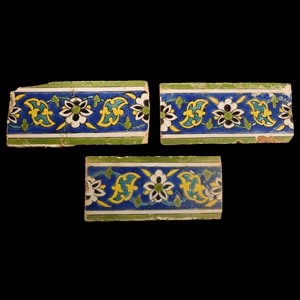
Western Asiatic Glazed Tile Collection
16th-17th century A.D.Sold for (Inc. bp): £208
A group of three glazed ceramic tiles each with green border enclosing white bands and median deep-blued band with tendrils, flowers and leaves in white, yellow, black and turquoise; Iranian workmanship. 2.4 kg total, 24-25 cm
Ex Hagop Kevorkian, 1979. Important North West London collection. -
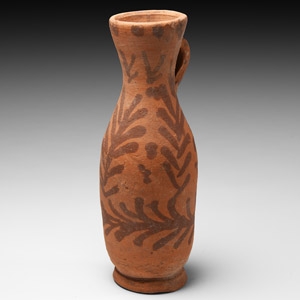
Nabataean Painted Jug
1st century B.C.-1st century A.D.Sold for (Inc. bp): £520
A small terracotta jug with strap handle above the shoulder, painted frond patterns to the body, shoulder and neck. 76 grams, 12.4 cm high
From an important collection of Holy Land pottery formed pre 1988, thence by descent.
