
Loading, please wait...
LOT 0976
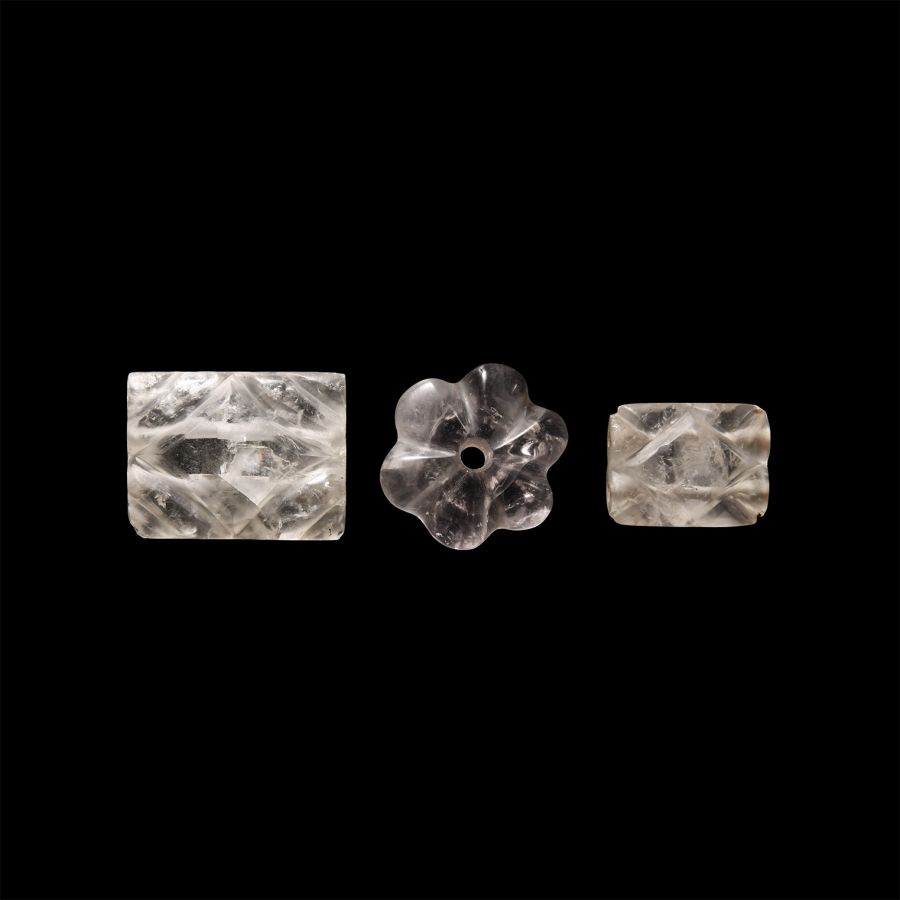
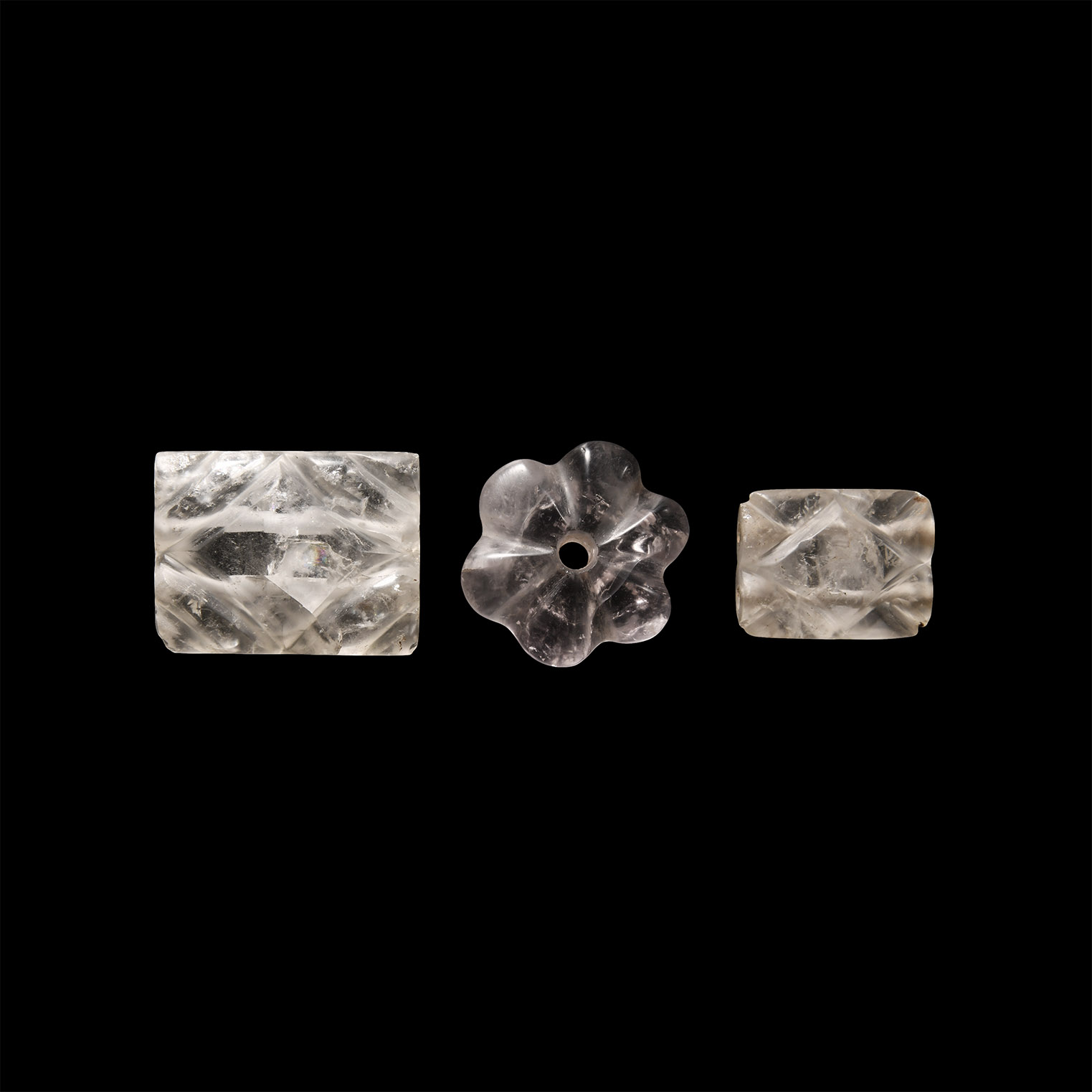
Babylonian Large Rock Crystal Bead Group
1ST MILLENNIUM B.C.
1 1/8 - 1 5/8 in. (68 grams total, 30-42 mm).
A trio of large rock crystal beads: two similar pillow-shaped beads with a lozenge to both faces, drilled twice for suspension; a stylised flower head with central hole for suspension. [3]
ProvenanceAcquired in the 1980s.
From the collection of a West London, UK, gentleman.
TimeLine Auctions follows a vetting process to ensure the authenticity and legality of all items, reinforcing our commitment to integrity and responsible trading. Each antiquity, antique, and coin lot undergoes thorough examination by a vetting committee of at least ten external specialists, professional trade association members, scientists, and archaeologists: Our Vetting Process
AUCTIONS:
TimeLine is a leading auction house specialising in antiquities, ancient art, collectables, natural history, coins, medals, and books. Our auctions offer museums, collectors, historians, and enthusiasts the opportunity to acquire unique and historically significant pieces.
-
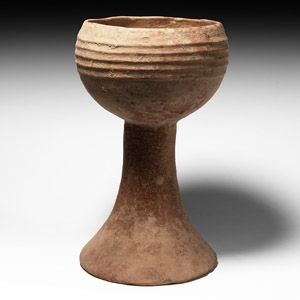
Western Asiatic Large Terracotta Chalice
1st millennium B.C.Estimate: £100 - 140 (+bp*)
Opening Bid: £50
A ceramic chalice with ribbed bowl, waisted stem and splayed foot. 1.44 kg, 26 cm high
Acquired 1980-2015. Ex Abelita family collection. -
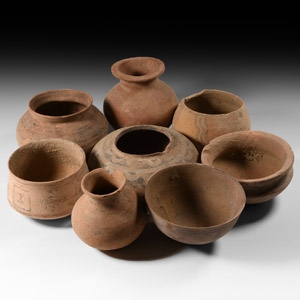
Western Asiatic Pottery Vessel Group
2nd-1st millennium B.C.Sold for (Inc. bp): £143
A group of eight ceramic vessels, mainly comprising jars of various forms, most painted with geometric motifs. 2.35 kg total, 9.5-15.5 cm wide
Acquired 1970-2010. Collection of a late Japanese gentleman. -
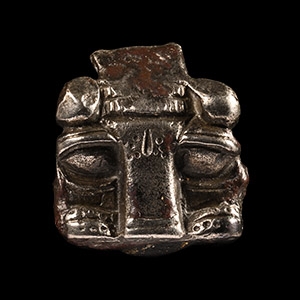
Western Asiatic Silver Lion Terminal Head
1st millennium B.C.Estimate: £200 - 300 (+bp*)
Opening Bid: £80
A silver terminal formed as the upper part of a lion's head with stylised facial detailing, rectangular lug above, simple decorative detailing to the reverse. 18.6 grams, 24 mm
Acquired before the early 1970s. Ex London, UK, gallery. Property of a London gentleman.
