
Loading, please wait...
LOT 0171
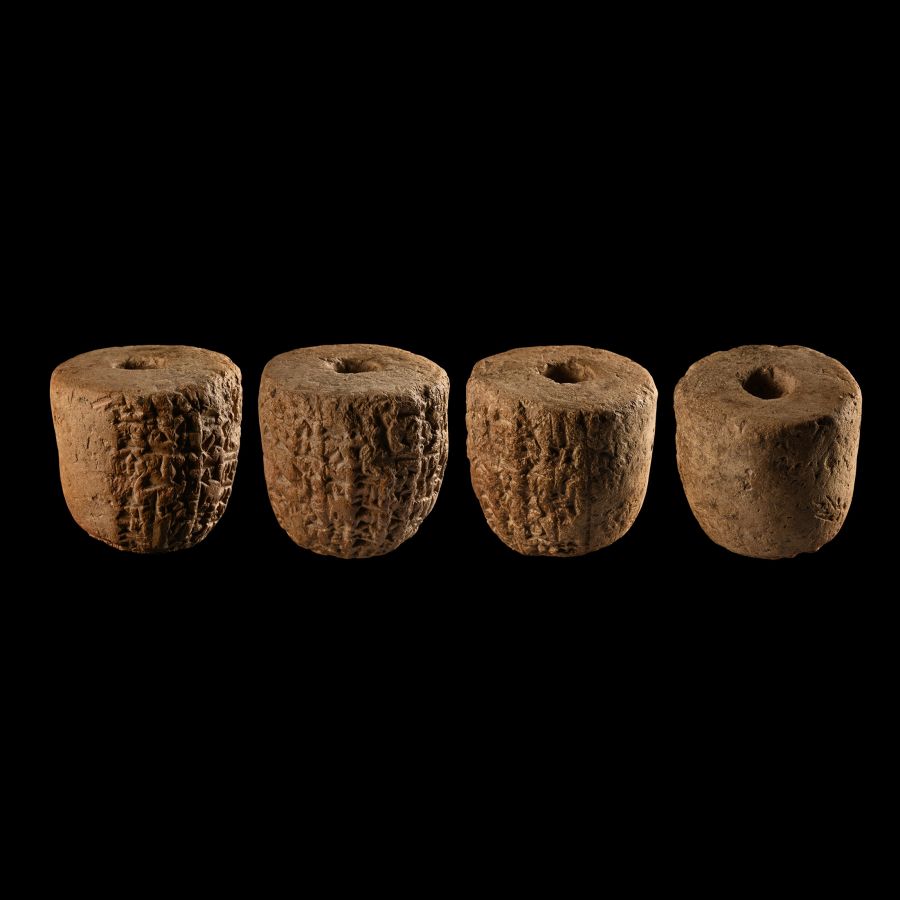
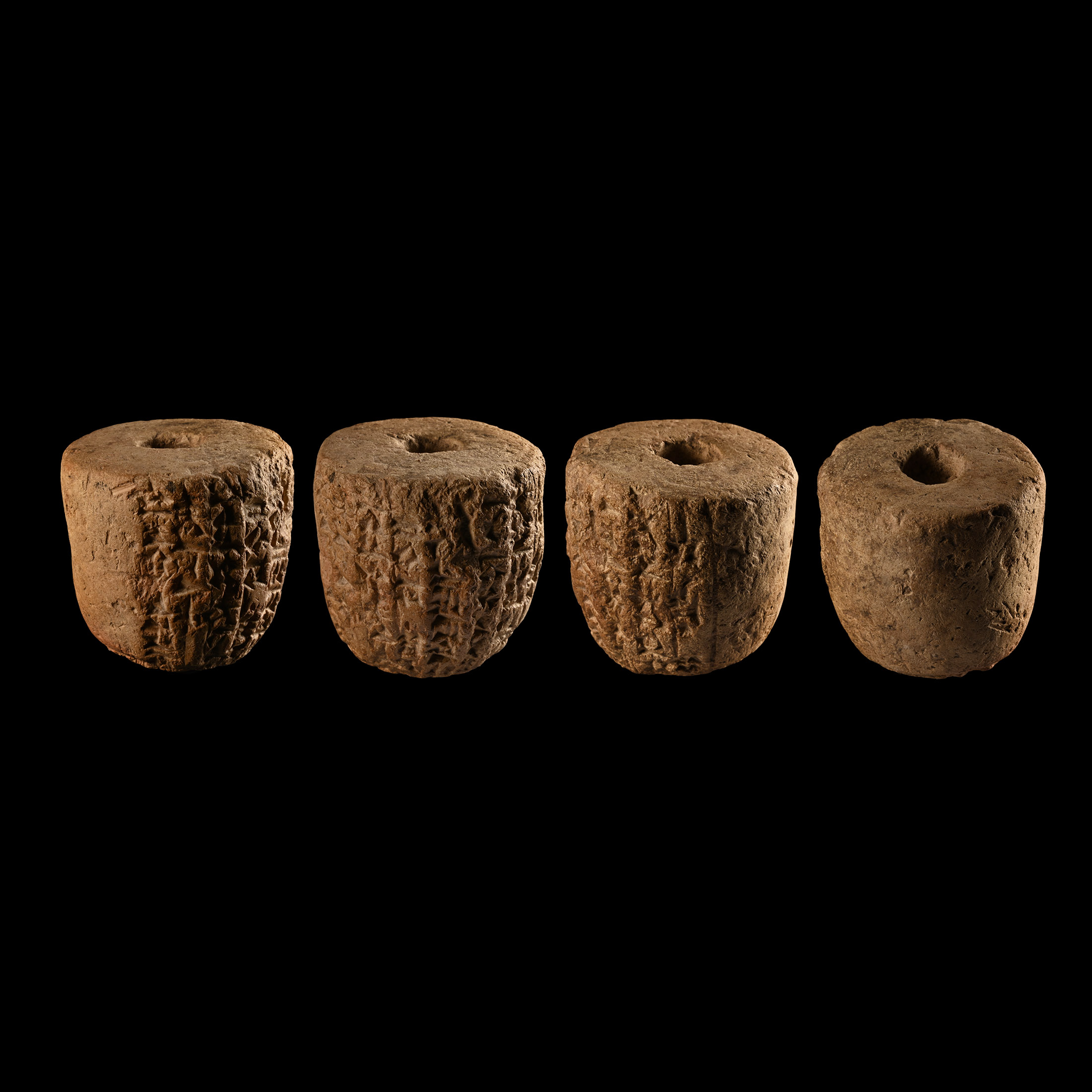
Babylonian Cuneiform Cylinder with Akkadian Inscription Relating to the Planting of a Cedar Hedge
CIRCA 2ND MILLENNIUM B.C.
1 1/2 in. (60 grams, 39 mm).
A hollow cylinder bearing an inscription in Akkadian, relating to the planting of a cedar hedge to protect the orchard of Ili-tukulti from the wind: 'At (the edge of) a bare orchard, against the north wind, near six watering holes, Yamhad cedars were planted in the orchard of Ilī-tukultī.'
ProvenanceAcquired before 1992.
Ex gentleman's family collection, London, UK.
TimeLine Auctions follows a vetting process to ensure the authenticity and legality of all items, reinforcing our commitment to integrity and responsible trading. Each antiquity, antique, and coin lot undergoes thorough examination by a vetting committee of at least ten external specialists, professional trade association members, scientists, and archaeologists: Our Vetting Process
AUCTIONS:
TimeLine is a leading auction house specialising in antiquities, ancient art, collectables, natural history, coins, medals, and books. Our auctions offer museums, collectors, historians, and enthusiasts the opportunity to acquire unique and historically significant pieces.
LOT 0171
Babylonian Cuneiform Cylinder with Akkadian Inscription Relating to the Planting of a Cedar Hedge
Sold for (Inc. bp): £845
-
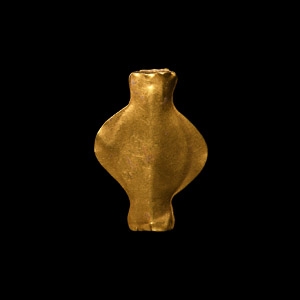
Western Asiatic Gold Butterfly Bead
2nd-1st millennium B.C.Estimate: £400 - 600 (+bp*)
Opening Bid: £222
A sheet-gold 'butterfly' bead of hollow construction. 5.16 grams, 35 mm
Fine condition.
Acquired 1970-2010. Collection of a late Japanese gentleman. -
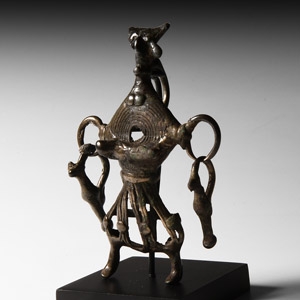
Amlash Figure of Fertility
Circa 13th-12th century B.C.Sold for (Inc. bp): £635
A copper-alloy fertility figure with openwork decoration, loop arms suspending pendants formed as slender figurative horned animals; suspension loop to reverse and cage-style torso; accompanied by a custom-made display stand. 47 grams, 91 mm (78 grams total, 10 cm including stand)
Fine condition.
Acquired before 1983.mj Ex London gallery, 1990s. -
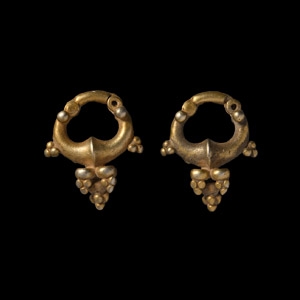
Parthian Electrum Earring Pair
2nd century B.C.-1st century A.D.Sold for (Inc. bp): £889
A matching pair of gold hoop earrings, each composed of a tapering hoop with expanded central section, adorned on both faces with gold pellets, pyramid clusters and a larger pyramid cluster finial with pyramid granules to each pellet; hinged closure. 10.02 grams total, 21 mm each
Fine condition.
Acquired 1970-2010. Collection of a late Japanese gentleman.
