
Loading, please wait...
LOT 0254
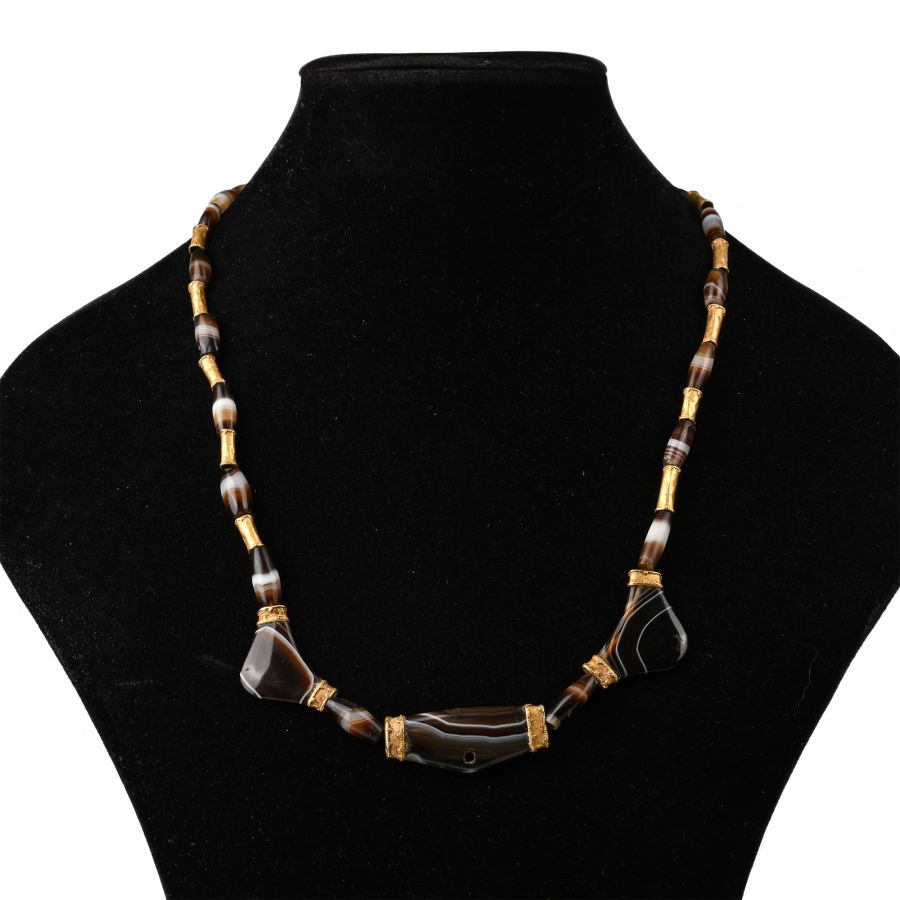
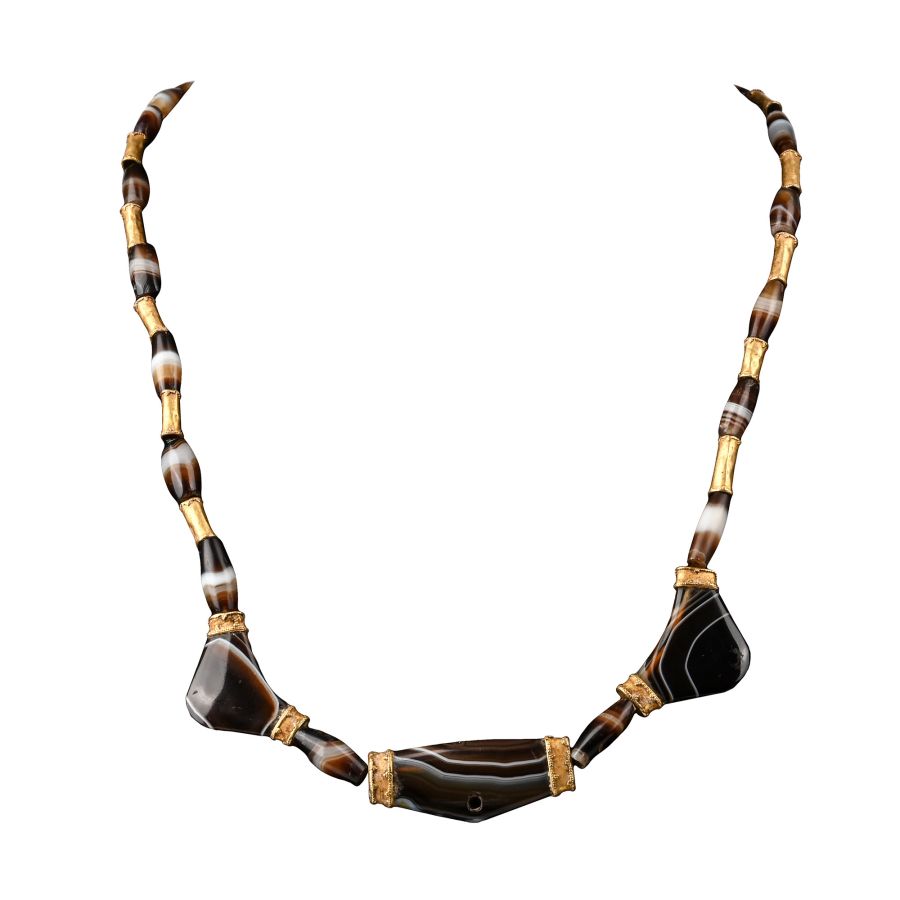
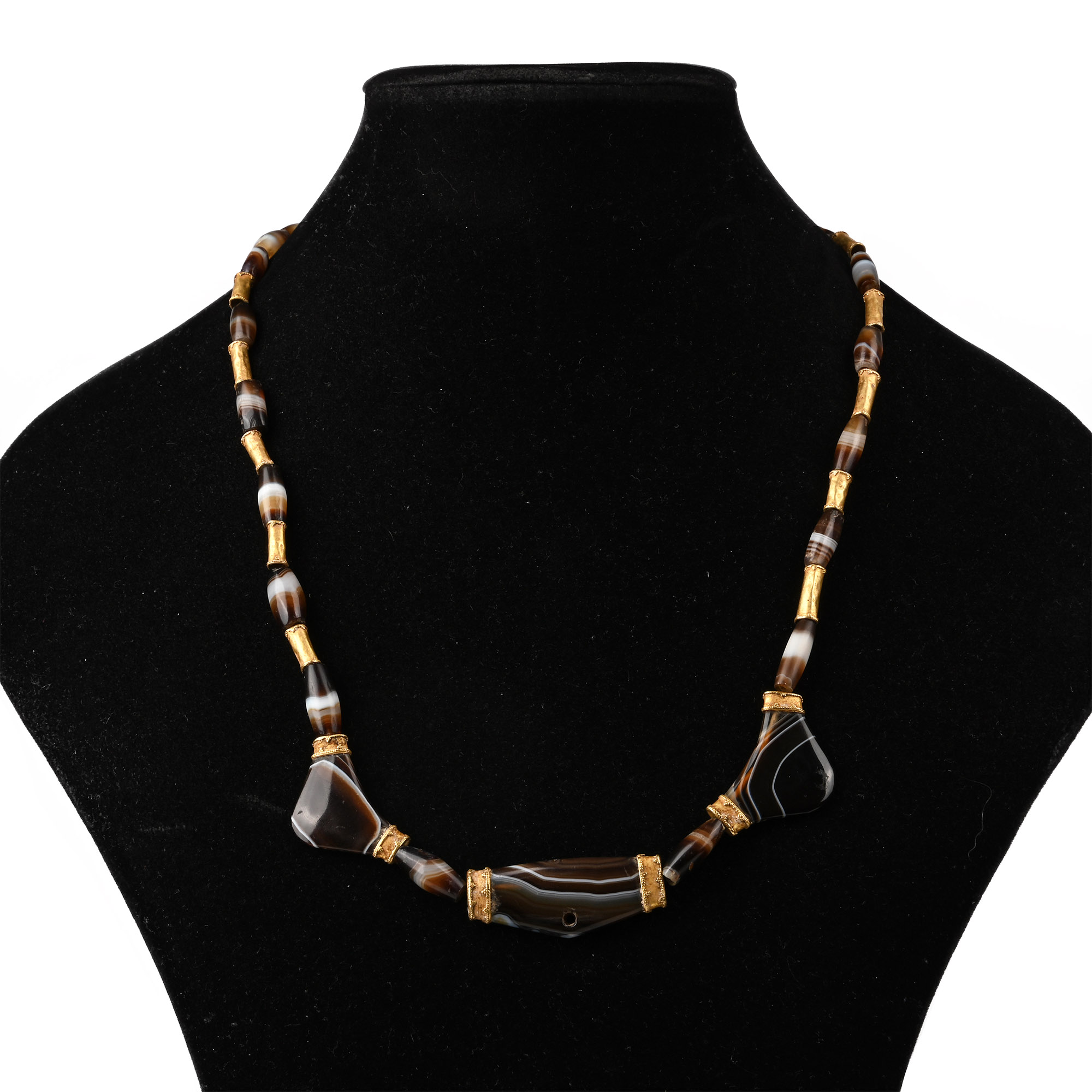
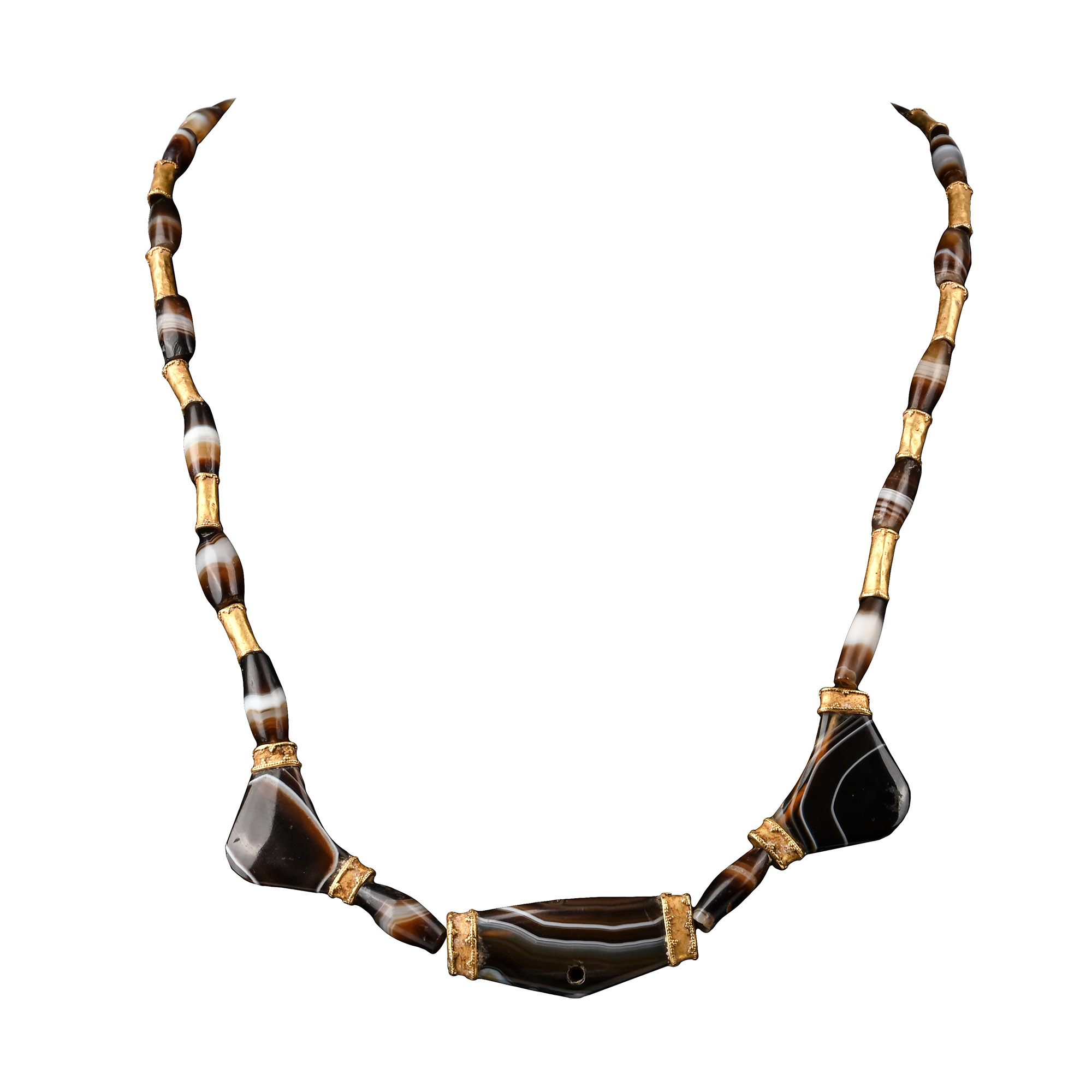
Babylonian Agate Bead Necklace with Gold Beads
9TH CENTURY B.C.
12 1/4 in. (43.24 grams, 31 cm).
Restrung necklace of tubular and fusiform beads with interstitial gold tubular beads, three D-shaped plaques with granulated gold caps, one pierced to accept a pendant.
ProvenancePrivate collection, acquired in the late 1980s-early 1990s; thence by descent.
This lot has been checked against the Interpol Database of stolen works of art and is accompanied by search certificate number no.13207-249239.
Cf. Wolley, L., Ur excavations, volume IX, The Neo-Babylonian and Persian Periods, London, 1962, pl.22, for a similar necklace with gold beads and stones.
FootnotesTexts from Neo-Babylonian times in various archives, such as that of Eanna, concern the smelting of metals for the construction or repair of specific objects, including necklaces. One example from the archive (NCBT 184 - Npl 9 III 1) obv. 3 recites: '3 minas 26 shekels of gold (were) put into the kiln for the necklace of dubkåtu (beads) of Nanåya. It (the gold) is (now) at the disposal of Sadûni. (It was weighed) according to the 3 mina weight of bronze and (smaller) weights of iron.' The jewellers were responsible for cutting the precious stones and beads that were set in the jewellery and other ornamentation produced by the goldsmiths. In this capacity, they were issued beads and unworked pieces (takkassu, sibirtu) of various semiprecious stones, including agate (pappardilû), carnelian (samtu), eye stones (na igiII.mes), lapis lazuli (uqnû), and turquoise (asgikû).
CONDITIONTimeLine Auctions follows a vetting process to ensure the authenticity and legality of all items, reinforcing our commitment to integrity and responsible trading. Each antiquity, antique, and coin lot undergoes thorough examination by a vetting committee of at least ten external specialists, professional trade association members, scientists, and archaeologists: Our Vetting Process
AUCTIONS:
TimeLine is a leading auction house specialising in antiquities, ancient art, collectables, natural history, coins, medals, and books. Our auctions offer museums, collectors, historians, and enthusiasts the opportunity to acquire unique and historically significant pieces.
-
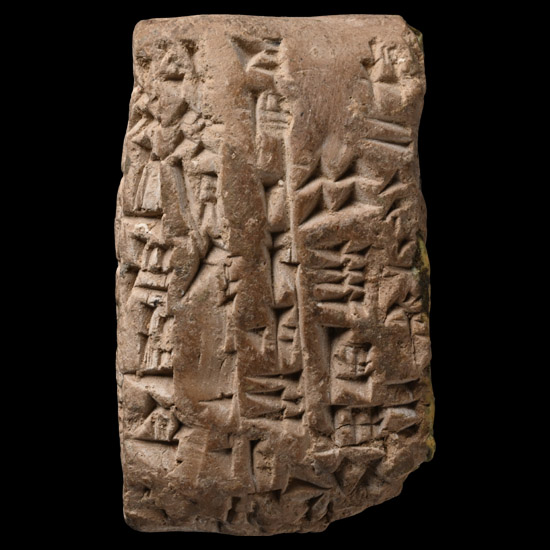
Old Babylonian Terracotta Cuneiform Tablet Section
2nd millennium B.C.Sold for (Inc. bp): £416
The narrow end of a pillow-shaped tablet with rows of cuneiform text on four sides. 33.5 grams, 44.5 mm
From the private collection of a European gentleman (1942-2024), formed since the 1970s. -
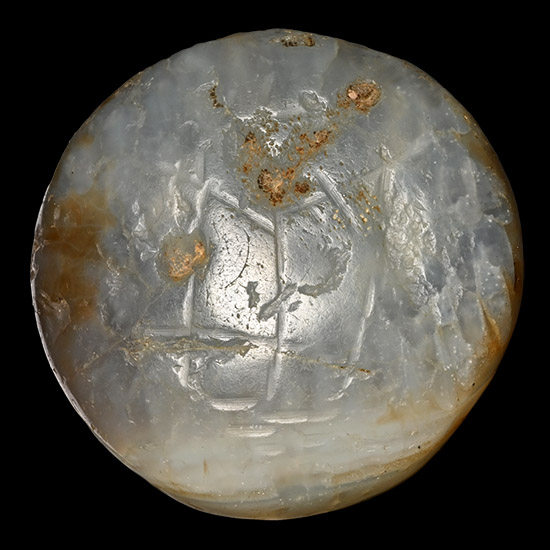
Large Sasanian Banded Agate Stamp Seal
Circa 4th-5th century A.D.Sold for (Inc. bp): £26
Plano-convex in section with linear motifs. 18.43 grams, 28.74 mm
From the private collection of a European gentleman (1942-2024), formed since the 1970s. -
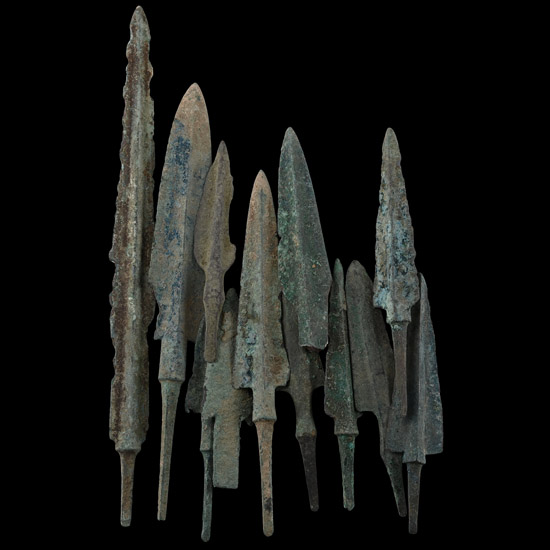
Western Asiatic Bronze Arrowhead Collection
2nd-1st millennium B.C.Sold for (Inc. bp): £169
Comprising eleven tanged triangular arrowheads, most with a raised midrib, and a tanged javelin head. 309 grams total, 8-20.7 cm
London, UK, collection, 1990s.
Most of these blades are bipartite, but the definition of the bipartite type is not absolute, as it brings together weapons of very different and unrelated designs. In fact, some weapons do not have a sufficiently characteristic shape to be interpreted as a javelin or long arrowhead.
