
Loading, please wait...
LOT 0288
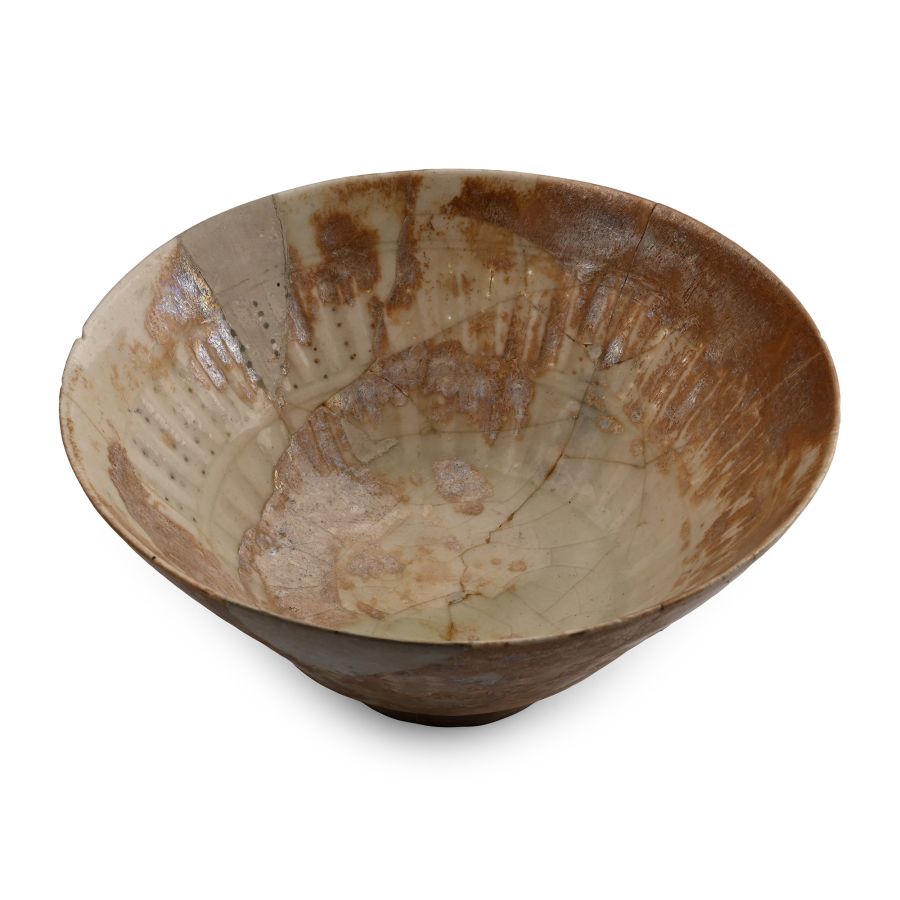
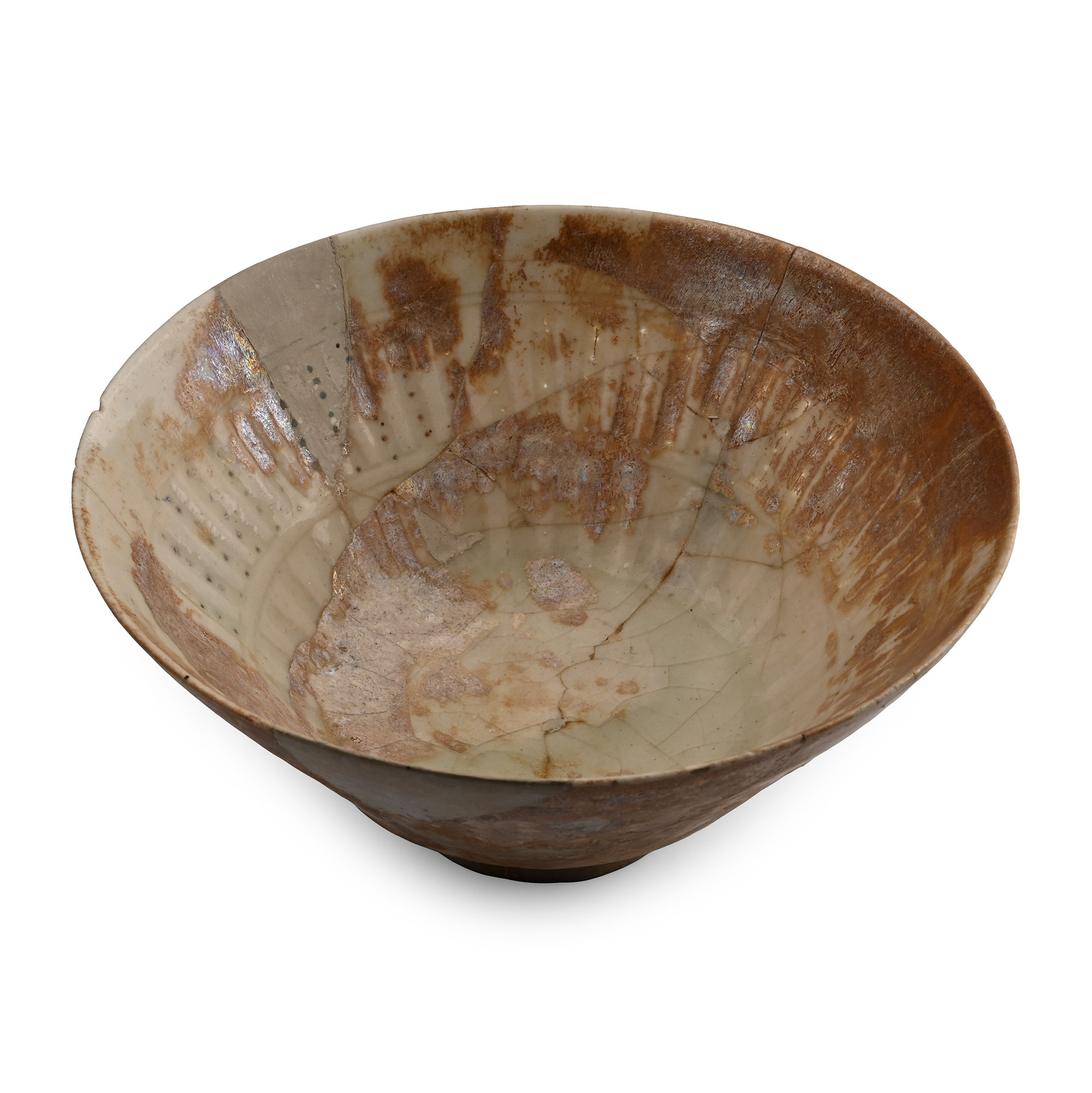
Ayyubid Glazed Bowl
12TH-13TH CENTURY A.D.
7 in. (249 grams, 17.8 cm wide).
Conical profile with wide foot, white glaze and ribbed decoration to the inner face; some restoration. [No Reserve]
ProvenanceFrom the private family collection of Ersula Barter-Hemmerich, the longest serving member of staff working at the United Nations, her private collection formed in the 1950s and 1960s; thence by descent to her grandson.
This lot has been cleared against the Art Loss Register database, and is accompanied by an illustrated lot declaration signed by the Head of the Antiquities Department, Dr Raffaele D'Amato.
TimeLine Auctions follows a vetting process to ensure the authenticity and legality of all items, reinforcing our commitment to integrity and responsible trading. Each antiquity, antique, and coin lot undergoes thorough examination by a vetting committee of at least ten external specialists, professional trade association members, scientists, and archaeologists: Our Vetting Process
AUCTIONS:
TimeLine is a leading auction house specialising in antiquities, ancient art, collectables, natural history, coins, medals, and books. Our auctions offer museums, collectors, historians, and enthusiasts the opportunity to acquire unique and historically significant pieces.
-
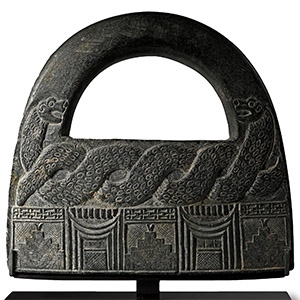
Large Bactrian Black Chlorite 'Hand Bag' Ceremonial Weight
3rd millennium B.C.Sold for (Inc. bp): £49,400
D-shaped in profile with void below the curved edge, obverse with reserved serpents above a frieze of trees; reverse with rearing serpents above geometric panels; mounted on a custom-made stand. 4.8 kg total, 24 cm high (27 cm including stand)
with Gallery Rosen Ancient Art, Tel Aviv, 1968. Ex London, UK, gallery, 1971-early 2000s. London, UK, collection. Accompanied by a copy of an original invoice from Gallery Rosen Ancient Art, 25 December 1968. This lot has been checked against the Interpol Database of stolen works of art and is accompanied by a search certificate no.12775-237877. This lot has been cleared against the Art Loss Register database, and is accompanied by an illustrated lot declaration signed by the Head of the Antiquities Department, Dr Raffaele D'Amato.
The object could have been carried or swung in ceremonies or processions. This is also suggested by the side in which the snakes overlook buildings of a religious place, which have the clear structure of the Ziggurats, while other sections are representing the doors of a temple. -
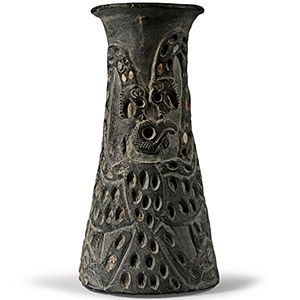
Bactrian Chlorite Vessel with Opposing Serpents
3rd millennium B.C.Sold for (Inc. bp): £9,100
With a frieze comprising an eagle with spread wings, two rearing lion-headed serpents above with open jaws; the bodies of the beasts with shallow sockets to accept inserts, some still present. 2.3 kg, 23 cm
with Gallery Rosen Ancient Art, Tel Aviv, 1960s. Ex London, UK, gallery, 1971-early 2000s. London, UK, collection. This lot has been checked against the Interpol Database of stolen works of art and is accompanied by a search certificate no.12773-237879. This lot has been cleared against the Art Loss Register database, and is accompanied by an illustrated lot declaration signed by the Head of the Antiquities Department, Dr Raffaele D'Amato.
The chlorite stone vessels of early Bactria were kidney-shaped vessels with simple geometric decoration often representing snakes and other animals. Small cylindrical vases were used as cosmetic containers, together with chlorite cosmetic flasks. Interestingly the eyes and the bodies of the animals were destined to receive inlay, as can be seen on our specimen where some are still in situ. -
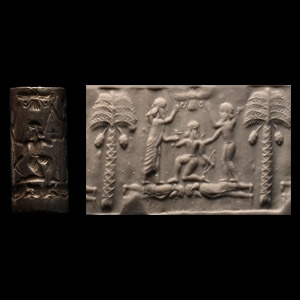
Achaemenid Silver Cylinder Seal Case with Battle Scene
5th century B.C.Estimate: £2,500 - 3,500 (+bp*)
Opening Bid: £1,250
Depicting a combat scene comprising of a standing richly dressed royal figure with a bow-case, one hand holding wrist and other piercing shoulder of a kneeling soldier; standing helmetted archer holding his other shoulder; two bearded men lying face down beneath; winged sun disc above and date palm behind; supplied with a museum-quality impression. 17.4 grams, 32 mm
From the collection of the late S, London, UK, 1970-2000. Examined by Professor Wilfrid George Lambert FBA (1926-2011), historian, archaeologist, and specialist in Assyriology and Near Eastern archaeology, in the 1990s. This lot has been checked against the Interpol Database of stolen works of art and is accompanied by search certificate number no.12821-240845. This lot has been cleared against the Art Loss Register database, and is accompanied by an illustrated lot declaration signed by the Head of the Antiquities Department, Dr Raffaele D'Amato.
