
Loading, please wait...
LOT 0275
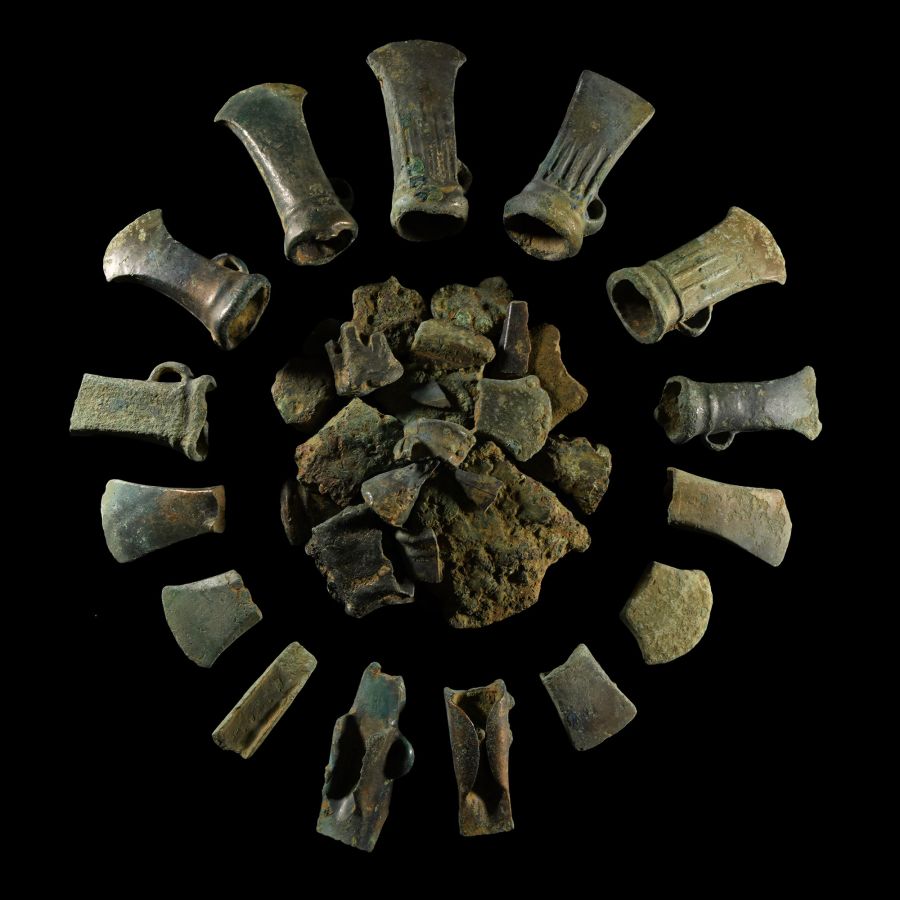
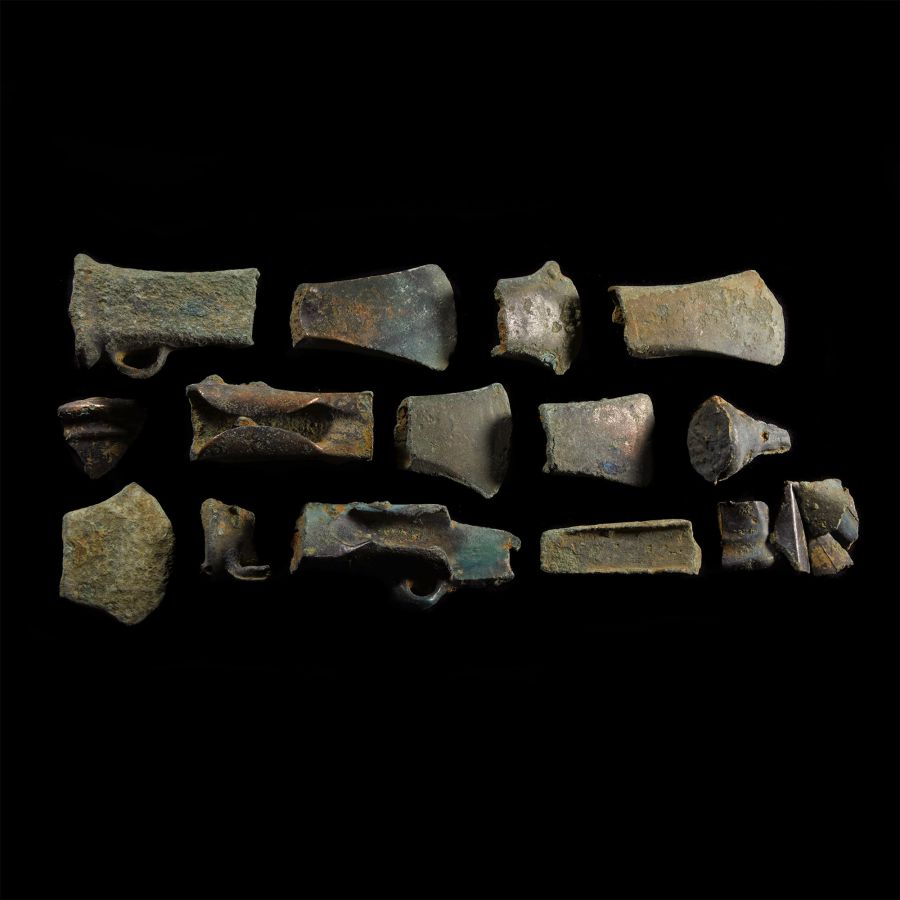
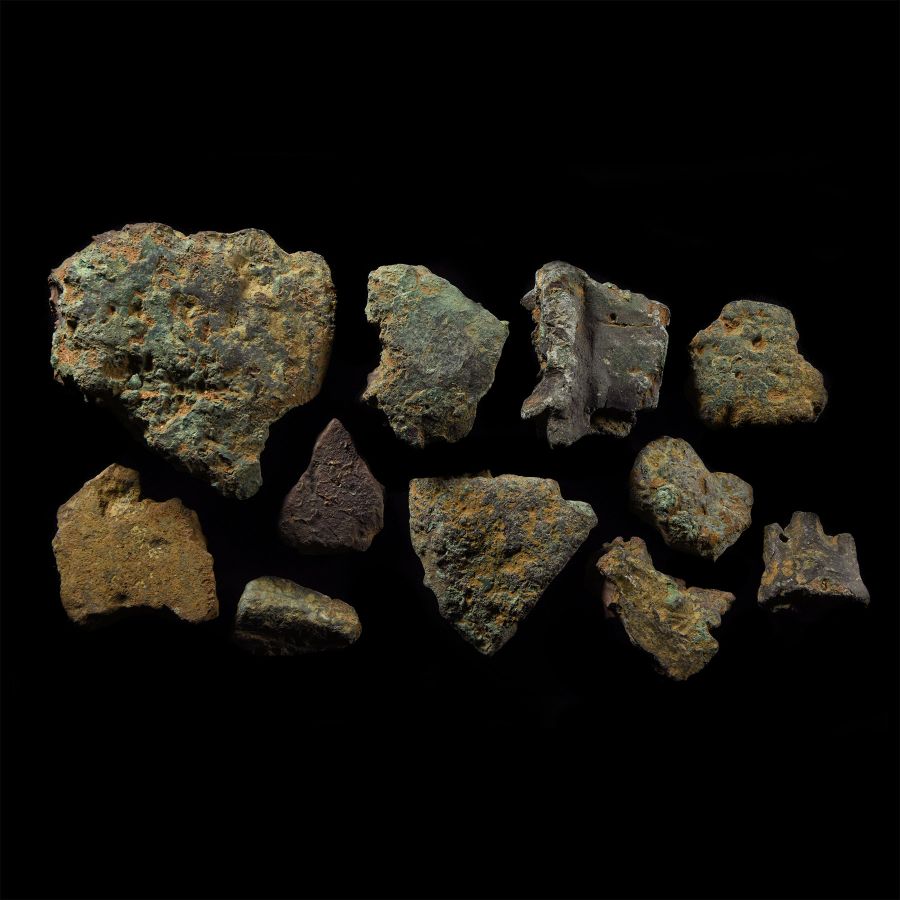
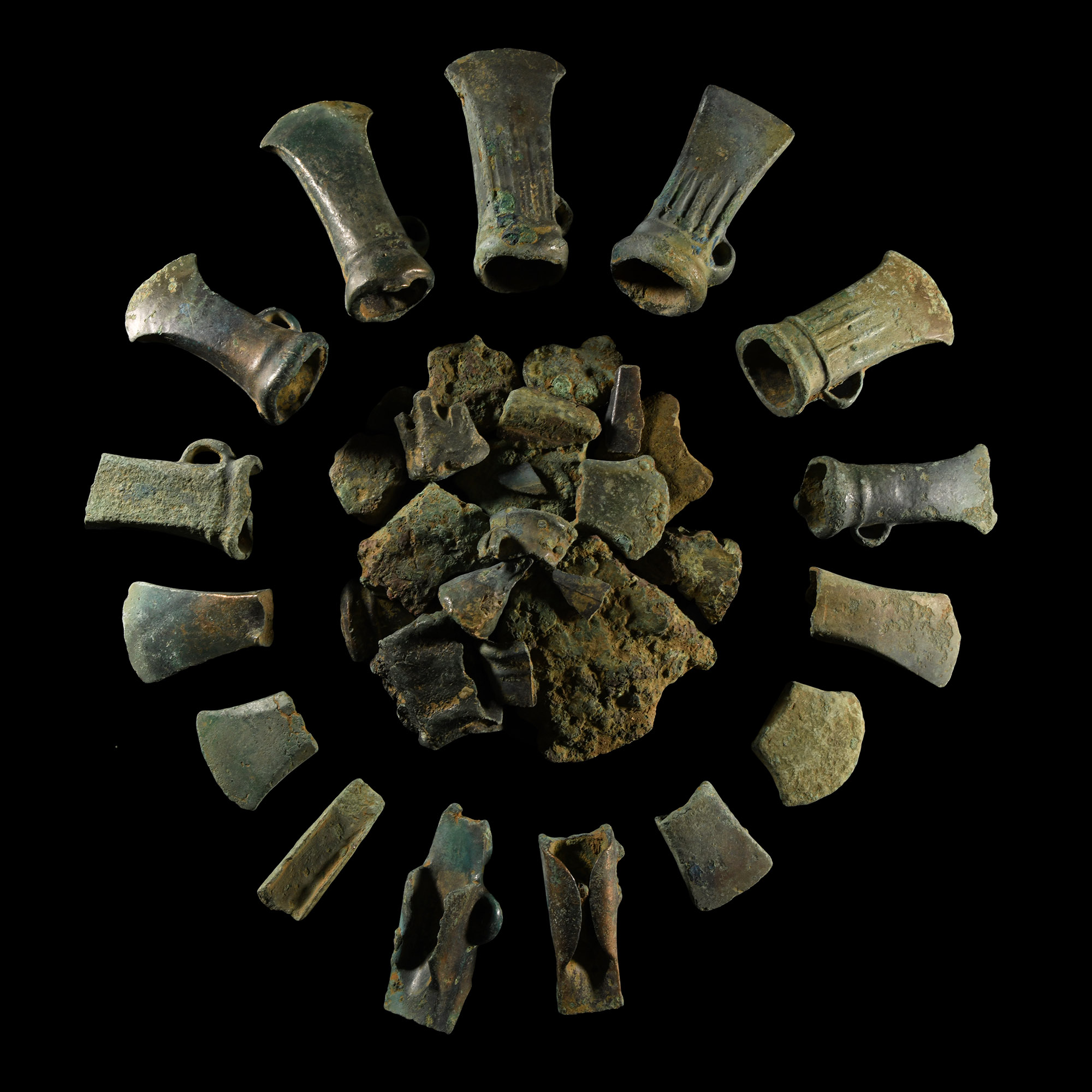
'The Braintree' Bronze Age Axehead and Foundry 'Carp's Tongue/Ewart Phase' Hoard
DEPOSITED CIRCA 900-800 B.C.
7/8 - 4 3/8 in. (5.20 kg total, 2-11 cm).
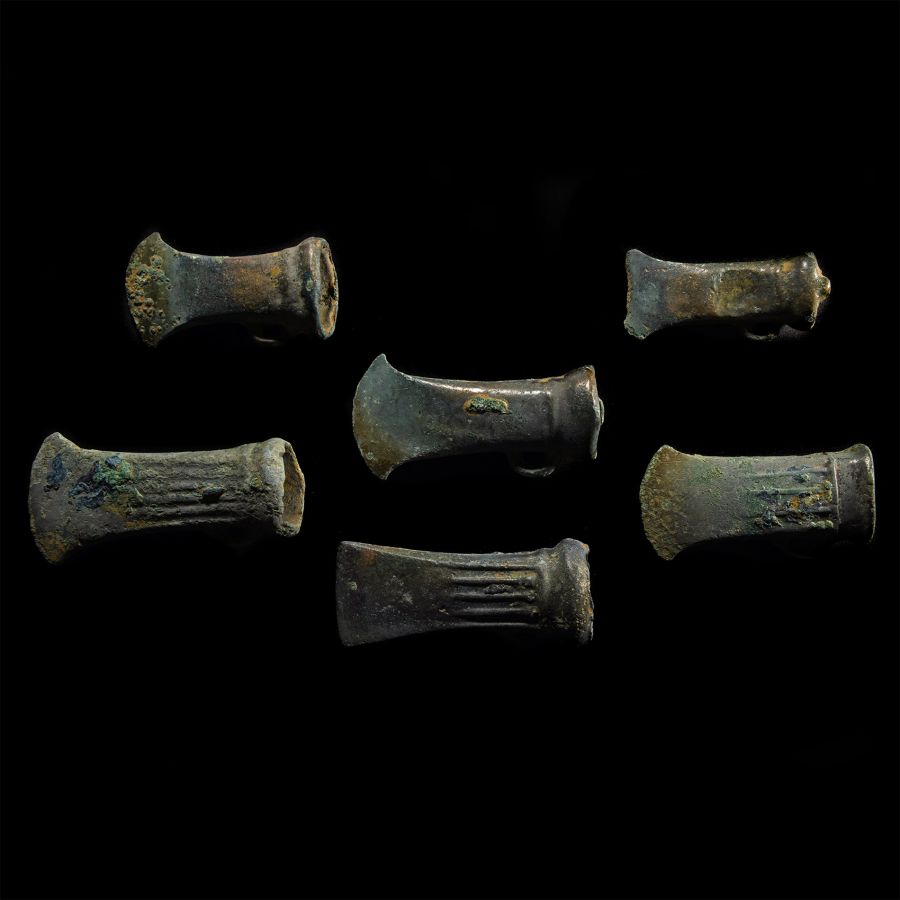
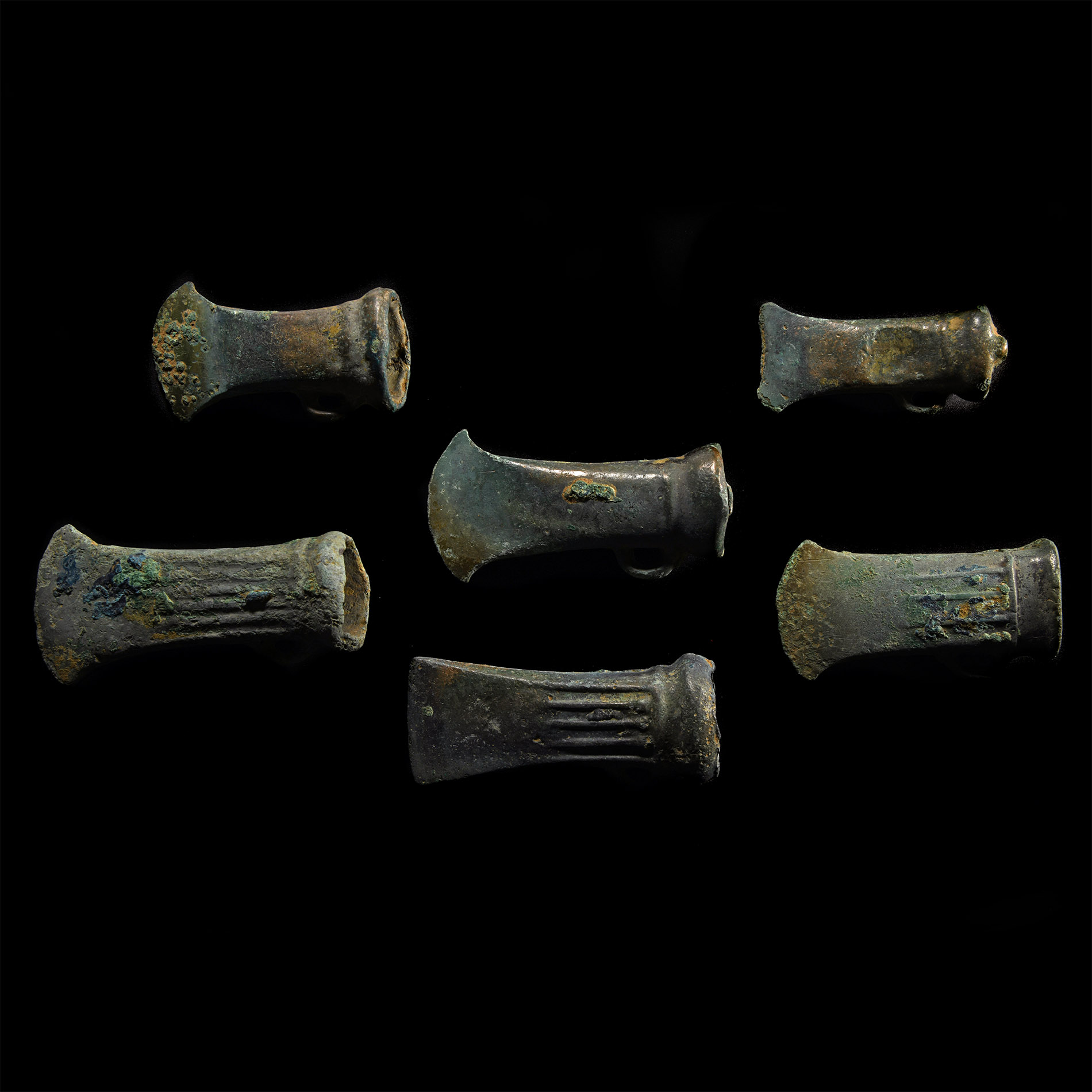
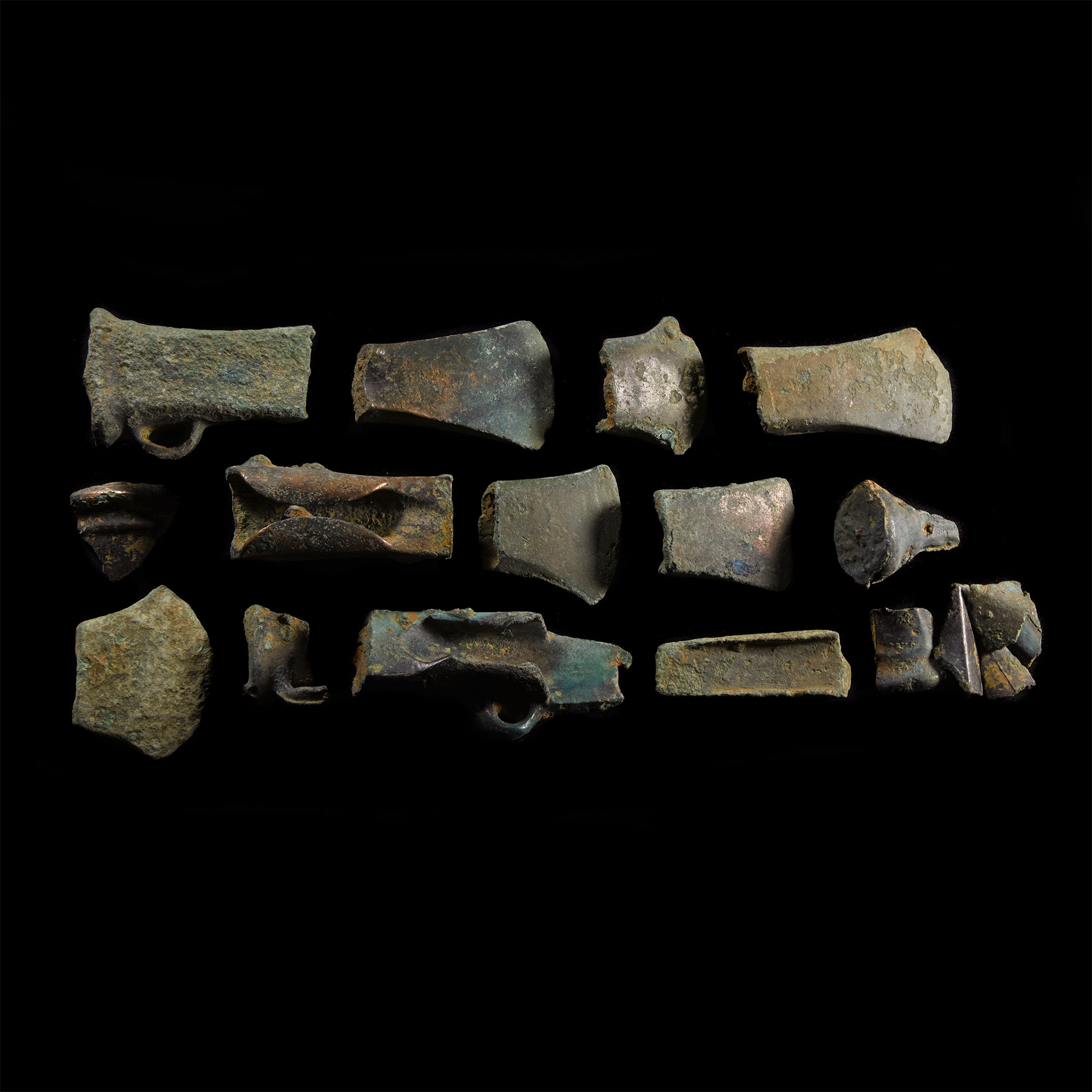
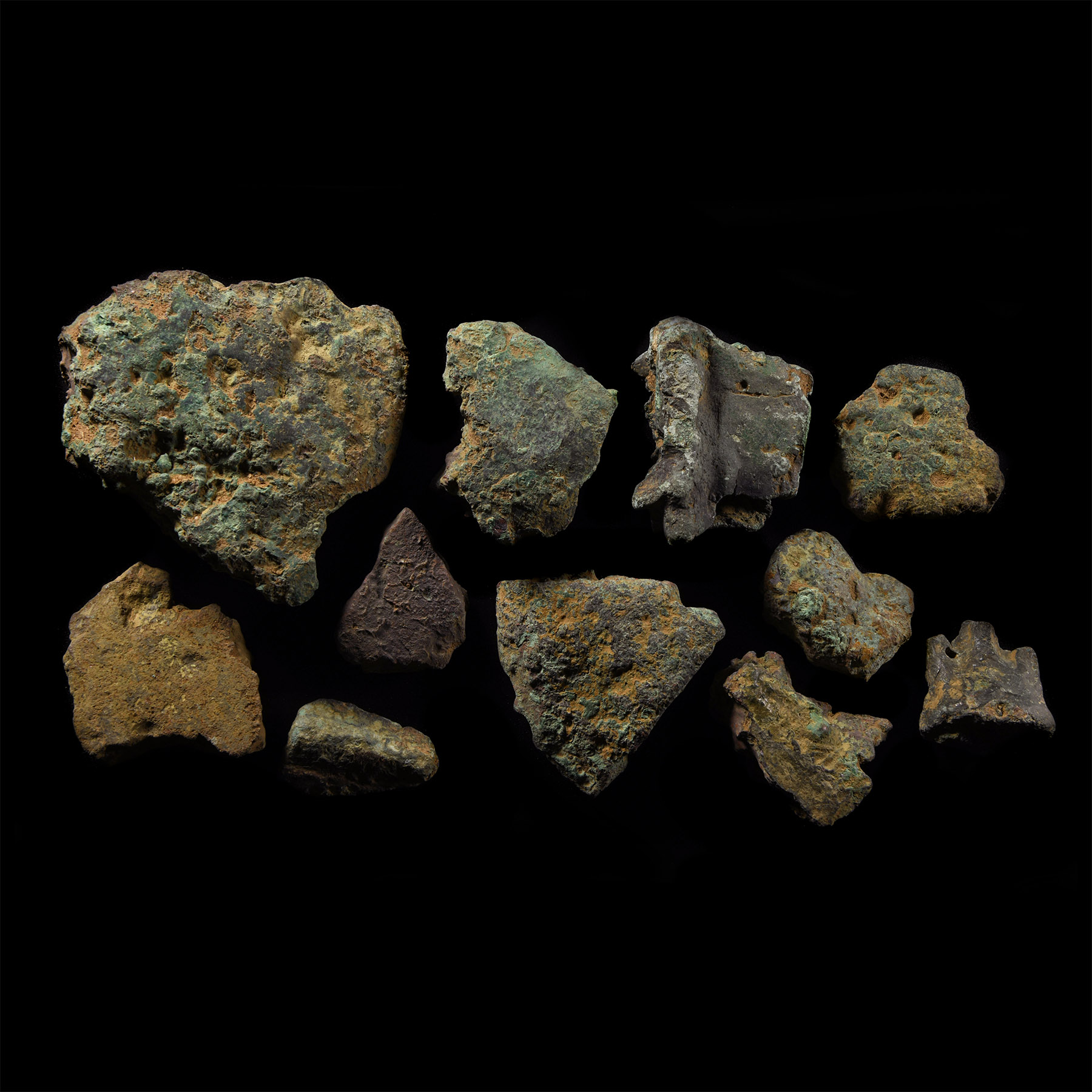
Being an entire 'founder' hoard deposit comprising: complete socketted axes (6; three with linear ornament to sockets); fragments of socketted and earlier type palstave axes (18, including two that fit together); fragments of other items (4) and pieces of copper 'bun' ingot (8). [36]
ProvenanceFound whilst searching with a metal detector in Braintree, Essex, UK, on 14th August 2019.
Accompanied by a copy of the British Museum's Portable Antiquities Scheme (PAS) report no.BM-C514EA and with a copy of the Harwich Museum loan form.
Disclaimed under the Treasure Act with reference number 2019 T731.
The British Museum's Portable Antiquities Scheme (PAS), reference BM-C514EA (this find).
Exhibited at Harwich Museum, Harwich, Essex, UK, 29th June-4th September 2023.
See Pendleton, Colin F., Bronze Age Metalwork in Northern East Anglia, BAR British Series 279, 1999, for much information on similar pieces found in East Anglia; see also Evans, John, The Ancient Bronze Implements, Weapons and Ornaments of Great Britain and Ireland, London, 1881.
FootnotesThe composition of this hoard is quite typical of similar deposits found across south-eastern England and dating to the Late Bronze Age; most such finds include broken fragments together with pieces of ingot and some complete items, as seen here. It is unusual to see an entire deposit offered together as most such are either held in museums or have been divided up.
CONDITIONTimeLine Auctions follows a vetting process to ensure the authenticity and legality of all items, reinforcing our commitment to integrity and responsible trading. Each antiquity, antique, and coin lot undergoes thorough examination by a vetting committee of at least ten external specialists, professional trade association members, scientists, and archaeologists: Our Vetting Process
AUCTIONS:
TimeLine is a leading auction house specialising in antiquities, ancient art, collectables, natural history, coins, medals, and books. Our auctions offer museums, collectors, historians, and enthusiasts the opportunity to acquire unique and historically significant pieces.
LOT 0275
'The Braintree' Bronze Age Axehead and Foundry 'Carp's Tongue/Ewart Phase' Hoard
Sold for (Inc. bp): £3,380
-
.jpg)
Bronze Age Socketted Axehead Fragment
2nd-1st millennium B.C.Sold for (Inc. bp): £26
Featuring a convex cutting edge and wedge-shaped cheeks with crescentic blade; socket damaged in antiquity. 159 grams, 71 mm
UK gallery, early 2000s. -
Bronze Age to Post Medieval Artefact Collection
2nd millennium B.C.-18th century A.D.Sold for (Inc. bp): £26
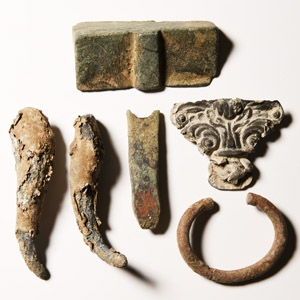
Comprising: rectangular bronze plaque with fluted surface; pair of bronze curved horns; round-section C-shaped child's bracelet; baroque furniture mount with scrolled palmette detailing; small bronze chisel with scooped end. 244 grams total, 45-70 mm
Found Berkshire, UK, by M. Ruczynski; the mount found Boxford in 2016. Accompanied by a copy of a report for the Bronze Age Chisel by the British Museum's Portable Antiquities Scheme (PAS) with report no.BERK-DEF089. -
Large Bronze Age Socketted Axehead
2nd millennium B.C.Sold for (Inc. bp): £117
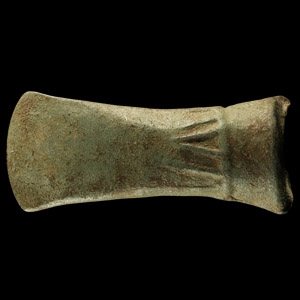
Featuring an elliptical socket and wedge-shaped cheeks with convex cutting edge, raised concentric triangle-in-trapezoid to both sides of the neck. 485 grams, 13.5 cm
Private collection formed in Europe in the 1980s. Westminster collection, central London, UK.
