
Loading, please wait...
LOT 1194
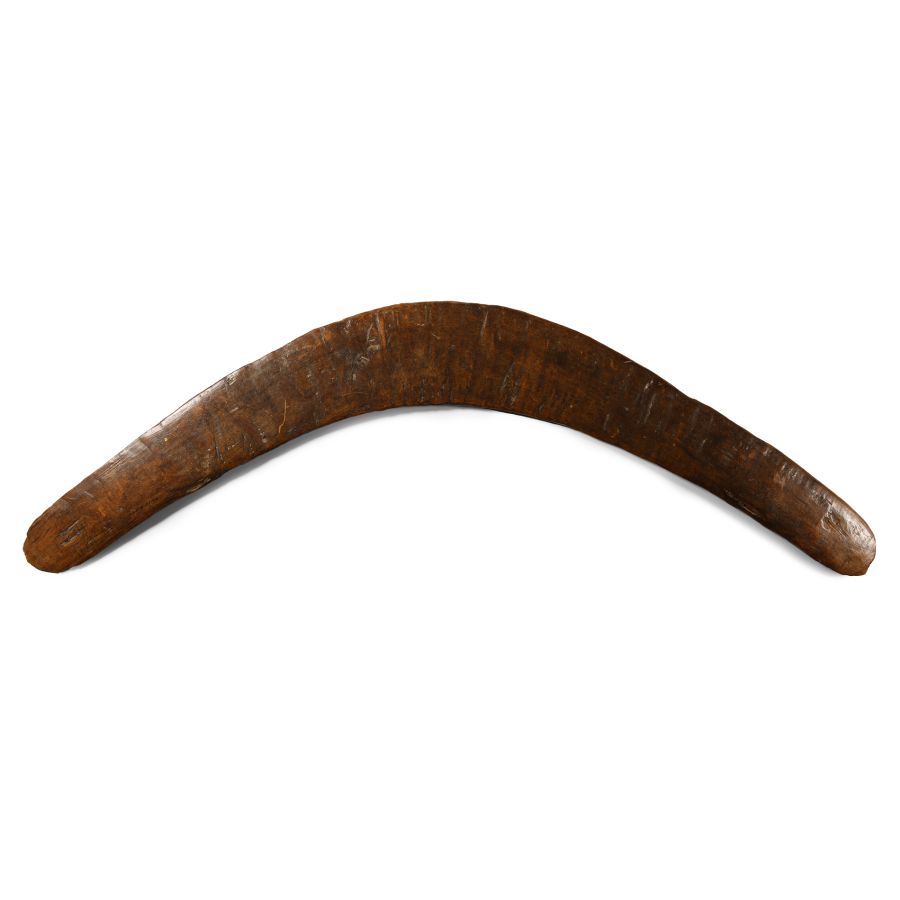
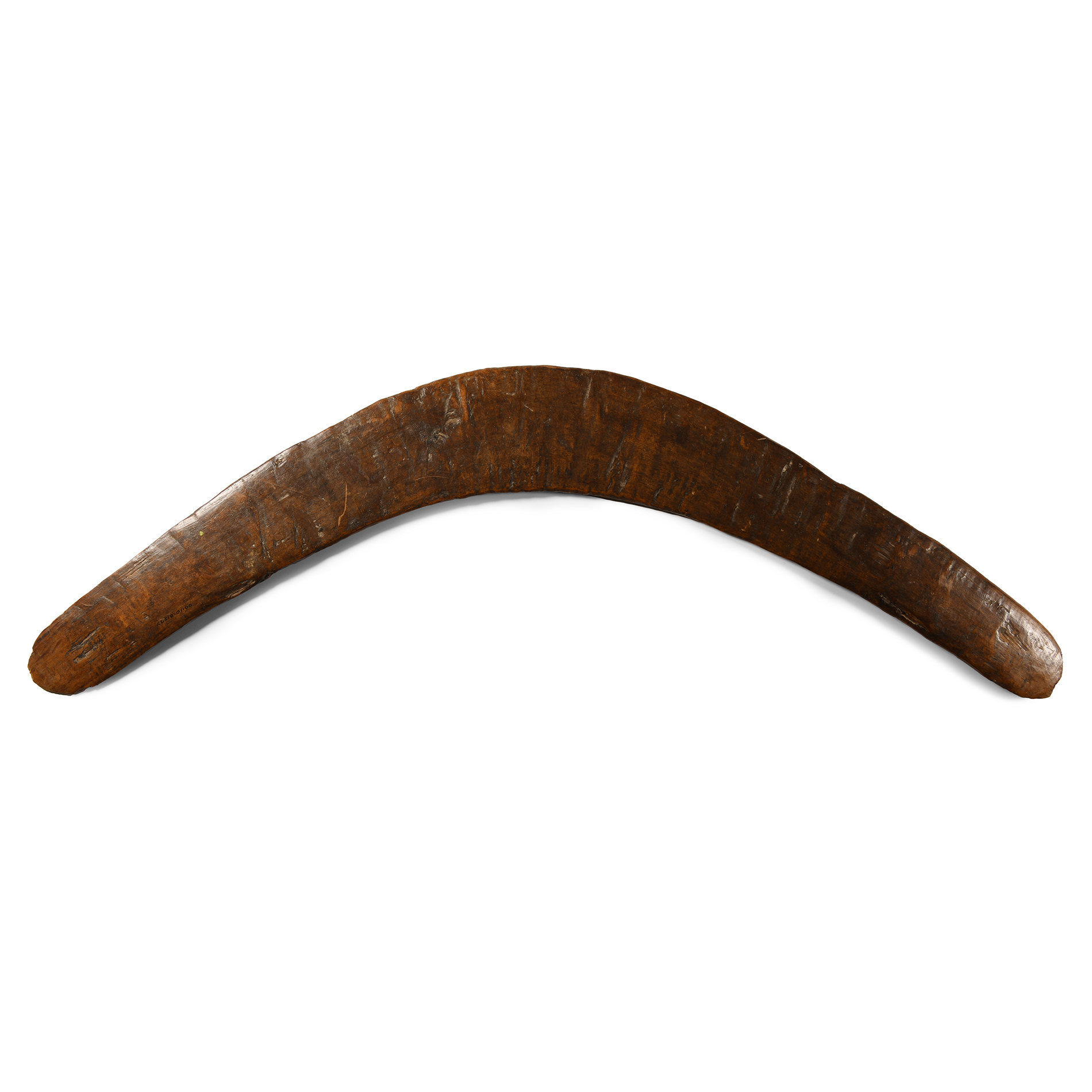
Australian Aboriginal Wood Boomerang
19TH CENTURY A.D. OR EARLIER
20 7/8 in. (182 grams, 53 cm).
Formed with a gently curving profile and showing transverse grooves from the carving technique; bearing handwritten collector's inventory number 'RO518.01.00'. [No Reserve]
ProvenancePrivate U.K. family collection formed in the early 1970s.
The property of Mr and Mrs P.R. of East Sussex.
Thence by descent to family members.
TimeLine Auctions follows a vetting process to ensure the authenticity and legality of all items, reinforcing our commitment to integrity and responsible trading. Each antiquity, antique, and coin lot undergoes thorough examination by a vetting committee of at least ten external specialists, professional trade association members, scientists, and archaeologists: Our Vetting Process
AUCTIONS:
TimeLine is a leading auction house specialising in antiquities, ancient art, collectables, natural history, coins, medals, and books. Our auctions offer museums, collectors, historians, and enthusiasts the opportunity to acquire unique and historically significant pieces.
-
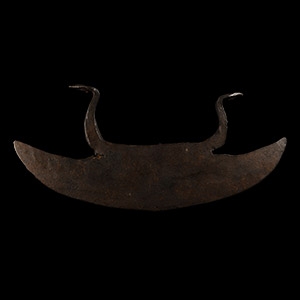
Medieval Iron Blade
Circa 14th-16th century A.D.Sold for (Inc. bp): £78
A slender crescentic axehead with attachment arms, single rivet hole to each terminal. 418 grams, 26 cm
Ex property of B.C., previously in a 1970s collection. Property of a Ruislip, UK, gentleman, by inheritance. Accompanied by a copy of a previous dealer's certificate of authenticity. -
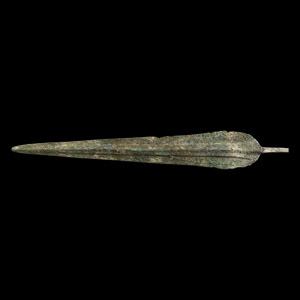
Luristan Bronze Sword Blade
1st millennium B.C.Sold for (Inc. bp): £221
Comprising a narrow leaf-shaped blade with midrib and lateral channels, rounded shoulders, short tang with attachment hole. 445 grams, 45.5 cm
Ex German collection, Cologne, formed 1980s-1990. The Kusmirek Collection, UK.
The metalworking techniques used in making bronze weapons in early Iran were very complex. Surfaces were often finished in repoussé work, and some of the weapons were chased, others engraved. The function of the ridges here was not only decorative, however, but principally to reduce suction and thus allow the blade to be withdrawn speedily. The ruling elites of warrior horsemen were buried in the graves with their weapons and horses which are the main sources of the Luristan and North-Western bronze weapons. -
.jpg)
Sassanian Bronze Spangenhelm
6th-7th century A.D.Sold for (Inc. bp): £3,380
Multi-segmented with an ogival profile, rivetted conical finial and riveted straps running vertically around the circumference; some restoration. 1.14 kg, 23 cm high
UK private collection before 2000. UK art market. Property of a London gentleman. Accompanied by an academic report by Dr Raffaele D'Amato. This lot has been checked against the Interpol Database of stolen works of art and is accompanied by searcher certificate no.11589-199700.
The Spangenhelm is a protective headgear made up from segments or plates held together by a frame. As a popular form of helmet it came to prominence in western Europe in the later Roman Empire, and remained in use for some centuries until replaced by helmets formed from a single sheet.
