
Loading, please wait...
LOT 1130
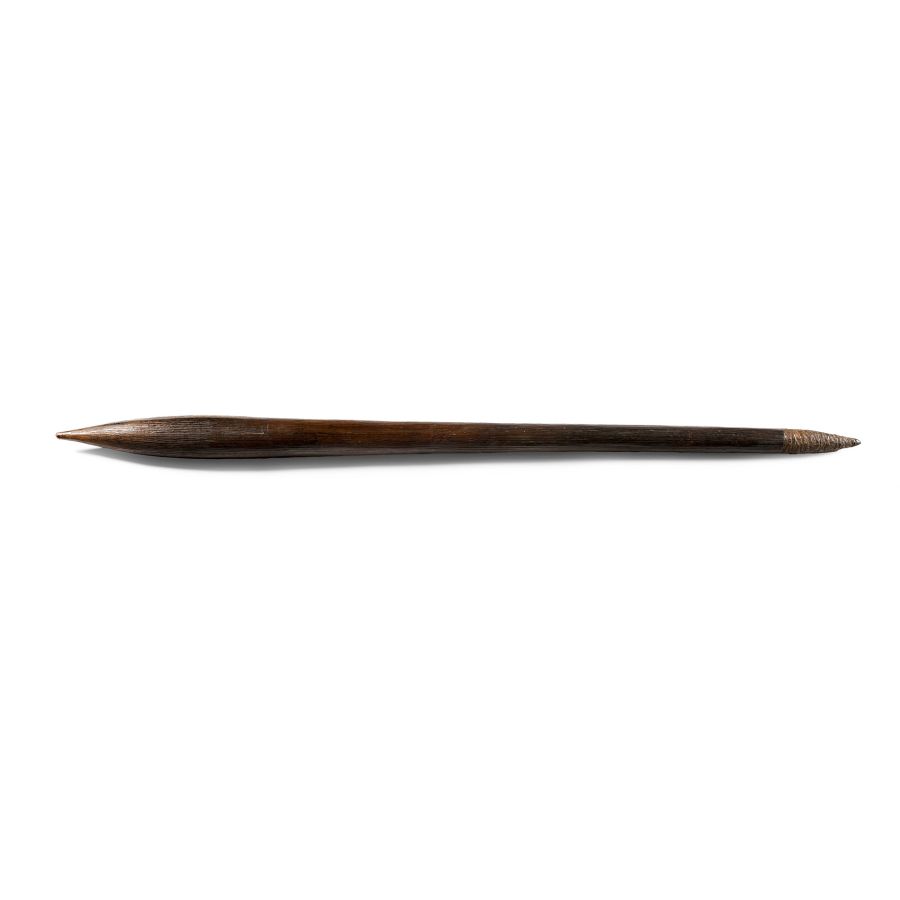
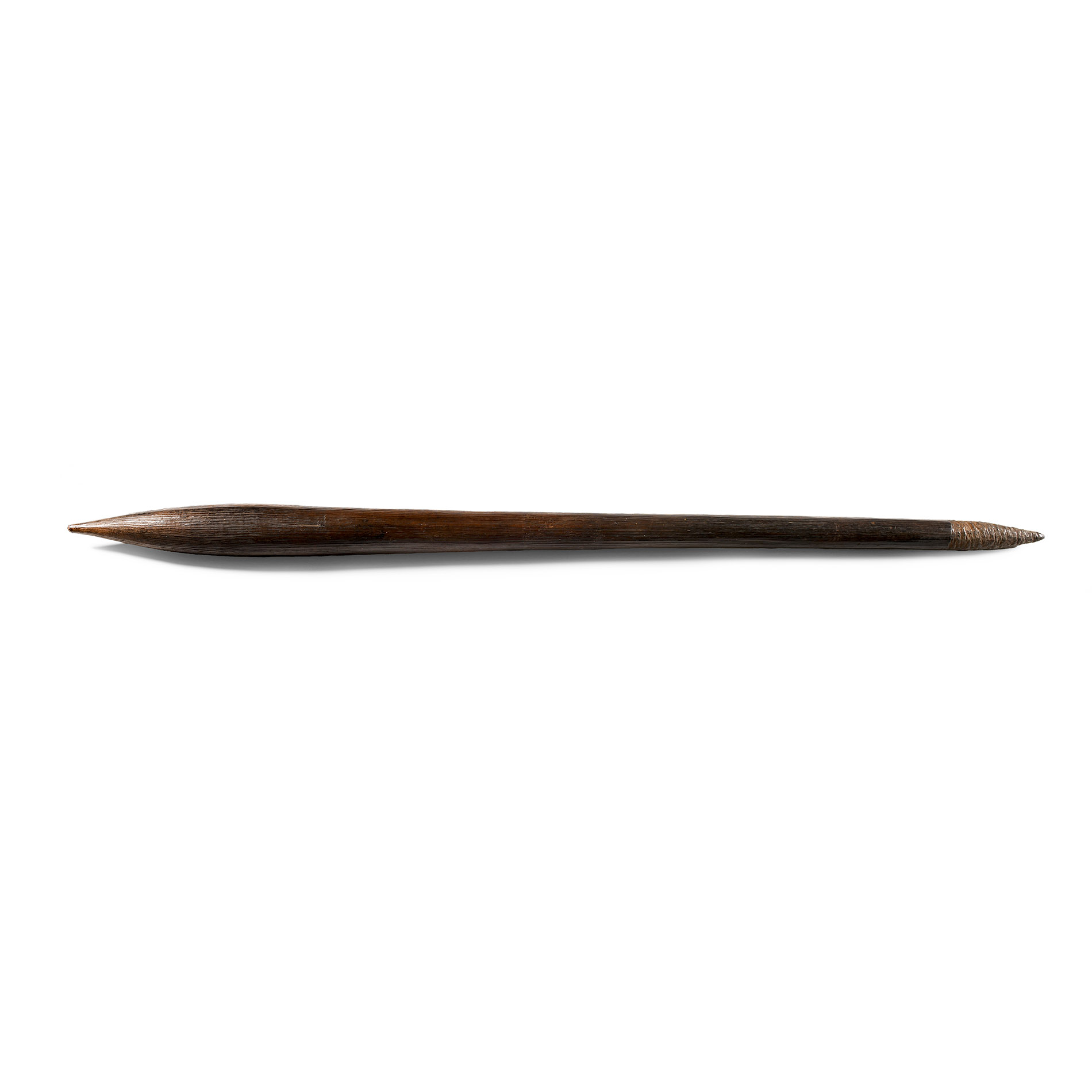
Australian Aboriginal Throwing Club
19TH CENTURY A.D.
27 1/8 in. (435 grams, 69 cm).
The round-section shaft with one tapered end and a pointed, bulbous head. [No Reserve]
ProvenanceAcquired UK market.
Property of a Kent collector.
Used for hunting and in warfare. Possibly engraved using a possum tooth.
CONDITIONTimeLine Auctions follows a vetting process to ensure the authenticity and legality of all items, reinforcing our commitment to integrity and responsible trading. Each antiquity, antique, and coin lot undergoes thorough examination by a vetting committee of at least ten external specialists, professional trade association members, scientists, and archaeologists: Our Vetting Process
AUCTIONS:
TimeLine is a leading auction house specialising in antiquities, ancient art, collectables, natural history, coins, medals, and books. Our auctions offer museums, collectors, historians, and enthusiasts the opportunity to acquire unique and historically significant pieces.
-
Australian Aboriginal Throwing Club
19th century A.D.Sold for (Inc. bp): £117
The round-section shaft with one tapered end and a pointed, bulbous head. 435 grams, 69 cm
Acquired UK market. Property of a Kent collector.
Used for hunting and in warfare. Possibly engraved using a possum tooth. -
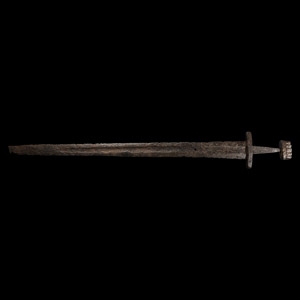
Viking Age Single-Handed Sword with Five-Lobed Pommel
9th-10th century A.D.Sold for (Inc. bp): £4,160
Of Petersen Type K with double-edged tapering blade, shallow fullers; boat-shaped lower and upper guard with five-lobed pommel showing traces of silver inlay. 703 grams, 81.2 cm
Otto Kruetz collection, Germany 1980s. Belgium collection. UK collection, 2000s. Property of an East Sussex, UK, teacher. Accompanied by an academic report by Dr Raffaele D'Amato.
It is the decoration and the structure of the sword that suggests classifying it as Petersen Type K, with a similar structure to the famous sword from Ballinderry Bog (Peirce, 2002, pp.63ff.). Other examples of the type are the 9th century sword of Kilmainham, in Dublin, the Ostby farm sword from Oslo, a sword in the Musée de l’Armée, Paris, and the Kilde farm sword from Oslo, the fullers of which are very similar to our model (Peirce, 2002, pp.66-73). -
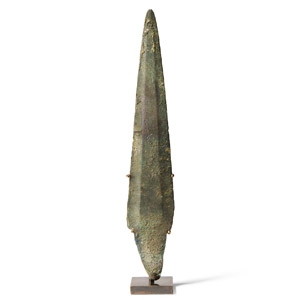
Western Asiatic Bronze Dagger
2nd millennium B.C.Estimate: £200 - 300 (‡+bp*)
Opening Bid: £100
With narrow pointed blade and wide raised flange down centre, straight sides, well marked shoulders with wide tang, one upper hole for rivet. 149 grams total, 21 cm high including stand
From the possessions of a member of a German princely family, gathered in the late 19th century, until the 1930s. with Auction House CUSP, Vienna, Auction Antique Art from Asia and from the Eastern Mediterranean, 16 June 2012, lot 75 [Part].
The type was technically more advanced than previous types of blades in the Near East due to its shape and its slightly convex sides widening out near the point, which combined the advantages of the leaf-shaped and straight-sided forms.
