
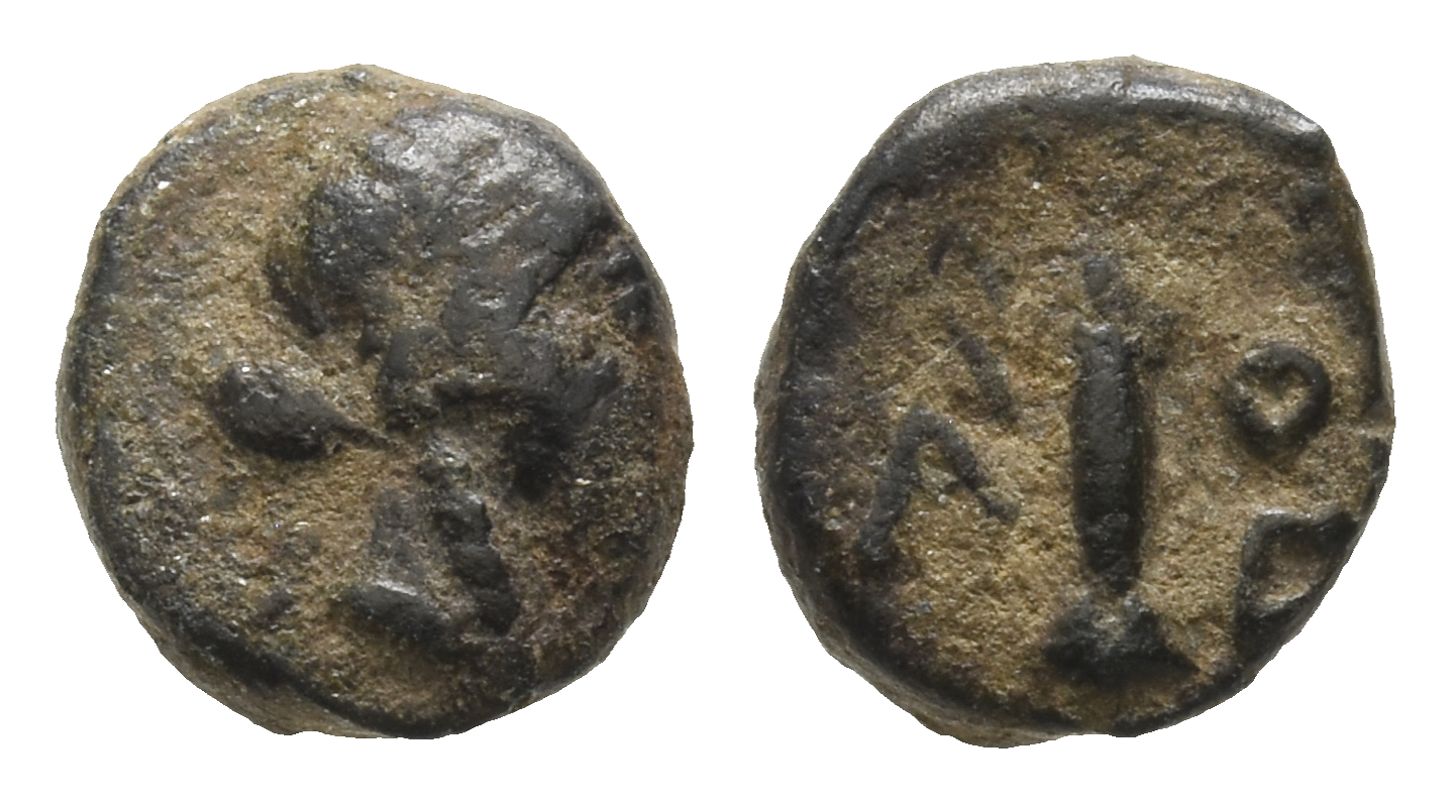
LOT 3145
Attica, Athens AE 9mm. Clerouchy of Delos, Period III, circa 166-150 BC.
Laureate head of Apollo to right / Quiver; AΘΕ in fields. Svoronos, Monnaies pl. 106, 33-41. Near Very Fine. Extremely rare; no other examples on CoinArchives.(0.94gr, 9mm, 12h.).
ProvenanceAcquired on the European coin market.
Property of a Kent, UK, gentleman.
It is in the Periods II-III and after the acquisition of Delos in 167/166 BC, that Delian Apollo and his attributes make their appearance as Athenian coin types and dominate the obverses of these small bronze denominations.
TimeLine Auctions follows a vetting process to ensure the authenticity and legality of all items, reinforcing our commitment to integrity and responsible trading. Each antiquity, antique, and coin lot undergoes thorough examination by a vetting committee of at least ten external specialists, professional trade association members, scientists, and archaeologists: Our Vetting Process
AUCTIONS:
TimeLine is a leading auction house specialising in antiquities, ancient art, collectables, natural history, coins, medals, and books. Our auctions offer museums, collectors, historians, and enthusiasts the opportunity to acquire unique and historically significant pieces.
-
.jpg)
Seleukid Empire, Antiochos I Soter AE 12mm. 281-261 BC. Tarsos mint.
Sold for (Inc. bp): £52
Head of Athena to right, wearing Corinthian helmet / BA AN, laureate pileus. SC 334; HGC 9, 217 (R3). 1.53gr, 12mm, 1h.
Near Very Fine. Extremely rare; no other examples on CoinArchives.
Acquired on the European coin market. Property of a Kent, UK, gentleman. -
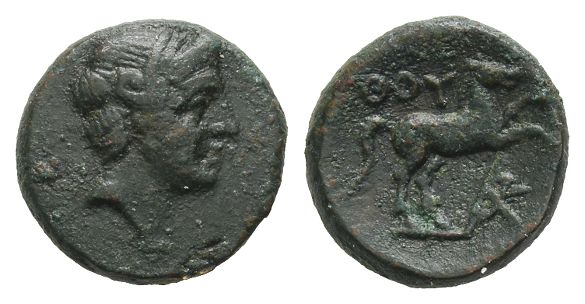
Lucania, Thourioi AE 13mm. Circa 280-270 BC.
Sold for (Inc. bp): £46
Head of Apollo to right / ΘΟΥ, horse galloping to right; below, monogram of ΑΣ. Historia Numorum Italy 1928 var. (monogram); HGC 1, 1288. 2.38gr, 13mm, 9h.
Very Fine.
Acquired on the UK art market. From the collection of Mr Carlos Bahamonde, Manchester, UK. -
.jpg)
Cyclades, Delos AE Chalkous. Circa 280-166 BC.
Sold for (Inc. bp): £117
Laureate head of Apollo to left / Δ-H, lyre. SNG Copenhagen 670; BMC 7; HGC 6, 500. 0.75gr, 10mm, 4h.
Very Fine.
Acquired on the European coin market. Property of a Kent, UK, gentleman.
