
Loading, please wait...
LOT 0629
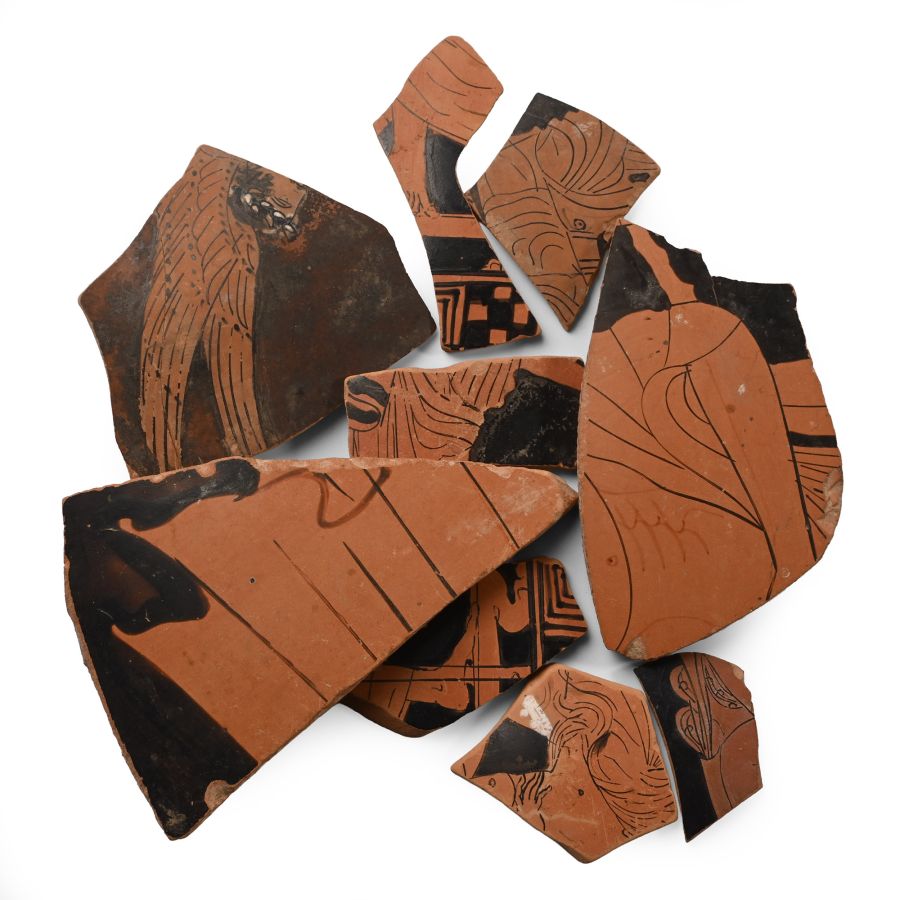
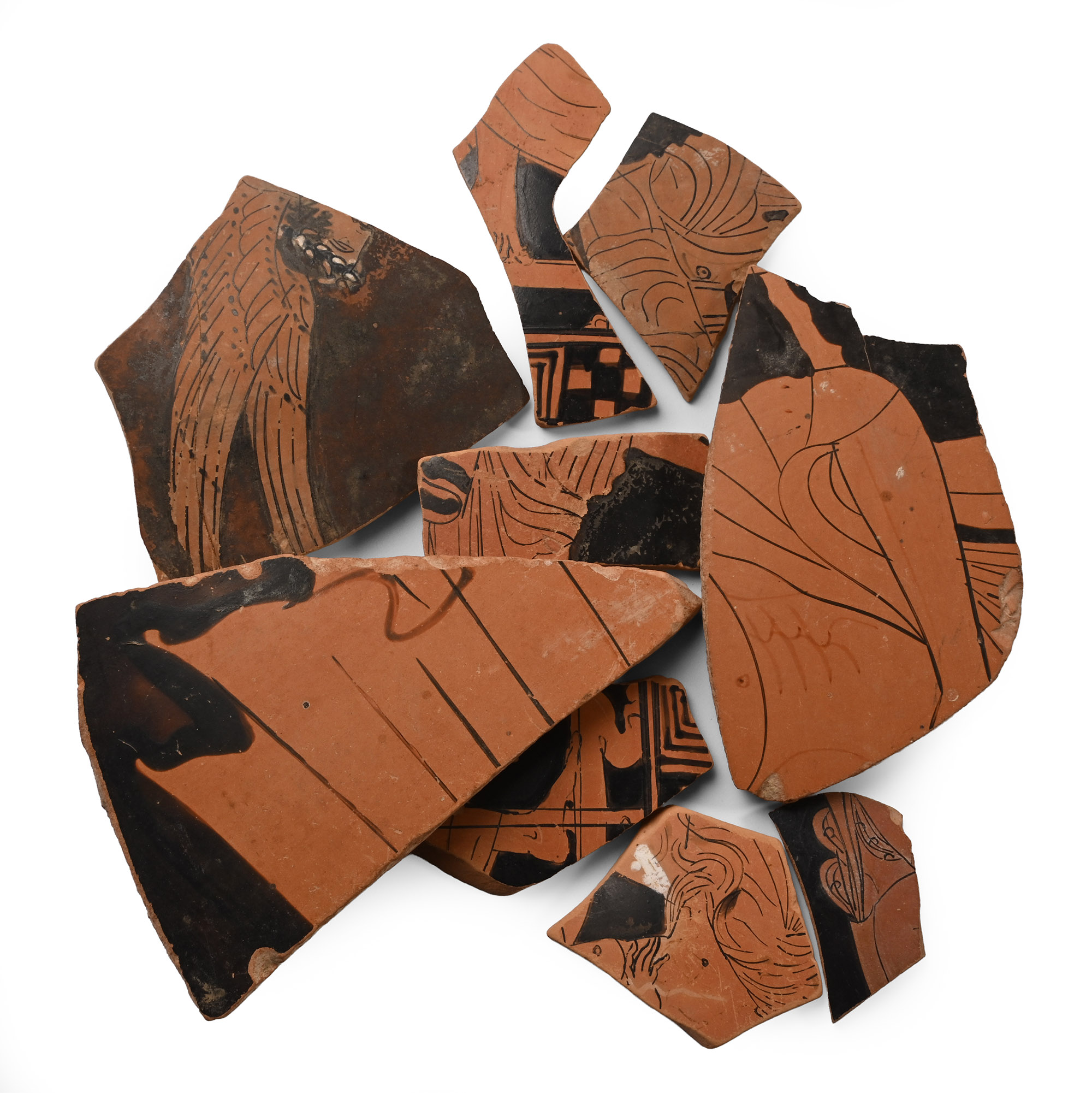
Attic Pottery Collection
4TH CENTURY B.C.
1 - 3 in. (53 grams total, 26-76 mm).
Each showing various decorative motifs including one with the winged figure of Eos, and other images of torsos of men and women. [9, No Reserve]
ProvenanceFrom a deceased estate, UK.
Acquired on the UK art market.
This lot is accompanied by an illustrated lot declaration signed by the Head of the Antiquities Department, Dr Raffaele D'Amato.
Cf. Jentoft-Nilsen, Corpus Vasorum Antiquorum, the J.Paul Getty Museum, Malibu, South Italian Vases, Apulian, Lucanian, Campanian, Sicilian and Paestan Red-Figure, Malibu, 1991, pls.190,192,215, for painted pottery showing intact parallels for similar fragments.
FootnotesThese fragments show the indebtedness or South Italian vase-makers to their colleagues in mainland Greece, which later developed into one of the most dominant shapes in Apulian red-figure while, at the same time, in Athens, these subjects became less popular by 380 B.C.
CONDITIONTimeLine Auctions follows a vetting process to ensure the authenticity and legality of all items, reinforcing our commitment to integrity and responsible trading. Each antiquity, antique, and coin lot undergoes thorough examination by a vetting committee of at least ten external specialists, professional trade association members, scientists, and archaeologists: Our Vetting Process
AUCTIONS:
TimeLine is a leading auction house specialising in antiquities, ancient art, collectables, natural history, coins, medals, and books. Our auctions offer museums, collectors, historians, and enthusiasts the opportunity to acquire unique and historically significant pieces.
-
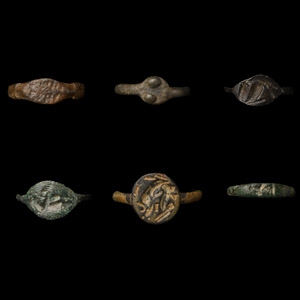
Greek and Other Bronze Ring Collection
4th century B.C.-2nd century A.D.Sold for (Inc. bp): £104
Including discoid, scaphoid, pelletted and other bezel types. 10.12 grams total, 18-24 mm
Ex London, UK, gentleman 1980-1990s. This lot is accompanied by an illustrated lot declaration signed by the Head of the Antiquities Department, Dr Raffaele D'Amato. -
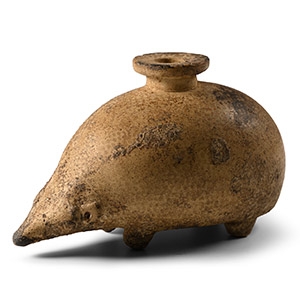
Eastern Greek Terracotta Hedgehog Aryballos
6th century B.C.Estimate: £1,200 - 1,700 (‡+bp*)
Opening Bid: £667
Hollow-formed with textured body and four stub legs, conical nose and lateral flanges with impressed point eyes; discoid flange rim to the neck with incised petal detailing. 55 grams, 98 mm
Ex Mrs IM collection, nr 18 (widow of Leo Mildenberg), formed in Zurich, gift from her husband between 1975-2000. Acquired by the present owner from the above. This lot has been checked against the Interpol Database of stolen works of art and is accompanied by search certificate number no.12208-222174. This lot has been cleared against the Art Loss Register database, and is accompanied by an illustrated lot declaration signed by the Head of the Antiquities Department, Dr Raffaele D’Amato. This lot is accompanied by an illustrated lot declaration signed by the Head of the Antiquities Department, Dr Raffaele D'Amato. -
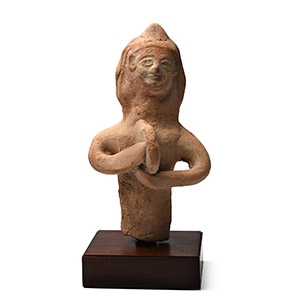
Greek Terracotta Musician Figure
Cyprus, 7th century B.C.Sold for (Inc. bp): £390
A musician wearing a broad leaf-shaped headdress, arms bent clasping a D-shaped rhoptron tambourine; red pigment to the headdress, carefully modelled ears, eyes and other facial features; mounted on a custom-made stand. 283 grams total, 16 cm including stand
Fine condition.
Formerly in an old Tokyo collection. Property of a Japanese gentleman, acquired early 1990s. with Timeline Auctions, London, 4 September 2019, no.904. Private collection of John Meredith, thence by descent. This lot is accompanied by an illustrated lot declaration signed by the Head of the Antiquities Department, Dr Raffaele D'Amato.
