
Loading, please wait...
LOT 1507
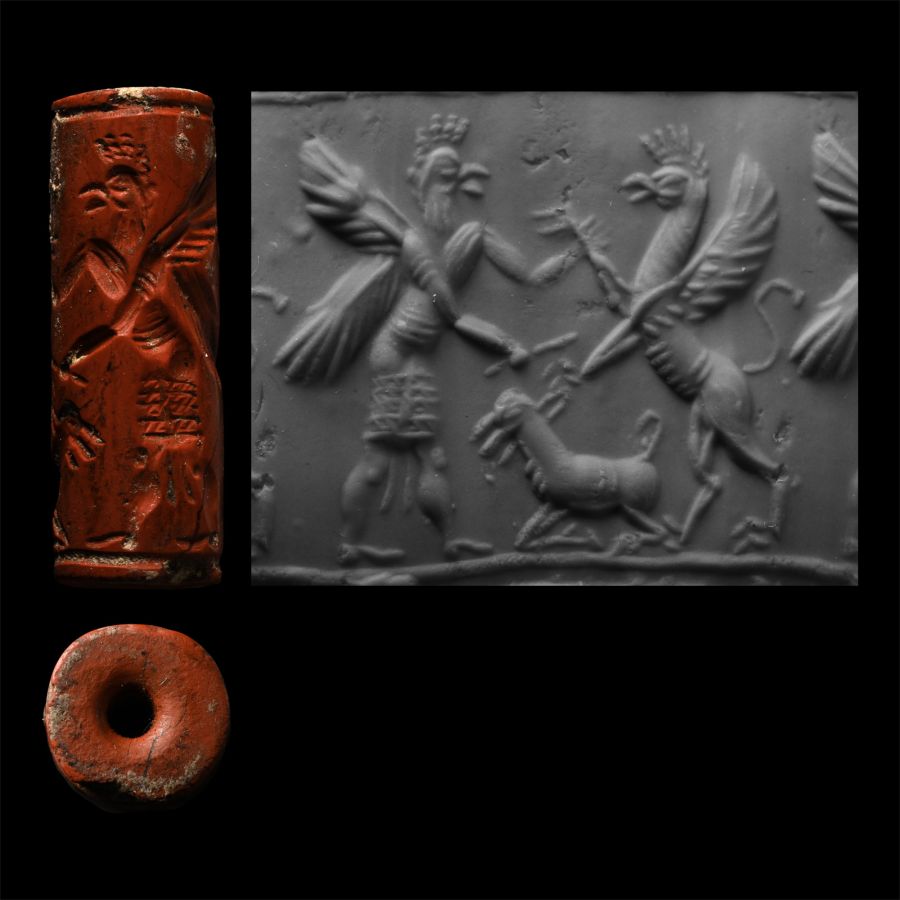
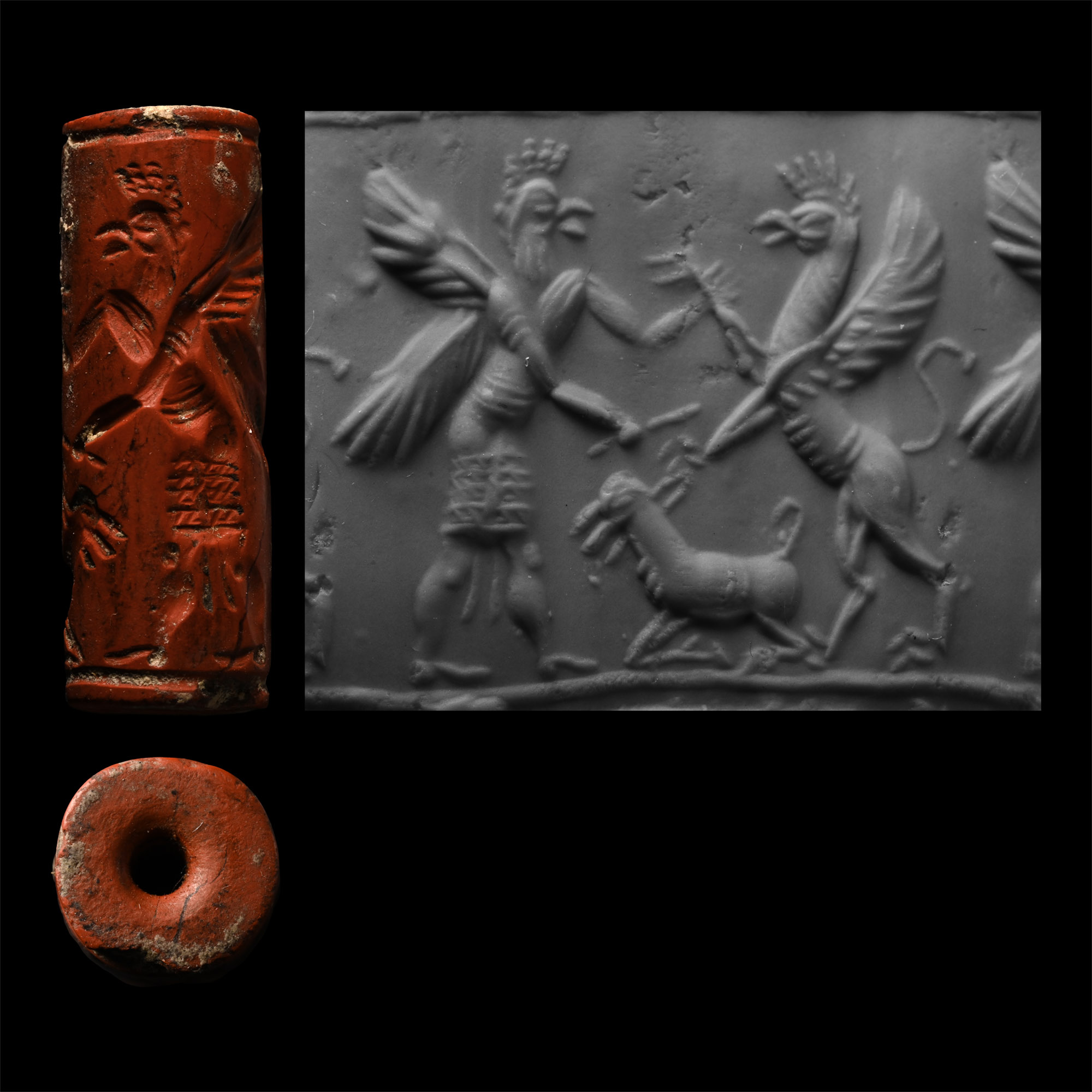
Assyrian Red Jasper Cylinder Seal with Contest Scene
EARLY 1ST MILLENNIUM B.C.
1 1/8 in. (6.07 grams, 30 mm).
Comprising two rearing gryphons engaged in combat, a small reclining quadruped (sheep?) between them on the ground line.
ProvenanceUK private collection before 2000.
Acquired on the UK art market.
Property of a London gentleman.
This lot has been cleared against the Art Loss Register database, and is accompanied by an illustrated lot declaration signed by the Head of the Antiquities Department, Dr Raffaele D'Amato.
TimeLine Auctions follows a vetting process to ensure the authenticity and legality of all items, reinforcing our commitment to integrity and responsible trading. Each antiquity, antique, and coin lot undergoes thorough examination by a vetting committee of at least ten external specialists, professional trade association members, scientists, and archaeologists: Our Vetting Process
AUCTIONS:
TimeLine is a leading auction house specialising in antiquities, ancient art, collectables, natural history, coins, medals, and books. Our auctions offer museums, collectors, historians, and enthusiasts the opportunity to acquire unique and historically significant pieces.
-
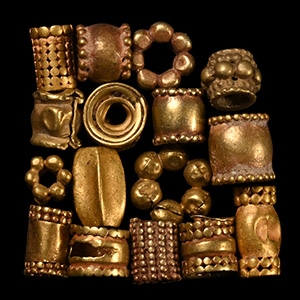
Western Asiatic Tubular Gold Bead Group
1st millennium B.C.Sold for (Inc. bp): £468
Comprising twelve tubular beads with applied granules, two formed of interlocking spheres, and one barrel-shaped with concave sides. 4.67 grams total, 3-7 mm
Ex property of a late Japanese collector, 1970-2000s. This lot has been cleared against the Art Loss Register database, and is accompanied by an illustrated lot declaration signed by the Head of the Antiquities Department, Dr Raffaele D'Amato. -
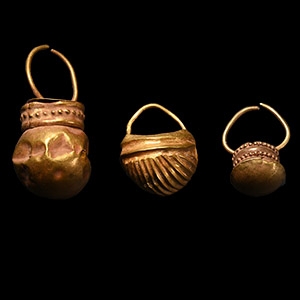
Western Asiatic Gold Earring Group
1st millennium B.C.Estimate: £250 - 350 (+bp*)
Opening Bid: £125
Comprising: one with domed underside, two beaded collars; one with bulbous body and repoussé pellets to the collar; one shell-shaped with ribbing. 3.05 grams total, 17-27 mm
Ex property of a late Japanese collector, 1970-2000s. This lot has been cleared against the Art Loss Register database, and is accompanied by an illustrated lot declaration signed by the Head of the Antiquities Department, Dr Raffaele D'Amato. -
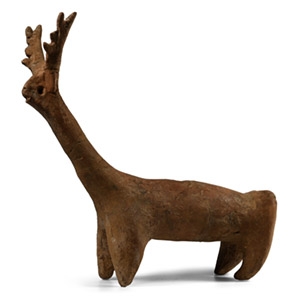
Amlash Terracotta Rhyton
2nd-1st millennium B.C.Sold for (Inc. bp): £572
In the form of a standing stag with tubular body, flared rump with pendant tail, four stub legs, large crescentic antlers, flat muzzle, and dimpled eyes, filling hole to middle of back, small spout at mouth. 825 grams, 24.3 cm wide
with a London, UK gallery 1971-early 2000s. Private collection, London. This lot has been cleared against the Art Loss Register database, and is accompanied by an illustrated lot declaration signed by the Head of the Antiquities Department, Dr Raffaele D'Amato.
