
Loading, please wait...

LOT 1235
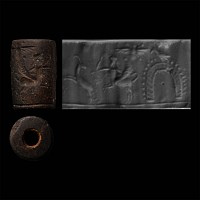
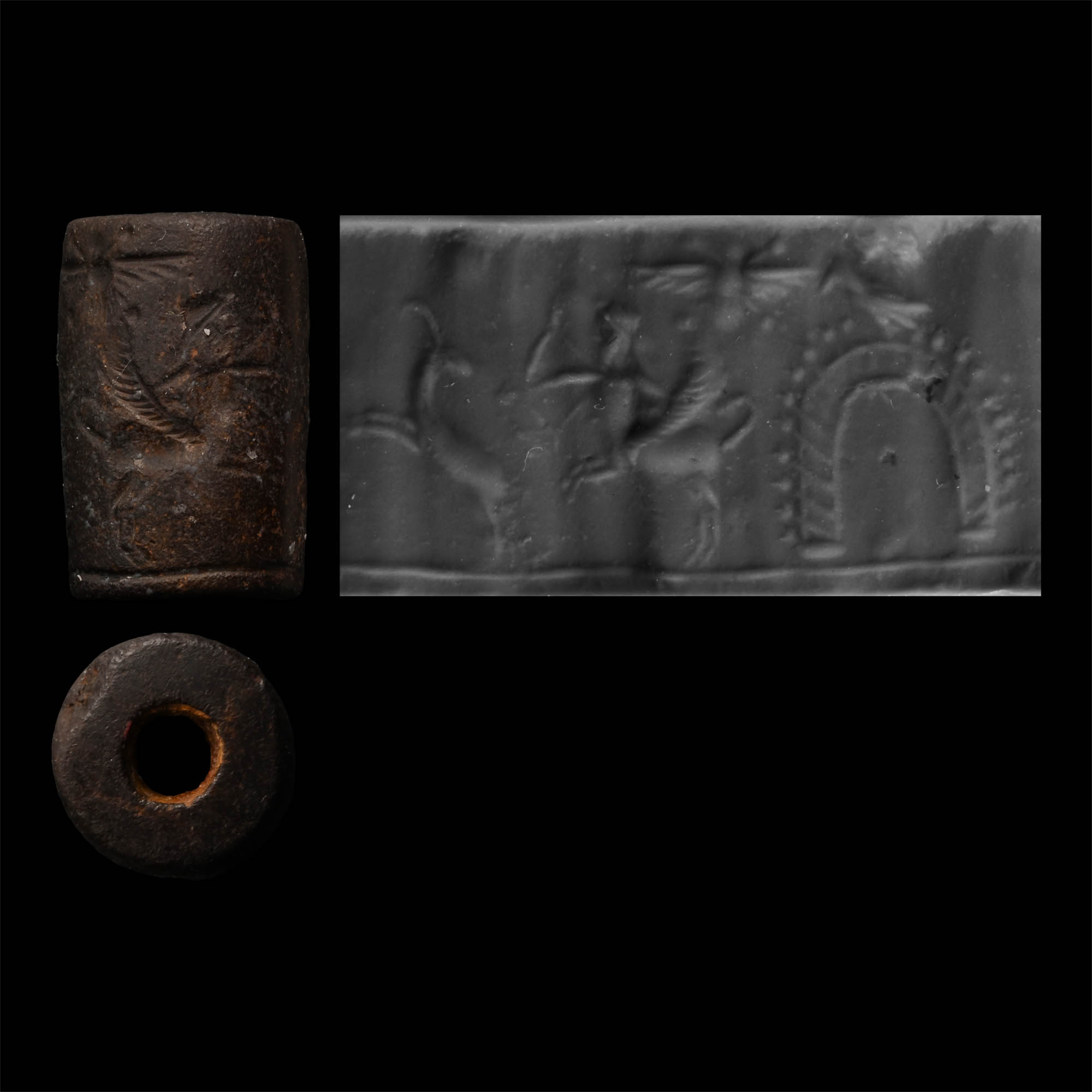
Assyrian Haematite Cylinder Seal with Hunting Scene
1ST MILLENNIUM B.C.
5/8 in. (3.65 grams, 15 mm).
Frieze including ribbed arch, gryphon drawing a bow, winged sun-disc, rampant ibex.
ProvenanceFrom the 'S' collection, 1970-1990s.
This lot has been cleared against the Art Loss Register database, and is accompanied by an illustrated lot declaration signed by the Head of the Antiquities Department, Dr Raffaele D'Amato.
TimeLine Auctions follows a vetting process to ensure the authenticity and legality of all items, reinforcing our commitment to integrity and responsible trading. Each antiquity, antique, and coin lot undergoes thorough examination by a vetting committee of at least ten external specialists, professional trade association members, scientists, and archaeologists: Our Vetting Process
AUCTIONS:
TimeLine is a leading auction house specialising in antiquities, ancient art, collectables, natural history, coins, medals, and books. Our auctions offer museums, collectors, historians, and enthusiasts the opportunity to acquire unique and historically significant pieces.
LOT 1235
Assyrian Haematite Cylinder Seal with Hunting Scene
Estimate £350 - 450€410 - 520 (for guidance only)$470 - 610 (for guidance only)
-
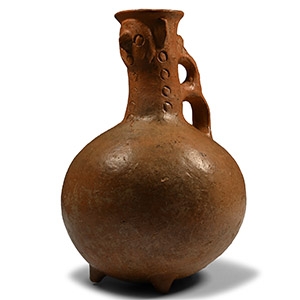
Amlash Terracotta Single-Handled Jug with Head Attachment
10th-8th century B.C.Estimate: £1,000 - 1,400 (‡+bp*)
Opening Bid: £405
Comprising a rounded body resting on three stub legs; funicular mouth and short neck; beneath the rim a mask with pinched nose and two pointed ears, impressed circular eyes and mouth; three vertical decorative strips impressed with the same tool as formed the eyes and mouth; tiered strap handle with two finger-grips to the outer face and impressed detailing running from the neck to the shoulder; rim and one foot partly restored. 723 grams, 20.6 cm
Ex Zackary, Los Angeles, 1960s. Thereafter London art market, 1992. Accompanied by a copy of an Art Loss Register certificate no.S00079639. This lot has been cleared against the Art Loss Register database, and is accompanied by an illustrated lot declaration signed by the Head of the Antiquities Department, Dr Raffaele D'Amato. -
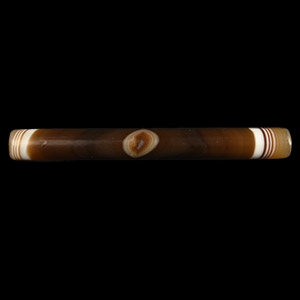
Large Bactrian Banded Agate Bead
1st millennium B.C. or laterEstimate: £800 - 1,000 (+bp*)
Opening Bid: £200
A long cylindrical bead, polished to accentuate natural contrasting banding at each end, with a natural 'eye' motif at the centre. 16.9 grams, 89 mm
UK private collection before 2000. Acquired on the UK art market. Property of a London gentleman. This lot has been cleared against the Art Loss Register database, and is accompanied by an illustrated lot declaration signed by the Head of the Antiquities Department, Dr Raffaele D'Amato. -
.jpg)
Old Babylonian Red Stone Cylinder Seal with Two Kneeling Worshippers
2100-2000 B.C.Sold for (Inc. bp): £416
Cylinder with cord and bead handles; accompanied by a copy of an old scholarly note, typed and signed by W.G. Lambert, late Professor of Assyriology, University of Birmingham, 1970-1993, which states: 'Cylinder seal of Red Stone with Some Cream, 30x13mm. The scene shows two kneeling worshippers, one either side of a stylized sacred tree below a winged solar disc. The seal is cut entirely with one tool, the cutting sheel, which enabled the work to be done quickly. the seal is to be dated c.900-800 B.C. and seals of this type are generally considered to be Babylonian, though this is not completely certain: they may have been made in Syria and southern Anatolia. The hands of the worshippers are in a typically Assyrian pose: one raised, one extended, but this type of seal is not generally found at Assyrian sites. The solar disc represents the storm god. Though there is some wear on the stone, the design remains quite clear and sharp.'; accompanied by a museum-quality impression. 8.8 grams total, 8.1-29.5 mm
UK private collection, acquired 1980-1983. Accompanied by a copy of a scholarly note, typed and signed by Professor Wilfrid George Lambert in August 1990. This lot has been cleared against the Art Loss Register database, and is accompanied by an illustrated lot declaration signed by the Head of the Antiquities Department, Dr Raffaele D'Amato.
