
Loading, please wait...
_900x900.jpg "Assyrian Clay Cuneiform Brick")
_200x200.jpg "Assyrian Clay Cuneiform Brick")
.jpg "Assyrian Clay Cuneiform Brick")
LOT 0232
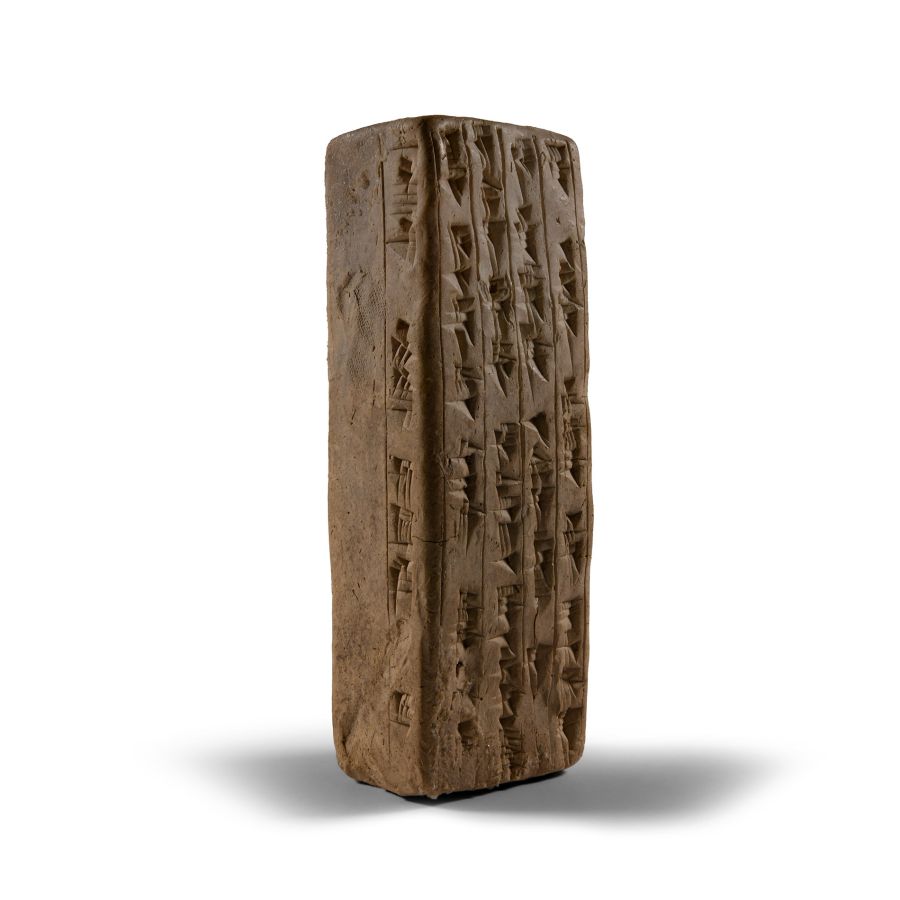
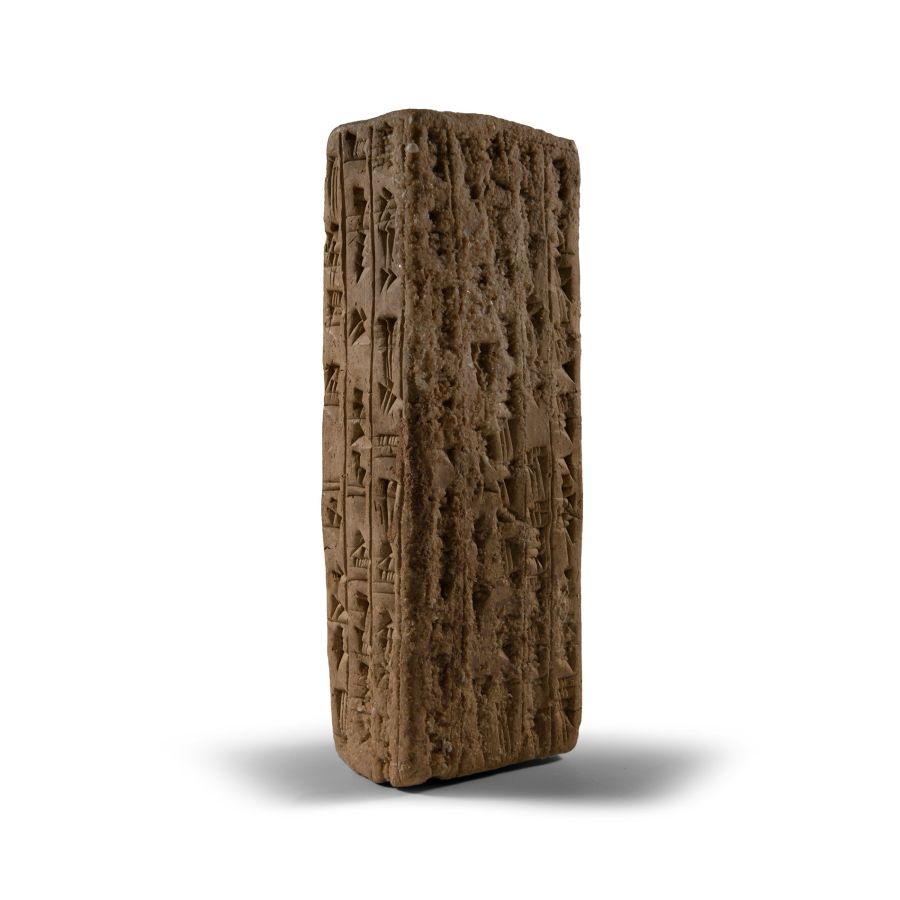
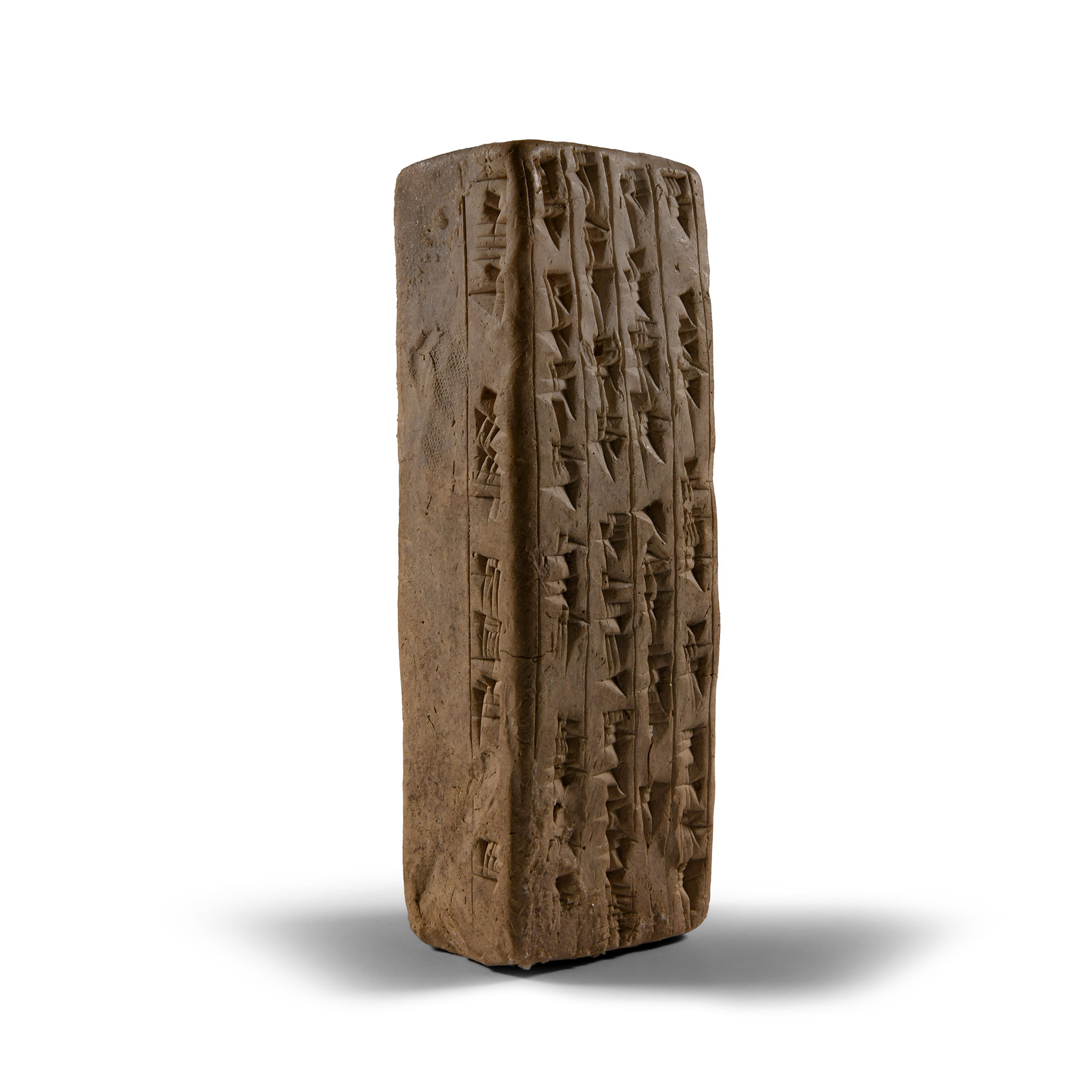
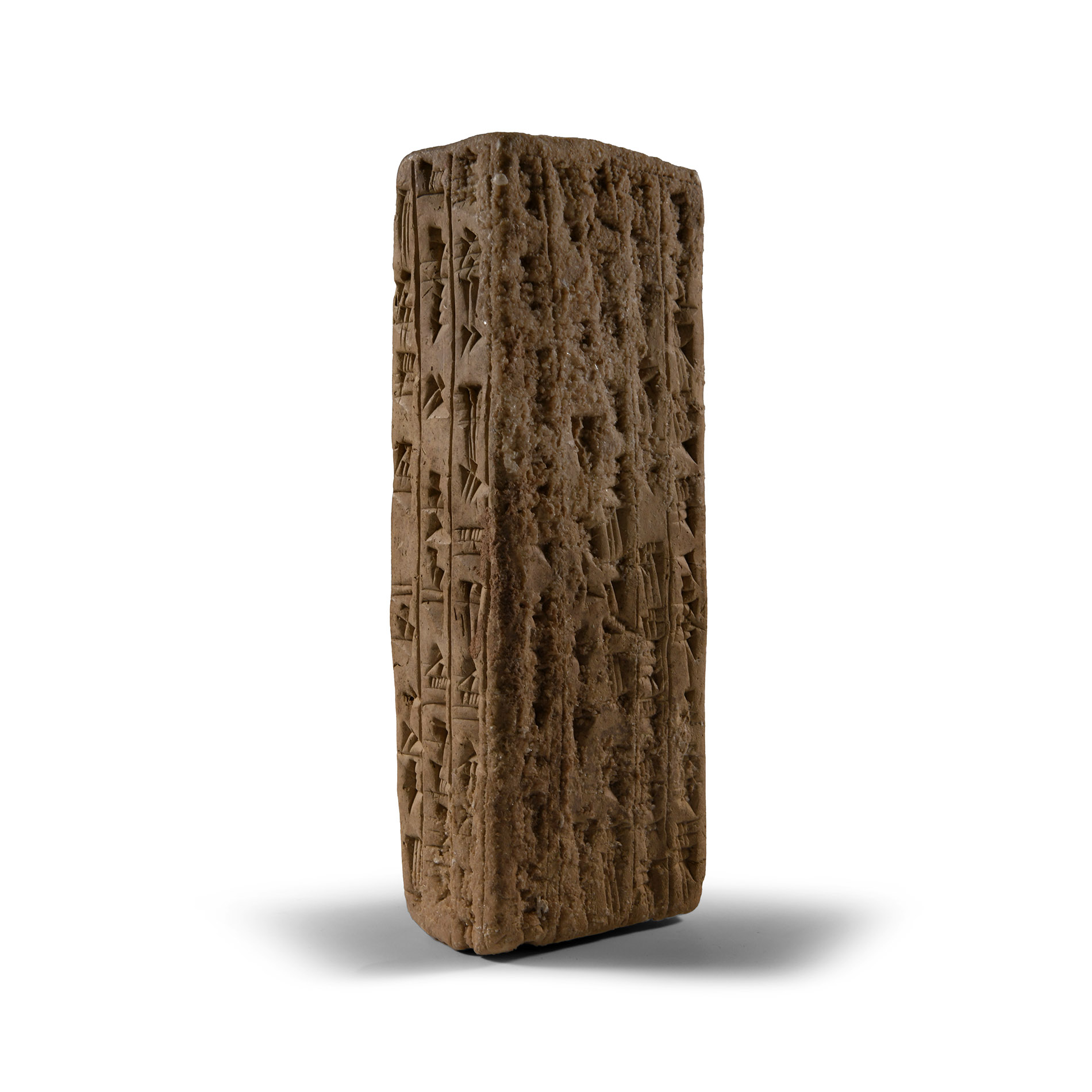
Assyrian Clay Cuneiform Brick
13TH CENTURY B.C.
6 7/8 in. (682 grams, 17.5 cm).
Roughly tabular and bearing impressed cuneiform text arranged in vertical columns to five of its six faces.
ProvenanceEx French art market.
with Boisgirard & Associés, Paris, 14 February 2005, lot 246.
Private Swiss collection since 2005.
This lot has been checked against the Interpol Database of stolen works of art and is accompanied by search certificate no.11638-198993.
Cf. The Metropolitan Museum, accession number 62.85.1, for a 13th century Assyrian tablet.
CONDITIONTimeLine Auctions follows a vetting process to ensure the authenticity and legality of all items, reinforcing our commitment to integrity and responsible trading. Each antiquity, antique, and coin lot undergoes thorough examination by a vetting committee of at least ten external specialists, professional trade association members, scientists, and archaeologists: Our Vetting Process
AUCTIONS:
TimeLine is a leading auction house specialising in antiquities, ancient art, collectables, natural history, coins, medals, and books. Our auctions offer museums, collectors, historians, and enthusiasts the opportunity to acquire unique and historically significant pieces.
-
Achaemenid Bronze Bowl
Circa 7th-4th century B.C.Sold for (Inc. bp): £117
With high tin content, the body formed with a D-section wall and rounded base. 268 grams, 17 cm wide
Acquired 1980-2015. Ex Abelita family collection. -
Ancient Large Gold Bead Collection
Circa 1st millennium B.C.Sold for (Inc. bp): £572
Mixed group including collared melon, melon, biconical, and one spherical bead. 6.88 grams total, 6-15 mm
From a late Japanese specialist collector, 1970-2000s. -
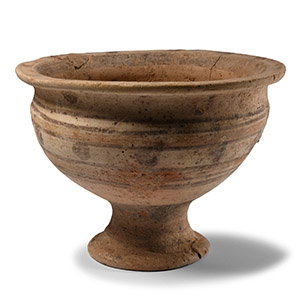
Western Asiatic Painted Pottery Chalice
2nd-1st millennium B.C.Sold for (Inc. bp): £65
With broad everted rim, painted with brown and ochre bands of varying width with bosses to centre. 651 grams, 16.8 cm wide
Acquired 1980-2015. Ex Abelita family collection.
