
Loading, please wait...
LOT 0267
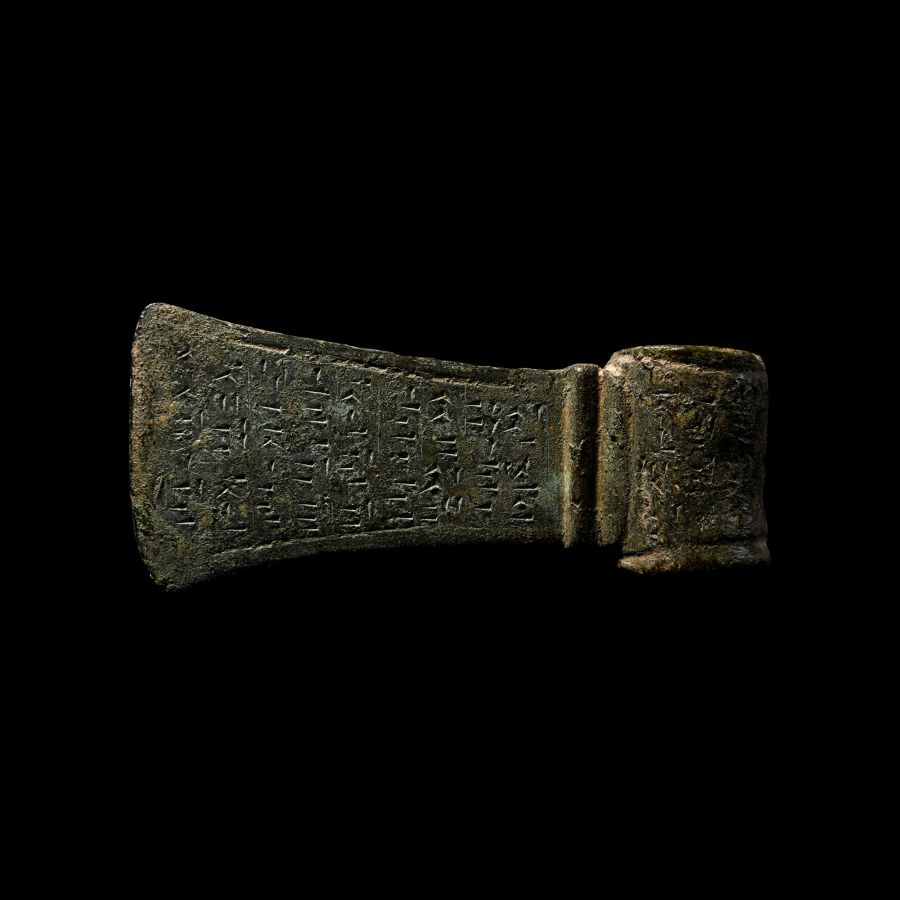
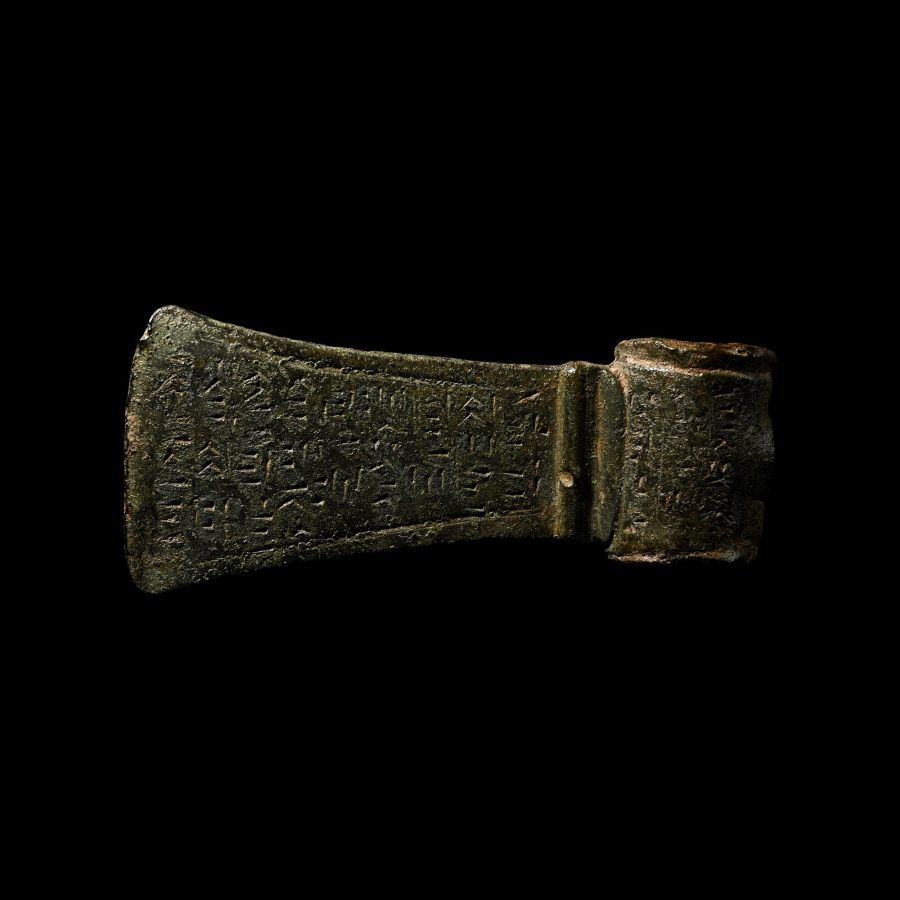
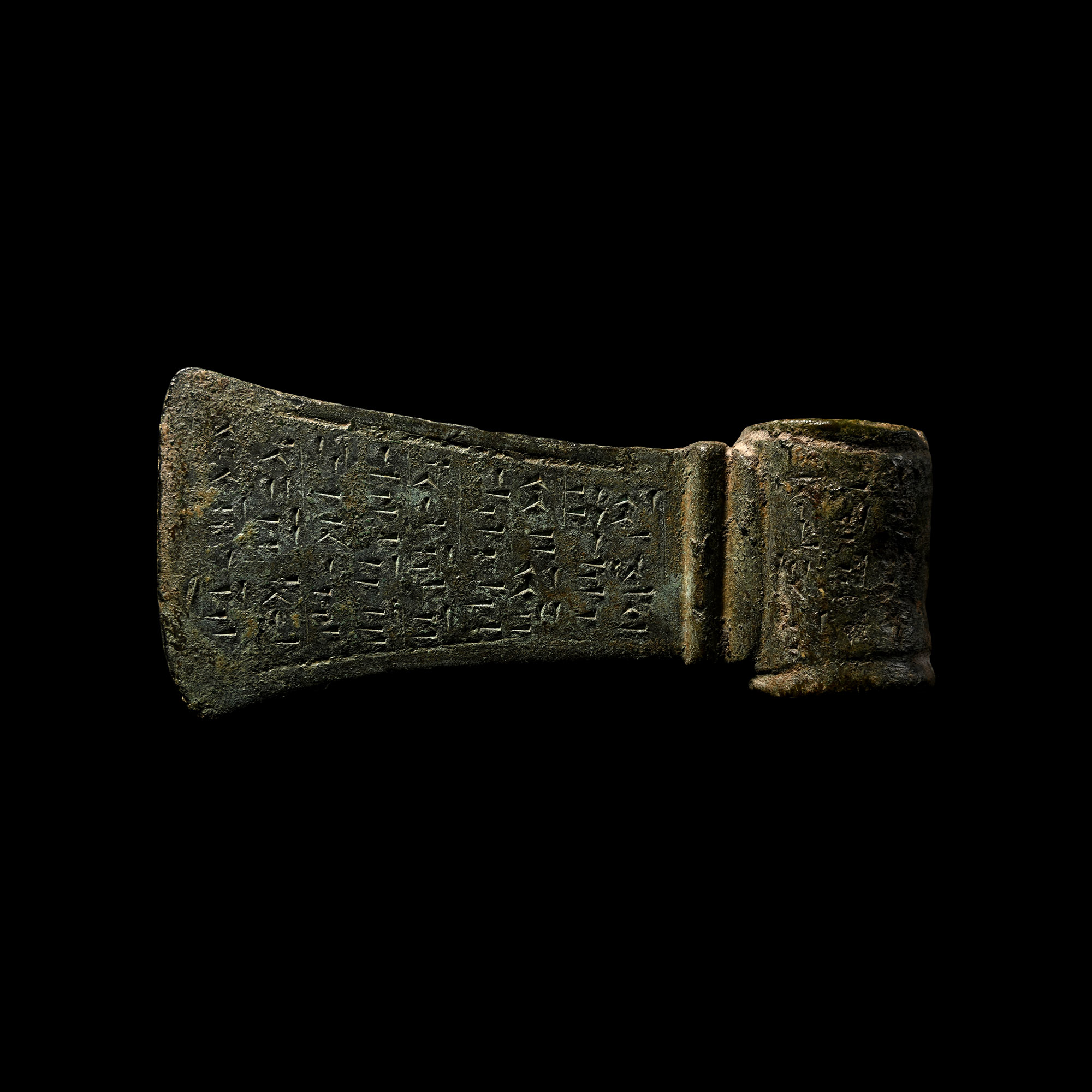
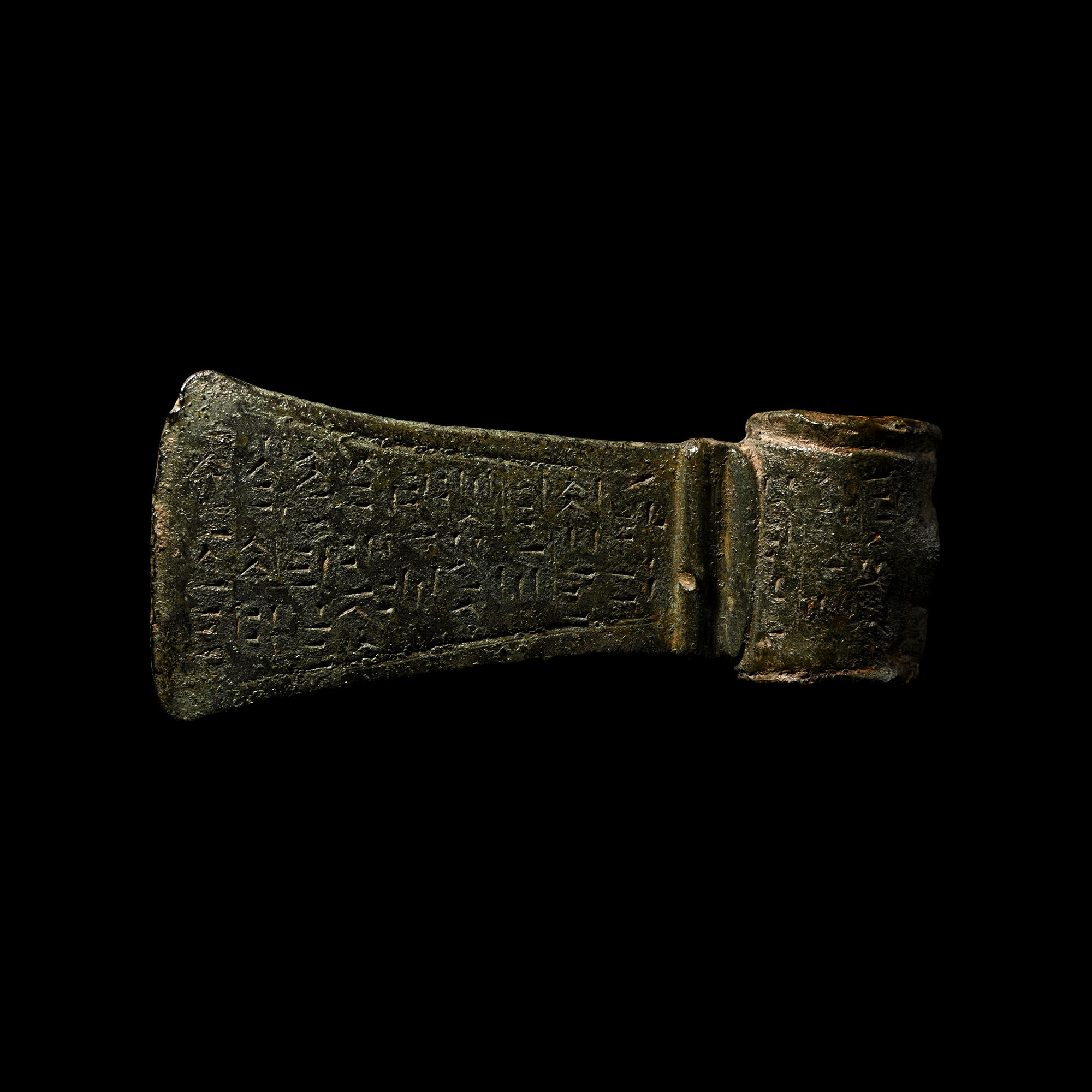
Assyrian Bronze Axehead with Cuneiform Inscription
8TH CENTURY B.C.
3 3/4 in. (141 grams, 94 mm).
Comprising a barrel-shaped socket with rounded collars and a hole to the rear to accept a mounting peg, a wedge-shaped blade with a stepped neck; incised cuneiform text on both faces of the blade and the socket; votive type.
ProvenancePrivate collection, acquired on the European art market in 2002.
This lot has been checked against the Interpol Database of stolen works of art and is accompanied by search certificate number no.13206-249182.
See Various la Mésopotamie entre le Tigre et l'Euphrate, cat. exp. (Musée d'art de Setagaya, 5 août 2000 - 3 décembre 2000, for an inscribed Assyrian axe; Fukuoka, Musée d'art asiatique d'art asiatique, 16 décembre 2000 - 4 mars 2001, Tokyo, NHK, 2001, p. 154, n° 220.
FootnotesThe royal inscriptions on weapons were common in Mesopotamia. Our blade, although younger, finds a parallel with an Assyrian cuneiform-inscribed bronze axe blade bearing the name of the Assyrian king Adad-nirari I, dating back to the reign of King Adad-Nirari I (1307-1275 BC) from Assyria, currently on display at the Louvre Museum in Paris.
CONDITIONTimeLine Auctions follows a vetting process to ensure the authenticity and legality of all items, reinforcing our commitment to integrity and responsible trading. Each antiquity, antique, and coin lot undergoes thorough examination by a vetting committee of at least ten external specialists, professional trade association members, scientists, and archaeologists: Our Vetting Process
AUCTIONS:
TimeLine is a leading auction house specialising in antiquities, ancient art, collectables, natural history, coins, medals, and books. Our auctions offer museums, collectors, historians, and enthusiasts the opportunity to acquire unique and historically significant pieces.
-
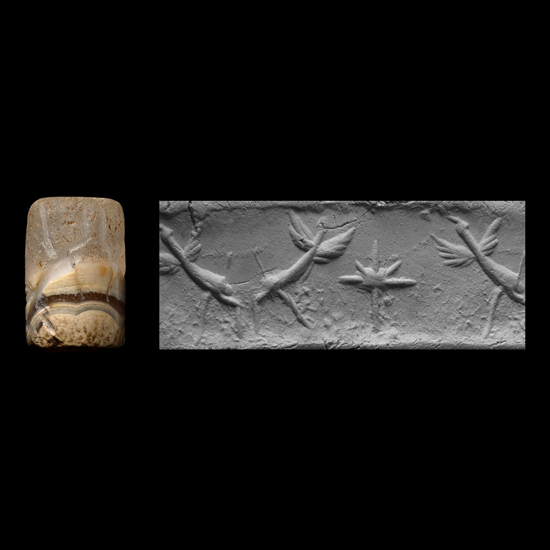
Western Asiatic Banded Agate Cylinder Seal with Birds
2nd-1st millennium B.C.Sold for (Inc. bp): £195
Frieze with starburst motif and two birds with outstretched wings; supplied with a museum-quality impression. 2.22 grams, 14.23 mm
From the private collection of a European gentleman (1942-2024), formed since the 1970s. -
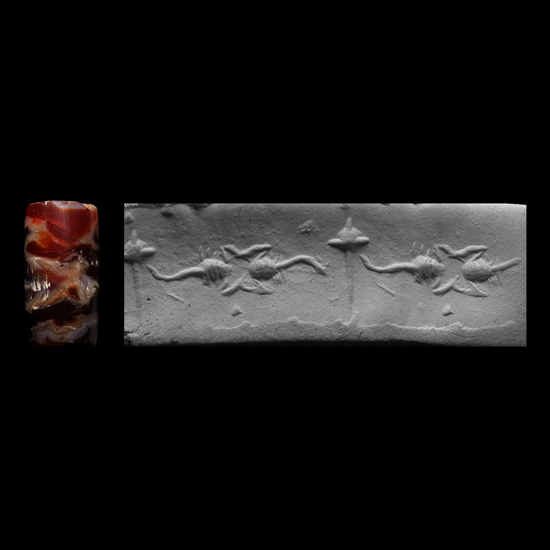
Western Asiatic Marbled Agate Cylinder Seal with Scorpions
2nd-1st millennium B.C.Sold for (Inc. bp): £195
Frieze depicting two scorpions advancing towards each other, starburst to the rear; supplied with a museum-quality impression. 1.02 grams, 13.24 mm
From the private collection of a European gentleman (1942-2024), formed since the 1970s. -
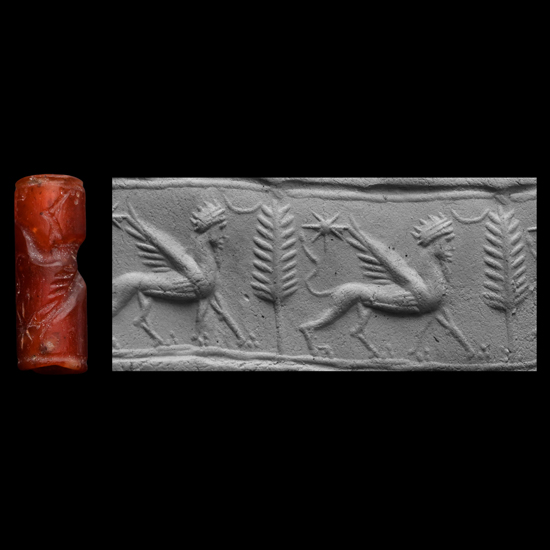
Western Asiatic Carnelian Cylinder Seal with God Lamassu
2nd-1st millennium B.C.Sold for (Inc. bp): £338
Frieze depicting a lamassu in profile advancing towards a tree with crescent above; supplied with a museum-quality impression. 0.54 grams, 14.1 mm
From the private collection of a European gentleman (1942-2024), formed since the 1970s.
