
Loading, please wait...
LOT 0995
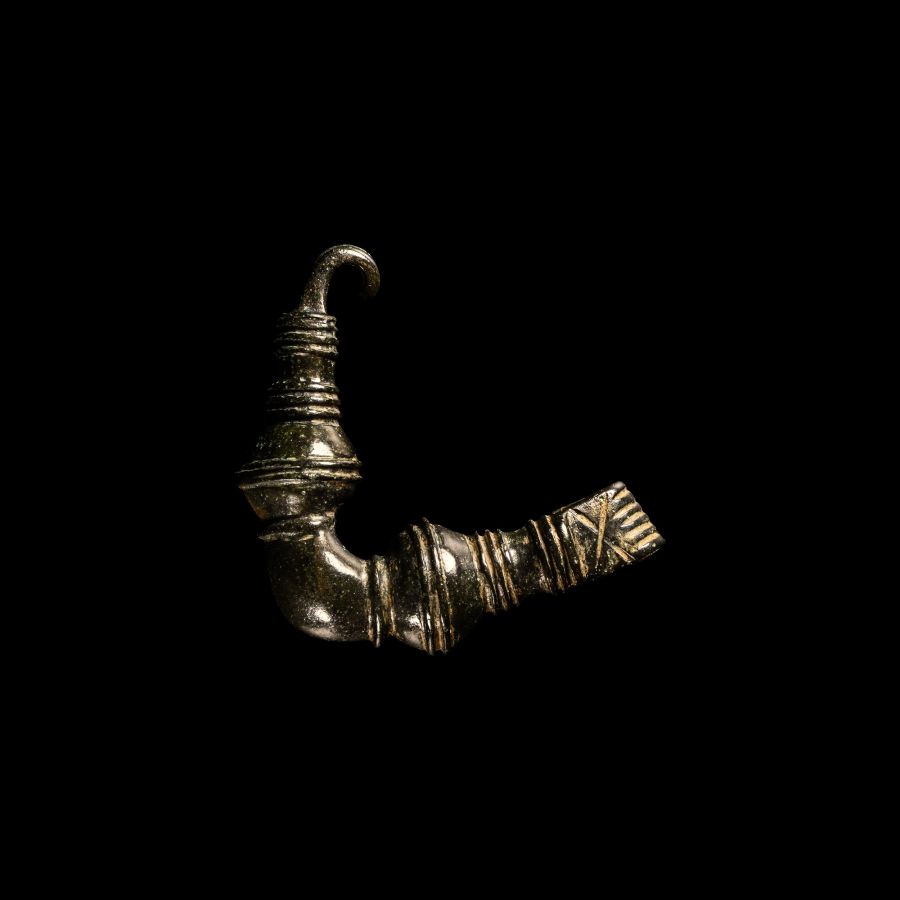
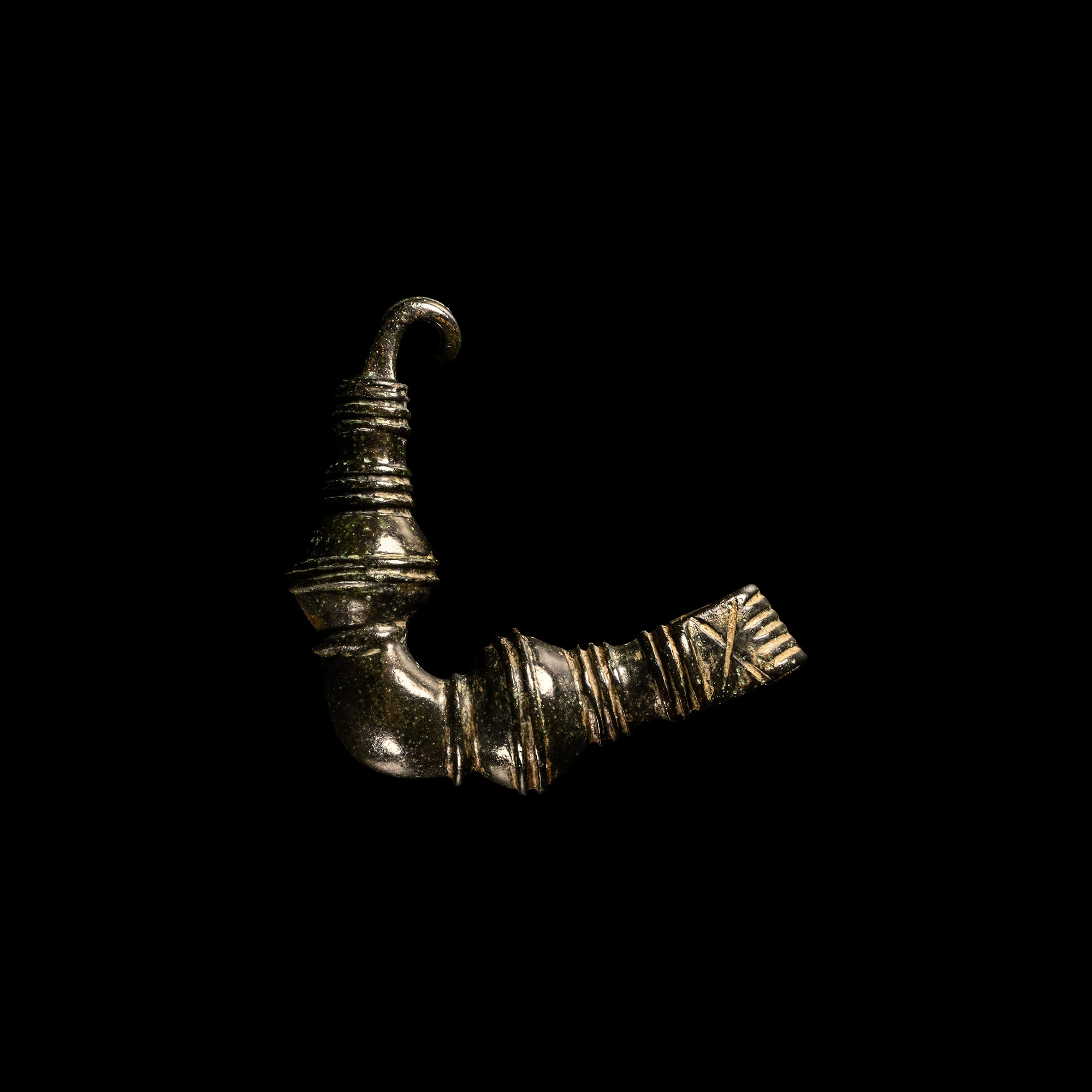
Assyrian Bronze Arm and Hand Type Brooch
CIRCA 7TH-5TH CENTURY B.C.
4 x 4 in. (186 grams total, 10 x 10.3 cm including frame).
The bow decorated with circumferential grooves, one arm ending with the partially preserved wire coil; the catchplate in the form of a hand engraved with an X; accompanied by a display frame with information ticket. [No Reserve]
ProvenanceEx Robin Symes Gallery, London, UK, 1990s.
From a Leicestershire, UK, collection.
Cf. Curtis, J., An examination of late Assyrian Metalwork with special reference to Nimrud, Oxford-Oakville, 2013, pl.LXXXVIII.
FootnotesFibulae with triangular bows (type 3 of Curtis classification) were the most common in Assyria. At least 66 bronze examples have been found at Nimrud, 32 in the graves and tombs at Ashur, 14 at Kouyunjik (some of them represented only by fragments), three at Nebbi Yunus, six at Khorsabad, three at Sharif Khan, all fragmentary, and single examples at Tell Billa and Tell al Rimah.
CONDITIONTimeLine Auctions follows a vetting process to ensure the authenticity and legality of all items, reinforcing our commitment to integrity and responsible trading. Each antiquity, antique, and coin lot undergoes thorough examination by a vetting committee of at least ten external specialists, professional trade association members, scientists, and archaeologists: Our Vetting Process
AUCTIONS:
TimeLine is a leading auction house specialising in antiquities, ancient art, collectables, natural history, coins, medals, and books. Our auctions offer museums, collectors, historians, and enthusiasts the opportunity to acquire unique and historically significant pieces.
-
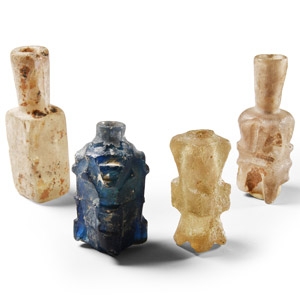
Western Asiatic Glass Vessel Collection
8th-10th century A.D.Sold for (Inc. bp): £338
Comprising four miniature cosmetic bottles including a molar flask, a dark blue iridescent unguentarium and other types. 91 grams total, 42-60 mm
Acquired 1970s-1996. Property of a North American collector. London collection, 2016. -
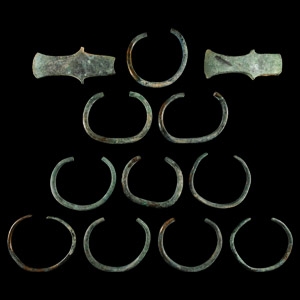
Western Asiatic Bronze Bracelet and Axehead Collection
2nd millennium B.C.Sold for (Inc. bp): £650
Ten penannular arm-bands or bracelets composed of round-section bodies tapering towards the terminals; two axeheads. 1.8 kg total, 10.4-13.7 cm
Acquired in Europe before 1992. -
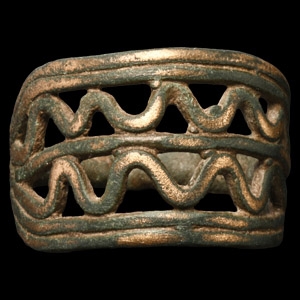
Amlash Bronze Openwork Ring
1st millennium B.C.Sold for (Inc. bp): £143
With broad plaque formed as two undulating bars within a bilinear frame. 4.89 grams, 23.52 mm overall, 19.00 mm internal diameter (approximate size British Q 1/2, USA 8 1/4, Europe 18.12, Japan 17)
From the private collection of a Bristol, UK, gentleman. Ex private Merseyside, UK, collection since 2005.
