
Loading, please wait...



LOT 0036
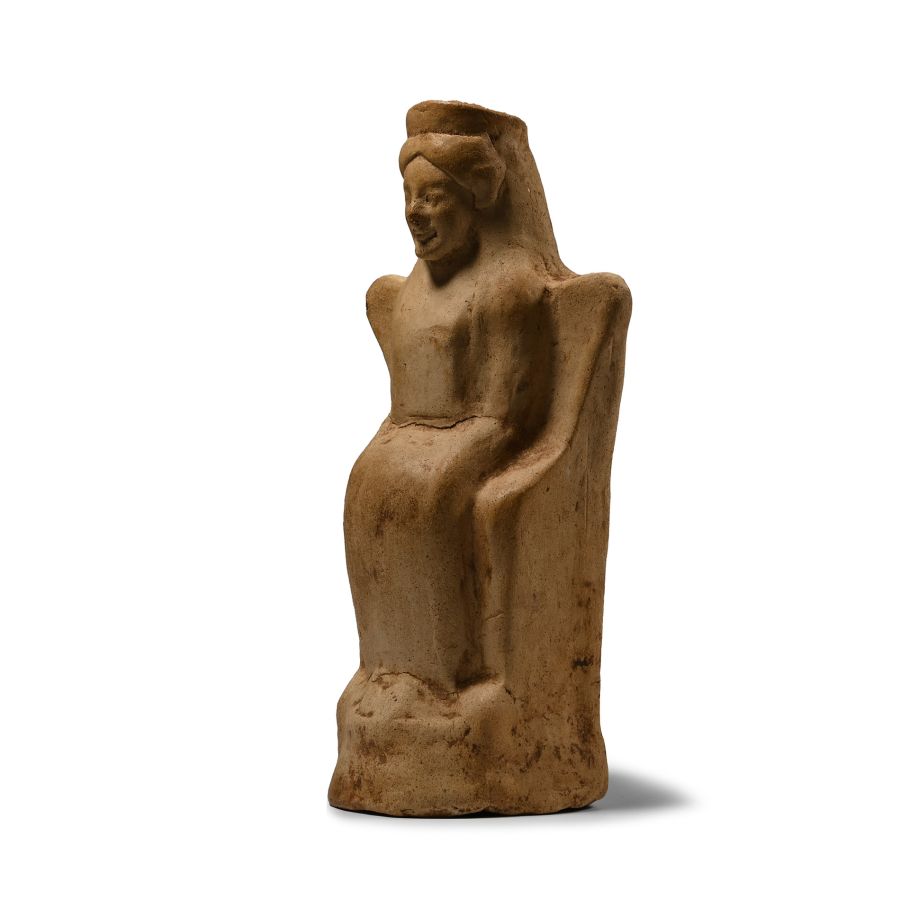
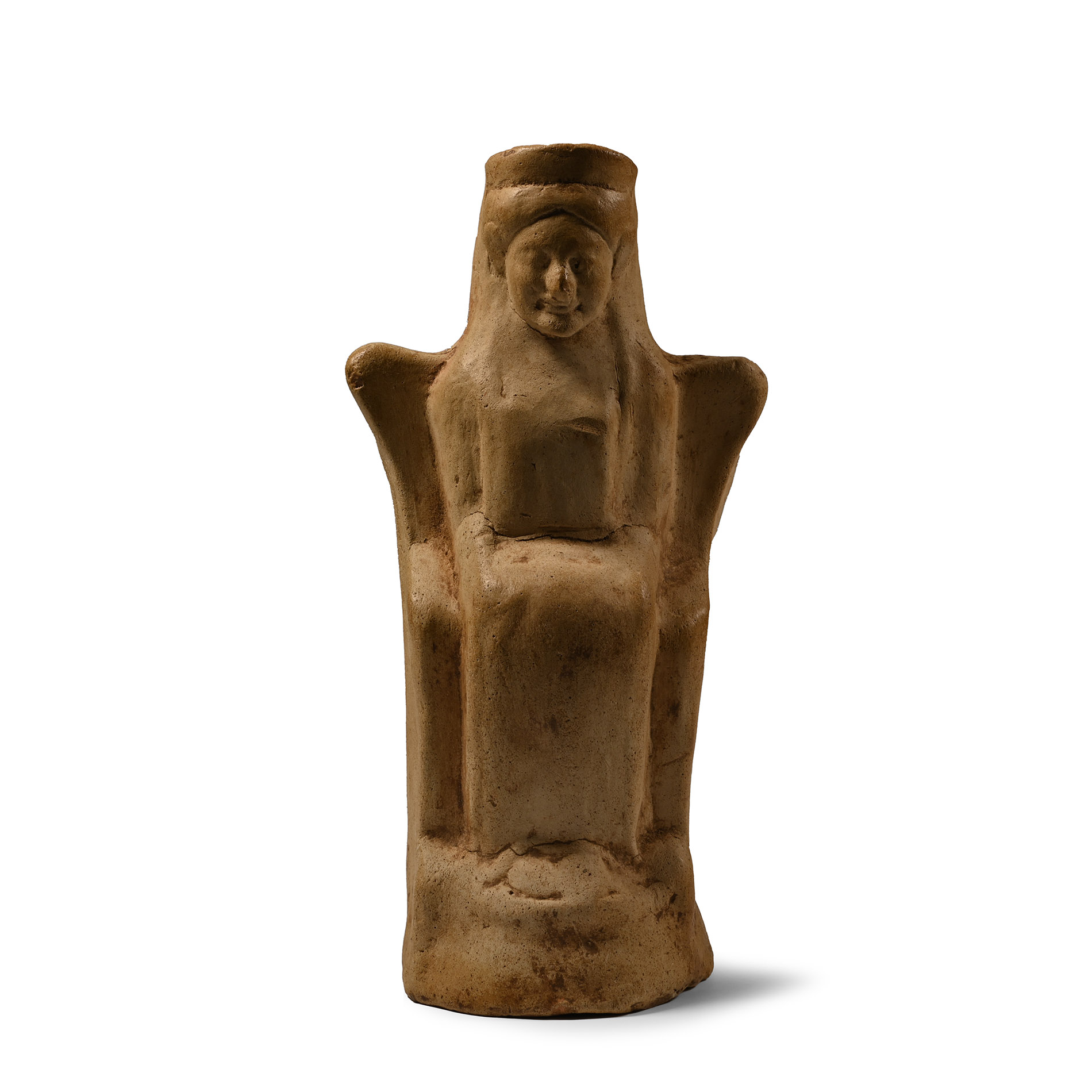
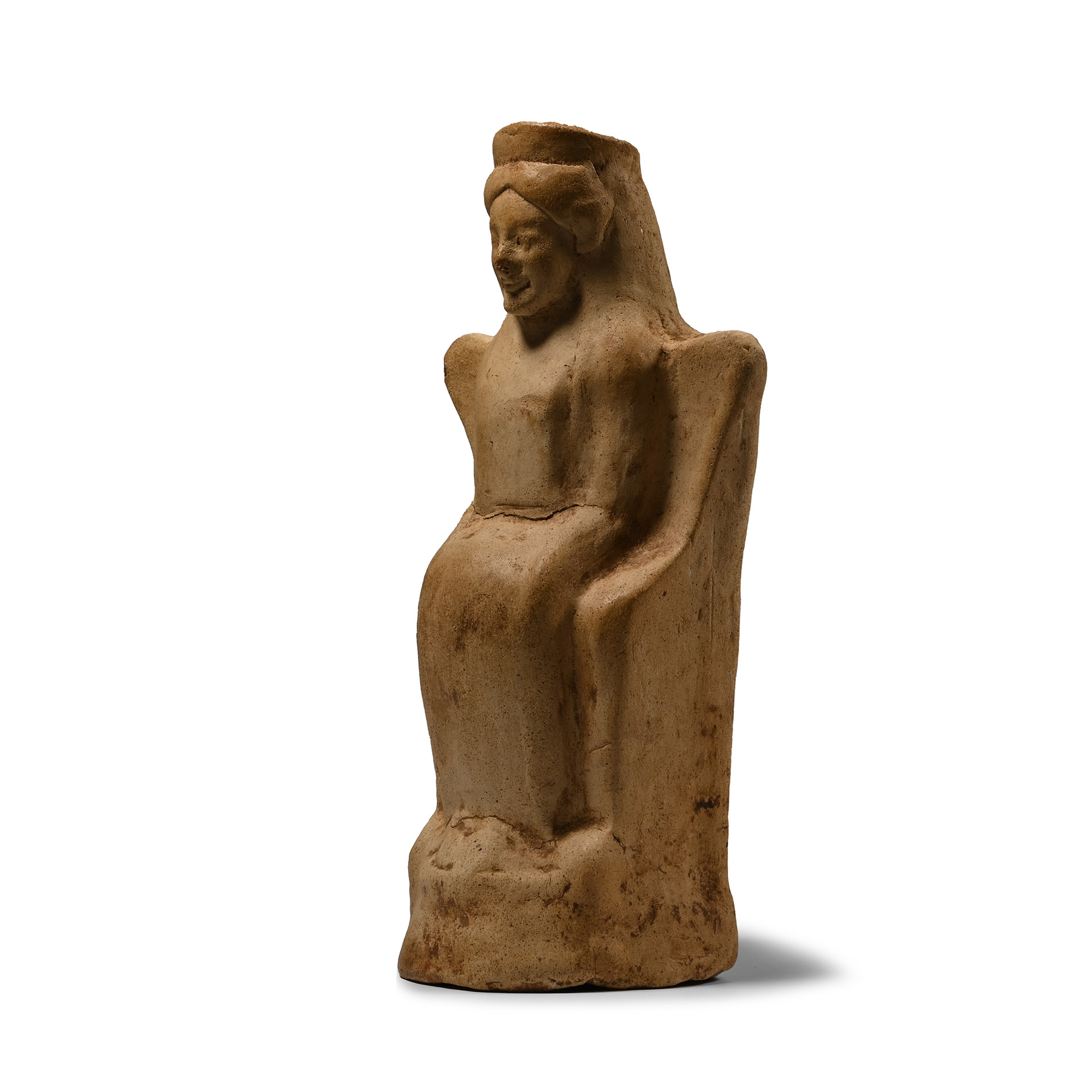
Archaic Greek Terracotta Seated Goddess
5TH CENTURY B.C.
7 1/8 in. (412 grams, 18.2 cm).
Depicting the goddess seated on a high-backed throne and wearing a long dress, her hands resting on the lap.
ProvenanceAcquired in Europe before 1996.
This lot is accompanied by an illustrated lot declaration signed by the Head of the Antiquities Department, Dr Raffaele D’Amato.
Cf. Biers, W.R., The Archaeology of Greece. An Introduction, Ithaca-London, 1987, fig.8.63, p.236, for similar.
FootnotesThe typical 5th century B.C. terracotta female figurine was a standing or seated woman wearing a chiton and a himation. It usually represented the goddess Demeter, and it was a votive figure offered to the shrines or temples. Attica was one of the principal centres of figurine production, but Corinth continued to produce solid standing or seated females with moulded fronts and flat backs.
CONDITIONTimeLine Auctions follows a vetting process to ensure the authenticity and legality of all items, reinforcing our commitment to integrity and responsible trading. Each antiquity, antique, and coin lot undergoes thorough examination by a vetting committee of at least ten external specialists, professional trade association members, scientists, and archaeologists: Our Vetting Process
AUCTIONS:
TimeLine is a leading auction house specialising in antiquities, ancient art, collectables, natural history, coins, medals, and books. Our auctions offer museums, collectors, historians, and enthusiasts the opportunity to acquire unique and historically significant pieces.
-
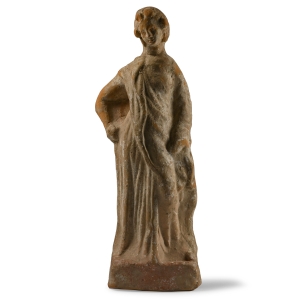
Hellenistic Terracotta Statuette of a Wreathed Young Woman
Late 4th-3rd century B.C.Estimate: £400 - 600 (‡+bp*)
Opening Bid: £180
Standing on a rectangular base, hair divided in regular stripes with voluminous locks, head slightly bowed, the bare arm resting on her right hip; the left leg is visible under the pleated undergarment chiton and slanted himation. 257 grams, 17.5 cm
Traces of white engobe and polychromy in the folds of the robe and on the base. The added chignon lost, otherwise intact.
Ex Belgian art market, 2020. This lot is accompanied by an illustrated lot declaration signed by the Head of the Antiquities Department, Dr Raffaele D’Amato.
The statuette finds comparisons among examples that can be dated between the 4th century and the middle of the 3rd century B.C. It shows some traces of the original polychromy, characterised by strongly contrasting hues, keeping in with the local style. -
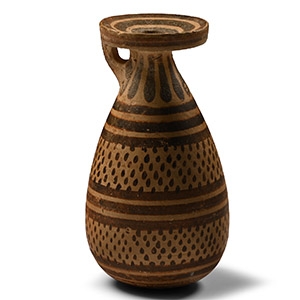
Corinthian Piriform Aryballos
Circa 625-600 B.C.Sold for (Inc. bp): £182
With short strap handle below mouth, piriform body, painted radiating and horizontal bands and pellets; mouth with painted bands to rim and base. 39.1 grams, 79 mm
Private collection, London, acquired in the 1960s, by descent. English art market, prior 2022. This lot is accompanied by an illustrated lot declaration signed by the Head of the Antiquities Department, Dr Raffaele D’Amato. -
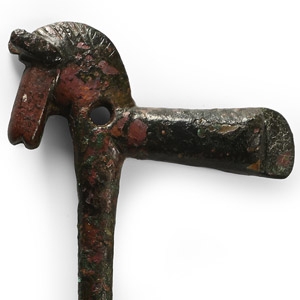
Greek Geometric Pin with Horse Terminal
Circa 900-700 B.C.Estimate: £300 - 400 (+bp*)
Opening Bid: £100
Comprising a long tapering shank with a flattened tip, horse-shaped finial set perpendicular to the shank, pierced through the centre and a flat-section short tang to the rear. 39 grams, 14 cm
UK private collection before 2000. Acquired on the UK art market. Property of a London gentleman. This lot is accompanied by an illustrated lot declaration signed by the Head of the Antiquities Department, Dr Raffaele D’Amato.
