
Loading, please wait...
LOT 0092
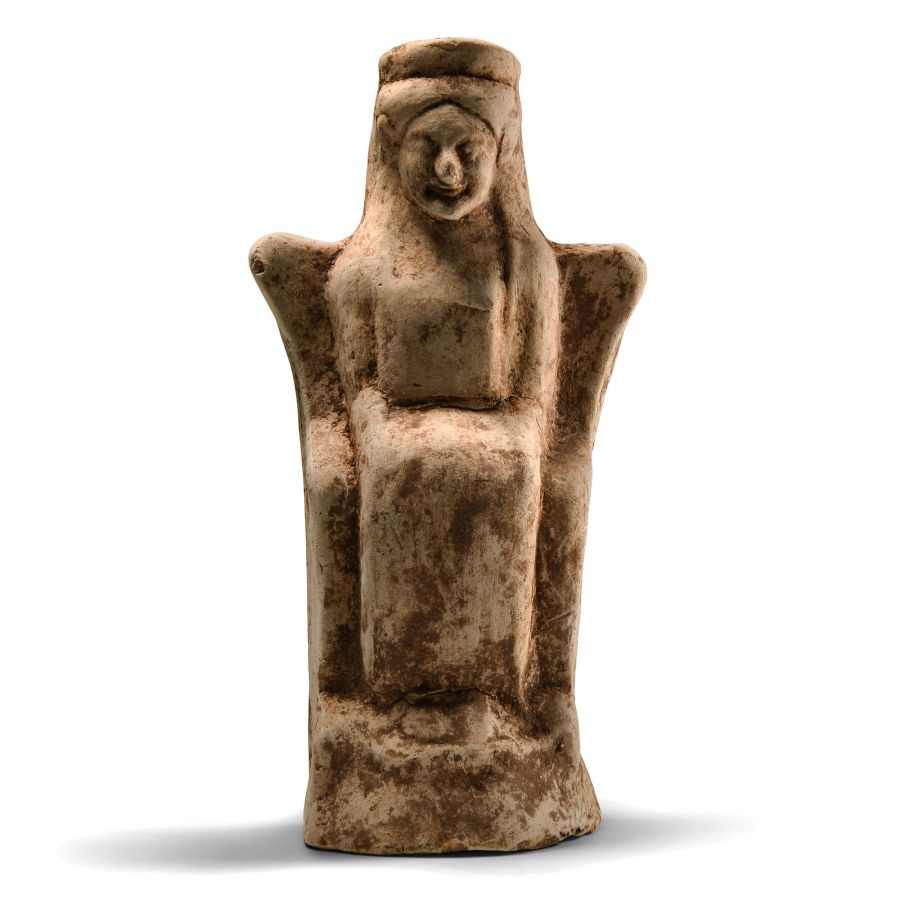
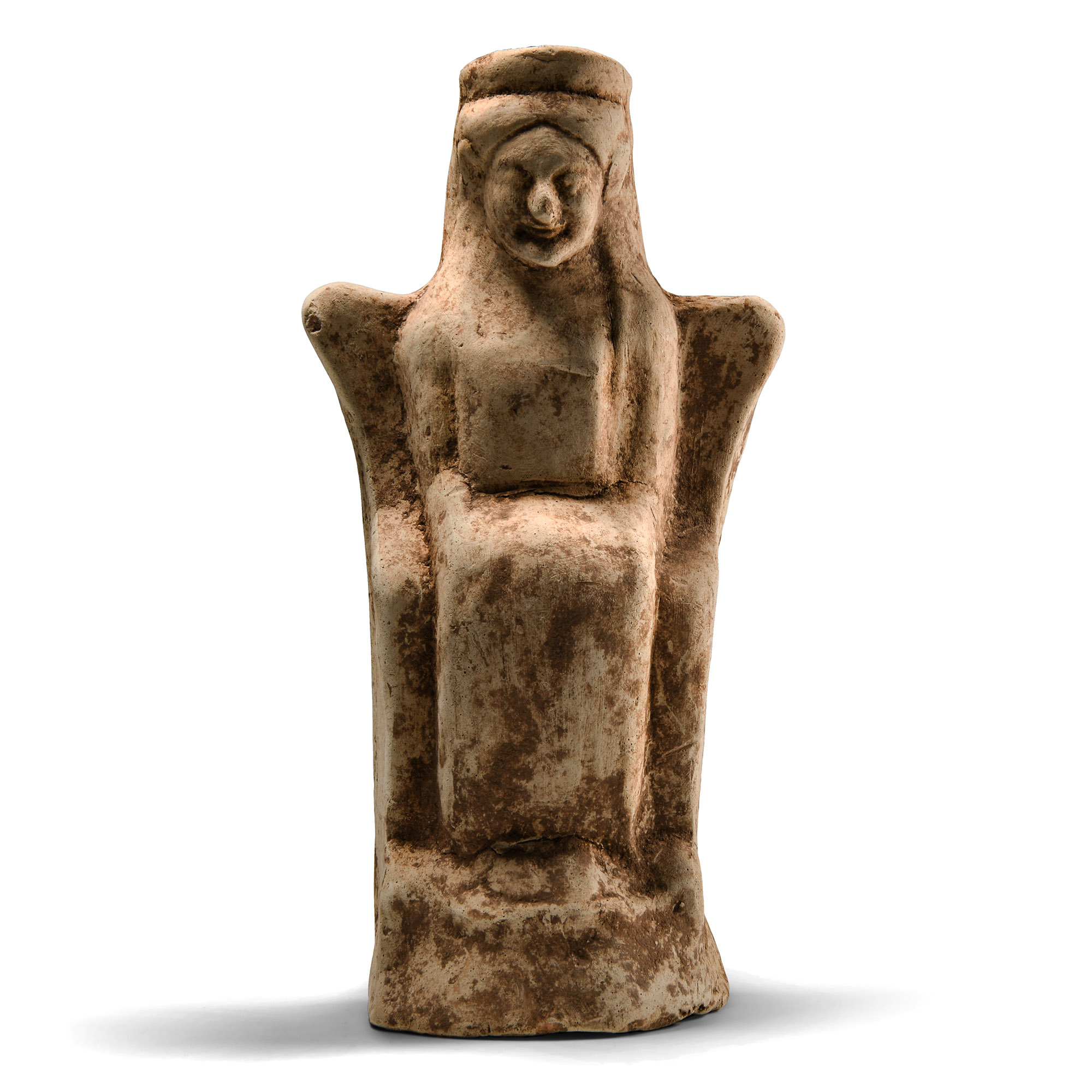
Archaic Greek Terracotta Seated Goddess
5TH CENTURY B.C.
7 1/4 in. (413 grams, 18.5 cm).
Represented in the typical female attire wearing a long chiton and a polos headgear; seated upon a throne with side horns, hands upon her knees; flat back.
ProvenanceAcquired in Europe before 1996.
LiteratureCf. Biers, W.R., The Archaeology of Greece, An Introduction, Ithaca-London, 1987, fig.8.63, p.263, for similar.
FootnotesThe typical 5th century B.C. terracotta female figurine was a standing or seated woman wearing a chiton and a himation. It usually represented the goddess Demeter, and it was a votive figure offered to the shrines or temples. Attica was one of the principal centres of figurine production, but Corinth continued to produce solid standing or seated females with moulded fronts and flat backs.
CONDITIONTimeLine Auctions follows a vetting process to ensure the authenticity and legality of all items, reinforcing our commitment to integrity and responsible trading. Each antiquity, antique, and coin lot undergoes thorough examination by a vetting committee of at least ten external specialists, professional trade association members, scientists, and archaeologists: Our Vetting Process
AUCTIONS:
TimeLine is a leading auction house specialising in antiquities, ancient art, collectables, natural history, coins, medals, and books. Our auctions offer museums, collectors, historians, and enthusiasts the opportunity to acquire unique and historically significant pieces.
-
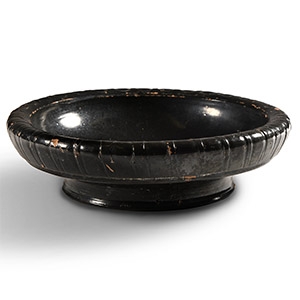
Greek Black-Glazed Plate
5th-4th century B.C.Estimate: £500 - 700 (‡+bp*)
Opening Bid: £250
Shallow-bodied with broad foot; incised fluting around the exterior body and rim. 192 grams, 12.7 cm wide
Acquired in the 1960s-1970s. Ex European private collection. -
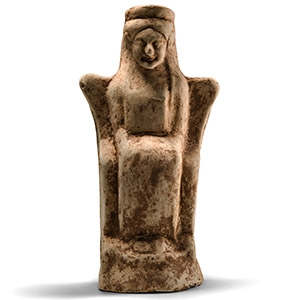
Archaic Greek Terracotta Seated Goddess
5th century B.C.Sold for (Inc. bp): £650
Represented in the typical female attire wearing a long chiton and a polos headgear; seated upon a throne with side horns, hands upon her knees; flat back. 413 grams, 18.5 cm
Acquired in Europe before 1996.
The typical 5th century B.C. terracotta female figurine was a standing or seated woman wearing a chiton and a himation. It usually represented the goddess Demeter, and it was a votive figure offered to the shrines or temples. Attica was one of the principal centres of figurine production, but Corinth continued to produce solid standing or seated females with moulded fronts and flat backs. -
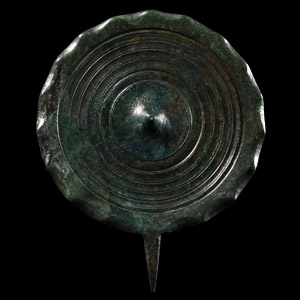
Hellenistic Bronze Decorated Mirror
2nd-1st century B.C.Sold for (Inc. bp): £260
With decorated reverse comprising raised central nipple surrounded by concentric circles, scalloped edge and spike for attachment to the handle. 164 grams, 15.2 cm
Ex old English collection. London art market, 1980s.
