
Loading, please wait...
LOT 0504
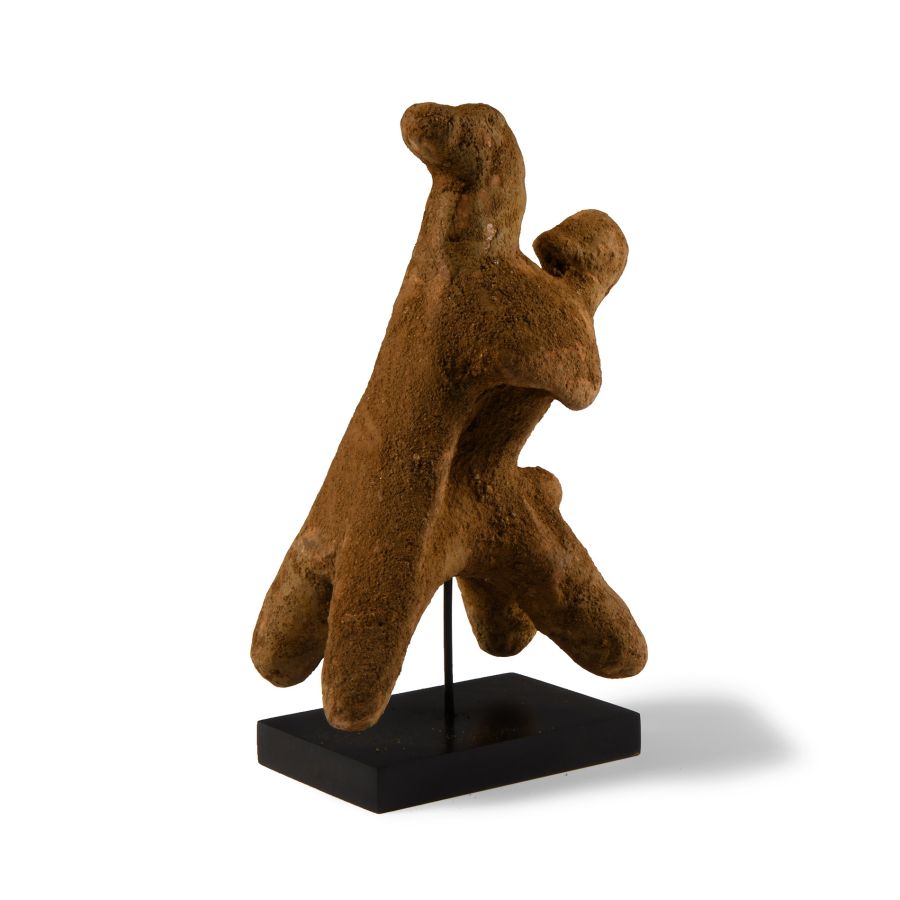
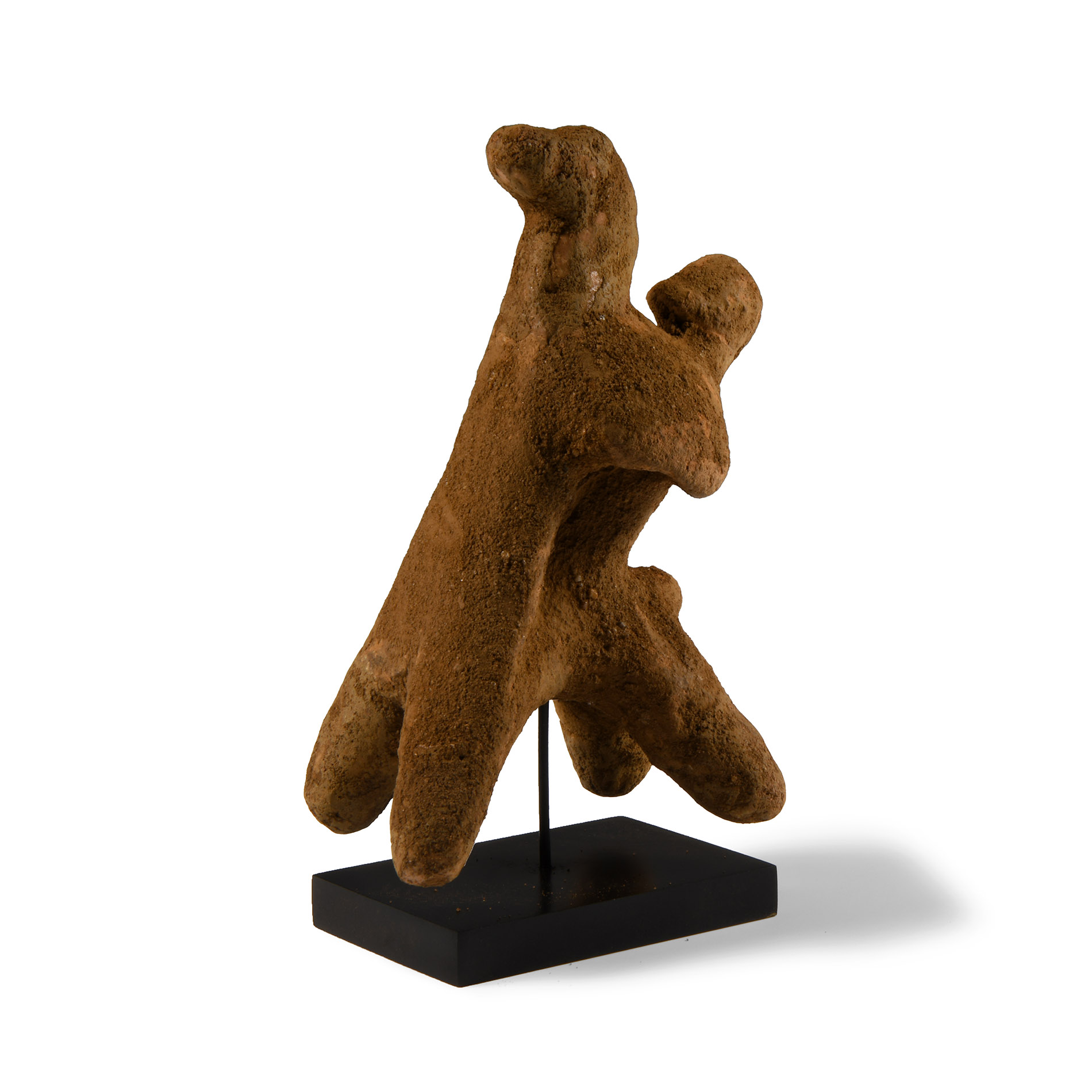
Archaic Greek Terracotta Figure of Mounted Warrior with Shield
7TH-5TH CENTURY B.C.
5 3/4 in. (275 grams total, 14.5 cm high including stand).
The figure comprising a stylised horse with elongated neck, mounted by a bearded rider figure holding a shield; mounted on a custom-made display stand. [No Reserve]
ProvenanceAcquired before 1990.
From an old German collection.
Cf. Marantidou, P., Terracotta statues and figurines of Cypriote type found in the Aegean. Provenance studies, Limassol, 2009, pls.XIII no.SAH69, XXXII, no.CYP50, for the type.
FootnotesTerracotta figurines of horse and rider were common grave offerings in Boeotia, northwest of Attica, particularly during the 6th century B.C. Representations of warriors on horseback were already widespread in the Geometric Period, and widely used in Cyprus during this period. The rider, although influenced by Cypriot designs, does not show typical Cypriot characteristics.
CONDITIONTimeLine Auctions follows a vetting process to ensure the authenticity and legality of all items, reinforcing our commitment to integrity and responsible trading. Each antiquity, antique, and coin lot undergoes thorough examination by a vetting committee of at least ten external specialists, professional trade association members, scientists, and archaeologists: Our Vetting Process
AUCTIONS:
TimeLine is a leading auction house specialising in antiquities, ancient art, collectables, natural history, coins, medals, and books. Our auctions offer museums, collectors, historians, and enthusiasts the opportunity to acquire unique and historically significant pieces.
LOT 0504
Archaic Greek Terracotta Figure of Mounted Warrior with Shield
Sold for (Inc. bp): £195
-
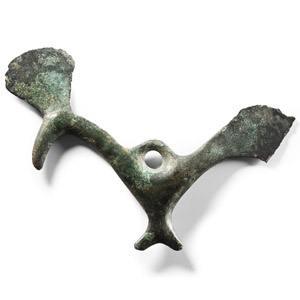
Archaic Greek Bronze Bird-Shaped Pendant
Circa 8th century B.C.Sold for (Inc. bp): £143
Formed as a stylised bird with elongated tail and neck, chevron-shaped foot, hooked beak, domed eye, large fan-shaped crest; loop to the back. 28.8 grams, 80 mm wide
Acquired from Arte Primitivo, New York City, U.S.A., circa 2010. Private collection of Professor Kenneth Graham, London, UK. -
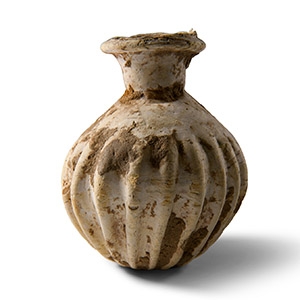
Greek Cream Frit Ribbed Bottle
4th-2nd century B.C.Estimate: £120 - 170 (‡+bp*)
Opening Bid: £60
Opaque with vertical ribbing around the globular body, trumpet-style neck and mouth with rolled rim. 76 grams, 73 mm high
Acquired early 1990s. Ex private American collection; thence by descent. Private collection since 1998. -
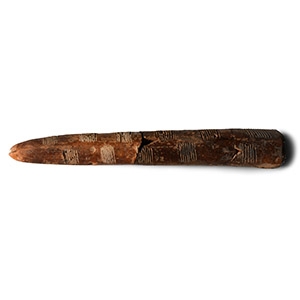
Cypriot Terracotta Votive Horn
2100-1850 B.C.Sold for (Inc. bp): £221
Tapering square-section votive with transverse bands of dense linear hatching; repaired. 116 grams, 16.5 cm
From the celebrated personal collection of art formed by the famous anthropologist, artist, and television presenter Desmond Morris. with Christie’s, South Kensington, 14 May 2002, lot 19 (part).
