
Loading, please wait...
LOT 0550
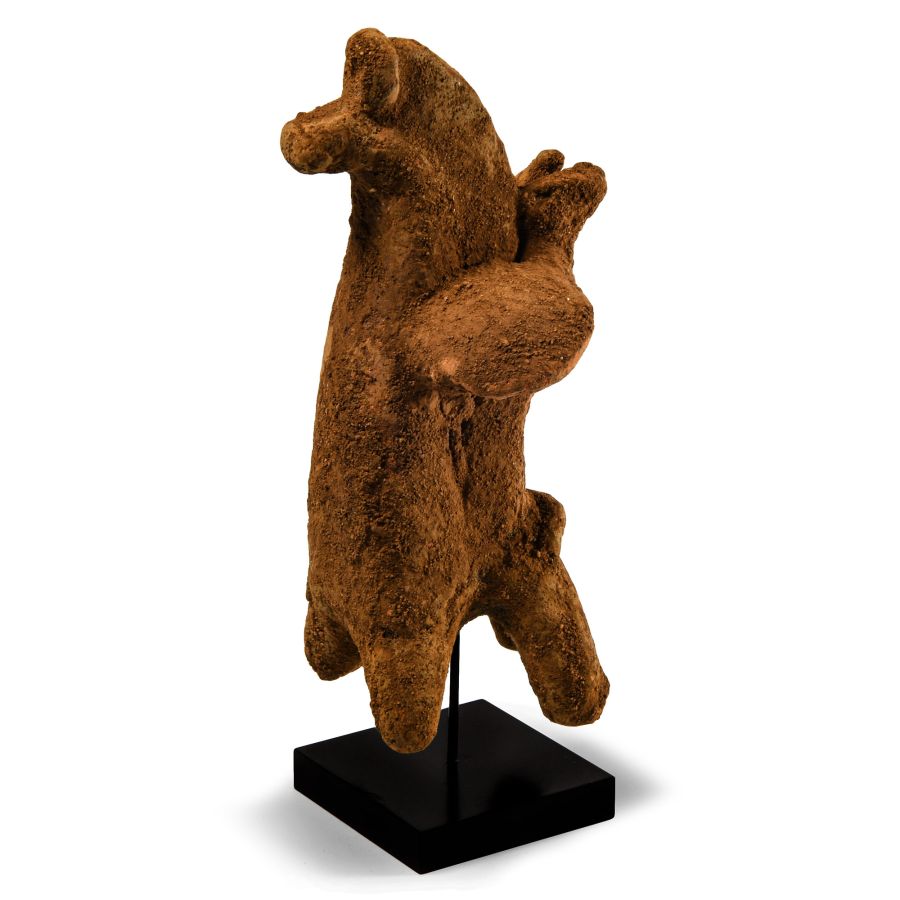
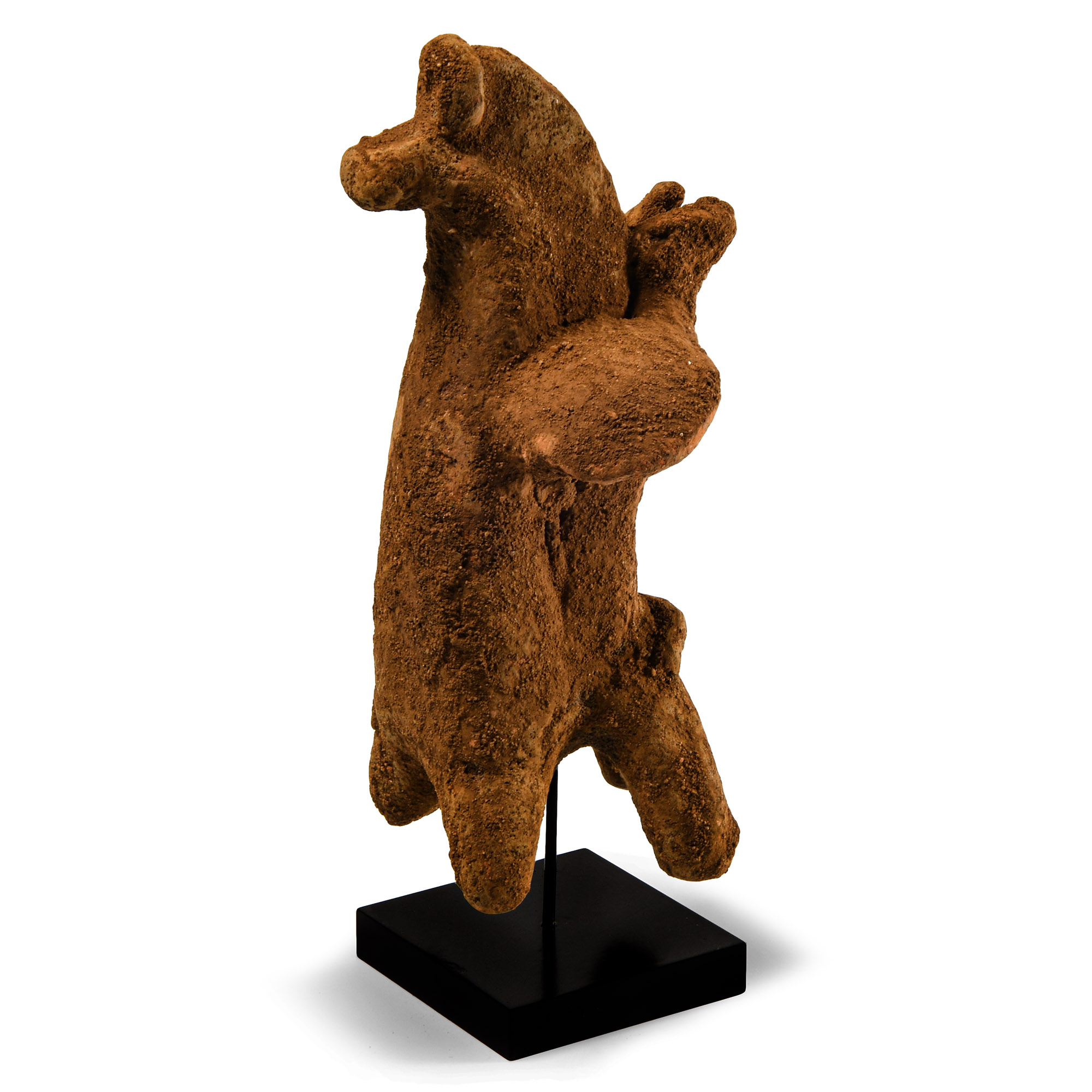
Archaic Greek Terracotta Figure of Mounted Warrior with Shield
7TH-5TH CENTURY B.C.
6 3/4 in. (303 grams total, 17 cm high including stand).
Modelled in the round, the stylised horse standing on stub legs, with a long neck and detailing to its eyes; the warrior holding a shield in his left hand, right hand and arm raised to eye level, wearing a crested helmet; restored and mounted on a custom-made display stand. [No Reserve]
ProvenanceAcquired before 1990.
From an old German collection.
TimeLine Auctions follows a vetting process to ensure the authenticity and legality of all items, reinforcing our commitment to integrity and responsible trading. Each antiquity, antique, and coin lot undergoes thorough examination by a vetting committee of at least ten external specialists, professional trade association members, scientists, and archaeologists: Our Vetting Process
AUCTIONS:
TimeLine is a leading auction house specialising in antiquities, ancient art, collectables, natural history, coins, medals, and books. Our auctions offer museums, collectors, historians, and enthusiasts the opportunity to acquire unique and historically significant pieces.
LOT 0550
Archaic Greek Terracotta Figure of Mounted Warrior with Shield
Sold for (Inc. bp): £221
-
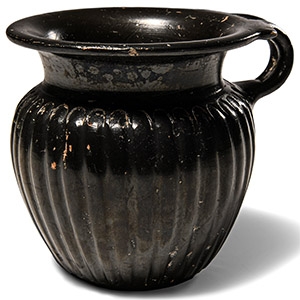
Greek Apulian High-Glazed Fluted Cup
4th century B.C.Estimate: £2,000 - 3,000 (‡+bp*)
Opening Bid: £1,000
Raised fluting decorating the body, broad c-section neck and everted rim, segmented openwork handle. 174 grams, 90 mm high
Acquired in the 1960s-1970s. Ex European private collection. This lot has been checked against the Interpol Database of stolen works of art and is accompanied by search certificate number no.11856-206542. -
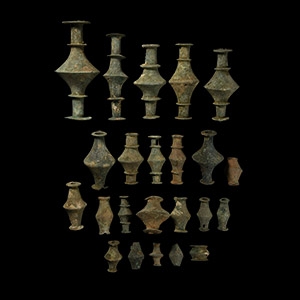
Greek Bronze Furniture Fitting Group
3rd-2nd century B.C.Sold for (Inc. bp): £156
Comprising over 20 hollow-formed bicones. 790 grams total, 21-96 mm
Acquired 1960s-1990s. Late Alison Barker collection, a retired London barrister. -
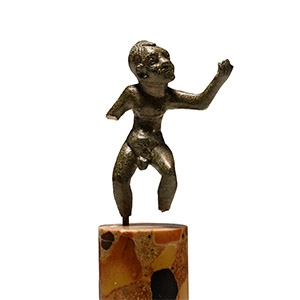
Hellenistic Bronze Statuette of an Alexandrian Dancing Dwarf
1st century B.C.-1st century A.D.Estimate: £3,000 - 4,000 (+bp*)
Opening Bid: £1,500
In an active pose with both legs bent and left arm raised dramatically, head tilted to the left; exaggerated facial features, short trimmed hair, slim body with developed pectoral muscles and pronounced kyphosis; mounted on a columnar stand. 299 grams,14.5 cm including stand
Belgian private art collection of M.A., Brussels, Belgium, 1995. with Gorny and Mosch, 14 December 2011, lot 82. This lot has been checked against the Interpol Database of stolen works of art and is accompanied by search certificate number no.11886-206399.
