
Loading, please wait...
LOT 2074
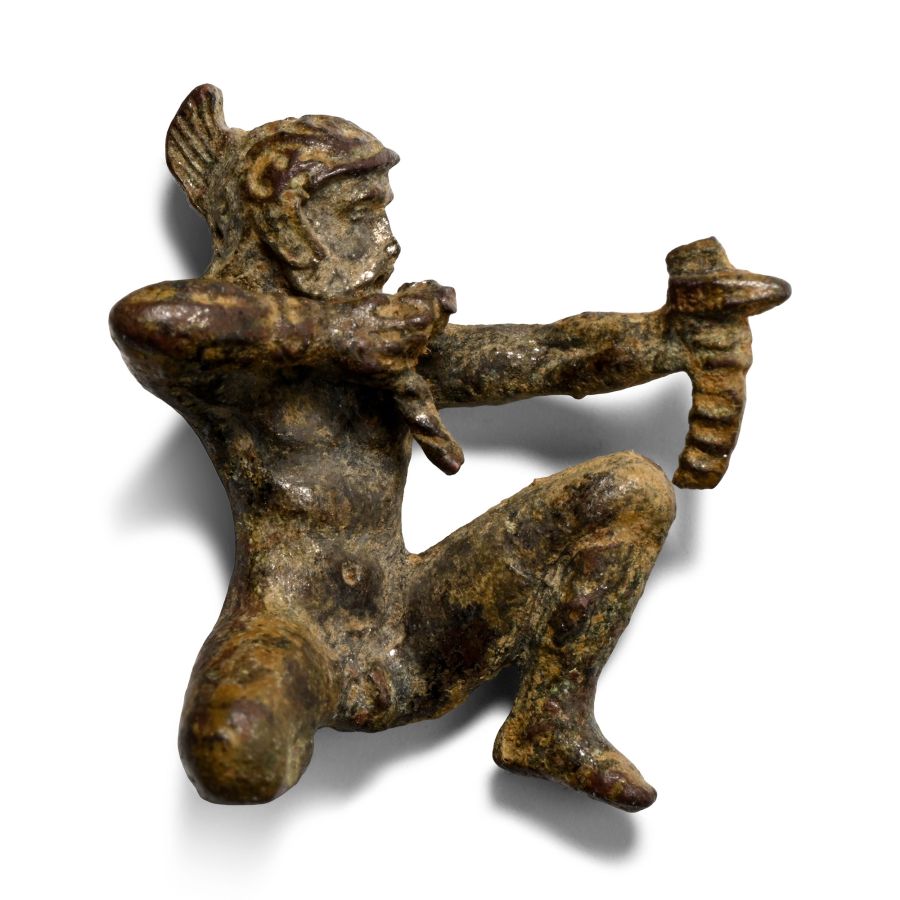
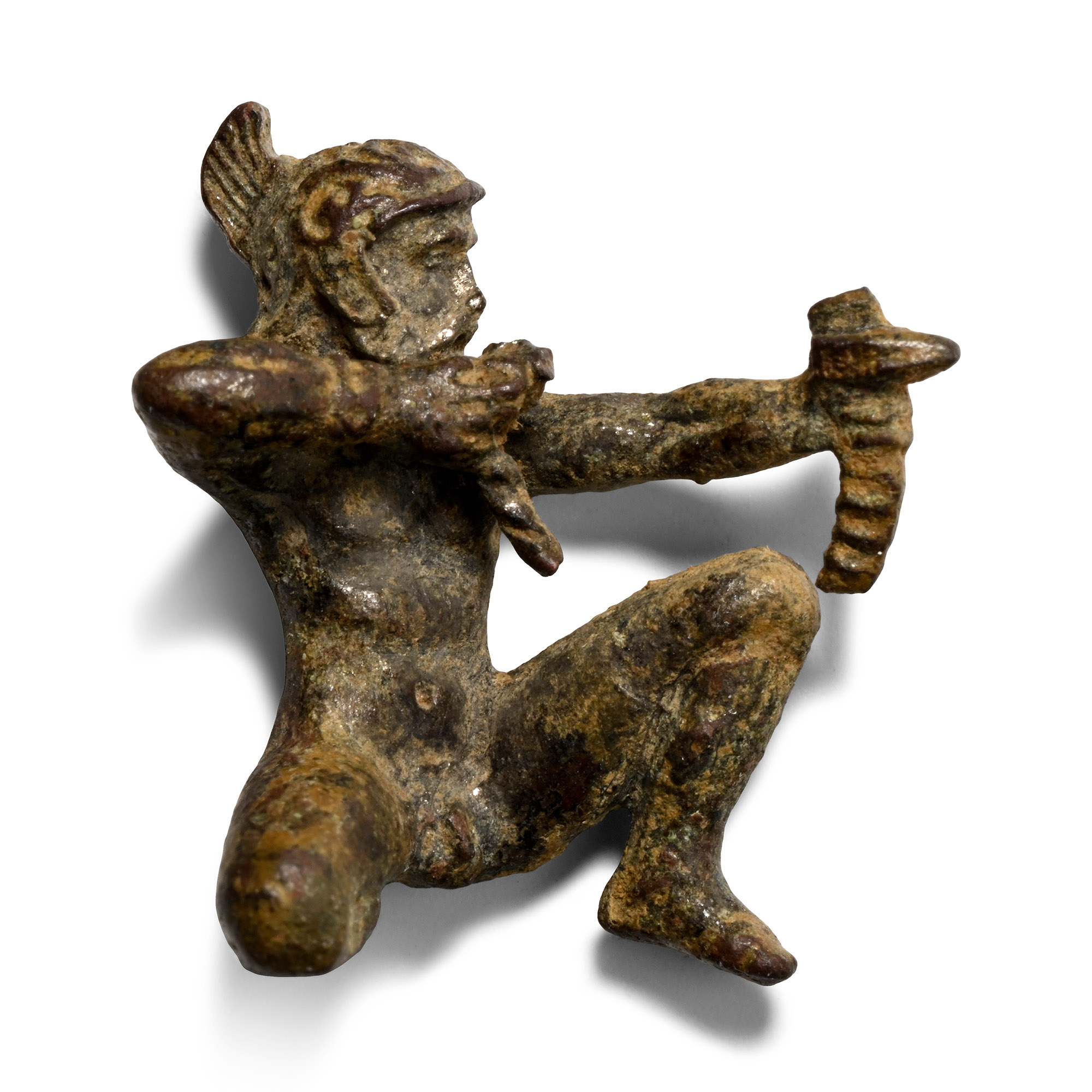
Archaic Greek Style Bronze Archer Statuette
20TH CENTURY A.D.
1 in. (12.9 grams, 27 mm).
Modelled nude, squatting with left arm extended holding a bow and right arm at the chin in the act of drawing the string; nude except for a crested helmet. [No Reserve]
ProvenancePreviously belonging to J Stewart, Mayfair, London, UK; acquired in the early 1980s.
Property of a Middlesex gentleman.
TimeLine Auctions follows a vetting process to ensure the authenticity and legality of all items, reinforcing our commitment to integrity and responsible trading. Each antiquity, antique, and coin lot undergoes thorough examination by a vetting committee of at least ten external specialists, professional trade association members, scientists, and archaeologists: Our Vetting Process
AUCTIONS:
TimeLine is a leading auction house specialising in antiquities, ancient art, collectables, natural history, coins, medals, and books. Our auctions offer museums, collectors, historians, and enthusiasts the opportunity to acquire unique and historically significant pieces.
-
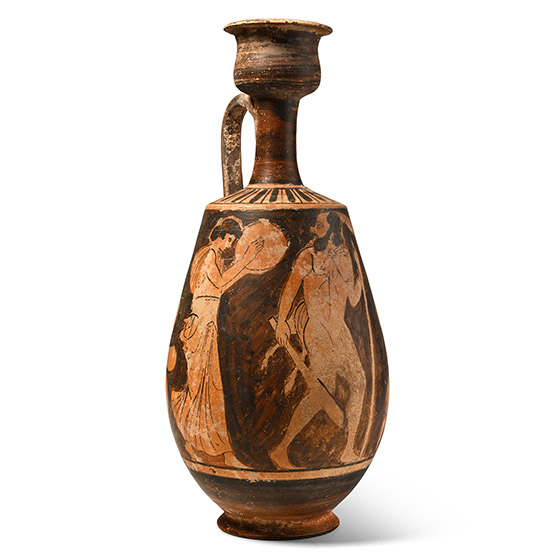
Grand Tour Greek Red Figure Lekythos
20th century A.D.Sold for (Inc. bp): £247
Rounded body with narrow neck and flared mouth, strap handle to the rear, the body showing a lively Dionysian procession with a satyr holding a long staff at the centre and a cymbal player behind him. 501 grams, 28 cm
Acquired in the early 2000s. From an important collection of a North London, UK, gentleman. -
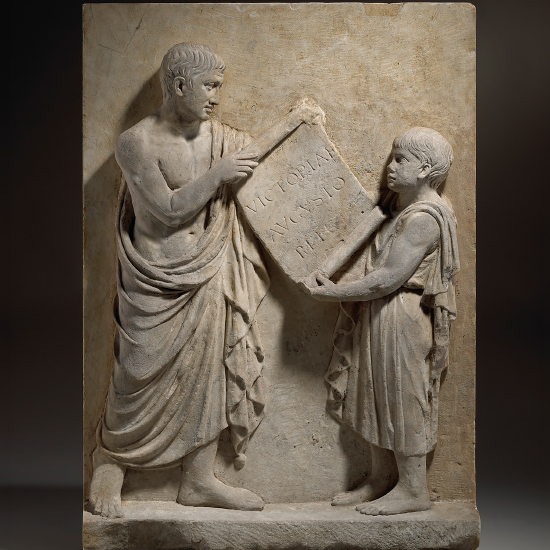
Large Marble Relief with Roman-Era Scene of a Boy Presenting a Scroll
18th-19th century A.D.Sold for (Inc. bp): £6,500
Rectangular scene with ledge to lower edge; high-relief carved scene depicting a standing male in loosely draped toga, holding the upper edge of a papyrus scroll; beside him, a small boy in similar attire holding the lower two corners of the document; legend in seriffed Roman capitals 'VICTORIAE / AVGVSTO / RE[...]' (to Victoria, to Augustus, ...). 127 kg total including stand, 87.5 cm high
Private collection, UK. This lot has been checked against the Interpol Database of stolen works of art and is accompanied by search certificate number no.13393-259011.
The relief recalls the images of the Propaganda Augusti, diffused by Julius Caesar Octavian after his victory over Marcus Antonius and Cleopatra at Actium. The aged man and the boy represent the old and new Roman world meeting in the Principate created by Augustus. -
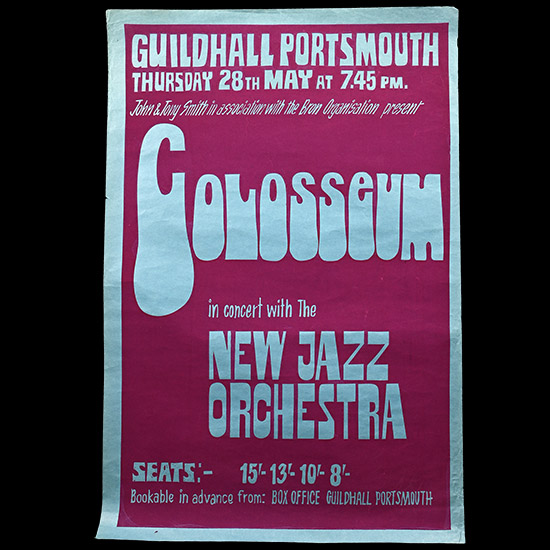
Original Colosseum Poster by David Arnott
1970 A.D.Estimate: £80 - 100 (+bp*)
Opening Bid: £40
Printed poster on mid-blue coarse paper with rose overprint; Guildhall Portsmouth concert with 'Colosseum' band and 'New Jazz Orchestra'. 22 grams, 76.2 x 51 cm
Acquired on the UK art market. Property of a Harwich, UK, collector.
'Colosseum' were an innovative band in the late 1960s, mixing blues, rock and jazz-based improvisational styles. Members of the group were previously with John Mayall's 'Bluesbreakers'. The original band split up in 1971, and reformed in 1994 and toured in Germany and elsewhere. With a new line-up, they are still playing today.
