
Loading, please wait...
LOT 0574
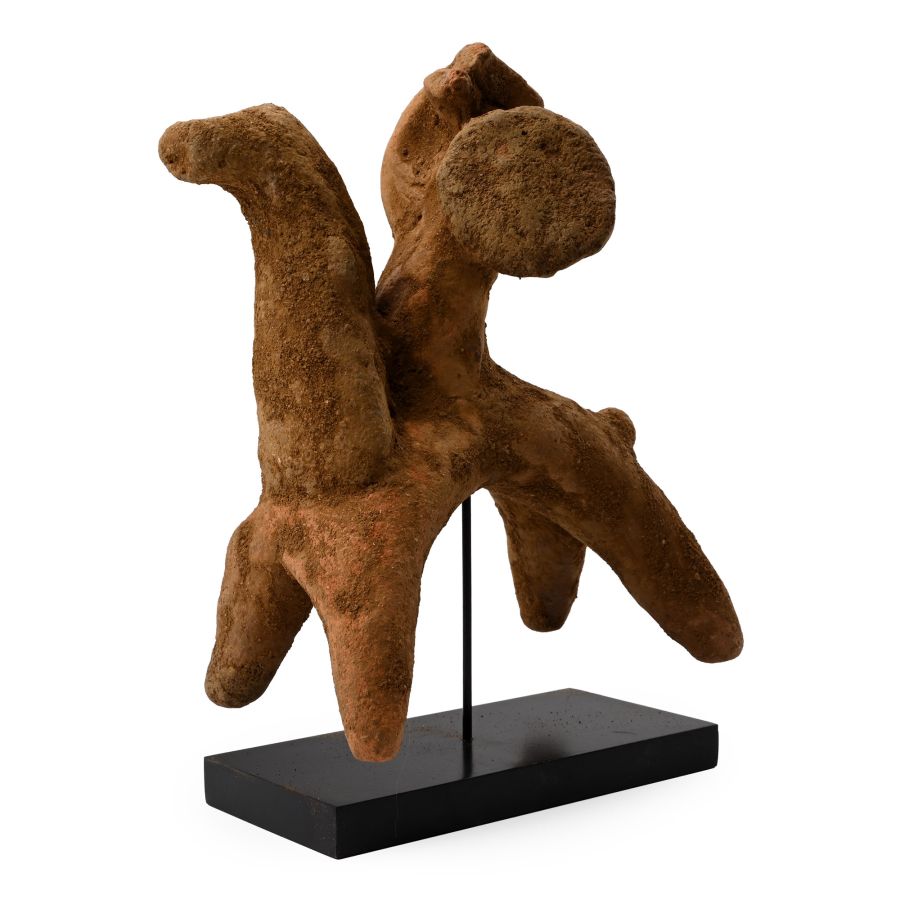
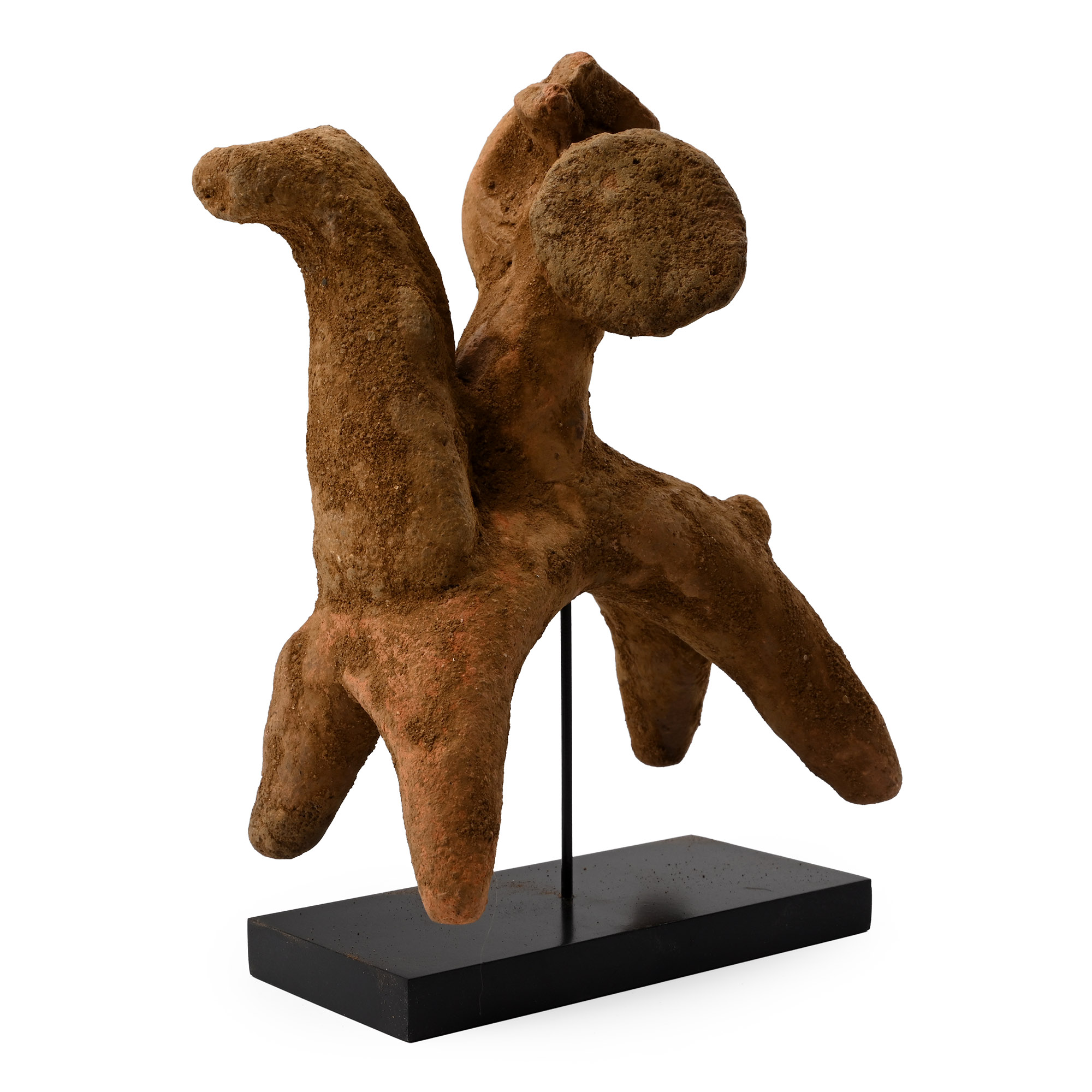
Archaic Greek Mounted Terracotta Warrior
7TH-5TH CENTURY B.C.
6 1/2 in. (410 grams total, 16 cm high including stand).
Modelled in the round as a mounted warrior, the stylised horse modelled standing on stub legs, with a long neck and detailing to its eyes; the warrior holding a shield in his left hand, right hand and arm raised to eye level, wearing a crested helmet; restored and mounted on a custom-made display stand. [No Reserve]
ProvenanceAcquired before 1990.
From an old German collection.
From the private collection of John Meredith, acquired since the 1990s; thence by descent.
This lot is accompanied by an illustrated lot declaration signed by the Head of the Antiquities Department, Dr Raffaele D'Amato.
Cf. Marantidou, P., Terracotta statues and figurines of Cypriote type found in the Aegean. Provenance studies, Limassol, 2009, pls.XIII no.SAH69, XXXII, no.CYP50, for the type.
FootnotesTerracotta figurines of horse and rider were common grave offerings in Boeotia, northwest of Attica, particularly during the 6th century B.C. Representations of warriors on horseback were already widespread in the Geometric Period, and also widely employed in Cyprus in this same period. The image of our rider, although influenced by Cypriot designs, does not show typical Cypriot characteristics, and indeed his kausia cap suggests a northern Greek origin.
CONDITIONTimeLine Auctions follows a vetting process to ensure the authenticity and legality of all items, reinforcing our commitment to integrity and responsible trading. Each antiquity, antique, and coin lot undergoes thorough examination by a vetting committee of at least ten external specialists, professional trade association members, scientists, and archaeologists: Our Vetting Process
AUCTIONS:
TimeLine is a leading auction house specialising in antiquities, ancient art, collectables, natural history, coins, medals, and books. Our auctions offer museums, collectors, historians, and enthusiasts the opportunity to acquire unique and historically significant pieces.
-
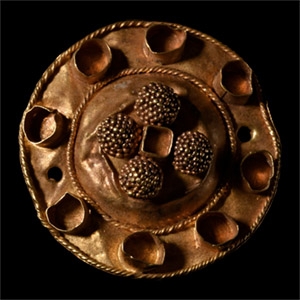
Scythian Gold Floral Mount
5th-3rd century B.C.Estimate: £400 - 600 (+bp*)
Opening Bid: £200
Discoid in plan with central dome, applied filigree trail to rim and base of dome, eight tubular cells to flange, four granulated clusters to boss and central square cell; flange pierced for attachment. 3.97 grams, 29 mm
Ex London, UK, gentleman's collection, 1980-1990s. This lot is accompanied by an illustrated lot declaration signed by the Head of the Antiquities Department, Dr Raffaele D'Amato. -
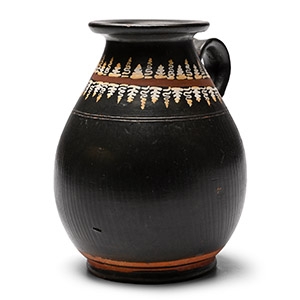
Greek Gnathian Black-Glazed Jug with Grape Vines
South Italic, 5th-3rd century B.C.Sold for (Inc. bp): £442
Blackware juglet with pedestal base, bulbous body, waisted neck and everted rim; the applied handle to the rear; band of red flanked by cream and white fronds to the shoulder. 155 grams, 11 cm
From the private collection of a Canadian gentleman living in Essex, UK, formed since the 1920s-circa 1990. Property of an Essex lady until the late 1990s; thence by descent. From the private collection of an Essex gentleman since the late 1990s. This lot is accompanied by an illustrated lot declaration signed by the Head of the Antiquities Department, Dr Raffaele D'Amato. -
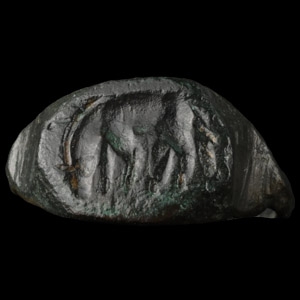
Greek Bronze Ring with Grazing Horse
4th-3rd century B.C.Sold for (Inc. bp): £182
Ellipsoid bezel with incuse image of a horse with head lowered. 4.23 grams, 21.71 mm overall, 18.78mm internal diameter (approximate size British O, USA 7, Europe 14.98, Japan 14)
Ex German art market, 2000s. Acquired from an EU collector living in London. From the collection of a Surrey, UK, gentleman. This lot is accompanied by an illustrated lot declaration signed by the Head of the Antiquities Department, Dr Raffaele D'Amato.
