
Loading, please wait...
LOT 0496
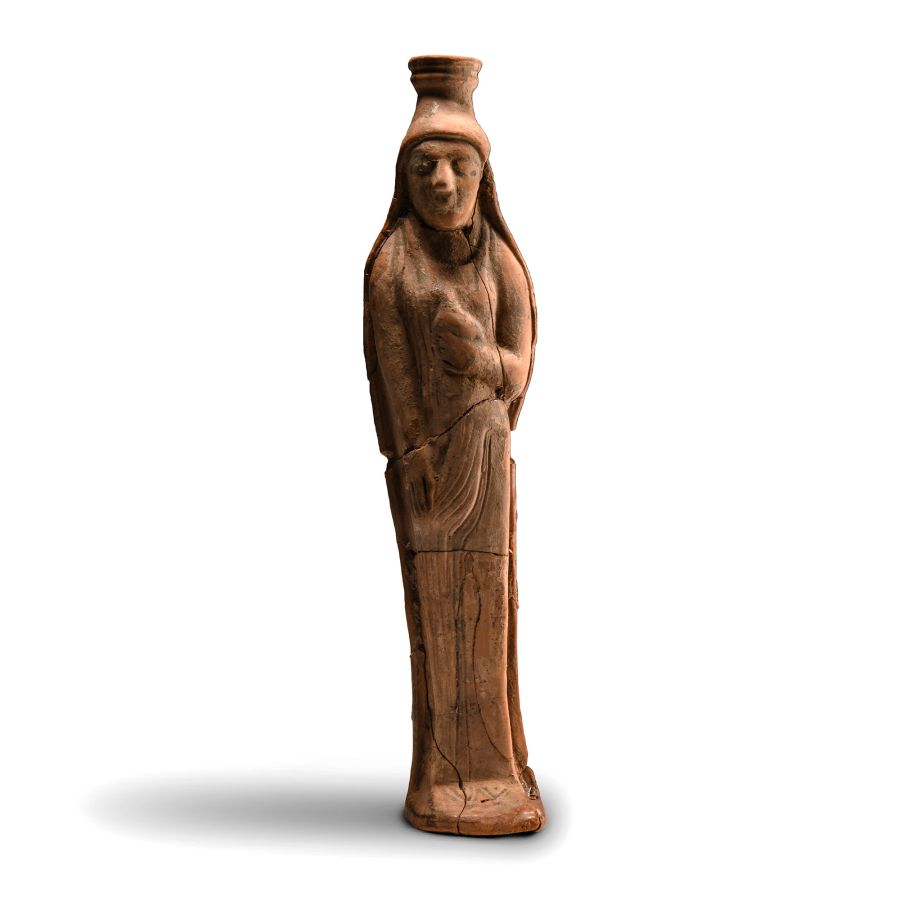
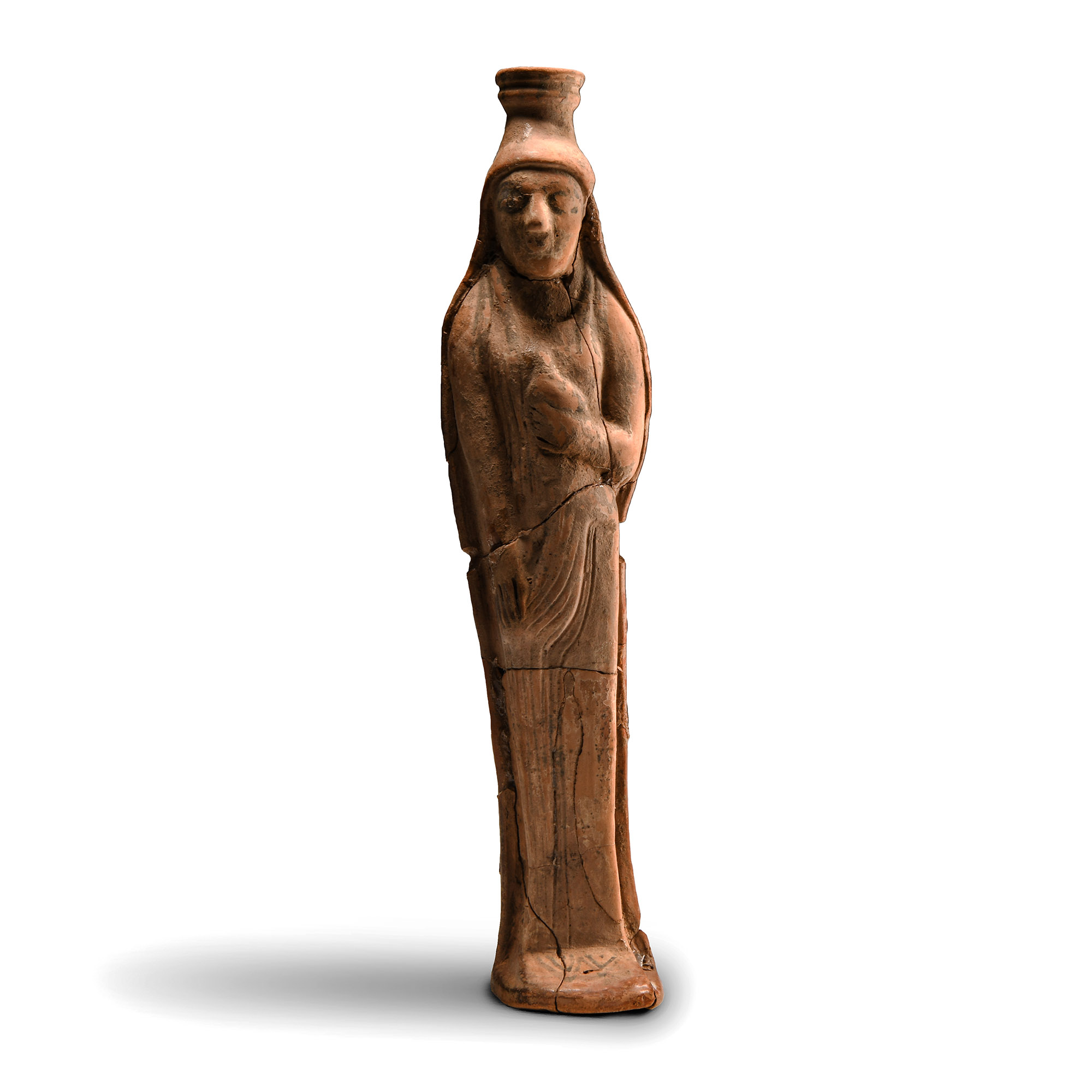
Archaic Greek Figural Terracotta Alabastron
6TH CENTURY B.C.
8 5/8 in. (269 grams, 22 cm high).
The free-standing perfume vase modelled as a standing and draped female figure, the neck and mouth of the vessel possibly formed as a modius worn on her head, holding what is possibly a dove to her chest; moulded and painted detailing to her face and garments; heavily repaired.
ProvenanceAcquired in Europe before 2001.
This lot is accompanied by an illustrated lot declaration signed by the Head of the Antiquities Department, Dr Raffaele D’Amato.
Cf. The Metropolitan Museum, accession number 54.151, for similar.
CONDITIONTimeLine Auctions follows a vetting process to ensure the authenticity and legality of all items, reinforcing our commitment to integrity and responsible trading. Each antiquity, antique, and coin lot undergoes thorough examination by a vetting committee of at least ten external specialists, professional trade association members, scientists, and archaeologists: Our Vetting Process
AUCTIONS:
TimeLine is a leading auction house specialising in antiquities, ancient art, collectables, natural history, coins, medals, and books. Our auctions offer museums, collectors, historians, and enthusiasts the opportunity to acquire unique and historically significant pieces.
LOT 0496
Archaic Greek Figural Terracotta Alabastron
Estimate £700 - 900€810 - 1,040 (for guidance only)$950 - 1,220 (for guidance only)
-
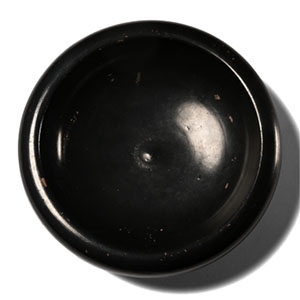
Greek Terracotta Black Glazed Bowl
4th century B.C.Sold for (Inc. bp): £260
With lustrous black glaze with metallic shimmer; shallow bowl on ring foot; fine double drill-hole in the ring for suspension; carinated inner edge, carinated lip to sidewall; base in reserve with two concentric circles in red; old collector's label 'N12960' to underside. 153 grams, 10.1 cm
Private collection Bavaria. By descent, in possession of the family since 1960s-1970s. German art market, 2013. Accompanied by a copy of an Art Loss Register certificate no.S00111200. This lot is accompanied by an illustrated lot declaration signed by the Head of the Antiquities Department, Dr Raffaele D’Amato. -
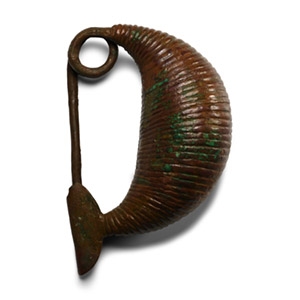
Greek Sanguisuga Bronze Fibula
Italic, 7th century B.C.Sold for (Inc. bp): £260
A 'sanguisuga' (leech) fibula with hollow, vertically ribbed bow; integral coiled spring and ellipsoid catchplate; loose contents suggests an additional function as a rattle, perhaps in a cultic context; pin restored. 166 grams, 89 mm
W. Rosenbaum, Ascona, before 1984. Accompanied by a copy of an Art Loss Register certificate no.S00091285. This lot is accompanied by an illustrated lot declaration signed by the Head of the Antiquities Department, Dr Raffaele D’Amato. -
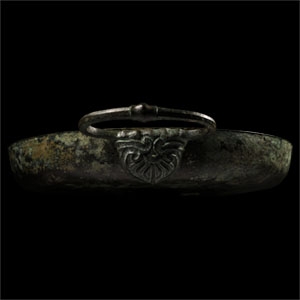
Hellenistic Bronze Bowl with High Rim
4th-3rd century B.C.Sold for (Inc. bp): £1,300
Deep sidewall, handle formed by a horizontal oval loop with offset central section and semi-circular plaque adorned with stylised pendant palmette; slightly offset rim. 775 grams, 32.9 cm
Ex P.M. Suter, 1970s-1994. with Cahn Auktionen AG, 3 November 2012, no.184. Accompanied by a copy of an Art Loss Register certificate no.S00069492. This lot is accompanied by an illustrated lot declaration signed by the Head of the Antiquities Department, Dr Raffaele D’Amato.
