
Loading, please wait...
LOT 0609
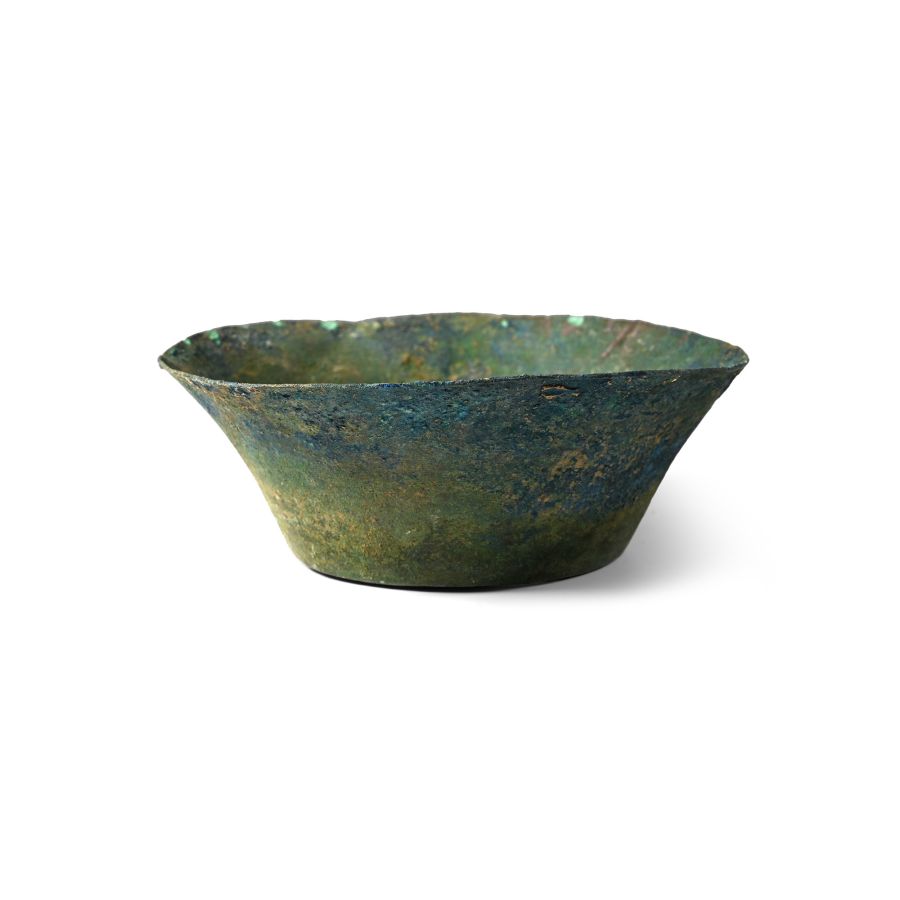
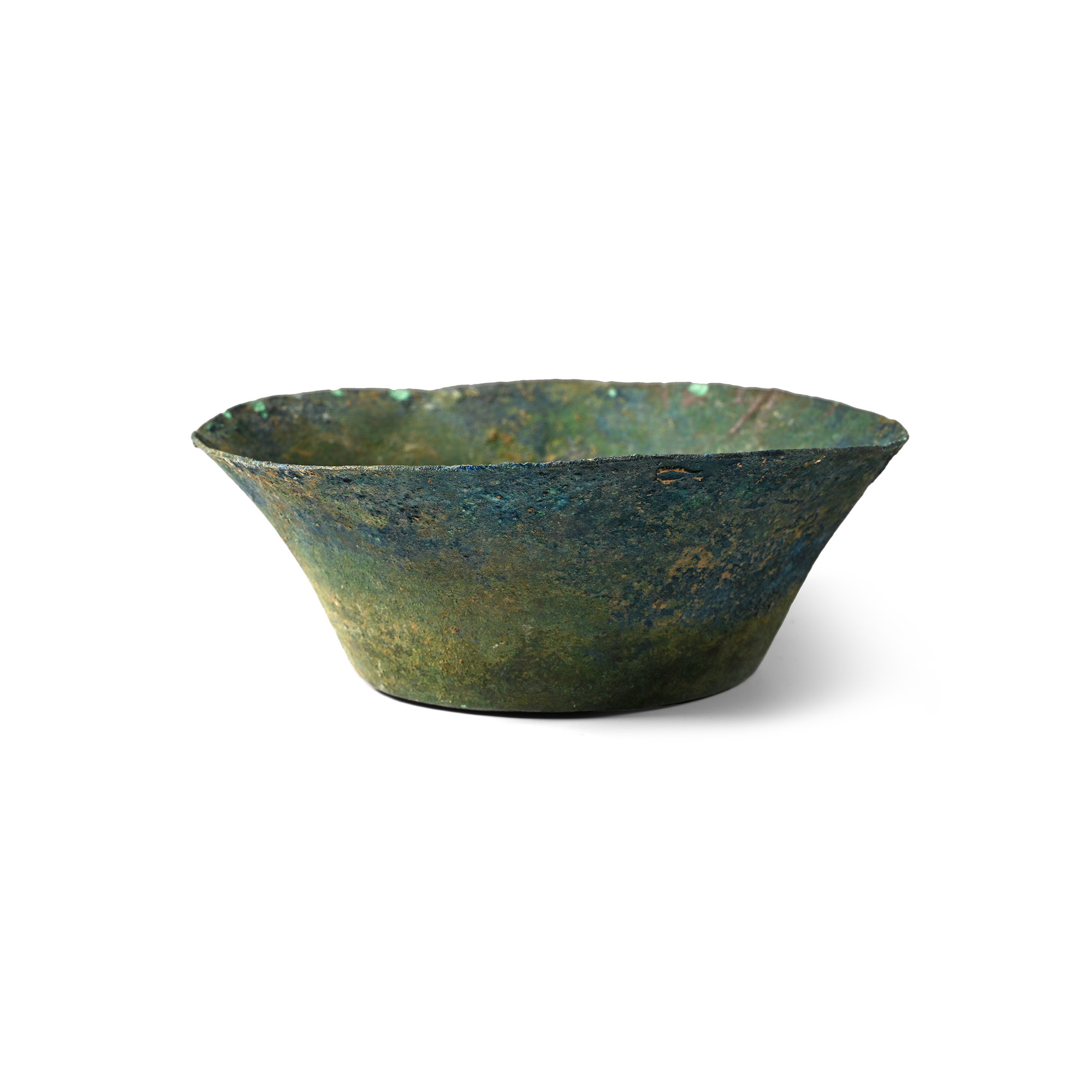
Archaic Cypriot Bronze Dish
7TH CENTURY B.C.
4 1/4 in. (52 grams, 10.7 cm).
Hemispherical with low profile and gently flaring walls, flat base. [No Reserve]
ProvenanceEx London, UK, collections, 1990s-2000s.
This lot is accompanied by an illustrated lot declaration signed by the Head of the Antiquities Department, Dr Raffaele D'Amato.
Cf. for similar Richter, G.M.A., The Metropolitan Museum of Art, Greek, Etruscan and Roman Bronzes, New York, 1925, p.204, fig.612.
FootnotesThe Greek name for a shallow, round bowl, generally with a round boss in the centre, appears to have been phiale, which is described as resembling a shield (Aristotle, Rhetoric, III, 4, 1 1; Poetics, 21, 12), and as without handles.
CONDITIONTimeLine Auctions follows a vetting process to ensure the authenticity and legality of all items, reinforcing our commitment to integrity and responsible trading. Each antiquity, antique, and coin lot undergoes thorough examination by a vetting committee of at least ten external specialists, professional trade association members, scientists, and archaeologists: Our Vetting Process
AUCTIONS:
TimeLine is a leading auction house specialising in antiquities, ancient art, collectables, natural history, coins, medals, and books. Our auctions offer museums, collectors, historians, and enthusiasts the opportunity to acquire unique and historically significant pieces.
-
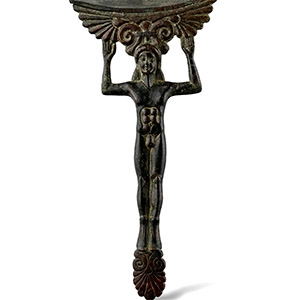
Archaic Greek Bronze Kouros Handle
Western Greek, circa 480 B.C.Estimate: £8,000 - 10,000 (‡+bp*)
Opening Bid: £3,500
The handle formed as a nude youth supporting a panel of double volutes and half-palmettes, long braided hair falling at the back of the neck and on his forehead; the legs joined and ankles extended, the feet enclosed in pointed shoes, palmette below; accompanied by the basin with inverted rim, a pair of parallel lines to the outer rim; the handle and part of the rim detached and mounted separately on the custom-made display stand. 1.35 kg total, 45.5 cm high including stand
with Herbert A. Cahn, Basel, 1990s. Accompanied by a copy of an Art Loss Register certificate no.S00075168. Accompanied by an academic report by Dr Raffaele D’Amato. This lot has been checked against the Interpol Database of stolen works of art and is accompanied by search certificate no.12462-228709. This lot has been cleared against the Art Loss Register database, and is accompanied by an illustrated lot declaration signed by the Head of the Antiquities Department, Dr Raffaele D'Amato. -
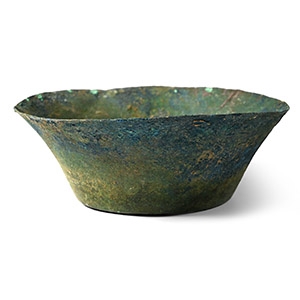
Archaic Cypriot Bronze Dish
7th century B.C.Sold for (Inc. bp): £260
Hemispherical with low profile and gently flaring walls, flat base. 52 grams, 10.7 cm
Ex London, UK, collections, 1990s-2000s. This lot is accompanied by an illustrated lot declaration signed by the Head of the Antiquities Department, Dr Raffaele D'Amato.
The Greek name for a shallow, round bowl, generally with a round boss in the centre, appears to have been phiale, which is described as resembling a shield (Aristotle, Rhetoric, III, 4, 1 1; Poetics, 21, 12), and as without handles. -
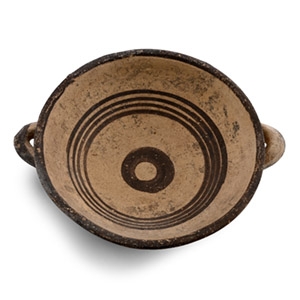
Greek Cypriot Two-Handled Terracotta Painted Bowl
Iron Age, 1050-480 B.C.Sold for (Inc. bp): £247
Shallow with disc foot and two lateral loop handles, painted concentric rings to inner face, Maltese cross to base. 78 grams, 11.7 cm
From the private collection of a Canadian gentleman living in Essex, UK, formed since the 1920s-circa 1990. Property of an Essex lady until the late 1990s; thence by descent. From the private collection of an Essex gentleman since the late 1990s. This lot is accompanied by an illustrated lot declaration signed by the Head of the Antiquities Department, Dr Raffaele D'Amato.
