
Loading, please wait...
LOT 2098
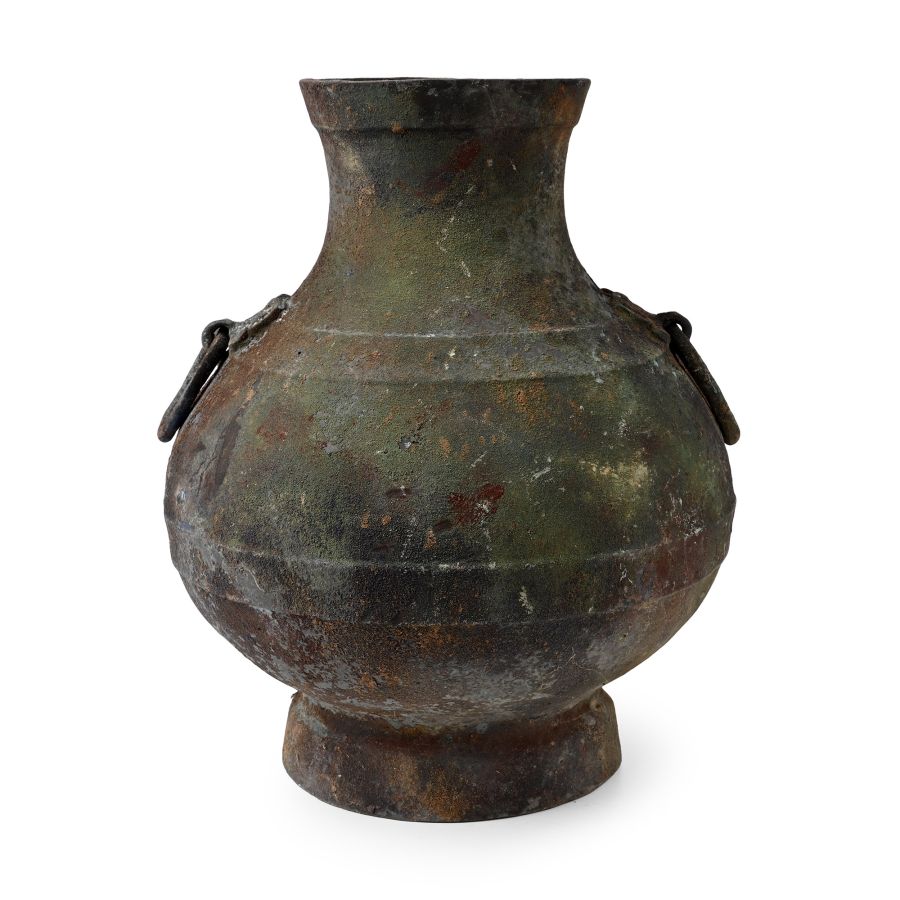
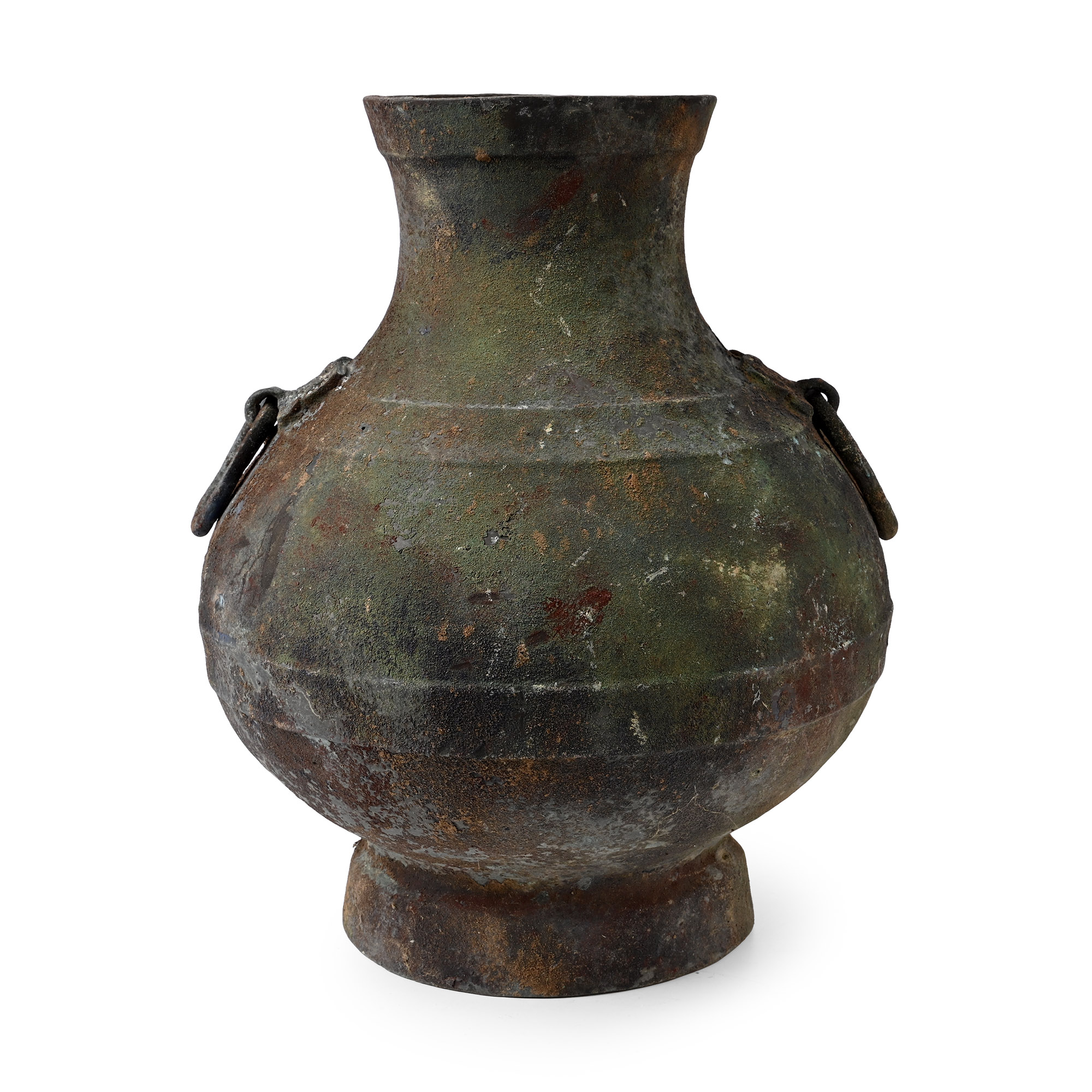
Archaic Chinese Style Bronze Jar
20TH CENTURY A.D.
111 /2 in. (2.43 kg, 29.3 cm high).
Bulbous body with a flaring foot and a funicular neck, two articulated loop handles on the shoulder with dragon-mask attachments.
ProvenanceEx Hong Kong gentleman's collection.
CONDITIONTimeLine Auctions follows a vetting process to ensure the authenticity and legality of all items, reinforcing our commitment to integrity and responsible trading. Each antiquity, antique, and coin lot undergoes thorough examination by a vetting committee of at least ten external specialists, professional trade association members, scientists, and archaeologists: Our Vetting Process
AUCTIONS:
TimeLine is a leading auction house specialising in antiquities, ancient art, collectables, natural history, coins, medals, and books. Our auctions offer museums, collectors, historians, and enthusiasts the opportunity to acquire unique and historically significant pieces.
-
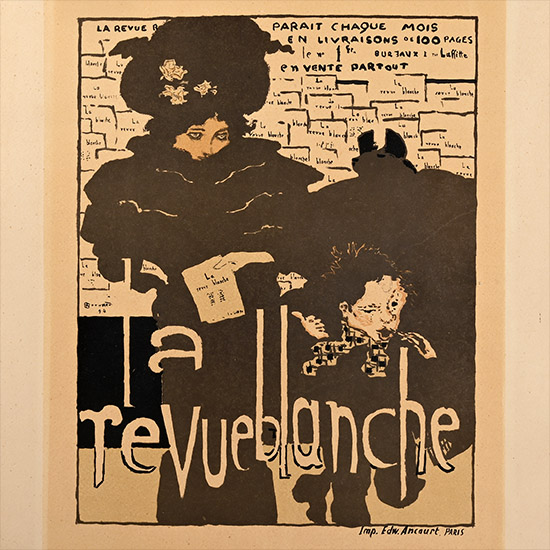
Pierre Bonnard, Les Maitres de l'Affiche, Plate 38 - Original La Revue Blanche Poster
1896 A.D.Sold for (Inc. bp): £468
Buff-coloured paper reproduction poster with grey, sepia and black image of a woman in hat and fur coat with a child at her side; large lettering to lower centre 'La Revue Blanche'; title in handwritten script 'La Revue parait chaque mois en livraisons de 100 pages le No 1ere nureaux 3 rue Laffitte en vente partout'; 'bottom right blind stamp 'Imp. Edw. Ancourt, Paris'; bottom left 'Les Maîtres de l'Affiche Pl.38 / Imprimerie Chaix / (Encres Lorilleux & Cie.)' 49 grams, 39.6 x 29 cm
Acquired on the UK art market. Property of a Harwich, UK, collector. -
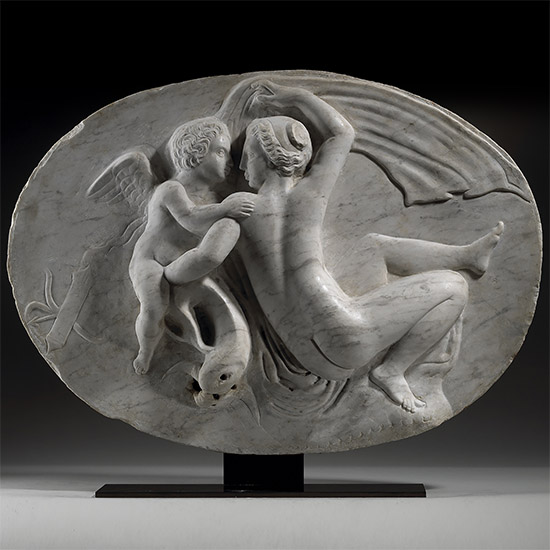
Renaissance Fontainebleau Marble Plaque with Psyche Revived by Eros's Kiss
France, 16th century A.D.Sold for (Inc. bp): £3,380
Ellipsoid plaque with carved high-relief scene depicting Psyche crouching with left leg extended, her right arm raised to support a veil, head turned towards Eros, left arm passing between the legs of Eros, standing nude with wings spread to kiss Psyche, his bow and quiver cast aside in the field. 33.5 kg total including stand, 63 cm wide
Private collection, UK. This lot has been checked against the Interpol Database of stolen works of art and is accompanied by search certificate number no.13396-259009. -
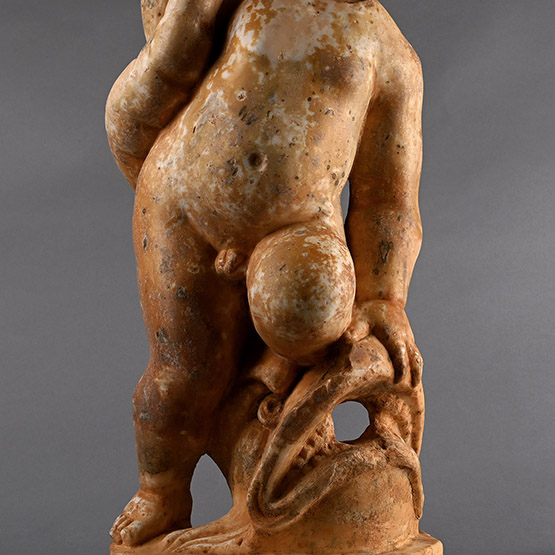
Marble Fountain Sculpture of a Putto Wrestling a Fish
Baroque, 17th century A.D.Sold for (Inc. bp): £598
Standing on an angular base resting his left knee on the open jaws of a fish, his left arm holding the jaws open, the body and tail held upright be the raised right hand (partly absent); with heavy sulphured patina. 20.75 kg, 48 cm
Acquired prior to 1970. From the estate of a Swiss gentleman, Ticino. Private collection, Zurich, Switzerland. This lot has been checked against the Interpol Database of stolen works of art and is accompanied by a search certificate number no.12790-240308.
In ancient Roman art and architecture, fountains were often decorated with sculptures of young boys or putti holding fish. These sculptures were known as 'putti with fish' or 'boy with fish' and were a popular motif in the decoration of fountains. The young boy or putto was shown holding a fish or a shell, which would spout water into the fountain basin below. The fish was a particularly popular motif because it symbolised abundance, fertility, and prosperity, which were all important values in ancient Roman society. Overall, the putti with fish sculptures are a notable example of the art and architecture of ancient Rome and have continued to be an enduring symbol of beauty, abundance, and prosperity throughout the centuries. Archaeological excavations in Pompeii have revealed many examples of sculptures of putti with fish. The putti with fish sculptures from Pompeii were usually made of bronze, marble, or terracotta. They were often placed in the centre of the fountain, surrounded by other decorative elements such as flowers, plants, and other sculptures. Many of these putti with fish sculptures are now on display in the National Archaeological Museum of Naples. The museum also houses a famous mosaic of a putto with a fish, which was discovered in the House of the Faun in Pompeii. The putti with fish sculptures from Pompeii and those in the Naples Museum provide valuable insights into the art and culture of ancient Rome. They demonstrate the importance of beauty and abundance in ancient Roman society and offer a glimpse into the everyday life of the people who lived in Pompeii over two thousand years ago. In the 17th and 18th centuries these sculptures were imitated and used to decorate the fountains of royal palaces and palaces.
