
Loading, please wait...


LOT 0972
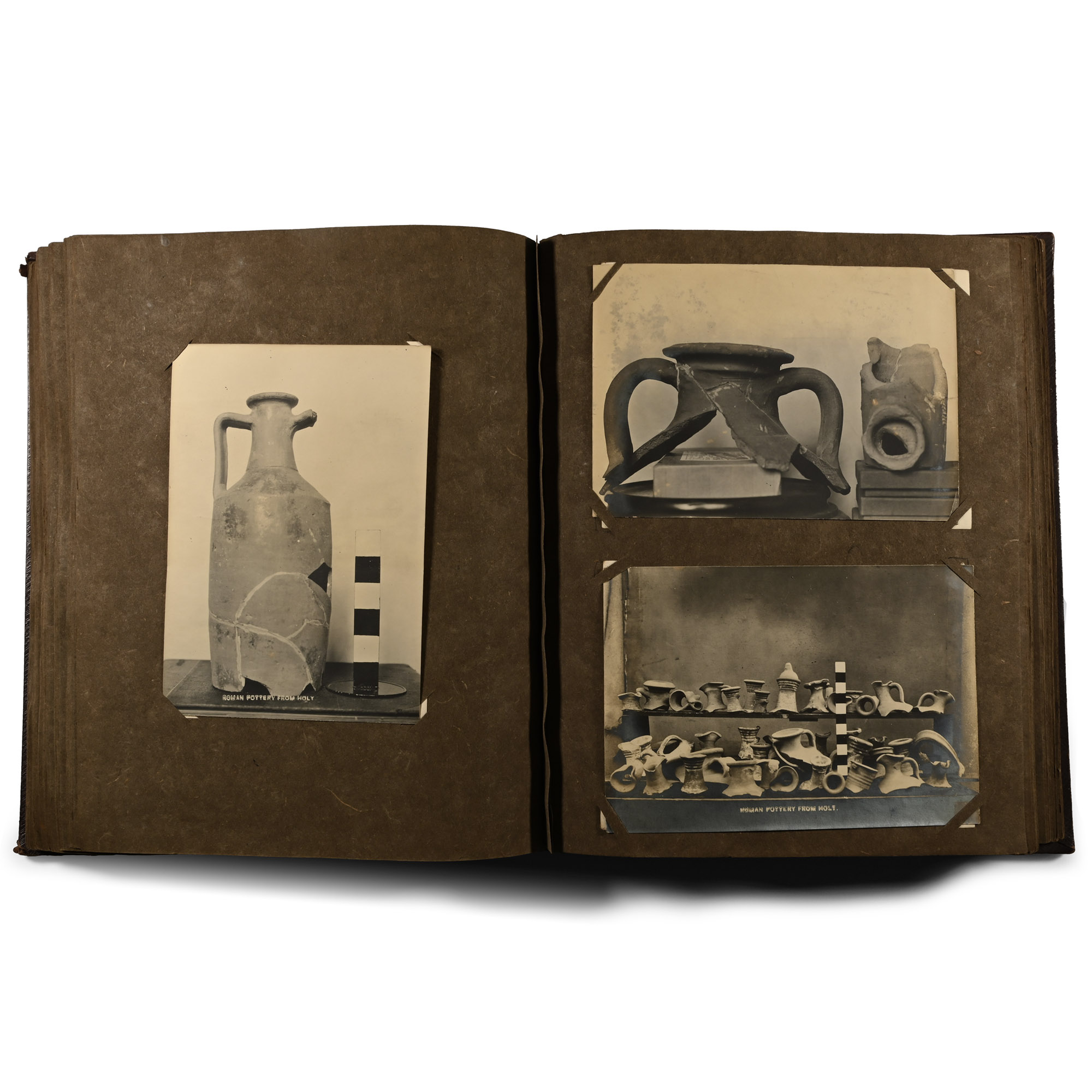
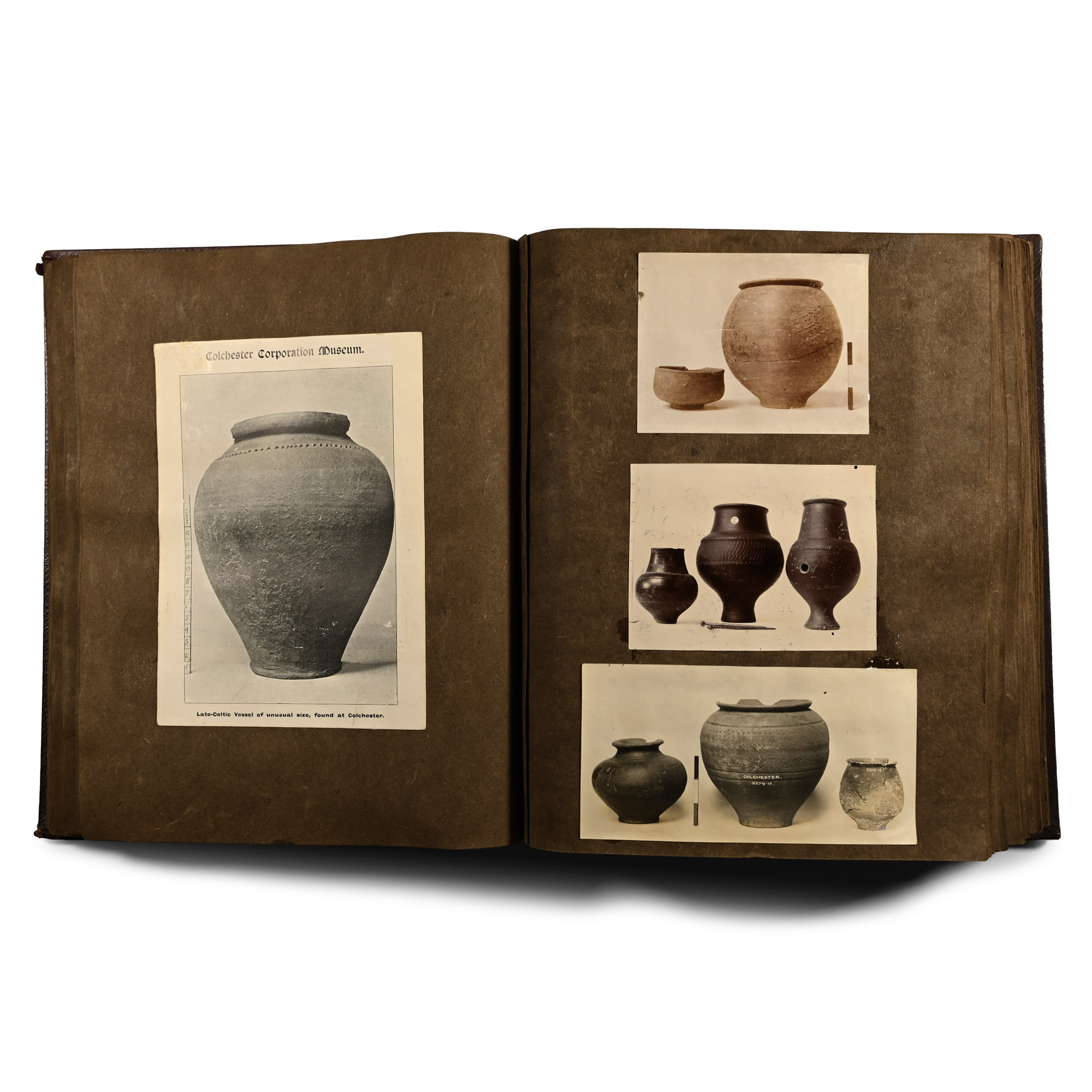
Archaeologist's Photograph Album
1920S A.D. AND EARLIER
10 3/8 x 8 in. (2.03 kg, 26.3 x 20.5 cm).
Containing numerous original photographs of archaeological digs, found artefacts, etc, including digs at Roman sites such as Hadrian's Wall, Colchester, Templeborough, Silchester, Viroconium, Mancunium, Wilderspool and Holt and published images from the Ny Carlsberg Glyptek, Copenhagen; mostly with handwritten identification; with a photograph of the archaeologist T. May M.A. F.S.A. at Richborough and dated 1926 and Wilderspool - possibly the owner of the book; a rare archive of the 1920s British archaeology. [No Reserve]
ProvenanceAcquired on the English art market circa 2017.
Ian Wilkinson collection, Nottinghamshire, UK, formed since 1985.
This lot is accompanied by an illustrated lot declaration signed by the Head of the Antiquities Department, Dr Raffaele D’Amato.
The Roman furnaces at Wilderspool were excavated in 1905; the photographs are consistent in their appearance with that date.
CONDITIONTimeLine Auctions follows a vetting process to ensure the authenticity and legality of all items, reinforcing our commitment to integrity and responsible trading. Each antiquity, antique, and coin lot undergoes thorough examination by a vetting committee of at least ten external specialists, professional trade association members, scientists, and archaeologists: Our Vetting Process
AUCTIONS:
TimeLine is a leading auction house specialising in antiquities, ancient art, collectables, natural history, coins, medals, and books. Our auctions offer museums, collectors, historians, and enthusiasts the opportunity to acquire unique and historically significant pieces.
-
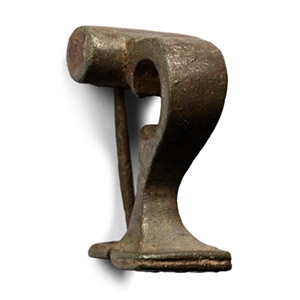
Romano-British Tinned Bronze Decorated Knee Brooch
2nd century A.D.Sold for (Inc. bp): £33
Comprising a chord housed with a horizontal sleeve with pin to the rear, deep scrolled bow with spurs to the reverse, scooped lower end and trapezoidal foot, hooked catch to reverse. 16.2 grams, 30 mm
Found near Wetwang, North Yorkshire, UK. Acquired UK circa 2007. Ian Wilkinson collection, Nottinghamshire, UK, formed since 1985. This lot is accompanied by an illustrated lot declaration signed by the Head of the Antiquities Department, Dr Raffaele D’Amato. -
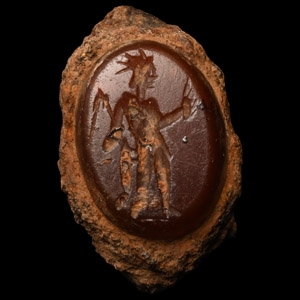
Roman Carnelian Gemstone with Sol Standing Right
2nd-3rd century A.D.Sold for (Inc. bp): £195
Ellipsoid cloison with intaglio figure of Sol standing with sceptre in one hand, the other extended, radiate crown to the head; mounted in a fragment of the ferrous finger ring. 2.75 grams, 19 mm
From the Fadel family collection, London, UK, 1970s. This lot is accompanied by an illustrated lot declaration signed by the Head of the Antiquities Department, Dr Raffaele D’Amato. -
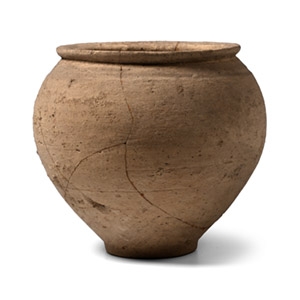
Romano-British Creamware Vase from Nene Valley
2nd-3rd century A.D.Sold for (Inc. bp): £390
Bulbous in profile with narrow base and sharply everted rim to the mouth; repaired. 77 grams, 86 mm
Found Nene Valley, Peterborough, UK. From an old English collection. Acquired from Helios Gallery in 2011. Ian Wilkinson collection, Nottinghamshire, UK, formed since 1985. This lot is accompanied by an illustrated lot declaration signed by the Head of the Antiquities Department, Dr Raffaele D’Amato.
