
Loading, please wait...


LOT 1640
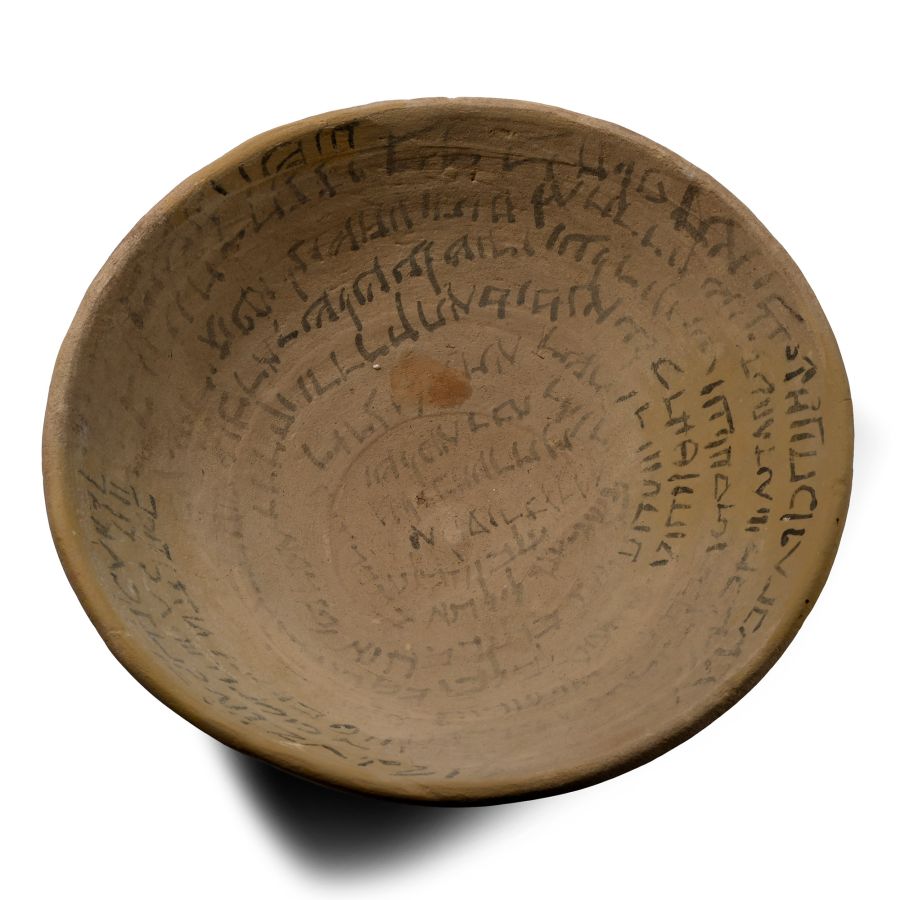
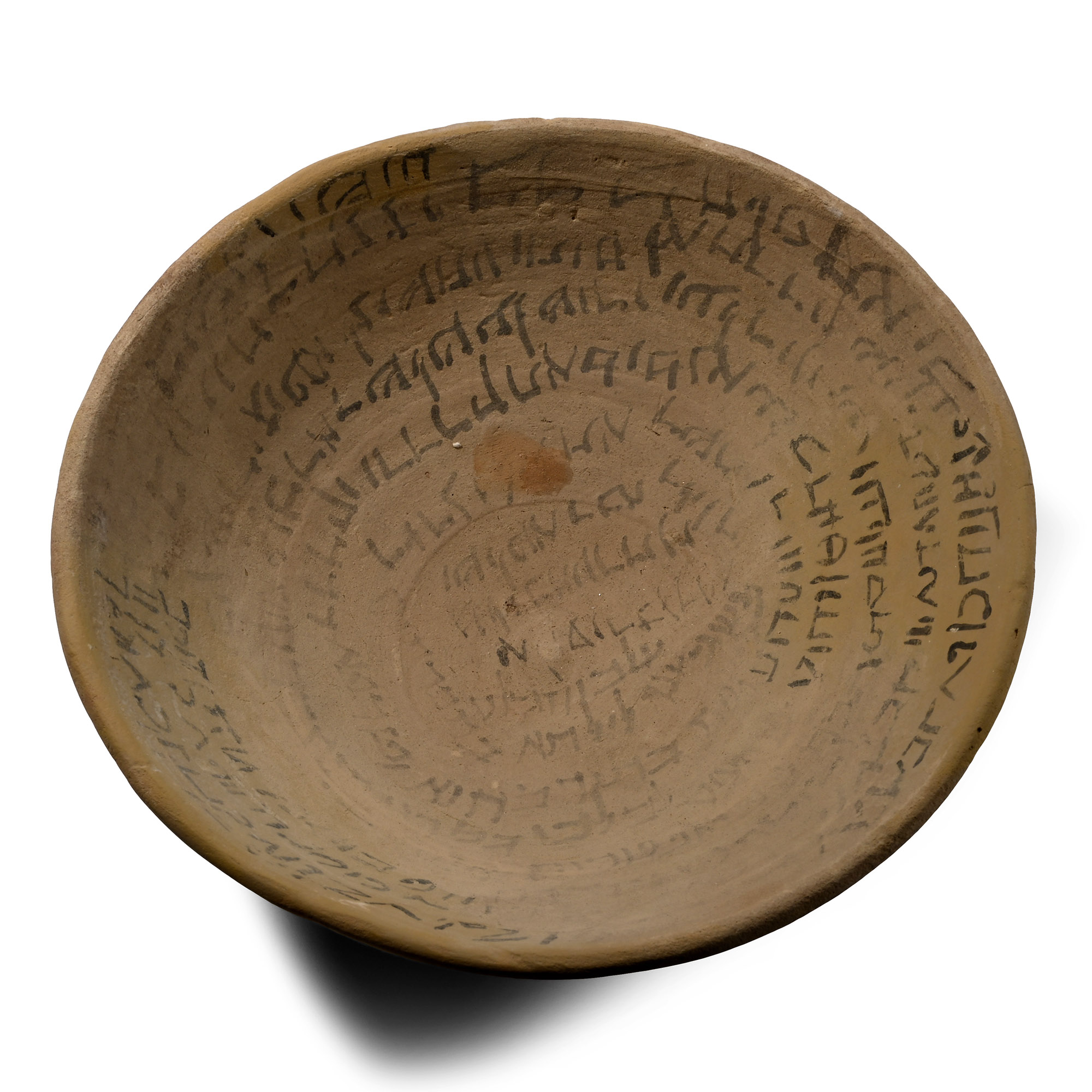
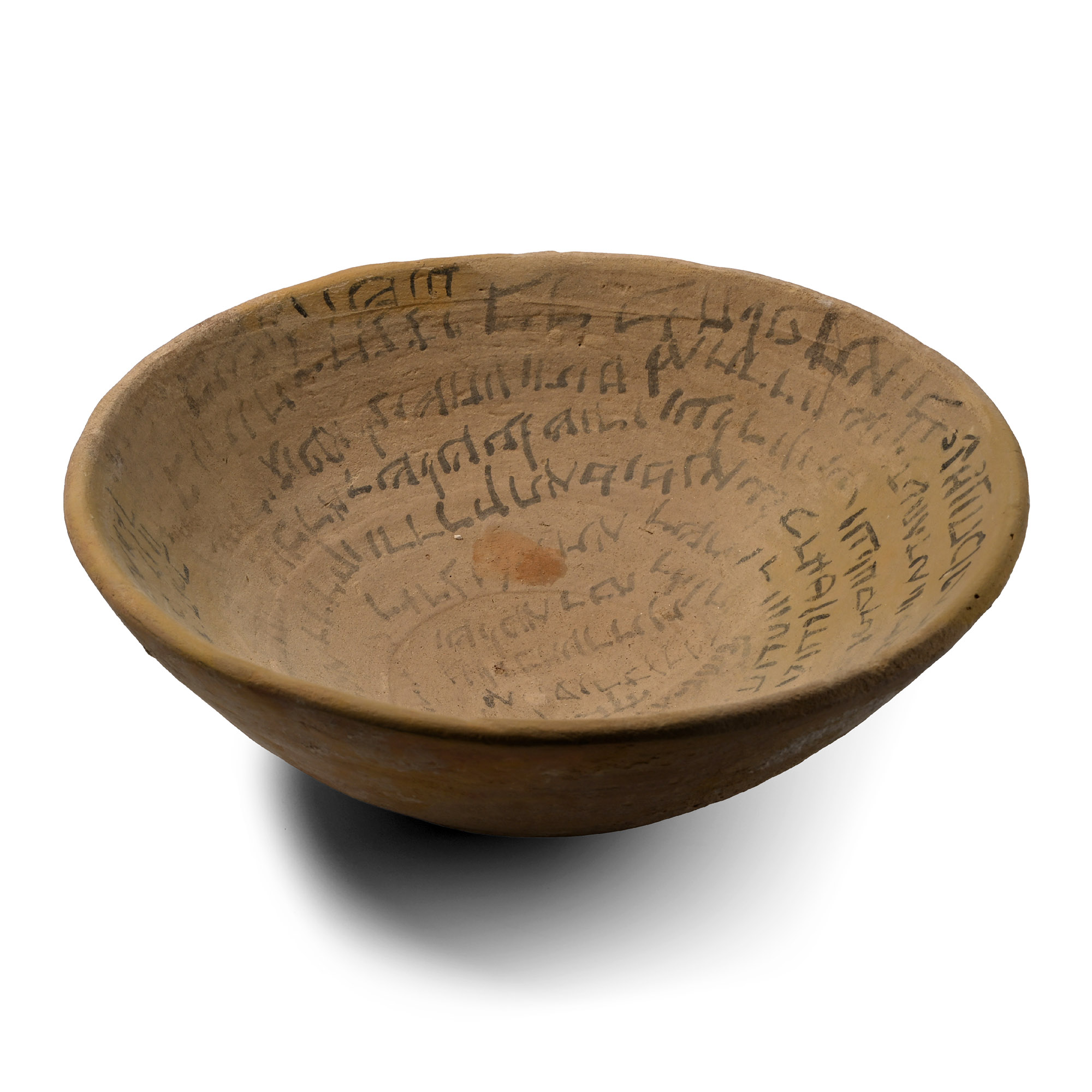
Aramaic Terracotta Magical Incantation Bowl
CIRCA 4TH-8TH CENTURY A.D.
6 5/8 in. (369 grams, 16.9 cm).
With conical body, the inner face bearing the remains of concentric rings of inked magical Aramaic text.
ProvenancePrivate collection, 1980s.
Acquired on the UK art market.
Private collection, London, UK
Cf. The Israel Museum, Jerusalem, accession number: 80.001.0001.
FootnotesAramaic incantation bowls are particular to the Sasanian period and have been found in the regions of modern Iraq. These simple ceramic bowls, also known as magic bowls, each contain an Aramaic inscription, written in ink, which spirals from the centre. The bowls seem to have played an important part in domestic life. For example, during excavation in Nippur in 1889, one or more incantation bowls were found in each house together with domestic artefacts, most often in doorways or under floorboards in the corner of rooms. The bowls are predominantly apotropaic, and the inscriptions tend to protect their owners from misfortunes such as childbirth, illness and evil spirits.
CONDITIONTimeLine Auctions follows a vetting process to ensure the authenticity and legality of all items, reinforcing our commitment to integrity and responsible trading. Each antiquity, antique, and coin lot undergoes thorough examination by a vetting committee of at least ten external specialists, professional trade association members, scientists, and archaeologists: Our Vetting Process
AUCTIONS:
TimeLine is a leading auction house specialising in antiquities, ancient art, collectables, natural history, coins, medals, and books. Our auctions offer museums, collectors, historians, and enthusiasts the opportunity to acquire unique and historically significant pieces.
LOT 1640
Aramaic Terracotta Magical Incantation Bowl
Estimate £500 - 700€580 - 810 (for guidance only)$680 - 950 (for guidance only)
Opening Bid
£250 (EUR 290; USD 338) +BP*
-
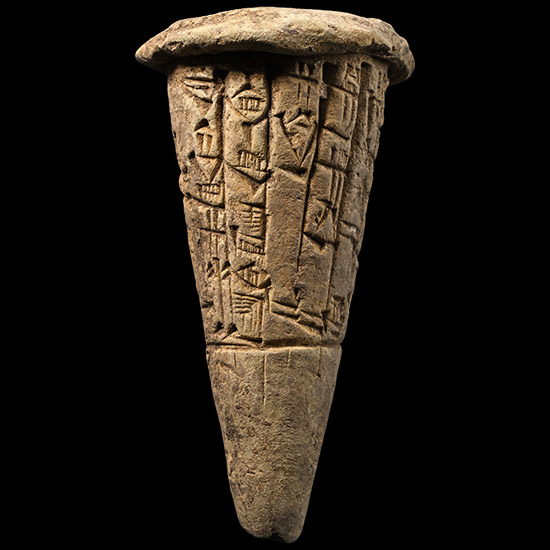
Sumerian Terracotta Foundation Cone From Lagash
Circa 2100 B.C.Estimate: £800 - 1,000 (+bp*)
Bids: 1 | Current Bid: £400
Conical in profile with domed top, vertical impressed lines and cuneiform inscription; tip absent. 220 grams, 12 cm
with Archaeologia, Switzerland, before 1983. Ex private North American collection. London private collection, 2016.
Votive cones are one type of royal foundation deposit, objects that were buried in the walls and beneath the floors of important buildings during construction to sanctify the site and to create a historical memory of the ruler and his achievements. -
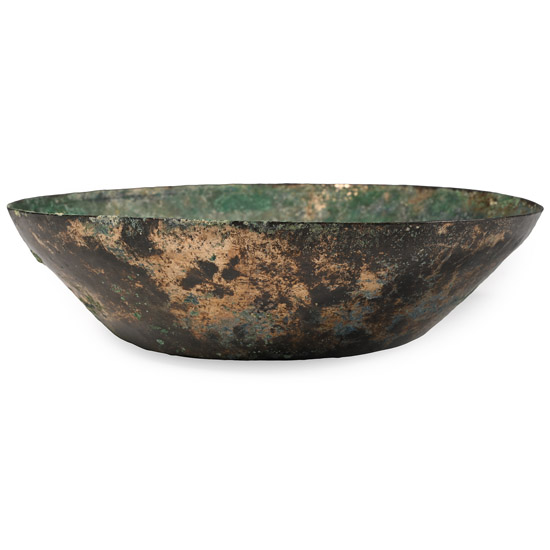
Sasanian Bronze Bowl with Concentric Circle
3rd-7th century A.D.Estimate: £50 - 70 (+bp*)
Opening Bid: £5
With broad base and deep everted sidewall, incised concentric rings to the central panel and below the rim. 272 grams, 19.3 cm wide
Ex Abelita collection, 1990s. -
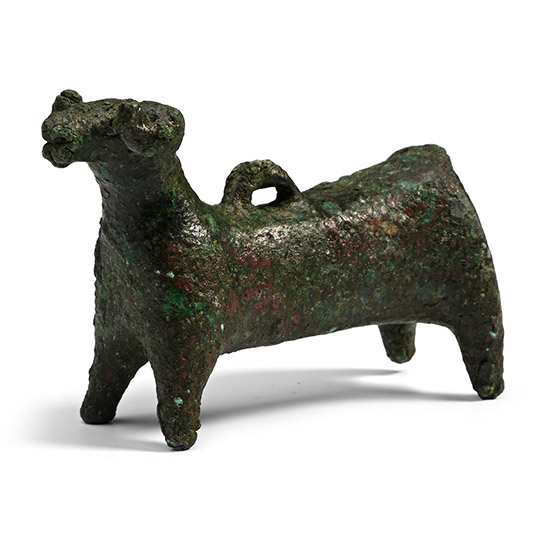
Marlik Bronze Figure of a Ram
Circa 1000-600 B.C.Estimate: £100 - 140 (+bp*)
Opening Bid: £50
Modelled standing with small erect head, curving horns framing the head, large rectangular body with suspension loop on the back. 105 grams, 55 mm
Nicolas Koutoulakis (1910-1996), thence by descent. Ex Galerie Khnoum, Geneva, Switzerland. Private collection of Mr K.A. This lot has been cleared against the Art Loss Register database, and is accompanied by an illustrated lot declaration signed by the Head of the Antiquities Department, Dr Raffaele D'Amato.
