
Loading, please wait...
LOT 0863
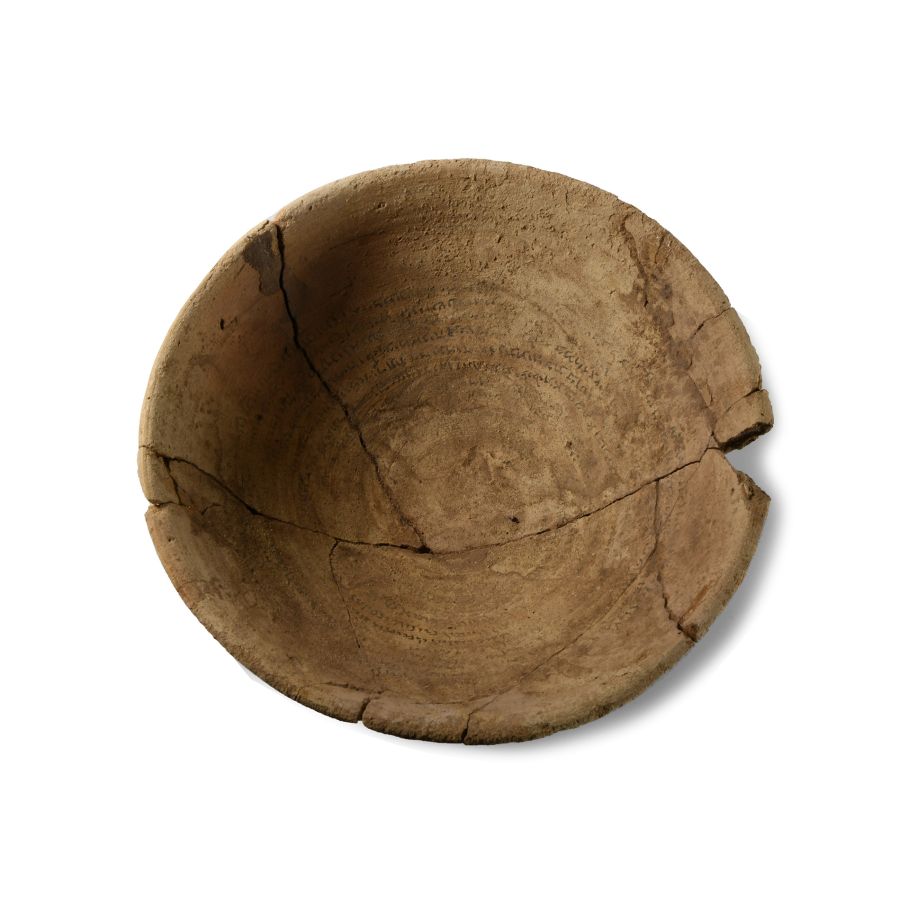
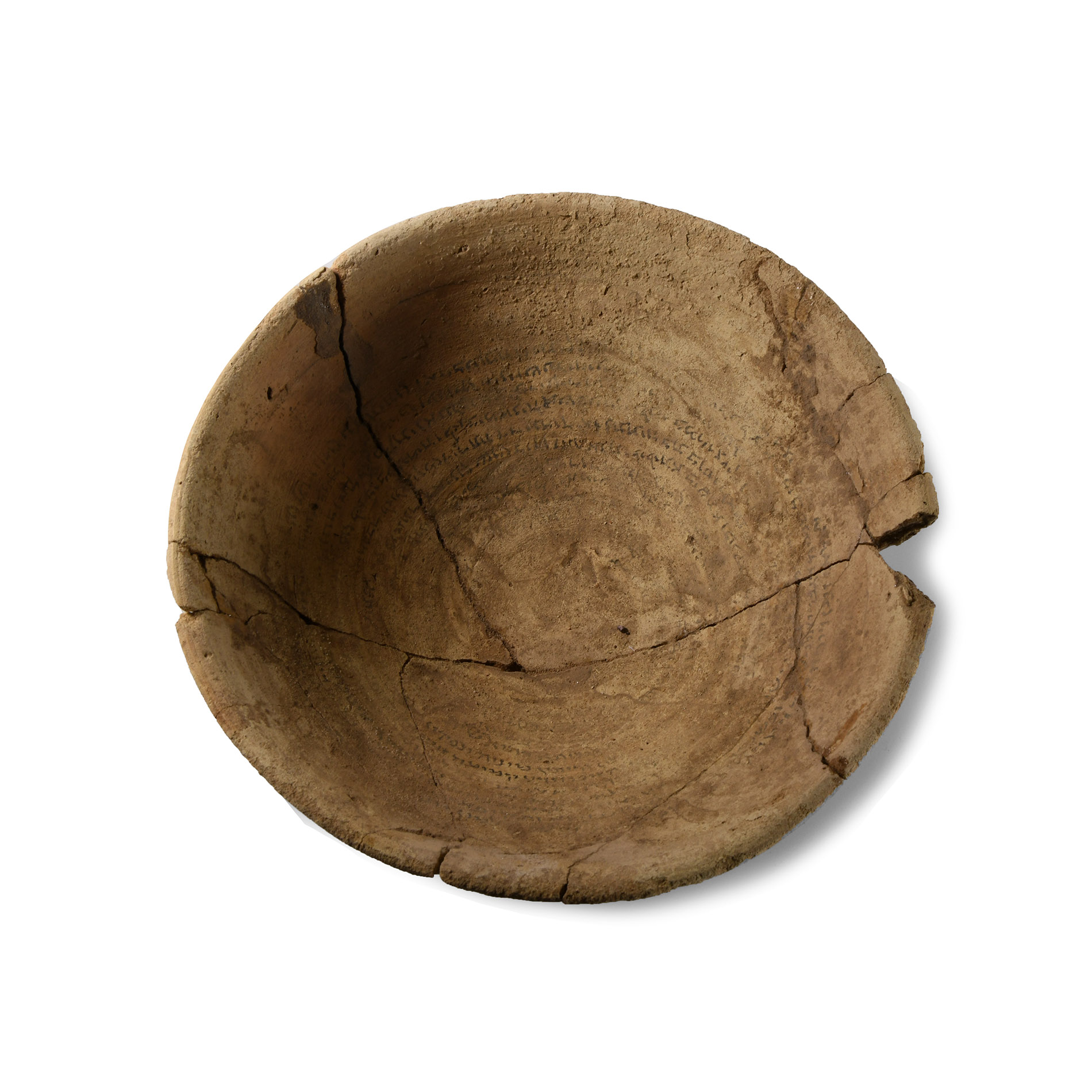
Aramaic Terracotta Bowl with Magical Incantation
4TH-8TH CENTURY A.D.
7 1/2 in. (357 grams, 19 cm wide).
With conical body, the inner face bearing concentric rings of inked magical Aramaic text, repaired.
ProvenanceEx Family collection, London, UK, pre 1988.
LiteratureCf. The Israel Museum, Jerusalem, accession number: 80.001.0001.
FootnotesAramaic incantation bowls are particular to the Sassanian period and have been found in regions of modern Iraq. These simple ceramic bowls, also known as magic bowls, each contain an Aramaic inscription, written in ink, which spirals from the centre. The bowls seem to have played an important part in domestic life. For example, during excavation in Nippur in 1889, one or more incantation bowls were found in each house together with domestic artefacts, most often in doorways or under floorboards in the corner of rooms. The bowls are predominantly apotropaic, and the inscriptions tend to protect their owners from misfortunes such as those faced in child-birth, illness and evil spirits.
CONDITIONTimeLine Auctions follows a vetting process to ensure the authenticity and legality of all items, reinforcing our commitment to integrity and responsible trading. Each antiquity, antique, and coin lot undergoes thorough examination by a vetting committee of at least ten external specialists, professional trade association members, scientists, and archaeologists: Our Vetting Process
AUCTIONS:
TimeLine is a leading auction house specialising in antiquities, ancient art, collectables, natural history, coins, medals, and books. Our auctions offer museums, collectors, historians, and enthusiasts the opportunity to acquire unique and historically significant pieces.
-
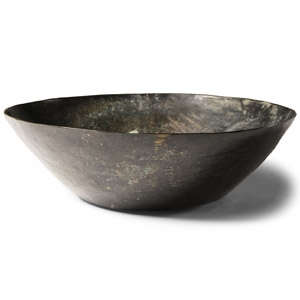
Achaemenid Bronze Bowl
Circa 6th-4th century B.C.Sold for (Inc. bp): £104
Comprising a deep dish with slightly convex bottom and outward sloping sides. 214 grams, 16.9 cm
UK private collection formed before 2000. Ex North London, UK, gallery. -
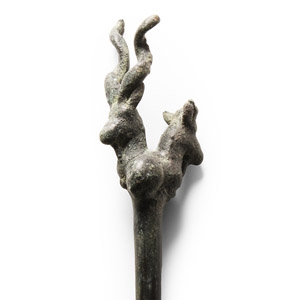
Luristan Bronze Implement with Antelope Heads
11th-8th century B.C.Sold for (Inc. bp): £124
Comprising a round-section stem with rounded point, possibly a probe; substantial finial formed as two resting antelopes with emphasised heads, one devoid of horns. 69.2 grams, 18 cm
From a UK private collection, before 1980. -
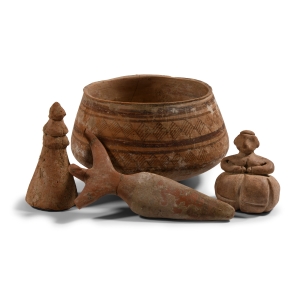
Indus Valley Painted Terracotta Bowl Decorated with Figures
Circa 2000 B.C. and laterSold for (Inc. bp): £416
Comprising: a squat biconical bowl with broad base, tiered bands of geometric hatched ornament in red and brown shades; terracotta idol figure with raised arms, dimpled rump and hooked head; offered with a later ceramic figurine and a conical pylon. 727 grams total, 6.8 - 15 cm
Acquired 1980-2015. Ex Abelita family collection.
