
Loading, please wait...
LOT 0213
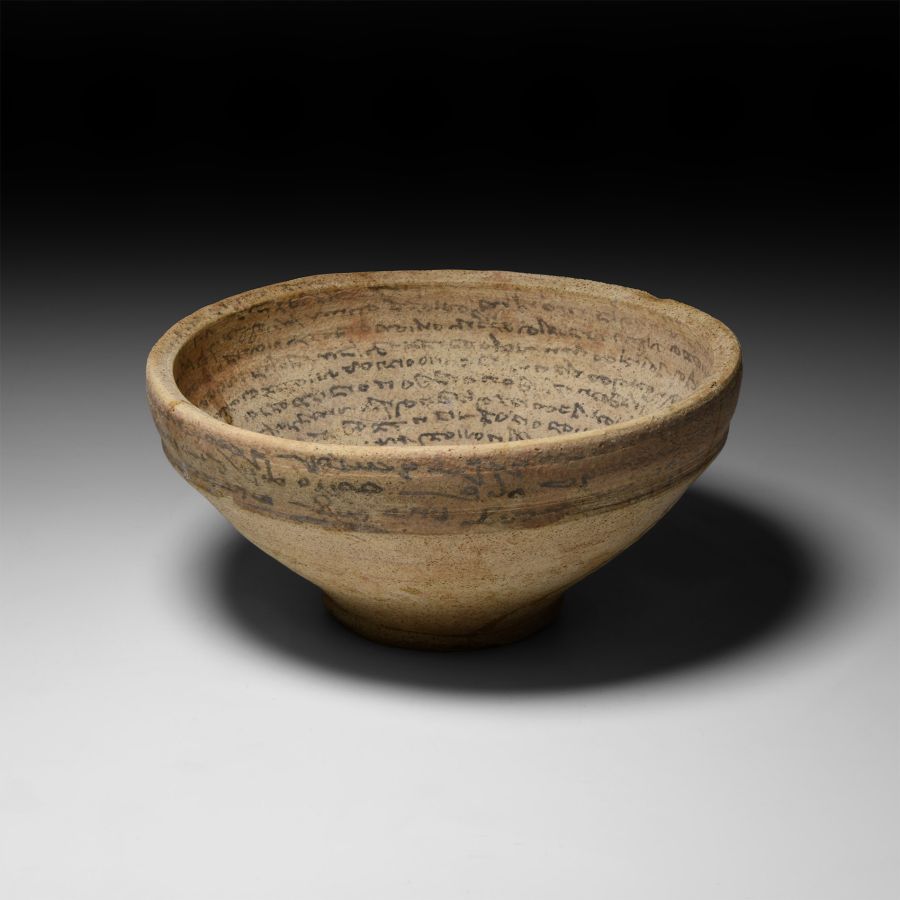
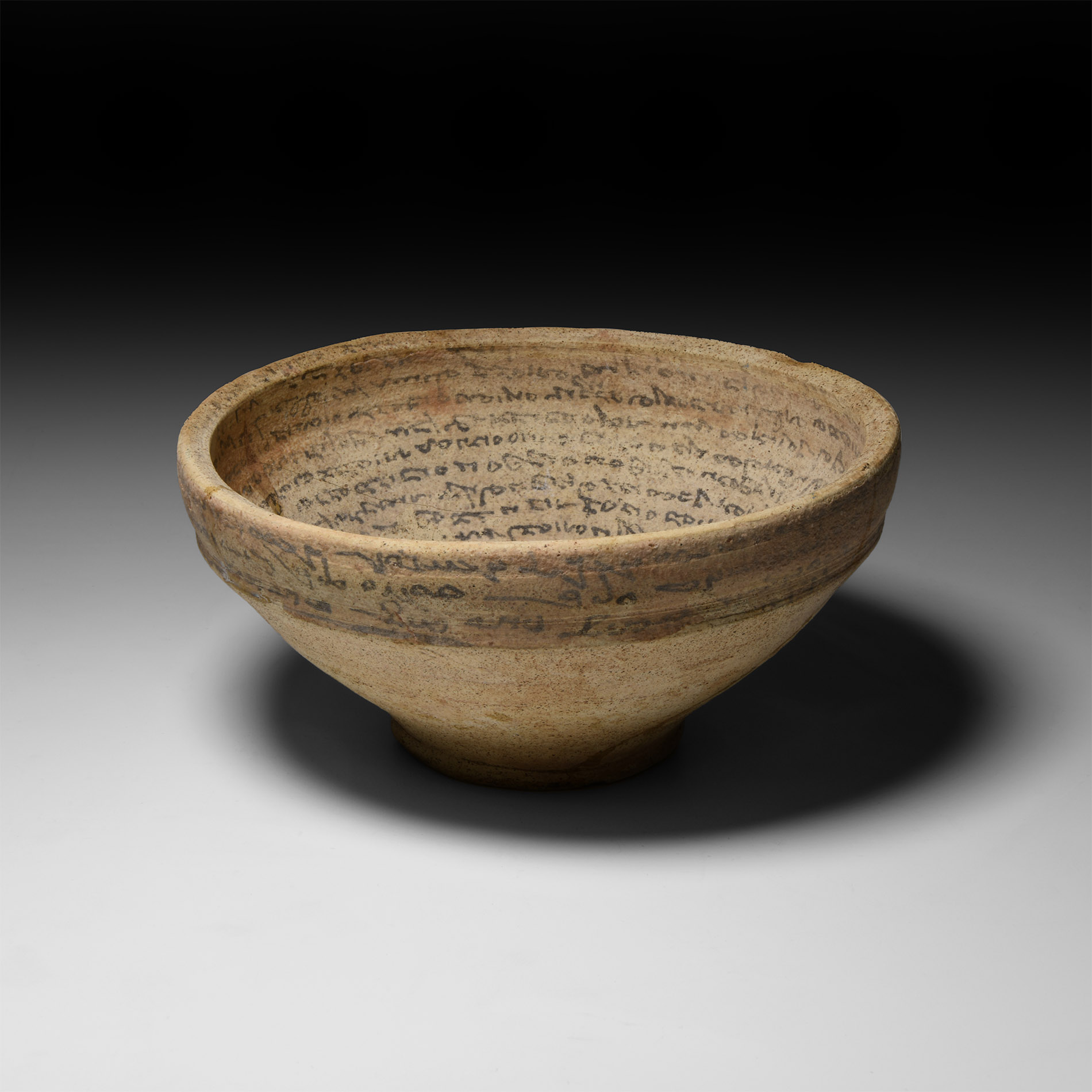
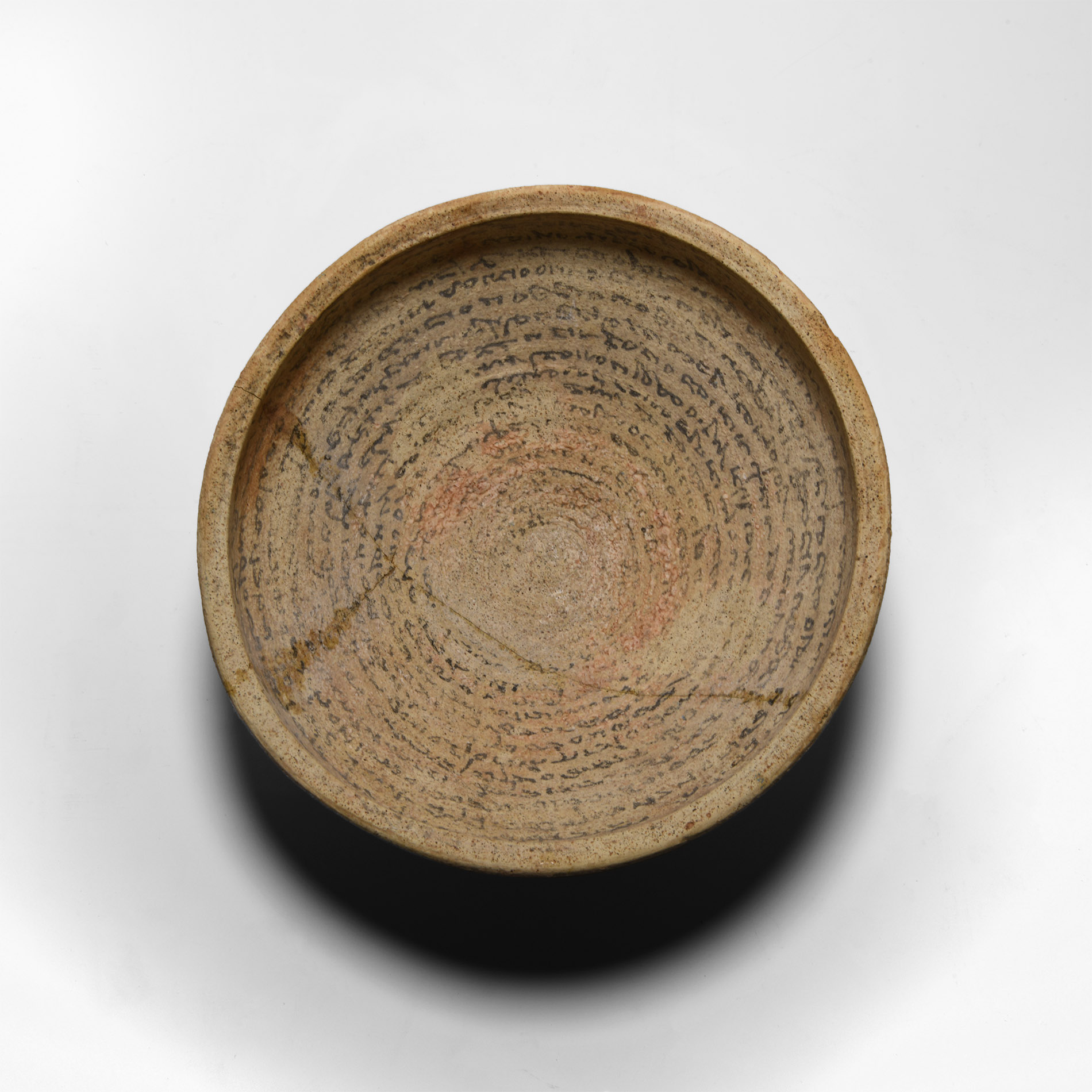
Aramaic Magical Bowl Bearing an Incantation Against Evil Spirits
4TH-8TH CENTURY A.D.
7 5/8 in. (692 grams, 19.5 cm wide).
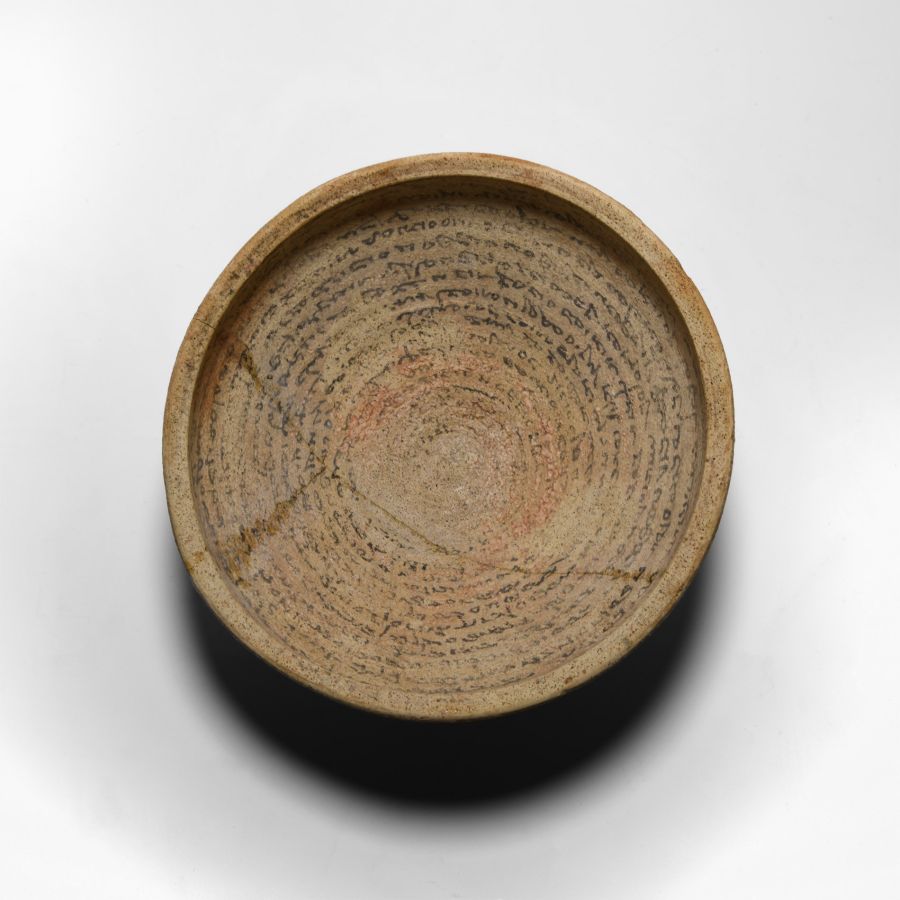
A ceramic flat-based bowl, inscribed in spiral from the bottom inner wall to the rim with Aramaic text, and on the outer rim.
ProvenanceEarly 1990s London collection.
Acquired on the UK art market.
From a private collection, Lancashire, UK
Cf. The Israel Museum, Jerusalem, accession number: 80.001.0001.
FootnotesAramaic incantation bowls are particular to the Sassanian period and have been found in the regions of modern Iraq. These simple ceramic bowls, also known as magic bowls, each contain an Aramaic inscription, written in ink, which spirals from the centre. The bowls seem to have played an important part in domestic life. For example, during excavation in Nippur in 1889, one or more incantation bowls were found in each house together with domestic artefacts, most often in doorways or under floorboards in the corner of rooms. The bowls are predominantly apotropaic, and the inscriptions tend to protect their owners from misfortunes such as child-birth, illness and evil spirits.
CONDITIONTimeLine Auctions follows a vetting process to ensure the authenticity and legality of all items, reinforcing our commitment to integrity and responsible trading. Each antiquity, antique, and coin lot undergoes thorough examination by a vetting committee of at least ten external specialists, professional trade association members, scientists, and archaeologists: Our Vetting Process
AUCTIONS:
TimeLine is a leading auction house specialising in antiquities, ancient art, collectables, natural history, coins, medals, and books. Our auctions offer museums, collectors, historians, and enthusiasts the opportunity to acquire unique and historically significant pieces.
LOT 0213
Aramaic Magical Bowl Bearing an Incantation Against Evil Spirits
Sold for (Inc. bp): £780
-
Western Asiatic Large Terracotta Chalice
1st millennium B.C.Sold for (Inc. bp): £117
A large terracotta chalice comprising a broad shallow bowl supported by three short arms on a conical base. 1.8 kg, 26.5 cm wide
Acquired 1980-2015. Ex Abelita family collection. -
Luristan Horse-Bit with Geometric Design
13th-6th century B.C.Sold for (Inc. bp): £494
A copper-alloy horse bit composed of a round-section bar with coiled ends and two free-moving openwork geometric cheek pieces. 605 grams, 20 cm
UK private collection before 2000. UK art market. Property of a London gentleman. -
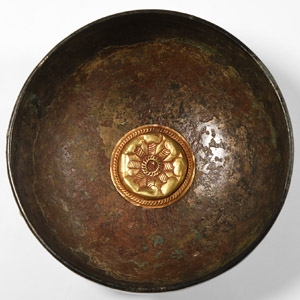
Highly Tinned Elamite Bowl with Central Gold Roundel
2nd-1st millennium B.C.Estimate: £500 - 700 (+bp*)
Opening Bid: £200
A highly tinned, roughly hemispherical bronze bowl displaying a possibly later central gold roundel to the interior base, decorated with a geometric motif, possibly representing a flower or the sun, border of conjoined S-motifs around. 497 grams, 14 cm wide
Acquired before the early 1970s. Ex London, UK, gallery. Property of a London gentleman.
