
Loading, please wait...


LOT 0330
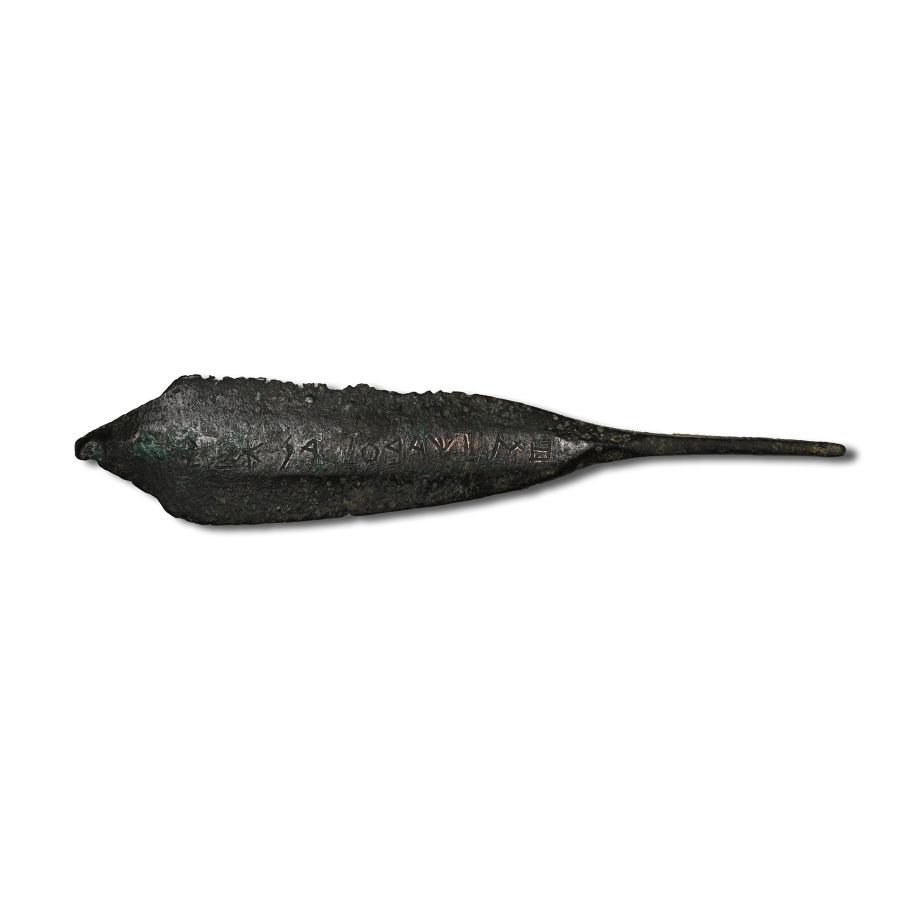
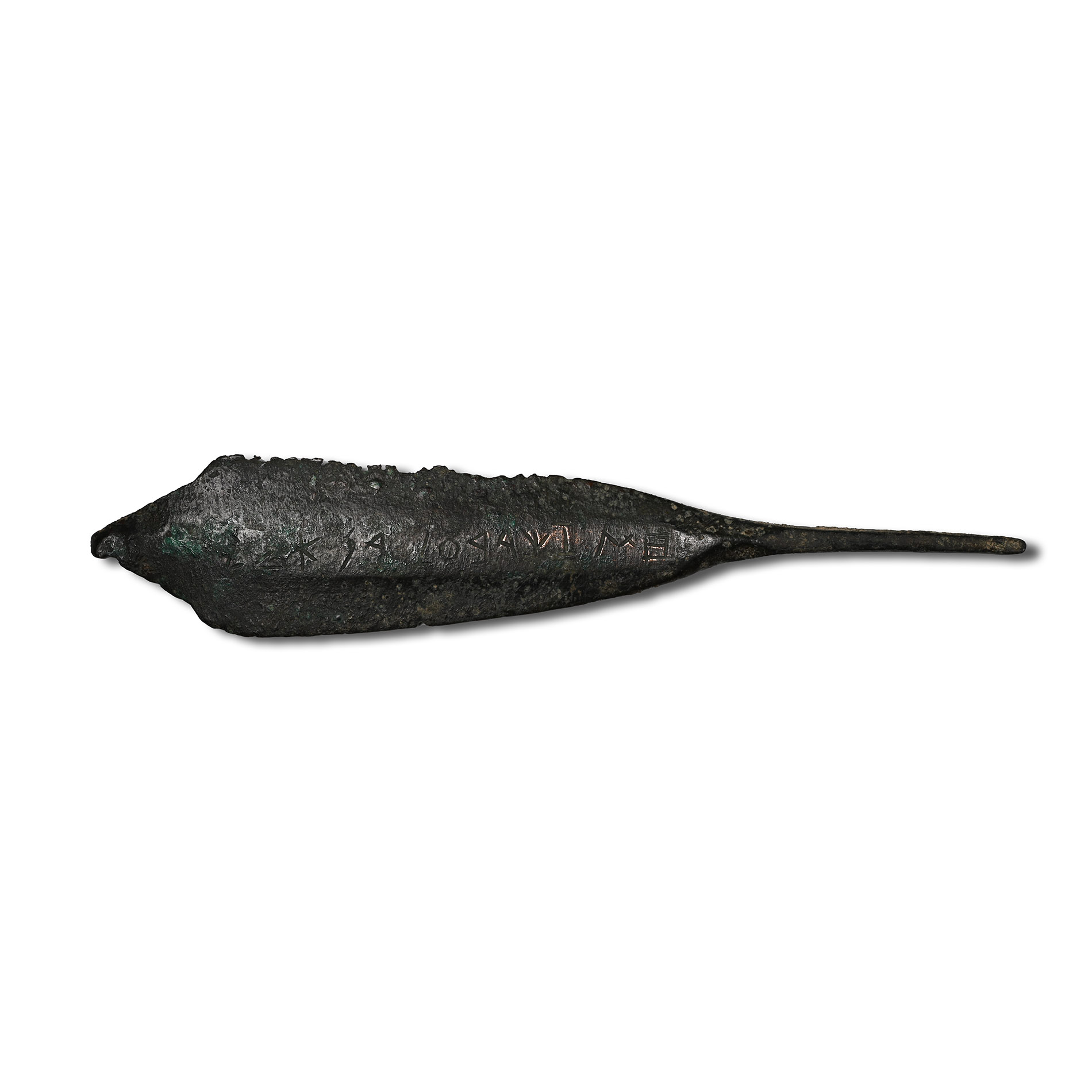
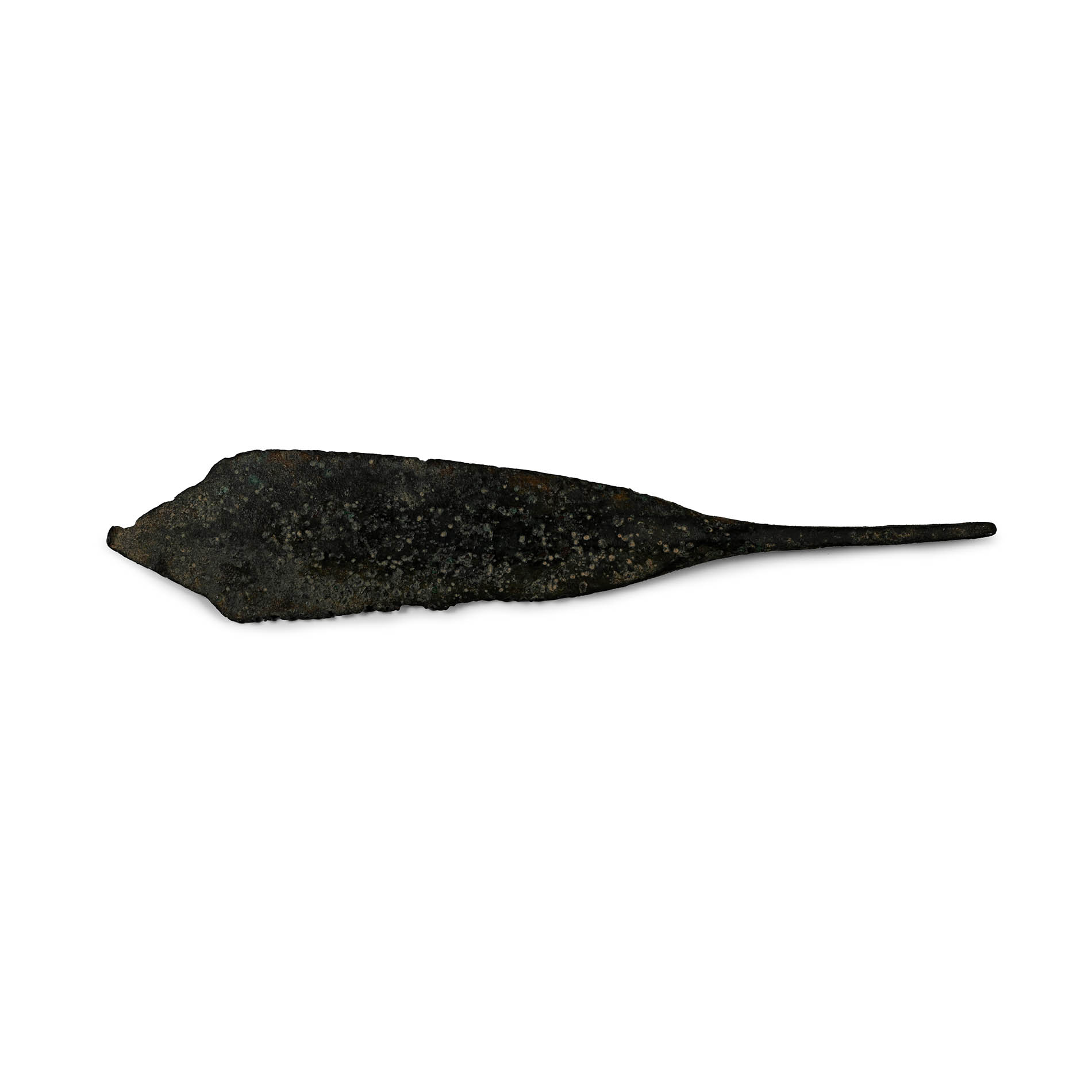
Aramaic Bronze Inscribed Arrowhead
8TH CENTURY B.C.
4 in. (12.6 grams, 10.1 cm).
Broad trapezoidal form with cutting edges, fifteen inscribed characters to one face.
ProvenanceFrom the collection of a gentleman, acquired on the London art market in the 1990s.
LiteratureCf. Röllig, W., ‘Onomastic and Palaeographic Considerations on Early Phoenician Arrow-Heads’ in Fantar, M. (ed.), Actes du IIIe Congrès International des Études Phéniciennes et Puniques, Tunis, 11-16 November 1991, Vol. II (1995), pp. 348-355; Elayi J., ‘Four New Inscribed Phoenician Arrowheads’ in SEL, 22, 2005, pp.33-45, pl.IV.
CONDITIONTimeLine Auctions follows a vetting process to ensure the authenticity and legality of all items, reinforcing our commitment to integrity and responsible trading. Each antiquity, antique, and coin lot undergoes thorough examination by a vetting committee of at least ten external specialists, professional trade association members, scientists, and archaeologists: Our Vetting Process
AUCTIONS:
TimeLine is a leading auction house specialising in antiquities, ancient art, collectables, natural history, coins, medals, and books. Our auctions offer museums, collectors, historians, and enthusiasts the opportunity to acquire unique and historically significant pieces.
LOT 0330
Aramaic Bronze Inscribed Arrowhead
Estimate £1,500 - 2,000€1,740 - 2,320 (for guidance only)$2,030 - 2,700 (for guidance only)
-
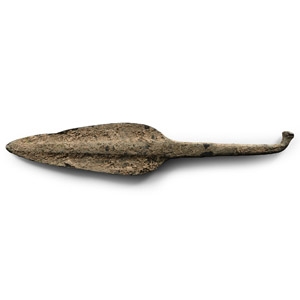
Luristan Bronze Spearhead
Early 1st millennium B.C.Sold for (Inc. bp): £26
With foliate blade and raised mid-rib with the tang bent at the tip. 233 grams, 26.7 cm
Acquired 1980-2015. Ex Abelita family collection.
Similar spearheads were excavated in the Marlik Royal cemetery by Dr Negahban, see for example in tomb 47, Trench XXIIE. They were the evolution of a typology which began much earlier in Mesopotamia and the fertile crescent, the type 4 of the Stronach classification, with straight tang and square section, usually thickened at the base with a button tang. The foliate blade was wide and exaggerated in some specimens excavated at Marlik. -
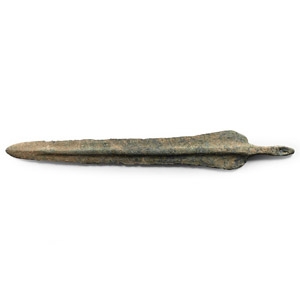
Western Asiatic Bronze Sword Blade
Circa 1000 B.C.Sold for (Inc. bp): £117
With rounded shoulders and square-sectioned mid-rib running to the blade tip; short tang with fastening hole. 254 grams, 34 cm
Acquired 1980-2015. Ex Abelita family collection.
The Luri people produced a quantity of fine metalwork, which according to Dr Khorasani, could be due to a settled period which arose as a result of the defeat of the Elamites by the Babylonians, leaving the Luristani people in relative peace for a period of time after 1200 BC. According to Khorasani 'A culture of innovation and experimentation flourished, and the repertoire of the Luristan smiths expanded in the period between 1150–1050 BC.' -
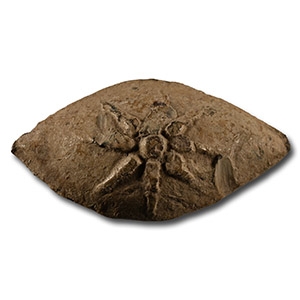
Greek Macedonian Lead Sling Shot
4th-3rd century B.C.Sold for (Inc. bp): £143
Scaphoid in plan and lentoid in section with reserved starburst motif to one face. 18.7 grams, 34 mm
Acquired in the 1980s. From the collection of a London antiquarian.
