
LOT 2590
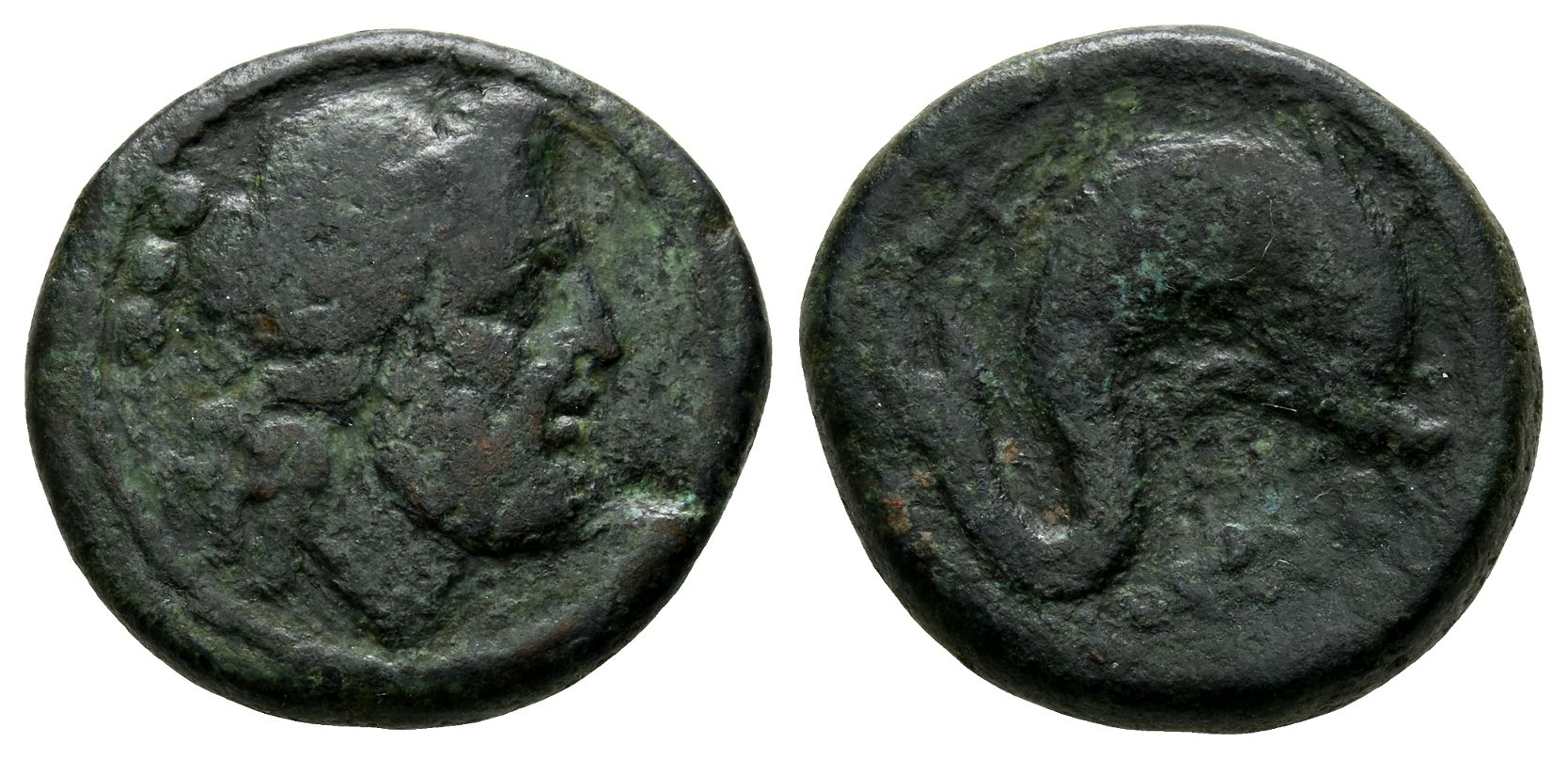
Apulia, Luceria AE Teruncius. Circa 211-200 BC.
Head of Poseidon to right; three pellets (mark of value) behind / Dolphin swimming to right; LOVCERI below, trident to right above. HN Italy 680; HGC 1, 609. Near Very Fine.(9.85g, 22mm, 11h.).
ProvenanceFrom the collection of a London antiquarian, formed since the 1980s.
TimeLine Auctions follows a vetting process to ensure the authenticity and legality of all items, reinforcing our commitment to integrity and responsible trading. Each antiquity, antique, and coin lot undergoes thorough examination by a vetting committee of at least ten external specialists, professional trade association members, scientists, and archaeologists: Our Vetting Process
AUCTIONS:
TimeLine is a leading auction house specialising in antiquities, ancient art, collectables, natural history, coins, medals, and books. Our auctions offer museums, collectors, historians, and enthusiasts the opportunity to acquire unique and historically significant pieces.
-
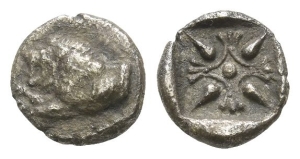
Western Asia Minor, uncertain mint AR Diobol. Circa 6th-5th century BC.
Sold for (Inc. bp): £195
Possibly Caria, uncertain mint or Ionia, Miletos. Forepart of roaring lion to left / Stellate pattern within incuse square. Unpublished in the standard references including HN Online. 0.98gr, 9mm.
Very Fine. Apparently unpublished and possibly unique.
From the collection of a London antiquarian, formed since the 1980s.
The fact that the present coin has the same reverse stellate pattern as the Diobols of Miletos (cf. SNG Kayhan I 462-75 and SNG Copenhagen 953) and some of the silver coins of the satraps of Caria (cf. HN Online 2926), leads us to attribute its origin to one of these two regions. -
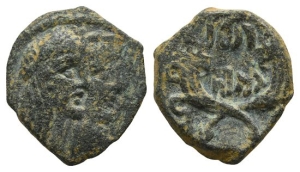
Nabataea, Rabbel II, with Gamilat AE 18mm. AD 70/1-105/6.
Sold for (Inc. bp): £20
Petra mint; struck circa AD 88/9-105/6. Jugate laureate and draped busts to right / Crossed cornucopiae; legend between and above. CN 235; Meshorer, Nabataea 163. 3.43gr, 18mm, 12h.
Very Fine.
Property of a North London, UK, gentleman. -
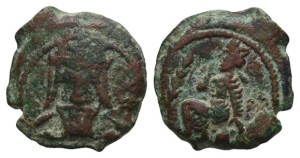
Kings of Parthia. Vologases III AE Dichalkon. Circa AD 105-147.
Sold for (Inc. bp): £20
Seleukeia mint. Dated Seleucid Era 451 (AD 139/140). Crowned facing bust wearing tiara; ANY (date) upwards to right / Tyche seated to left on column; palm to left. Sellwood 79.50; Shore -. 3.70gr, 18mm, 12h.
Near Very Fine. Very rare.
Property of a North London, UK, gentleman.
