
LOT 3460
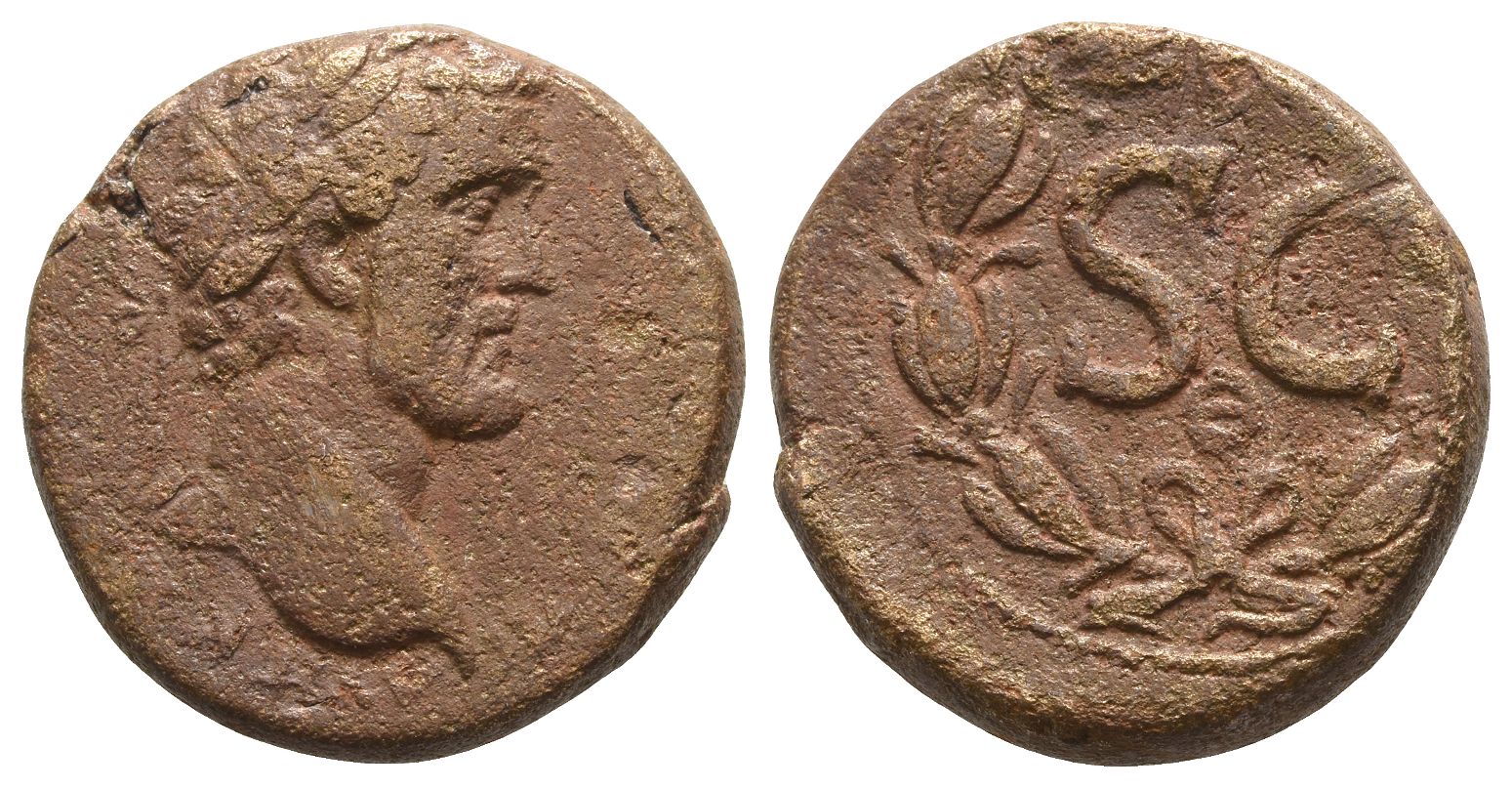
Antoninus Pius AE 25mm of Antioch, Seleucis and Pieria. AD 138-161.
Laureate head to right / Large S C, Θ below; all within laurel wreath. Cf. RPC IV.3 6999 (temporary). Very Fine.(16.21gr, 25mm, 1h.).
ProvenanceFrom a Cambridgeshire, UK, private collection.
TimeLine Auctions follows a vetting process to ensure the authenticity and legality of all items, reinforcing our commitment to integrity and responsible trading. Each antiquity, antique, and coin lot undergoes thorough examination by a vetting committee of at least ten external specialists, professional trade association members, scientists, and archaeologists: Our Vetting Process
AUCTIONS:
TimeLine is a leading auction house specialising in antiquities, ancient art, collectables, natural history, coins, medals, and books. Our auctions offer museums, collectors, historians, and enthusiasts the opportunity to acquire unique and historically significant pieces.
-
.jpg)
Hadrian AE Drachm of Alexandria, Egypt. Dated RY 16 (AD 131/2).
Sold for (Inc. bp): £286
ΑΥΤ ΚΑΙ ΤΡΑΙ ΑΔΡΙΑ CЄΒ, laureate, draped and cuirassed bust to right, seen from rear / Nilus seated to left on rock, holding reed in his right hand and cornucopia in his left; below, crocodile to right; L Iς (date) in two lines to left. RPC III 5791; Dattari (Savio) 1794; K&G 32.519; Emmett 1016.16. 26.75gr, 37mm, 12h.
Good Very Fine.
From the collection of a gentleman, acquired on the London art market in the 1990s. -
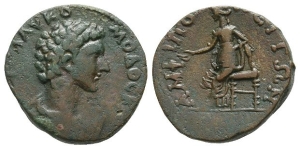
Commodus, as Caesar, AE 25mm of Amphipolis, Macedon. AD 166-177.
Sold for (Inc. bp): £26
ΑΥΤΟ Λ ΑV ΚΟΜΟΔΟС ΚΑΙСΑΡ, bareheaded and draped bust to right / ΑΜΦΙΠΟΛЄΙΤΩΝ, Tyche enthroned to left, holding phiale. RPC IV.1 Online 4243 (temporary); BMC 115. 10.65gr, 25mm, 12h.
Very Fine. Scarce.
Ex Roma Numismatics Ltd., E-Sale 71, 28 May 2020, lot 733 (company's ticket included). Ex Roma Numismatics Ltd, E-Sale 86, 8 July 2021, lot 724 (company's ticket included). Ex Classical Numismatic Group, Electronic Auction 390, 1 February 2017, lot 318 (company's ticket included). Property of a London antiquarian. -
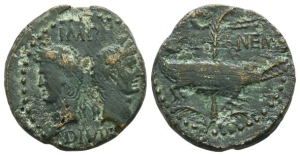
Augustus and Agrippa AE Dupondius of Nemausus, Gaul. Circa 9/8-3 BC.
Sold for (Inc. bp): £85
Head of Agrippa to left, wearing rostral crown combined with laureate crown, back to back with head of Augustus to right, wearing oak wreath; IMP above, DIVI F below / Chained crocodile to right, palm frond upwards in centre, wreath to left of palm tip with long ties trailing to right; COL NEM across fields; two palm fronds below. RIC I 158; RPC I 524. 12.30gr, 28mm, 12h.
Very Fine.
Acquired on the UK art market before 2000. Property of an Essex, UK, gentleman.
