
Loading, please wait...
LOT 1470
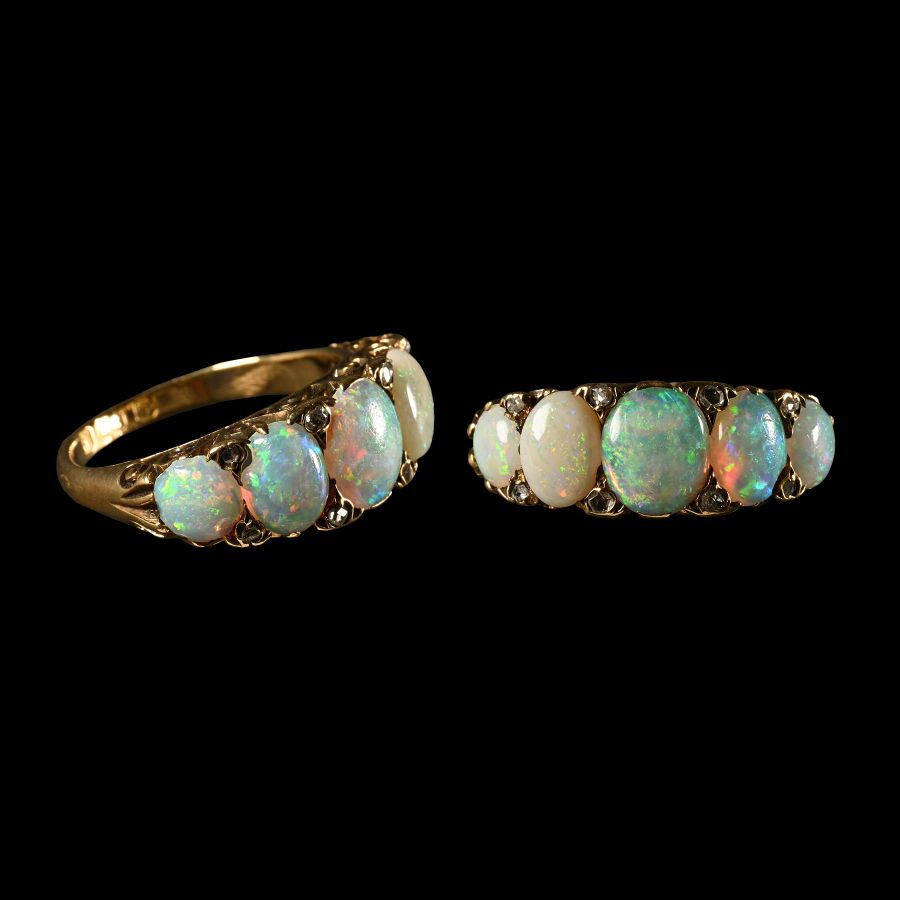
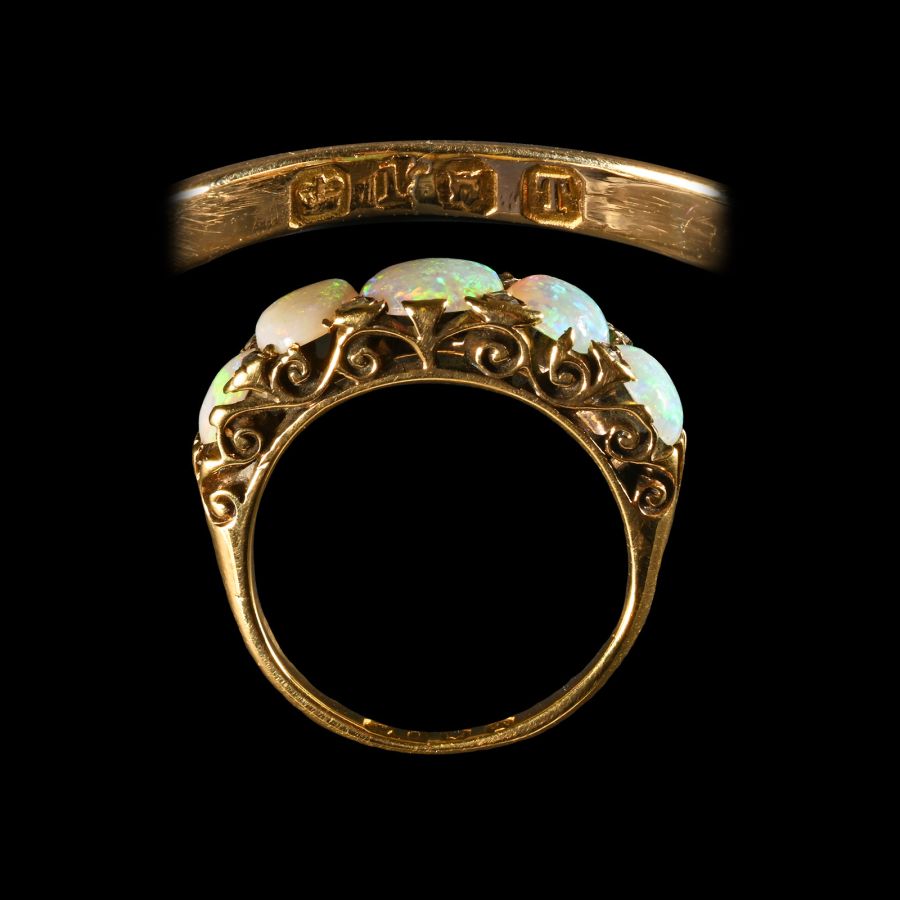
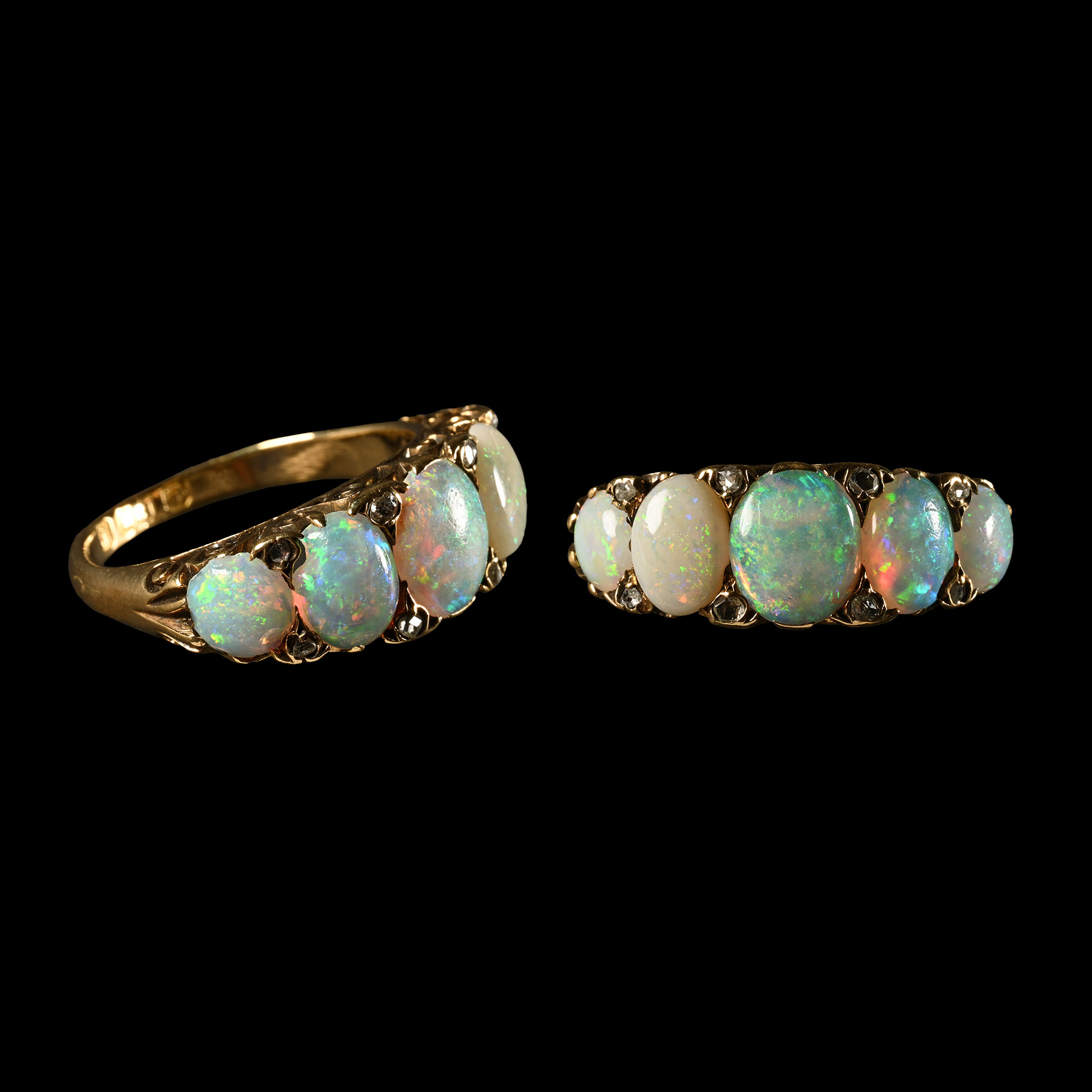
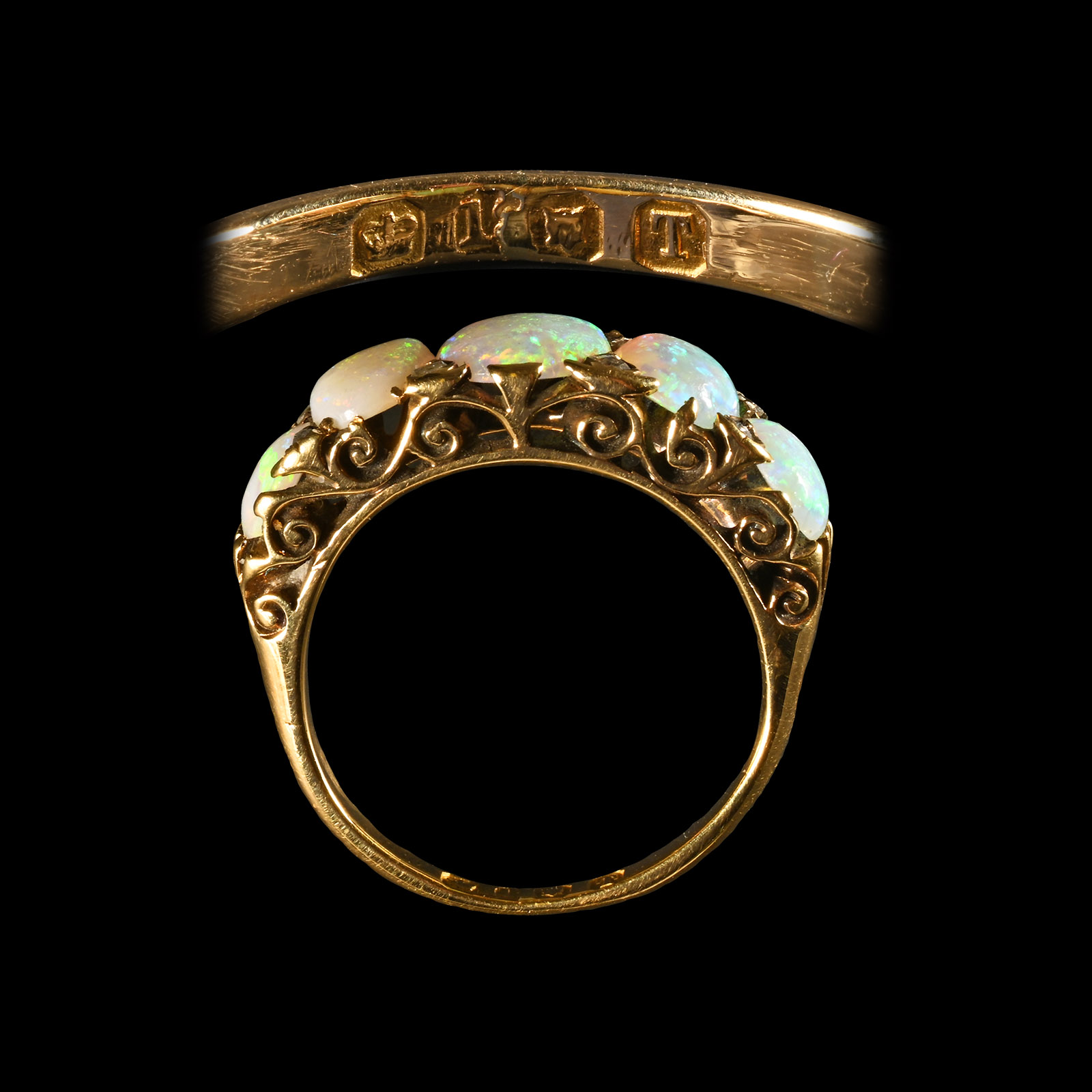
Antique Gold Ring with Australian Opals
LONDON, 1894 A.D.
7/8 in. (5.54 grams, 23.81 mm overall, 17.56 mm internal diameter (approximate size British O, USA 7, Europe 14.98, Japan 14)).
With five graduated white opal cabochons each with shimmering green, blue, yellow and orange coloration believed to be of Australian origin; hallmarked for London, 'T' in shield (1894), 18 carat gold.
ProvenanceProperty of an Essex, UK, gentleman.
CONDITIONTimeLine Auctions follows a vetting process to ensure the authenticity and legality of all items, reinforcing our commitment to integrity and responsible trading. Each antiquity, antique, and coin lot undergoes thorough examination by a vetting committee of at least ten external specialists, professional trade association members, scientists, and archaeologists: Our Vetting Process
AUCTIONS:
TimeLine is a leading auction house specialising in antiquities, ancient art, collectables, natural history, coins, medals, and books. Our auctions offer museums, collectors, historians, and enthusiasts the opportunity to acquire unique and historically significant pieces.
LOT 1470
Antique Gold Ring with Australian Opals
Estimate £1,000 - 1,400€1,160 - 1,620 (for guidance only)$1,350 - 1,890 (for guidance only)
-
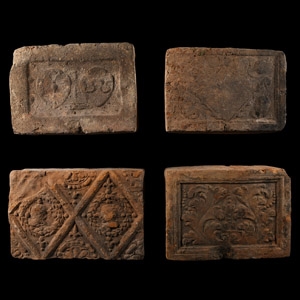
Elizabethan Period Ceramic Fire Brick Group
Circa 16th century A.D.Sold for (Inc. bp): £111
Each differently sized and displaying and decorative design in relief, including foliage, facing busts within wreaths and lozenges, crowned lozenge with flourishes and other worn motifs. 6.68 kg total, 13-15 cm
Acquired 1990s-early 2000s. East Anglian private collection. -
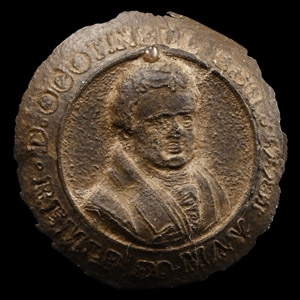
Irish O'Connell Bronze Supporters' Badge Centre
18th century A.D.Sold for (Inc. bp): £143
Sheet-bronze, stamped with bust of Daniel O'Connell with surrounding legend: 'D OCONNELL ESQ / REM[BR] 30 MAY 1844'. 0.58 grams, 20 mm
Found near Wigan, Lancashire, UK, circa 2006. Property of a Stowmarket, UK, gentleman.
O'Connell campaigned for the rights of Irish Catholics and for Irish independence from the United Kingdom. He was convicted of seditious conspiracy early in 1844 but this was reversed by the House of Lords later the same year. -
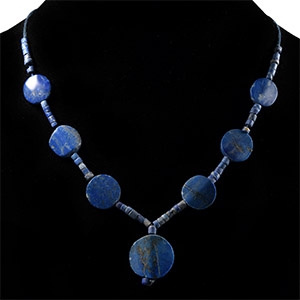
Bactrian Style Lapis Lazuli Bead Necklace String
20th century A.D.Sold for (Inc. bp): £33
Restrung necklace of annular beads with interstitial tabular types, the centrepiece a tabular disc pendant. 30.6 grams, 64 cm long
Acquired 1980-2015. Ex Abelita family collection.
