
Loading, please wait...
LOT 1646
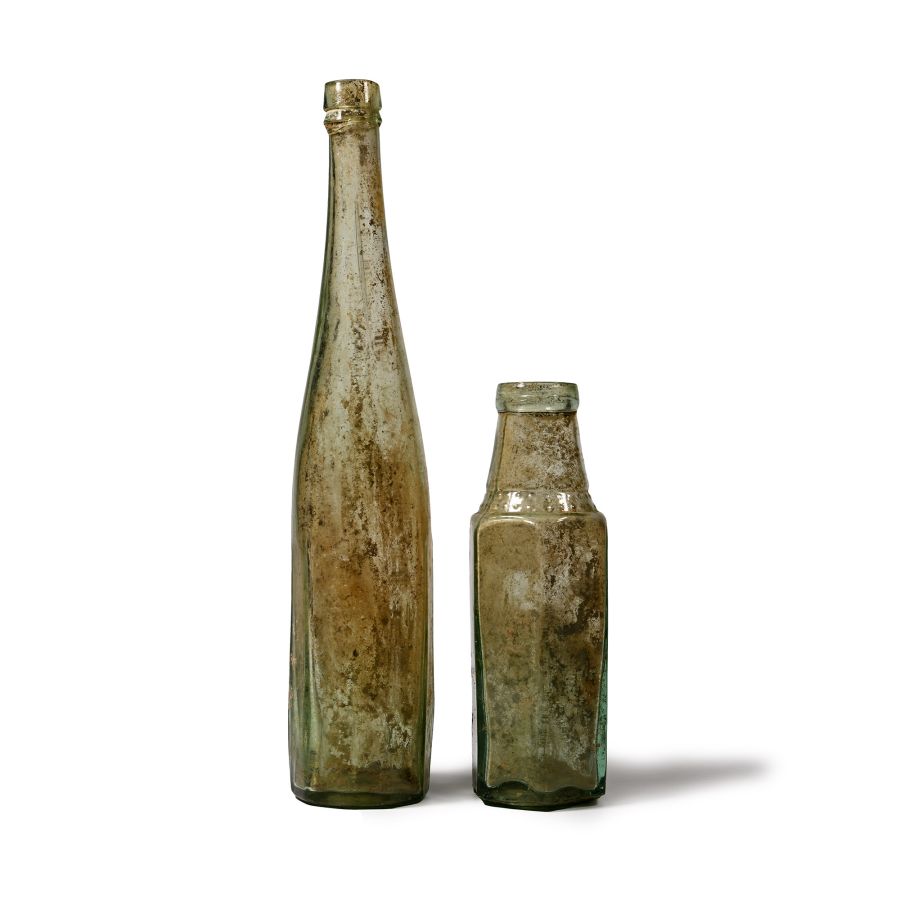
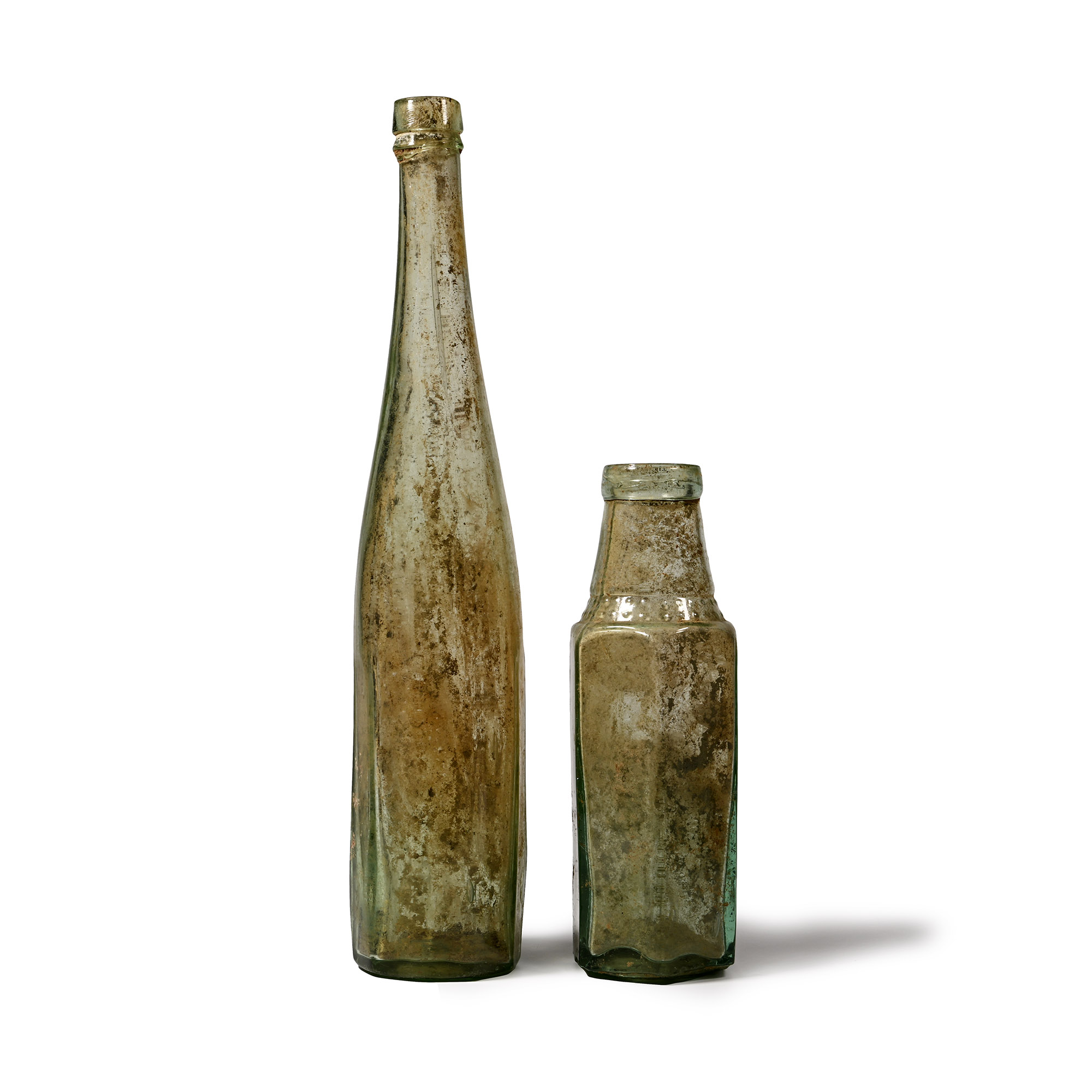
Anglo-Zulu War 'Battle of Khambula' Glass Bottles
29 MARCH 1879 A.D.
8 1/4 - 14 1/8 in. (1.14 kg total, 20.8-36 cm).
Aqua glass bottle with pontil base, ten-sided body, narrow neck hexagonal-section bottle with broad mouth. [2, No Reserve]
ProvenanceFound by Zulu natives, Khambula, South Africa, 1990s-early 2000s.
Ian Wilkinson collection, Nottinghamshire, UK, formed since 1985.
This lot is accompanied by an illustrated lot declaration signed by the Head of the Antiquities Department, Dr Raffaele D’Amato.
Following defeats by the Zulu army at Isandlwana and Hiobane, the British were desperate for a victory, which they secured at Khambula.
CONDITIONTimeLine Auctions follows a vetting process to ensure the authenticity and legality of all items, reinforcing our commitment to integrity and responsible trading. Each antiquity, antique, and coin lot undergoes thorough examination by a vetting committee of at least ten external specialists, professional trade association members, scientists, and archaeologists: Our Vetting Process
AUCTIONS:
TimeLine is a leading auction house specialising in antiquities, ancient art, collectables, natural history, coins, medals, and books. Our auctions offer museums, collectors, historians, and enthusiasts the opportunity to acquire unique and historically significant pieces.
-
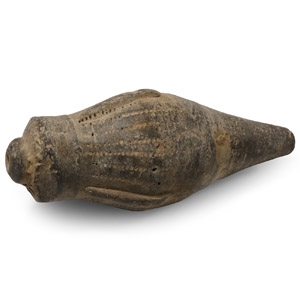
Turco-Mongol 'Greek Fire' Ceramic Fire Bomb or Hand Grenade
14th-15th century A.D.Sold for (Inc. bp): £182
Cylindrical in form with tapering foot, vertical flanges to the body with pointillé decoration between, carinated shoulder with impressed points, domed mouth. 393 grams, 16 cm
From an important specialist collection, London, UK, 1990s onwards. Accompanied by an academic paper by military specialist Dr Raffaele D'Amato, dated 15 July 2019 and titled 'Eastern Roman Empire - Greek Fire Bomb or Hand Grenade (μεσαίον kακάβιον) 9th-11th century AD'. This lot is accompanied by an illustrated lot declaration signed by the Head of the Antiquities Department, Dr Raffaele D’Amato. -
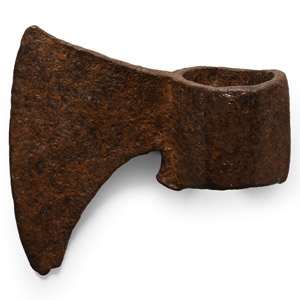
Medieval Iron Triangular Axehead
Circa 15th-16th century A.D.Sold for (Inc. bp): £13
A small axe with a gently curving blade and circular socket. 163 grams, 85 mm
Ex North American private collection, 1970s-1990s. This lot is accompanied by an illustrated lot declaration signed by the Head of the Antiquities Department, Dr Raffaele D’Amato. -
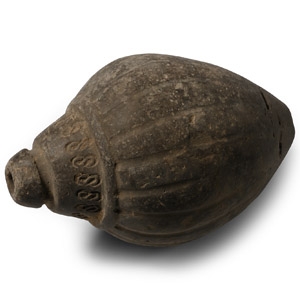
Byzantine 'Greek Fire' Ceramic Fire Bomb or Hand Grenade
9th-11th century A.D.Sold for (Inc. bp): £182
A piriform missile with dimed filler-hole, ribbed body and a band of stamped S-motifs around the neck, intended to be filled with explosive liquid and wick, used as a hand grenade. 560 grams, 14.2 cm
From an important specialist collection, London, UK, 1990s onwards. Accompanied by an academic paper by military specialist Dr Raffaele D'Amato, dated 15 July 2019 and titled 'Eastern Roman Empire - Greek Fire Bomb or Hand Grenade (μεσαίον kακάβιον) 9th-11th century AD'. This lot is accompanied by an illustrated lot declaration signed by the Head of the Antiquities Department, Dr Raffaele D’Amato.
