
Loading, please wait...
LOT 1363
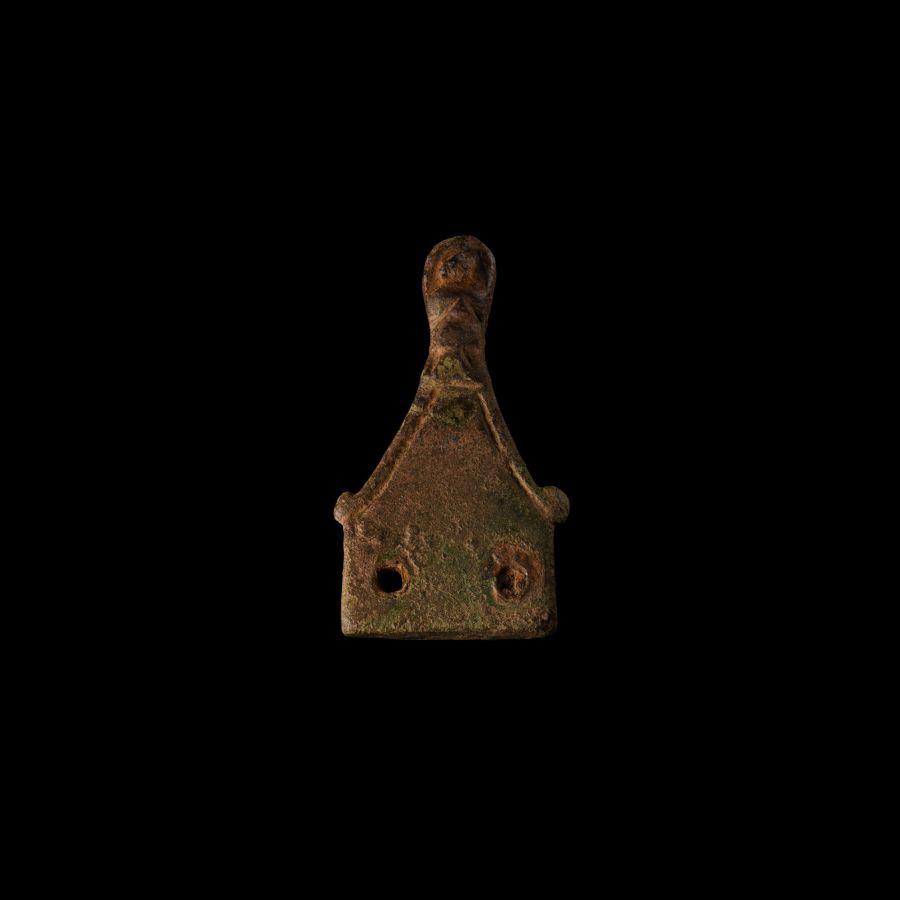
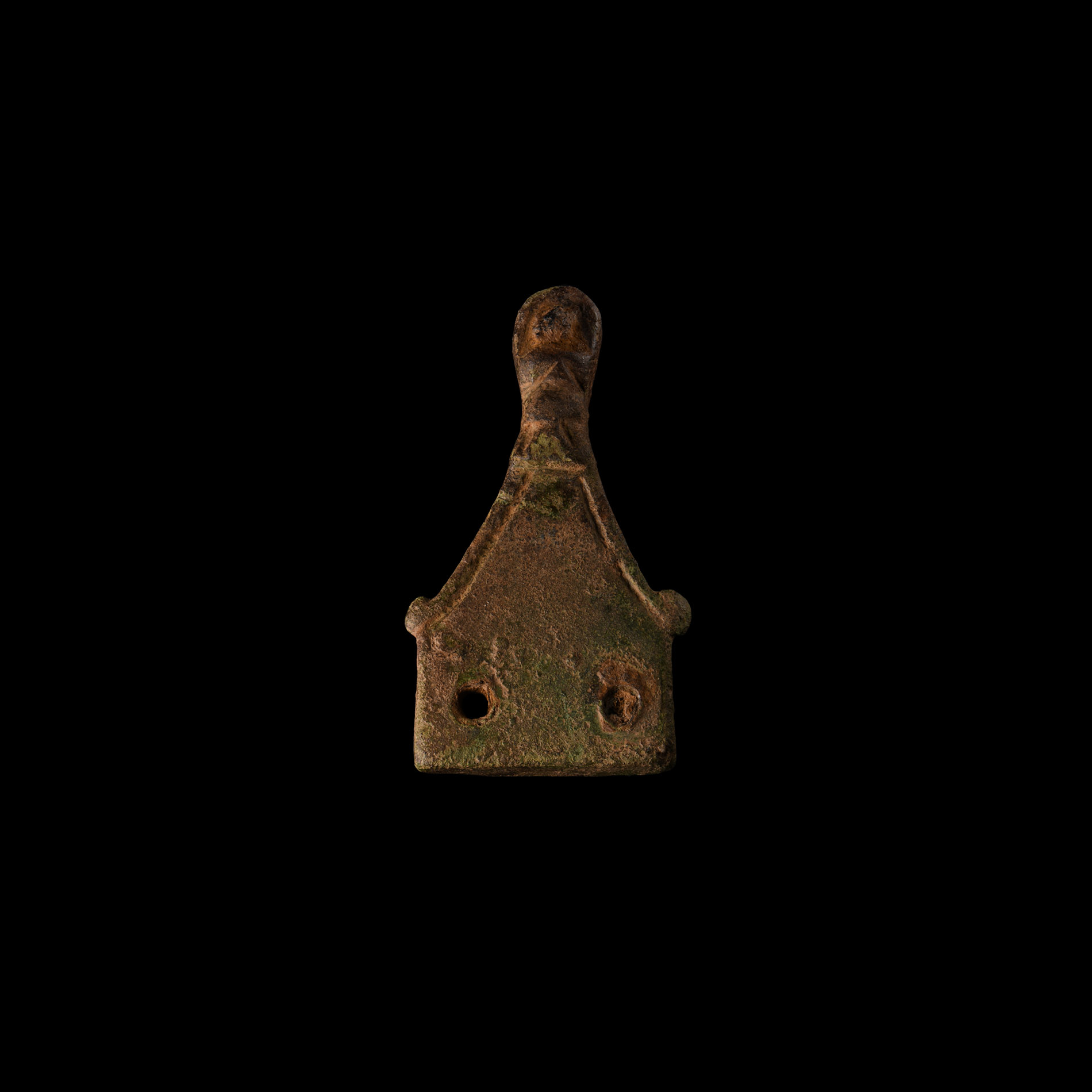
Anglo-Scandinavian Viking Bronze Stirrup Mount
CIRCA 11TH CENTURY A.D.
2 in. (21.6 grams, 49 mm).
The body of the mount roughly triangular in plan with a beast head in relief, volutes to two sides; two rivet holes to one edge. [No Reserve]
ProvenanceFound Cambridgeshire, UK.
CONDITIONTimeLine Auctions follows a vetting process to ensure the authenticity and legality of all items, reinforcing our commitment to integrity and responsible trading. Each antiquity, antique, and coin lot undergoes thorough examination by a vetting committee of at least ten external specialists, professional trade association members, scientists, and archaeologists: Our Vetting Process
AUCTIONS:
TimeLine is a leading auction house specialising in antiquities, ancient art, collectables, natural history, coins, medals, and books. Our auctions offer museums, collectors, historians, and enthusiasts the opportunity to acquire unique and historically significant pieces.
-
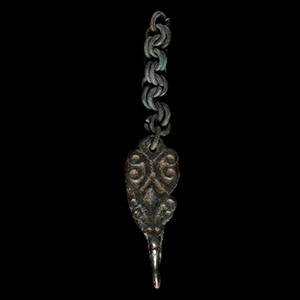
Viking Age Bronze Implement Pendant
9th-11th century A.D.Sold for (Inc. bp): £52
With short chain of doubled links, plaque with high-relief tendril design, bird-head finial and hook to the reverse; part of a female chatelaine assemblage. 16.6 grams, 88 mm
From the collection of a North American gentleman, formed in the 1990s. -
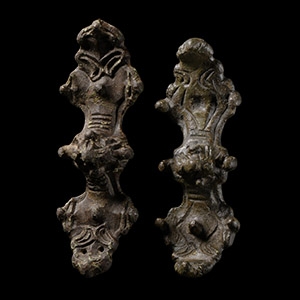
Viking Age Bronze Equal-Arm Brooch Pair
9th-11th century A.D.Sold for (Inc. bp): £143
With central dome and upturned ends, ribbed and textured detailing to the obverse, catch and pin-lugs to the reverse. 109 grams total, 78-84 mm
From the collection of a North American gentleman, formed in the 1990s.
Equal-armed bronze brooches of this category were found in various graves of Birka’s cemeteries (graves 444, 603, 535, 551, 577 and 483). They were all female graves and these clasps were used to fasten the cloaks in the upper part of the dress. -
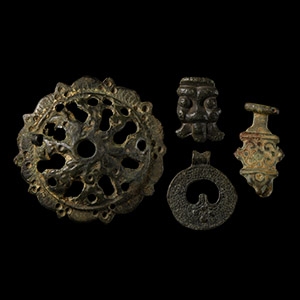
Viking Age Bronze Mount Collection
6th-11th century A.D.Sold for (Inc. bp): £65
Comprising an openwork floral example with domed face; one with T-shaped top and scrolling ornament; stylised face from a cruciform brooch, likely the English equivalent of Thor; openwork lunate pendant with suspension loop. 30 grams total, 20-46 mm
From the collection of a North American gentleman, formed in the 1990s.
