
Loading, please wait...
LOT 2054
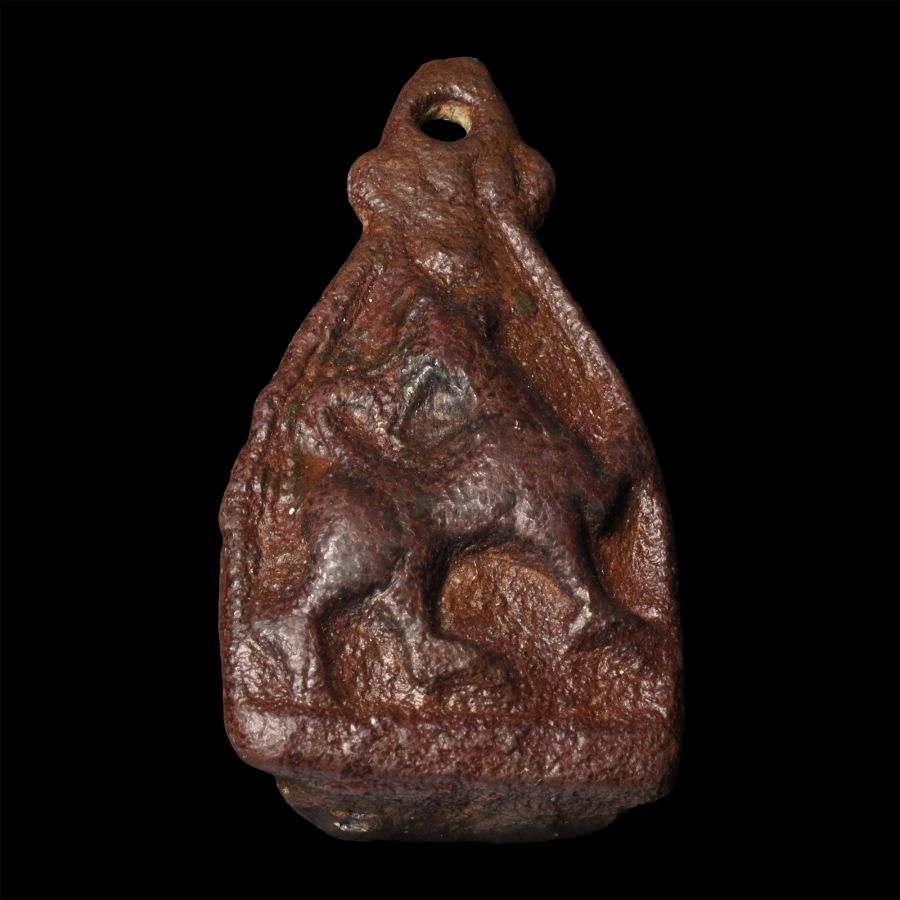
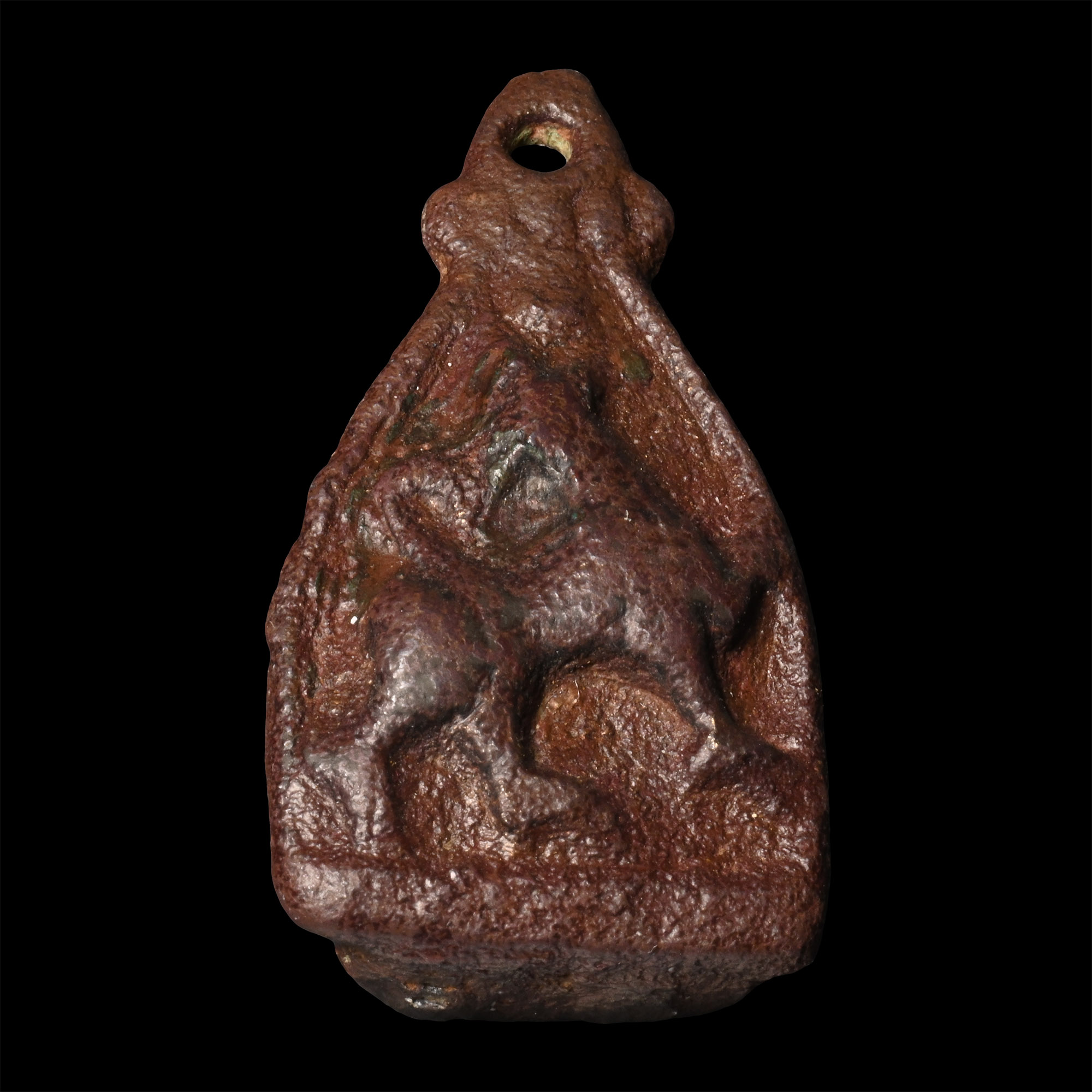
Anglo-Scandinavian Viking Bronze Stirrup Apex Mount with Howling Beast
11TH CENTURY A.D.
1 74/8 in. (24 grams, 49.5 mm).
Formed with a tongue-shaped body, of Williams's Class A Type 11 with pierced trefoil lug above, ledge to the reverse, two fixing holes, high-relief profile wolf with head thrown back and mouth open in a howling posture. [No Reserve]
ProvenanceEx Manchester, UK, collection, 1990s.
Accompanied by a previous typed catalogue information card.
Cf. Williams, D., Late Saxon Stirrup-Strap Mounts, York, 1997, p.59.
CONDITIONTimeLine Auctions follows a vetting process to ensure the authenticity and legality of all items, reinforcing our commitment to integrity and responsible trading. Each antiquity, antique, and coin lot undergoes thorough examination by a vetting committee of at least ten external specialists, professional trade association members, scientists, and archaeologists: Our Vetting Process
AUCTIONS:
TimeLine is a leading auction house specialising in antiquities, ancient art, collectables, natural history, coins, medals, and books. Our auctions offer museums, collectors, historians, and enthusiasts the opportunity to acquire unique and historically significant pieces.
LOT 2054
Anglo-Scandinavian Viking Bronze Stirrup Apex Mount with Howling Beast
Sold for (Inc. bp): £143
-
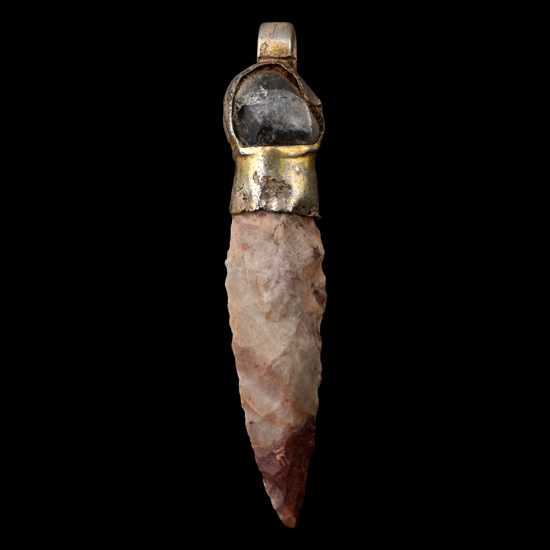
Viking Silver-Gilt Elfshot Pendant with Stone Arrowhead
9th-11th century A.D. and earlierSold for (Inc. bp): £845
Comprising a silver sleeve with a knapped flint arrowhead, a circular cell set with a clear glass cabochon above. 3.46 grams, 44.84 mm
From the private collection of a London gentleman, from his grandfather's collection formed before the early 1970s.
This amulet was believed to offer protection against 'Elfshot'. The attack of elves was believed responsible for mysterious suffering in men and livestock: sudden shooting pains localised to a particular area of the body, such as in rheumatism, arthritis, or muscle stitches or cramps. Elves were thought to shoot darts or arrows where such pains had no obvious external cause. Belief in elfshot persisted into the 20th century in rural areas, and as proof, country folk would sometimes find small arrowheads (the remains of Neolithic or Mesolithic flints, or naturally-occurring spear-shaped stones) that were believed to be the magical weapons that caused the afflictions. Belief in elfshot began in the Pagan Germanic period. -
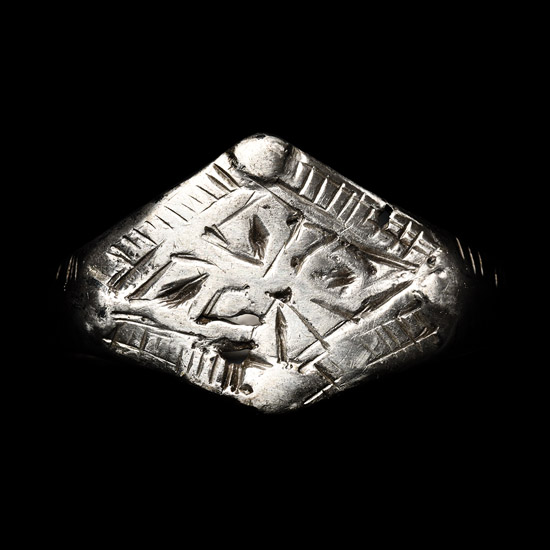
Viking Age Silver Ring
Circa 900-1100 A.D.Sold for (Inc. bp): £124
Comprising a D-section hoop and a lozenge-shaped bezel with four raised bosses and a central cross motif within a hatched border. 2.29 grams, 23.05 mm overall, 20.63 mm internal diameter (approximate size British S1/2, USA 9 1/4, Europe 20.63, Japan 19)
Ex property of an Oxfordshire art professional; previously in an old British collection, formed in the 1980s. Property of a West Northamptonshire, UK, gentleman. -
.jpg)
Viking Age Gilt Bronze Military Horse Harness Pendant Set
Circa 10th-11th century A.D.Sold for (Inc. bp): £3,900
Comprising fourteen openwork pendants, each a piriform openwork plaque with pelleted bands and hinged hollow bulb finial, hinged at upper edge to a trefoil plate with mounting pins to reverse. 194 grams total, 71.11-71.89 mm
From the private family collection of a lady, UK; acquired in Germany mid 20th century. This lot has been checked against the Interpol Database of stolen works of art and is accompanied by search certificate number no.13270-253197.
Such horse harness pendants were common to the culture of the Alan, Kabarian and Hungaro-Magyar warriors, and also in use among the Eastern Viking (Rus) warriors.
